According to the CDC’s Oral Health Surveillance Report, more than 90% of adults age 20 and older have had at least one cavity. Most assume their only options are a filling or a crown. This third choice sits between them, and many patients never hear about it.
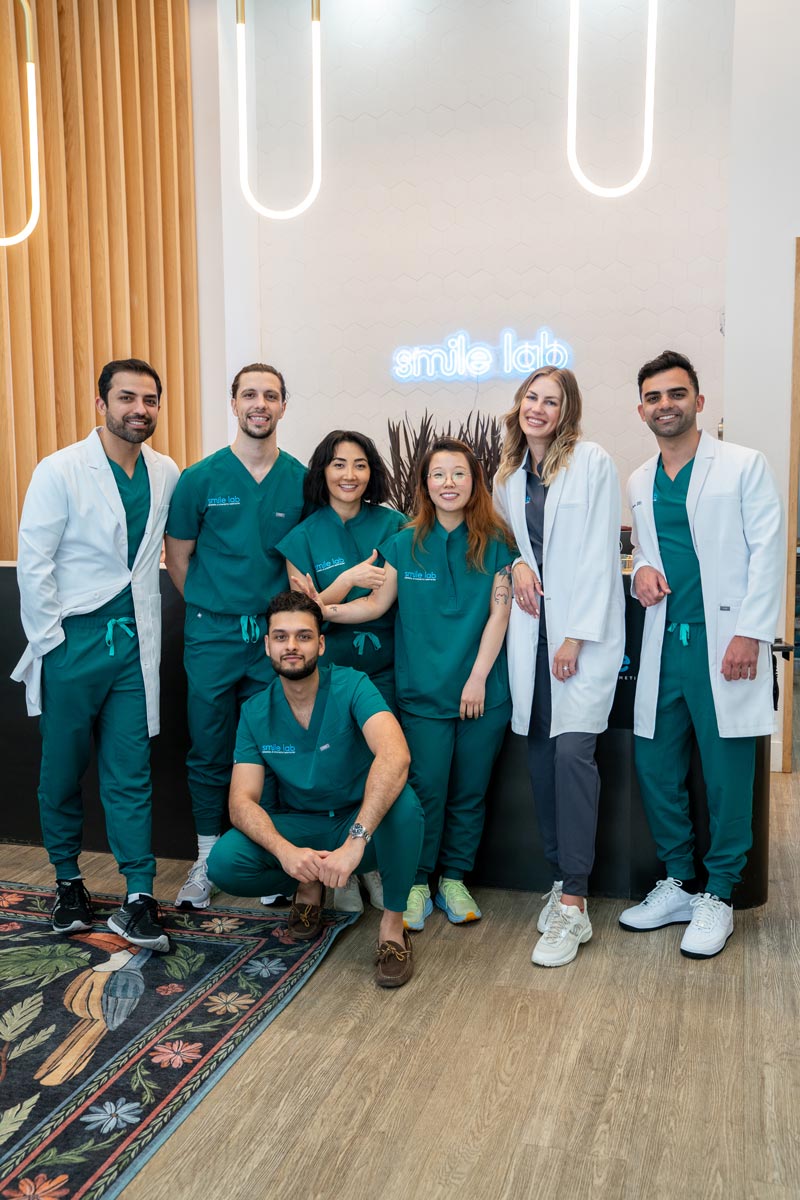
How an Onlay Compares to a Filling or Crown
A dental onlay is a lab-fabricated piece bonded directly onto the damaged molar. It covers the affected cusp or cusps on the biting surface, fitting precisely to your anatomy.
Think of it on a spectrum of invasiveness. A filling repairs decay inside the existing structure, a quick, single-visit procedure compared with the two-visit process an onlay requires. A crown caps the entire visible portion. A partial crown covers only what needs covering, leaving healthy areas untouched.
That makes it the right call when damage is too large for a filling to handle reliably, but not severe enough to justify removing sound enamel for full coverage.
What Our Patients Say
EXCELLENT Based on 2276 reviews
 Posted on Google
 Jou Min Chen (Jumin)I've been taking all my treatments over here for over a year now and so far I'm pretty satisfiedPosted on Google
 nikhil keswaneyDr basseri was amazing he took into account my fiances anxitey i to account and performed the filling even after hours he definitely earned 2 permenant patients.Posted on Google
 AkusaBeautiful experience! For my first dental visit- I had a smooth experience. Everyone was super nice. From the dentist, to the receptionist… all of the above.My teeth feels amazing. Super patient and explains everything clearly. I recommend, and I will definitely be back!Posted on Google
 Brynden FosterThis team is so helpful and kind! I always feel like a VIP coming for my cleaning and I couldn’t recommend them more.Posted on Google
 bhanu dattastaff was very helpful and they explained the procedure and payment options in a friendly wayPosted on Google
 Robina ShieldsMy experience with Smile Lab Dentistry Union Square "Wonderful", right down to the teeth cleaning.. that will make a person smile.Posted on Google
 Peter ChauLove coming here as a patient. Everyone here is super nice and thorough. I had my wisdom teeth done here which was an excellent experience. I now commute all the way to the city just to get my regular check ups here because it’s worth the trip. Also, I never had a hygienist floss my teeth before this place
Onlay Benefits: Why Dentists Recommend Them
The main onlay benefits come down to how much of your natural structure survives the repair.
1.- Less removal. A crown requires shaving enamel from every side. An onlay touches only the compromised cusps.
2.- Stronger than a filling. A lab mills or casts the piece to exact tolerances, then bonds it in place. Direct fillings are packed by hand.
3.- Tooth-colored options. Porcelain and composite match surrounding enamel, so back molars that show when you smile still look natural.
4.- Better seal at the margins. A precise lab fit leaves fewer gaps where fresh decay can start.
5.- Longer service life. Most last 10 to 15 years, and gold can go well beyond that.
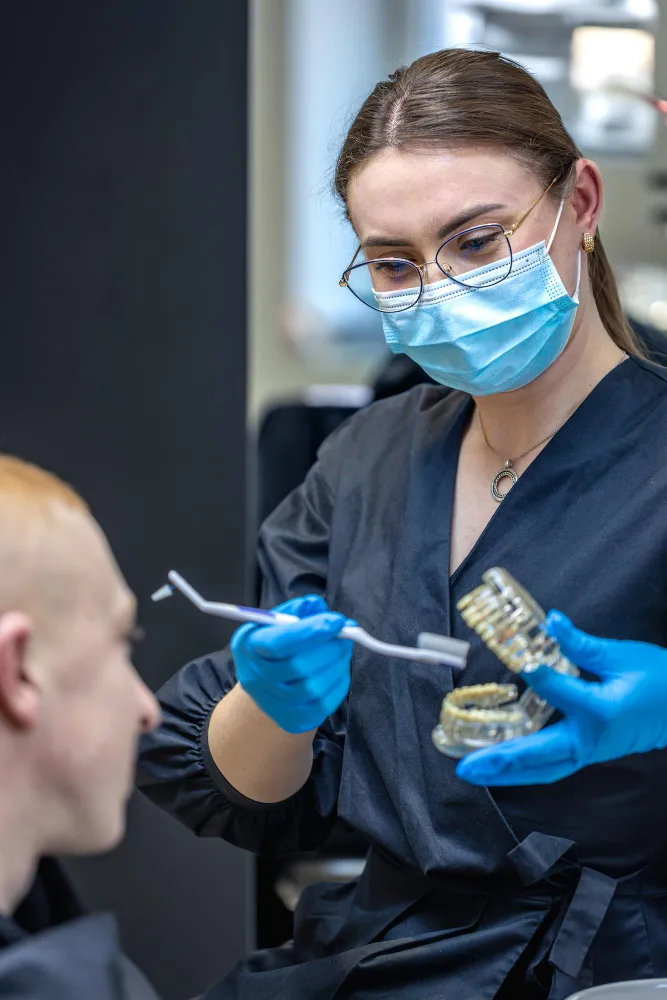
How Does the Onlay Procedure Work?
Getting a restoration through the onlay procedure typically takes two visits. Here is what to expect at each stage.
First Visit: Diagnosis and Preparation
Your dentist evaluates the damage and numbs the area with local anesthesia. The dentist removes any decayed or failed cavity-filling material. The dentist takes an impression, either with a putty-like material or a digital scan, and sends it to a lab. A temporary piece protects the prepared surface until the permanent one is ready.
How Onlays Are Designed
The lab uses your impression or digital scan to mill or cast the piece to exact tolerances, the same process behind lab-fabricated crowns versus same-day options. Modern dental onlays match your bite geometry and cover only the affected cusps. This precision fit is one reason they last longer than standard direct fillings.
Second Visit
The temporary comes off, the surface is cleaned, and the permanent piece is checked for fit and bite alignment. Once confirmed, we bond and polish it. Most patients leave with no more than mild sensitivity for a few days.
How Long Does an Onlay Take?
Plan on about an hour for the preparation appointment, from anesthesia through placing the temporary. Lab fabrication then runs roughly two to three weeks, though practices with in-house milling can compress that.
The second visit is shorter. Most of that time goes to checking fit and bite alignment before bonding, since the piece itself is already finished. Start to finish, onlay treatment usually spans about three weeks across two appointments.
Caring for Your Temporary Onlay
The temporary is not built to last. It holds the shape and shields exposed dentin for two or three weeks, and it loosens more easily than the finished piece. A few habits keep it seated:
- Wait until the anesthesia fully wears off before eating so you don’t bite a numb cheek or lip; the same post-filling eating guidelines apply here.
- Skip sticky and hard foods on that side: gum, caramel, nuts, hard candy, and ice.
- Floss gently, and pull the floss out sideways rather than snapping it upward, which can lift the temporary filling.
- Brush the area softly twice a day. It still needs cleaning, just with a lighter hand.
- Rinse with warm salt water if the gum around it feels tender.
Call your dentist if the temporary cracks or comes off. Leaving the prepared surface exposed invites sensitivity, and neighboring teeth can drift just enough to affect how the permanent piece seats. Mild cold sensitivity during this stretch is normal. Sharp pain when you bite down is not.
When Might You Need a Dental Onlay?
A tooth onlay is likely the right call when:
- Decay is too extensive for a filling, but the remaining structure is still sound.
- An old filling has cracked or worn out, and the surrounding area is intact.
- A cusp is cracked, but the roots and surrounding structure are healthy. If the crack runs deeper, dentists have a wider range of options for cracked teeth.
- You want a tooth-colored result on a back molar that shows when you smile.
Back molars are the most common candidates. Because they absorb the most chewing force, they benefit from the added coverage without the aggressive preparation a crown requires.
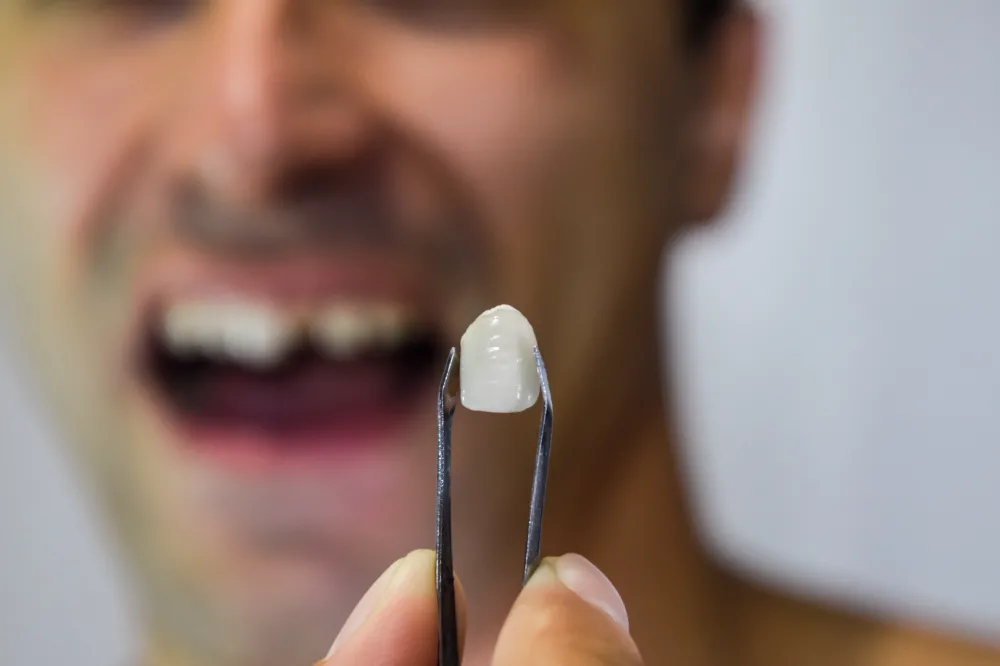
What Are Dental Onlays Made Of?
The material you choose affects appearance, strength, longevity, and cost. Here is how the three main options compare.
| Material | Appearance | Typical Lifespan | Strength | Best Use |
|---|---|---|---|---|
| Porcelain | Tooth-colored, stain-resistant | 15+ years | High | Visible teeth, front-tooth onlays |
| Composite Resin | Tooth-colored, blends naturally | 5–7 years | Moderate | Smaller repairs, budget-conscious cases |
| Gold | Metallic, not tooth-colored | 15–30 years | Very high | Molar onlays, heavy bite pressure |
Gold is the most durable choice and the best fit for molar onlays, where chewing forces are greatest. According to Cleveland Clinic, gold restorations can last up to 30 years in some cases. If you want the full picture on how it holds up, gold fillings and their safety are worth reading about.
Porcelain matches your natural shade and resists staining, the same property that makes it a popular choice for porcelain veneers in NYC. It’s the most common dental onlay material for anything that shows when you smile.
Composite resin costs less and works well for smaller repairs, but it does not last as long as the other two. It is also used in dental bonding, which is worth considering if the damage is minor enough that full coverage isn’t necessary.
How Long Do Onlays Last?
With routine care, most restorations last 10 to 15 years. Gold can reach 30 years. The material you choose and how well you maintain it are the main factors.
To get the most out of your restoration:
- Avoid chewing ice or hard objects, as they stress the bond.
- Brush twice daily and floss around the restored area to prevent decay at the margins.
- Schedule a routine cleaning every six months so we can catch any wear early.
How Much Do Dental Onlays Cost?
Nationally, dental onlay costs run $350 to $1,500 per tooth without insurance, with the higher end typical of major metro practices like New York, where dental costs run higher across the board. At Smile Lab, the fee is $1,950, which reflects the NYC market, precision lab fabrication, two appointments, and a five-year warranty.
Patients often ask how much does an onlay costs compared with a crown. Dental crown costs in NYC land in a similar range at most Manhattan practices, so the deciding factor is usually how much healthy structure you keep, not the invoice.
| Restoration | How much it covers | Typical lifespan | Chair time | Fee |
|---|---|---|---|---|
| Filling (1 surface) | Decay inside the tooth only | 5–10 years | 40 mins, 1 visit | $300 |
| Filling (3 surface) | Larger decay, still within the walls | 5–10 years | 1 hr, 1 visit | $400 |
| Onlay | Chewing surface plus one or more cusps | 10–15 years (gold up to 30) | 1 hr prep, 2 visits | $1,950 |
| Crown | Entire visible tooth above the gumline | 10–15 years | 1 hr prep + 1 hr delivery, 2 visits | $1,950 |
Fees shown are out-of-pocket without insurance. Most PPO plans cover a percentage of restorative work.
The main factors that move the price:
- Material: Gold tends to cost more than porcelain; composite resin is generally the most affordable.
- Position: Molar cases require more chair time and lab precision than front-tooth work.
- Geography: Practices in major metro areas typically charge more than suburban or rural offices.
Many PPO plans classify this as a major restorative service and cover a percentage of the fee. Without coverage, Cherry offers 0% financing.
Is a Dental Onlay Right for You?
Is a Dental Onlay Right for You?
Onlay treatment is a strong fit if you want to avoid the more aggressive prep a crown requires, still have enough healthy structure remaining, and have moderate rather than severe damage.
You may not be a candidate if the remaining structure is too compromised to support a bonded restoration, or if decay has reached the root, the kind of damage an endodontist typically treats. In those cases, a root canal or a full dental crown is likely the next step.
Onlay vs. Crown: What Is the Difference?
Both are lab-fabricated and bonded in place, but they cover different amounts of structure. The onlay crown decision usually comes down to one question: how much healthy enamel has to go?
A dental crown caps the entire visible portion above the gumline. Placing one means removing a fair amount of sound enamel from all sides. That enamel does not grow back. For how long crowns hold up and what affects their lifespan, see how long dental crowns last.
An onlay reaches only as far as the compromised cusps. Far less sound enamel comes off. If the side walls of your molar are still intact, this option preserves them. Full coverage would take them regardless.
The practical rule: if the cusp is damaged but the walls are healthy, the conservative choice wins. If decay or fracture has compromised the walls too, full coverage is the better call. And if the damage is mostly cosmetic rather than structural, veneers and crowns can fix it.
Understanding Dental Inlays
Inlays are a more conservative restoration used when decay sits within the grooves and does not reach the cusps. Both belong to the family of indirect restorations, made outside the mouth and bonded in afterward.
An inlay on tooth surfaces sits entirely inside the grooves between the cusps. An onlay extends out over the cusp itself. Both preserve more natural structure than a crown would.
The Dental Inlay Onlay Procedure: What Actually Differs
The dental inlay onlay procedure follows the same two-visit sequence: prepare and scan, then bond the finished piece at the second appointment. The difference sits in the preparation.
An inlay only needs the decayed groove cleared, so the prep is shallower, and the finished piece is smaller. An onlay requires reducing the damaged cusp so the restoration can sit over it without raising your bite. That extra step is why onlays take a bit more preparation time than inlays.
If you are not sure which one applies to your situation, a quick exam is the only reliable way to find out.
Why Choose Smile Lab for Onlays
The Union Square practice focuses on preserving natural structure wherever possible.
Led by Dr. Waise Ebrahimi, a UCSF-trained DDS, Fellow of the American Endodontic Society, ADA member, and Kois Center-trained clinician, the practice treats every restorative case with a focus on long-term stability rather than the quickest fix.
The practice is open seven days a week, making it easy to book around your schedule.
Frequently Asked Questions
How painful is the onlay procedure?
The appointment itself is not painful. Local anesthesia numbs the area before any work begins. You may feel mild sensitivity for a few days after each visit, particularly to temperature. That usually resolves on its own. If you have real anxiety around any procedure, sedation options are available.
Can an onlay fall out?
It can happen, though it is uncommon. Bond failure is more likely if there is decay at the margin, the fit isn’t precise, or you grind heavily at night. A well-fitted piece bonded to a clean surface should stay put for many years.
Is a dental onlay the same as a tooth overlay?
In everyday use, yes. Tooth overlay and dental overlay are informal terms for the same restoration. Clinically, onlay is the accepted term; overlay sometimes describes a version that covers all cusps. If a treatment plan uses either term, ask which cusps get covered.
What is a dental onlay front teeth treatment like?
Front cases are less common since those absorb less chewing force, but they do happen. Porcelain is almost always the material of choice there because it closely matches surrounding enamel.
What does an onlay look like before and after?
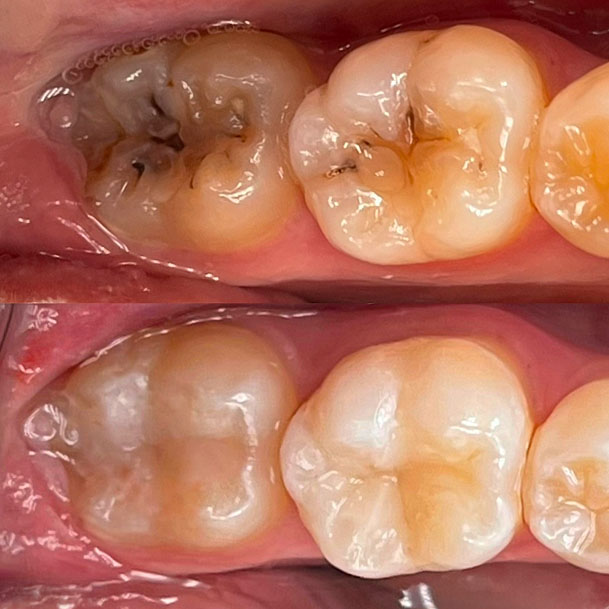
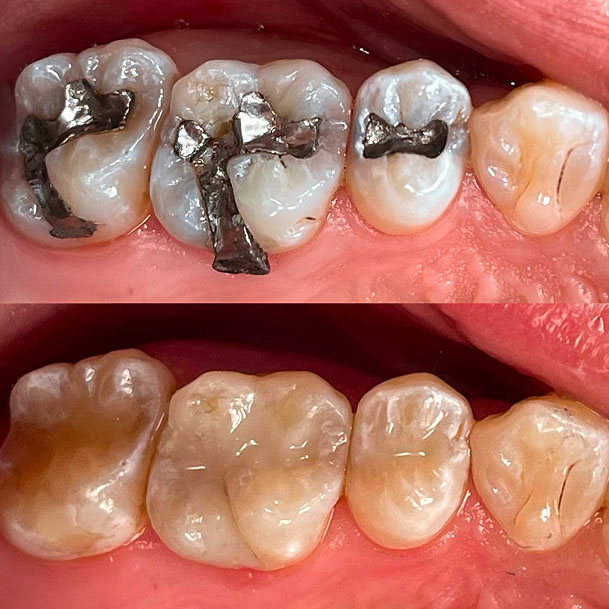
Before, you typically see a darkened or broken cusp, often beside an old silver filling. After, the chewing surface is rebuilt to its original shape and height. With porcelain, the repair is hard to spot. Gold stays visible, but it is placed where it rarely shows.
What is an onlay in dentistry, specifically for molars?
A molar onlay is the most common application of this restoration. Molars take the greatest bite load, so when a cusp fractures or decay spreads across the chewing surface, this restores full function without removing the healthy walls.
Does insurance cover onlays?
Coverage varies by carrier, and some classify the work as basic rather than major restorative, which changes your share. What you pay depends on your remaining annual maximum and whether you’ve met your deductible. Ask your office to submit a pre-treatment estimate so you see the number before you commit.>
Call now to Schedule Your Appointment
At Smile Lab, you will receive experienced & professional dental implant services in a supportive
and high-tech environment, ensuring you get the best care possible.
Or
Complete The Form Below
Final Thoughts
An onlay is a precise, conservative option for a molar with too much damage for a filling but not enough to need full coverage. You keep more natural structure, get a lab-fabricated fit stronger than a hand-packed filling, and choose a material that matches your priorities, whether that is longevity, appearance, or cost.