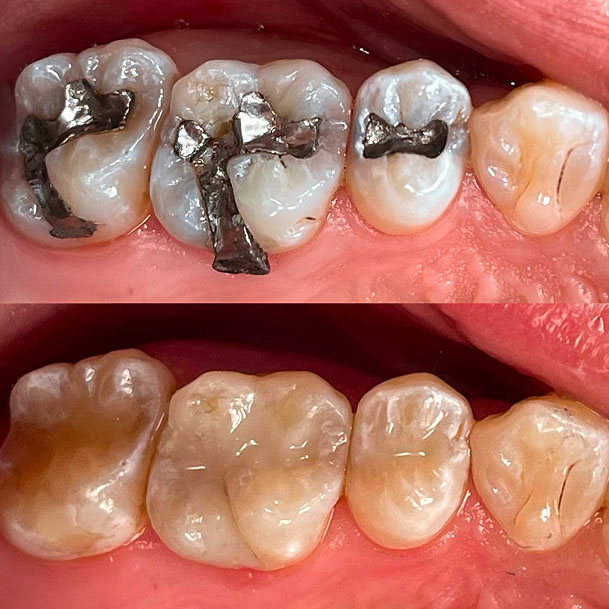

This guide explains what a reinfected canal looks like, when infected root canal extraction may be needed, what recovery involves, what it typically costs, and what other options can help you avoid tooth removal.
Reviewed by Dr. Ehsan Farrokh, Smile Lab Manhattan.
Key Takeaways
- A previously treated tooth does not always need extraction. Retreatment or an apicoectomy may save it if enough healthy structure remains.
- Removal is more likely when the tooth is cracked, loose, severely decayed, repeatedly reinfected, or unable to support a crown.
- Symptoms such as swelling, worsening pain, fever, drainage, or a gum bump should be evaluated promptly because infection can spread beyond the tooth.
- Treatment depends on X-rays, tooth stability, bone support, infection location, and whether the restoration can last long term.
- Recovery usually starts with 24 hours of socket protection, followed by several days of soreness and about 1 to 2 weeks of gum healing.
- Nationally, removing a previously treated tooth typically ranges from about $150 to $650, with molars, surgical cases, sedation, and replacement adding to the total.
What is a Root Canal Infection?
A canal infection happens when bacteria remain inside a treated tooth or return after therapy. The affected area may involve the tooth’s canals, the root tip, or the surrounding bone and gum tissue.
Endodontic treatment is usually done when decay, injury, or infection reaches the pulp, the soft inner tissue that contains nerves and blood vessels. During the procedure, the dentist removes the infected pulp, cleans the inside, seals the space, and restores it with a filling or a dental crown when it needs extra strength. Under normal conditions, endodontic therapy does get rid of the infection by removing the bacterial source and sealing off the canals.
Mayo Clinic describes this treatment as a way to repair and save a badly damaged or infected tooth rather than remove it. Source: Mayo Clinic.
So can a root canal tooth get infected again? Yes. Bacteria can survive or return, and reinfection may appear months or even years after the original therapy.
Common reasons include:
- A canal that was missed during the original treatment
- A new cavity around the crown or filling
- A cracked tooth or cracked restoration
- A loose crown that allows bacteria to enter
- Deep decay from a rotten tooth that returns near the treated area
- Complex anatomy that was difficult to clean fully
If the treated tooth becomes infected again, the goal is to stop the infection while saving as much natural tooth as possible.
How Long After the Root Canal Treatment Can an Infection Occur?
Reinfection can appear soon after treatment if bacteria were not fully removed. It can also appear years later if the crown leaks, a fracture develops, or new decay forms near the treated area.
Some discomfort after endodontic therapy is normal for a few days. Pain that gets worse, swelling, fever, drainage, or a pimple on the gum should be checked by a dentist.
If symptoms continue beyond 1 to 2 weeks or suddenly return after the area feels normal, the site may need new imaging and evaluation.
What Happens if a Root Canal Becomes Infected After the Procedure?
Your dentist typically starts by taking X-rays or a 3D scan to locate the source, then discusses options such as retreatment, apicoectomy, or extraction based on how much healthy structure remains and where the bacteria are sitting.
Prompt care matters because a lingering infection can travel into the jawbone, sinus, or nearby tissues. Severe pain, lingering sensitivity, swelling, or an abscess may require emergency root canal treatment if the tooth is still restorable.
What Causes an Infected Root Canal?
Most treated teeth heal well. When infection returns, it usually has a structural or bacterial cause.
A dentist will usually check for:
- Recurrent decay around the filling or crown
- A loose, broken, or leaking restoration
- A fracture that reaches below the gumline
- Infection under the root canal at the root tip
- Bone loss around the affected tooth
- A canal that was too narrow or curved to clean fully, which is common in molar infected root canal extraction cases where multiple curved canals can trap bacteria
- Delayed crown placement after the original therapy
An untreated infection can spread beyond the tooth, so watch for worsening pain, swelling, fever, or drainage.
Improve your oral health today!
Stop waiting! Call now to schedule your Root Canal at Smile Lab Manhattan
Does an Infected Root Canal Need to be Extracted?
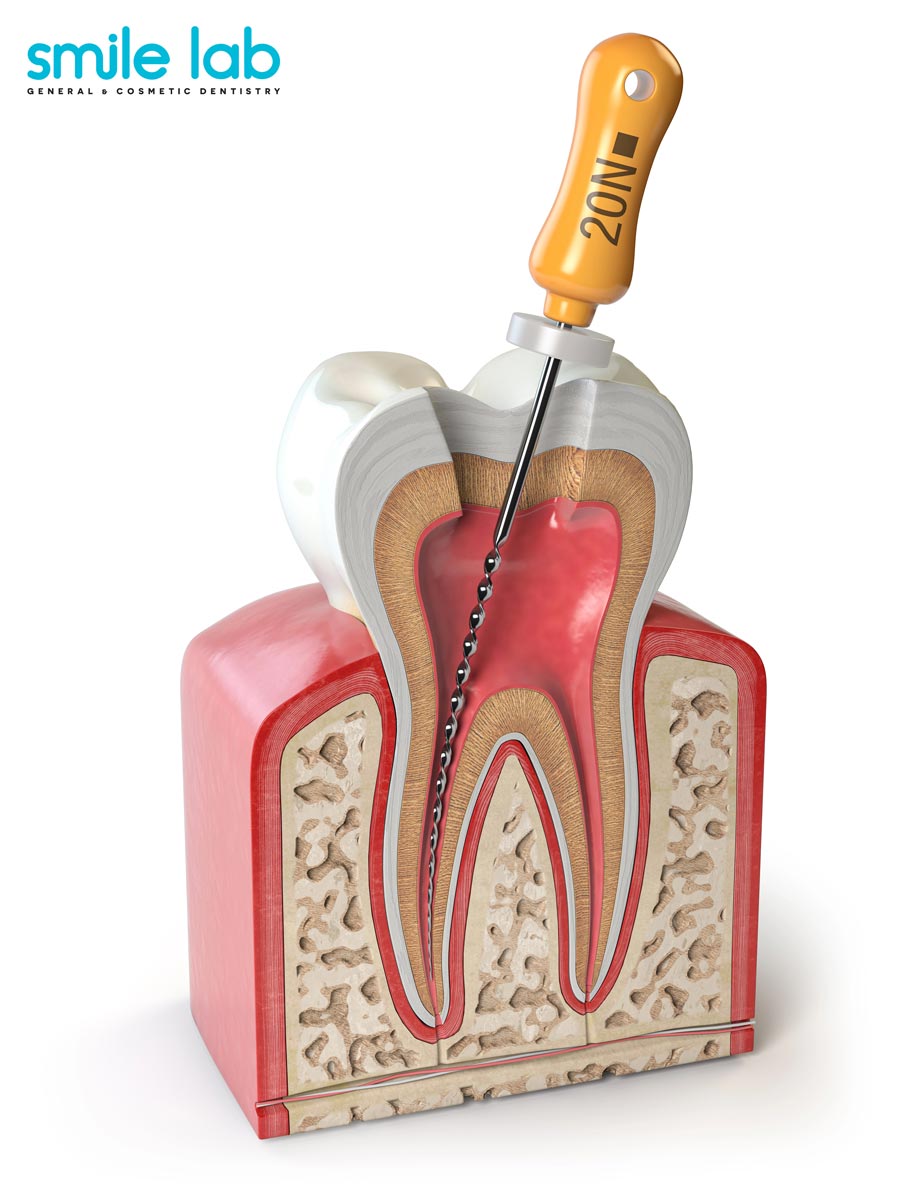
An infected root canal does not always need removal. The first step is usually to decide whether the treated tooth can still be saved. How to treat an infected root canal depends on how much healthy structure remains and where the bacteria are located.
Your dentist may recommend root canal retreatment if the tooth has enough healthy structure, the roots are stable, and the canals can be cleaned and sealed again.
If the infection is mainly around the root tip, an apicoectomy may be considered. During this procedure, the endodontist removes the end of the root and the infected tissue around it while keeping the rest of the tooth in place.
If neither option can stop the infection, or if the tooth is too damaged, your dentist may recommend tooth extraction. This can prevent bacteria from spreading and allow the area to heal before replacement.

When Can an Infected Tooth Be Saved?
A treated tooth may still be saved when the root is stable, and the remaining structure can support a long-term restoration. In many cases, eliminating infection without extraction is possible through retreatment or apical surgery.
Saving the tooth may be possible if:
- The crown or filling can be replaced
- The infection is limited to the canals or root tip
- There is enough tooth structure above the gumline
- The tooth is not split vertically
- Bone support is still adequate
- The patient can complete the recommended restoration
In these cases, retreatment or apical surgery may be a better first option than removal.
American Association of Endodontists explains that saving the natural tooth can help avoid added restorative procedures such as implants, bridges, bone grafts, or sinus lifts.
When Is Extraction Needed?
Removing a treated tooth may be necessary when it cannot be predictably repaired.
Your dentist may recommend removal if:
- The tooth has a vertical root fracture
- The infection keeps returning after prior treatment
- There is severe bone loss around the area
- The tooth is loose
- Decay extends too far below the gumline
- The remaining structure cannot hold a crown
- The infection is spreading into nearby tissues
- Repeated abscesses are forming, such as a tooth abscess on a root canal tooth
This decision should be based on an exam and X-rays. In some cases, a 3D scan may help show cracks, bone loss, or infection around the root.
Retreatment vs Apicoectomy vs Extraction
The best infected root canal treatment depends on the tooth’s condition, your bite, bone support, and long-term oral health goals.
| Treatment option | When it may be used | Main goal |
|---|---|---|
| Retreatment | The tooth has enough structure, but bacteria remain or return inside the canals | Reclean and reseal the treated tooth |
| Apicoectomy | The infection is mainly around the root tip, and the rest of the tooth is stable | Remove infected tissue near the root end while keeping the tooth |
| Extraction | The tooth is cracked, loose, severely decayed, or cannot support a restoration | Remove the infected tooth and protect nearby tissues |
| Replacement after extraction | The missing tooth affects chewing, spacing, bite, and appearance | Restore function with an implant, bridge, partial denture, or temporary tooth |
Retreatment typically runs $1,600 for front teeth, $1,800 for premolars, and $2,000 for molars, reflecting the added complexity of reopening and recleaning the canals compared with a first-time root canal.
Retreatment is often considered first when the inside of the tooth can be cleaned again. The dentist reopens the area, removes the old filling material, cleans the canals, seals them, and restores the tooth.
An apicoectomy may be used when the infection is near the root tip, and the rest of the tooth is still strong. This option can help preserve a treated tooth when standard retreatment is not enough.
Extraction is used when saving the tooth is no longer the healthiest choice. After removal, your dentist can discuss replacement options such as a dental implant, bridge, or partial denture.
Patients comparing restoration costs may also want to review factors that affect the cost of a dental crown if the treatment plan includes a final crown.
Root Canal Infection Symptoms
Symptoms can resemble those of other dental problems. A dentist needs to examine the area to confirm the cause.
Common signs include:
- Increasing tooth pain
- Pain when biting or chewing
- Swelling in the gums, cheek, or jaw
- A pimple or bump on the gum, which can indicate a tooth abscess on a root canal tooth
- Bad taste or drainage in the mouth
- Lingering sensitivity to heat or cold
- Tooth discoloration
- Tender or swollen lymph nodes
- Fever or fatigue
If your symptoms match these signs, do not try to remove canal material or treat the infection at home. A dentist needs to find the source and decide whether the tooth can be saved.
Is an Infected Root Canal Dangerous?
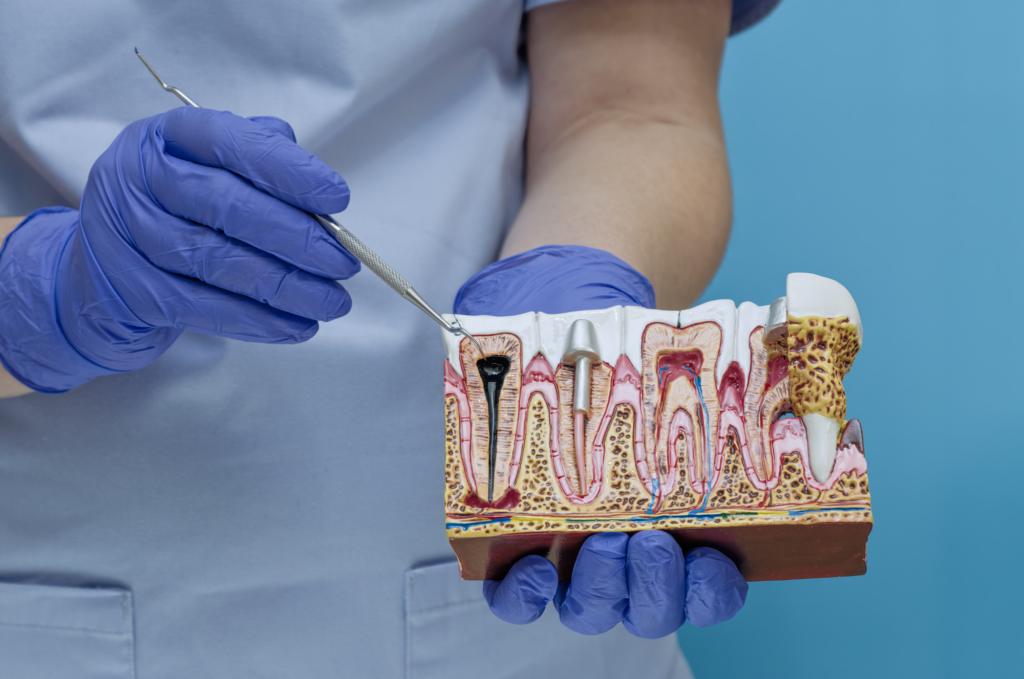
A reinfected canal can become dangerous if it is ignored. Bacteria may spread beyond the tooth and affect the surrounding gum, jawbone, sinus, or facial tissues.
Seek prompt care if you have swelling, fever, severe pain, difficulty opening your mouth, or trouble swallowing. An emergency dentist can evaluate whether same-day treatment is needed.
Early care gives you more options. It may also reduce the chance that infected root canal removal becomes the only practical choice.
Can You Remove a Root Canal or Pull a Tooth After One?
Patients often ask, “Can you remove a root canal?” or “Can you pull a tooth after a root canal?” During retreatment, the dentist can remove the filling material inside the canals, but that is different from removing the tooth itself.
During retreatment, the dentist removes the old material, cleans the canals again, and seals them. This may save the tooth if the surrounding structure is still strong.
If the tooth cannot be saved, extraction removes it completely from the socket. Complex cases may require oral surgery when the tooth is broken, deeply infected, or difficult to remove.
Who Should Perform the Extraction?
Not every case needs a specialist. A general dentist can typically pull a previously treated tooth when it is fully visible above the gumline, has straight roots, and can be lifted out intact under local anesthesia.
Surgical or specialist care is often needed when:
- The tooth is broken at or below the gumline
- Roots are curved, fused to bone, or unusually long
- The infection sits close to the sinus or a major nerve
- The patient has bleeding disorders, heart conditions, or takes medications that affect healing
- Sedation is needed for anxiety or a lengthy procedure
Your dentist will usually make this call after reviewing X-rays or a 3D scan and may refer you to an oral surgeon or endodontist if the case is complex.
What Happens During an Infected Tooth Extraction?
If removal is needed, your dentist will first review your symptoms, take X-rays, and check the surrounding bone and gum tissue. Here is what a typical infected root canal extraction involves:
- Numbing the area. Most cases use local anesthesia. IV sedation or general anesthesia may be offered for surgical extractions or for patients with dental anxiety.
- Loosening and removing the tooth. The dentist gently frees the tooth from the socket. If removal is difficult, the dentist may section the tooth to lift it out in smaller pieces.
- Cleaning the socket. The area is irrigated to flush out any remaining infected tissue and bacteria.
- Forming a protective clot. A blood clot develops in the empty socket to shield the underlying bone as healing begins.
- Aftercare planning. The dentist places gauze, gives aftercare instructions, and prescribes medication based on the infection and your health history.
Some patients may need a bone graft if they plan to replace the tooth with an implant later. This depends on the location, bone level, and treatment plan.
Recovery After Infected Root Canal Extraction
Most patients need to protect the area for the first 24 hours. Gum healing typically takes 1 to 2 weeks, while the socket continues to remodel underneath for several weeks after that.
Within the first 24 hours:
- Bite gently on gauze to control bleeding
- Apply ice in 20-minute intervals to reduce swelling
- Take pain medication as prescribed
- Rest and avoid strenuous activity
- Do not smoke, use straws, or rinse forcefully, since these can dislodge the protective clot
Days 2 through 7:
- Rinse gently with warm salt water after meals
- Eat soft foods such as yogurt, soup, mashed potatoes, and scrambled eggs
- Finish any prescribed antibiotics
- Brush carefully around the extraction site
- Reintroduce firmer foods gradually as comfort allows
Root Canal Tooth Extraction Complications to Watch For
Call your dentist if you notice any of these warning signs:
- Pain that gets sharper 2 to 4 days after removal, which can signal dry socket (loss of the protective clot)
- Bleeding that does not slow within a few hours
- Swelling that increases after 48 hours
- Fever, pus, or a bad taste that does not improve
- Numbness that lasts beyond the expected anesthesia window
Dry socket is the most common complication, especially with lower molars, and is treated in-office with a medicated dressing. If cost is a factor, this guide to emergency dental care costs explains what can affect urgent-visit pricing.
Root Canal Removal Cost
Root canal removal cost is different from retreatment cost. Retreatment reopens and reseals the existing canals, while removal takes the tooth out entirely, so the two are priced separately.
Retreatment pricing is covered above. Extraction of a tooth that cannot be saved is typically priced lower, with cost depending on tooth location, complexity, and whether sedation or a bone graft is needed.
- Simple extraction of a previously treated tooth: around $150 to $300
- Surgical extraction (broken, curved roots, or bone removal): around $250 to $650
- Sedation add-on: around $150 to $500 depending on the type used
- Bone graft at the time of removal: around $300 to $800
Replacement (implant, bridge, or partial denture): additional cost that depends on the option chosen
The figures above reflect typical national ranges and should be confirmed with the office; Smile Lab’s confirmed fees are listed for retreatment above.
Dental insurance often covers a portion of medically necessary extractions. Some offices offer bundled pricing when the extraction, bone graft, and eventual implant are planned together.
Patients who prefer not to pay the full cost upfront can apply for a payment plan through Cherry financing.
What Happens After Tooth Removal?
After removing a previously treated tooth, the next step is deciding whether to fill the missing space.
Replacement matters because nearby teeth can shift, the bite can change, and bone in the area can shrink over time. The right option depends on your health, budget, bone level, and the missing tooth’s location.
Common replacement options include dental implants, bridges, removable partial dentures, or a temporary tooth during healing.
Not every extracted tooth needs the same replacement plan. Your dentist can explain the timing after the infection clears and the area starts healing.
What Our Patients Say

11/02/2015


11/02/2015
11/02/2015
Visit Smile Lab Today for your Root Canal Infection Consultation

Root canals are among the safest dental procedures, but only when experienced endodontists perform them. Otherwise, the risk of reinfection right after the procedure becomes real, and if it is not caught early, that new infection can reach the jawbone and cause serious damage.
Fortunately, the resident endodontist at Smile Lab Manhattan, NY, Dr. Ehsan Farrokh, has more than a decade of experience as a root canal dentist. He has treated some of the most complex root canals and left his patients fully satisfied, most of whom have stayed with Smile Lab, NYC, ever since.
No matter the stage of the infection, Dr. Farrokh and his team can recommend a treatment path suited to the tooth. Book your first consultation call with Dr. Farrokh and his team at our Union Square office. Remember, the first one is on us.
Call now to Schedule Your Appointment
At Smile Lab, you will receive experienced & professional dental implant services in a supportive
and high-tech environment, ensuring you get the best care possible.