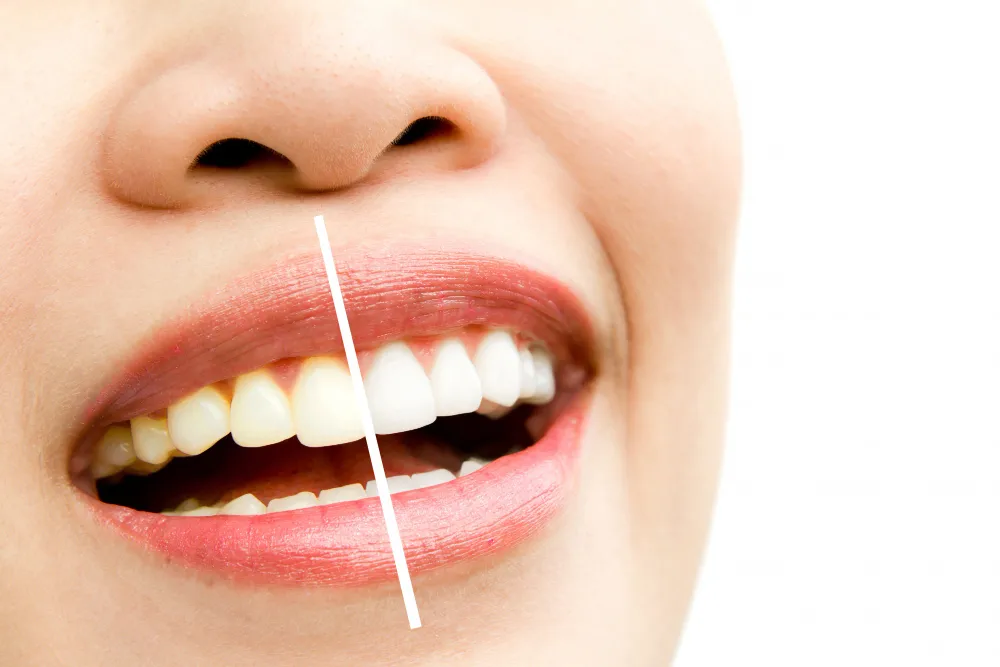
A study published in NCBI identifies tooth discoloration as a common consequence of coffee, red wine, and tobacco. But the type of stain determines whether home remedies will help or simply waste your time. This guide covers both, so you know exactly what to try and when to stop.
Key Takeaways
- Brown stains on the enamel surface respond to natural home care; stains that originate within the tooth structure (intrinsic stains) do not and require professional treatment to address safely.
- Baking soda and stain-control toothpastes are the best-researched at-home options, but both carry a risk of enamel abrasion with frequent use; baking soda should be used no more than 2 to 3 times per week, and toothpaste with sodium hexametaphosphate works best with gentle, circular brushing pressure.
- Several popular natural remedies, including lemon juice, apple cider vinegar, activated charcoal, and salt scrubs, damage enamel over time and are more likely to deepen discoloration than remove it.
- Staining near the gumline typically signals tartar buildup or early gum disease rather than surface pigment, and home care alone will not clear it; a professional cleaning is usually required.
- If surface stains do not improve after 4 to 6 weeks of consistent home care, or if sensitivity, pitting, or gum changes appear alongside the discoloration, a clinical evaluation is the appropriate next step.
Different Types of Brown Stains and Their Causes
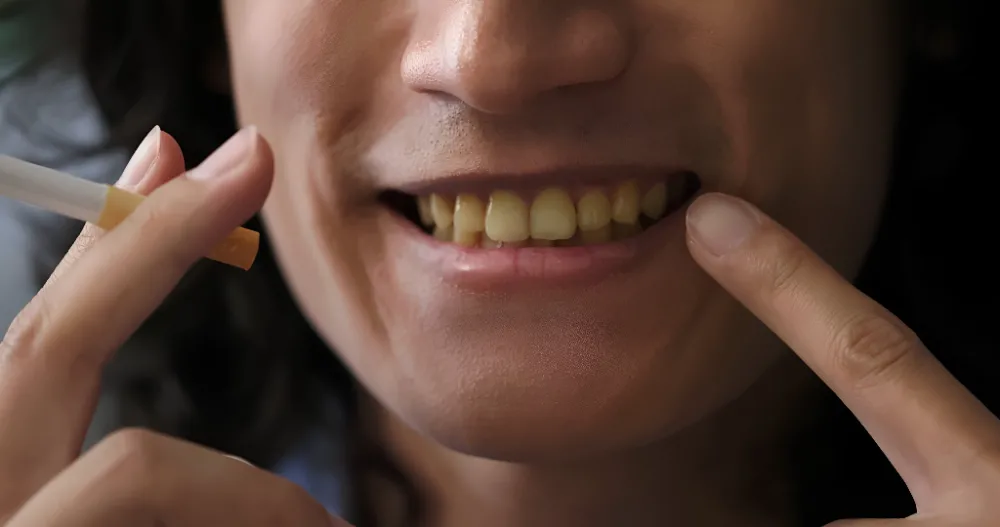
Identifying your stain type (sometimes called brown spots on teeth) is the first step toward choosing the right approach. Most discoloration falls into two categories.
1. Surface Stains (Extrinsic)
Surface stains sit on the enamel layer and respond to natural cleaning methods. They form when pigments from food and drinks bind to plaque proteins on the tooth surface. These stains can appear yellow, brown, or dark and may show up between teeth or on the backs of teeth, especially when plaque and tartar build up over time.
Common causes:
- Coffee, tea, and red wine
- Dark berries and sauces
- Tobacco use
- Poor brushing technique
- Dietary habits that allow pigment buildup
2. Deeper Stains (Intrinsic)
Intrinsic stains (also called deep stains) originate inside the tooth structure and do not respond to home remedies. They appear more persistent and often affect the dentin layer beneath the enamel.
Common causes:
- Enamel erosion from acids or aggressive brushing
- Certain medications taken during tooth development
- Excess fluoride exposure during childhood (fluorosis)
- Tooth trauma or injury
Natural methods do not remove intrinsic stains. If your discoloration appears grey or dark brown, or shows no improvement after several weeks of consistent care, that is a signal to book a professional evaluation.
Natural Ways to Remove Brown Stains from Teeth at Home

These methods work on surface-level staining and are among the most effective ways to get rid of stains without professional treatment. Each one below includes how often to use it safely.
1. Baking Soda and Hydrogen Peroxide Paste
Baking soda is a mild abrasive that scrubs pigment off the enamel surface. Hydrogen peroxide adds an oxidizing effect that breaks down stain compounds. Together, they are one of the most studied combinations for at-home teeth stain removal.
How to use it:
- Combine one teaspoon of baking soda with enough 3% hydrogen peroxide to form a paste
- Brush gently for 1 to 2 minutes, then rinse thoroughly
- Limit use to 2 to 3 times per week; daily use risks enamel wear and increased sensitivity
2. Brushing with Baking Soda Alone
For a simpler option, baking soda on its own still helps scrub away mild staining and plaque. It is a practical at-home teeth stain remover when you do not have peroxide available. This method also helps address brown stains between teeth when paired with consistent flossing.
How to use it:
- Wet your toothbrush and dip it in a small amount of baking soda
- Brush gently for two minutes using circular motions
- Rinse well afterward
3. Use a Stain-Control Toothpaste Daily
A 2024 study published in NCBI found that whitening toothpastes significantly outperformed standard options for removing coffee-related surface discoloration. The study found that sodium hexametaphosphate showed the strongest stain removal, though it was accompanied by higher abrasiveness; using gentle circular pressure while brushing reduces that risk.
Switching your daily toothpaste to a stain-control formula is one of the most consistent ways to keep surface discoloration from building up over time.
4. Oil Pulling with Coconut or Sesame Oil
Oil pulling is an Ayurvedic practice that reduces oral bacteria and plaque accumulation. Since plaque is the primary vehicle for pigment attachment to enamel, lower plaque levels lead to less staining over time.
How to do it:
- Swish one tablespoon of coconut or sesame oil for 10 to 15 minutes
- Spit into a trash bin (not the sink), rinse with water, then brush normally
- Use it alongside other stain removal methods; oil pulling alone will not whiten teeth, but it supports a cleaner mouth and helps reduce brown stains behind teeth.
5. Rinse with Water After Staining Foods and Drinks
Coffee and tea stains begin forming within minutes of contact, as pigments bind to enamel. Rinsing with water immediately after drinking dilutes these pigments before they set. This simple habit makes a noticeable difference over the course of weeks.
Also, wait 30 minutes before brushing after acidic drinks. Brushing on softened enamel accelerates erosion.
6. Crunchy Fruits and Vegetables
Apples, carrots, celery, and cucumbers work as natural teeth stain removers by physically scrubbing the enamel surface during chewing. They also stimulate saliva flow, which helps neutralize acids and wash away pigment particles before they bond to teeth.
7. Proper Brushing Technique
The way you brush matters more than how hard you brush. Aggressive pressure wears down enamel and exposes the darker dentin layer underneath, which can make teeth look more stained over time. Use a soft-bristle toothbrush with gentle circular motions for two full minutes, twice daily, the safest way to clean brown teeth without damaging enamel.
8.How to Remove Brown Stains Between Teeth and Near the Gums
Brown stains between teeth and brown stains near the gums usually come from tartar and trapped plaque that a regular toothbrush can’t reach, targeted cleaning matters more than which product you use.
- Use a water flosser daily to dislodge pigment-trapping plaque between teeth and along the gumline
- Follow with interdental brushes or floss picks for tight contact points a water flosser alone may miss
- Dip a flossable pick in a small amount of baking soda paste and run it gently between teeth 2-3 times per week
- If stains near the gums don’t lighten within 2-3 weeks of consistent flossing, it’s likely tartar rather than surface pigment, and only a professional cleaning removes it
Natural Remedies That Damage Enamel (Avoid These)
Some widely shared home remedies cause more harm than good. Before trying anything trending online, check this list.
Lemon juice or apple cider vinegar rinses: Both are acidic enough to erode enamel. Once enamel is gone, it does not grow back. Exposed dentin is darker and stains faster, often leaving brown teeth looking worse than before.
Activated charcoal powders: Daily charcoal scrubs abrade the enamel surface, creating microscopic grooves where stains accumulate more easily over time.
Strawberry and orange peel pastes: Often recommended online, but the malic and citric acid in these fruits sit below the critical pH threshold for enamel (5.5), meaning repeated application can erode the tooth surface over time rather than brighten it. If you use the strawberry-baking soda method occasionally, limit it strictly to once per week and do not leave it on longer than five minutes.
Unsupervised high-concentration peroxide: Over-the-counter products vary widely in peroxide concentration. Without clinical oversight, incorrect contact time or concentration can increase sensitivity and irritate gum tissue without delivering controlled whitening, which is why the timing around whitening strips matters as much as the product itself.
Salt scrubs: Salt particles are too coarse for tooth enamel. Repeated friction weakens the protective surface and lowers its resistance to discoloration.
The rule of thumb: if a natural remedy is acidic or mechanically abrasive beyond baking soda, it is more likely to worsen discoloration than improve it.
Daily Habits That Prevent and Reduce Brown Stains
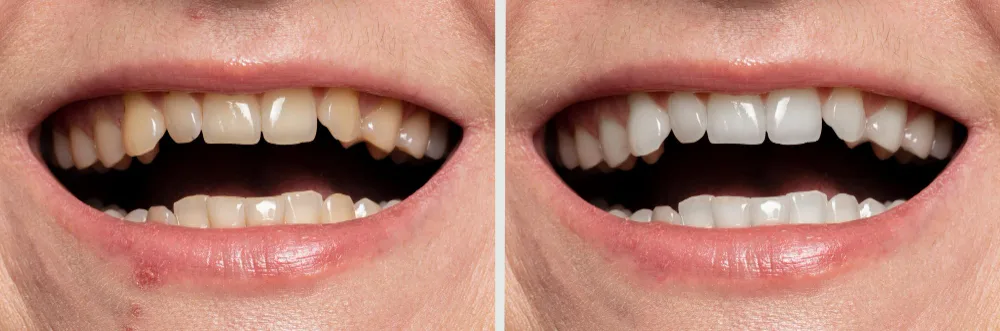
Natural remedies help to brighten your stained teeth. However, a few daily habits are also important to keep them shiny.
1. Good Oral Hygiene Really Matters
Brush your teeth twice and floss once a day for healthy, clean teeth. If you don’t brush and floss regularly, your teeth will start to develop plaque that, over time, turns into tartar.
Additionally, use fluoride toothpaste to strengthen your enamel and minimize tooth discoloration. Flossing is also crucial for those trying to prevent brown stains on the back of teeth that toothbrushes often miss.
2. Rinse After Staining Foods or Drinks
Drinks like coffee, tea, and red wine contain chromogens and tannins which cling to your teeth. Rinse your mouth with water right after drinking or eating. Also, wait 30 minutes before brushing to avoid brushing softened enamel.
3. Add More Crunchy Fruits and Vegetables
Eating raw, fiber-rich foods like apples, celery, and carrots can help clean your teeth naturally. They encourage saliva production, which helps wash away acids and keep your mouth fresh.
Additionally, chewing these foods can help reduce the amount of bacteria on your teeth which in turn helps prevent staining and decay.
When Natural Remedies Are Not Enough
Surface stains can improve with home care. Deeper staining will not respond, and continuing to try natural methods for intrinsic discoloration only risks enamel damage.
See a dentist if:
- Stains do not improve after 4 to 6 weeks of consistent home care
- Teeth feel sensitive or painful
- You notice pitting or dark brown spots that worsen
- Gums are swollen, bleeding, or receding
- You have brown stains on your teeth near the gums that are not responding to brushing
Staining in those locations often indicates tartar buildup or early gum disease, not surface pigment, so it is worth booking a visit in Union Square rather than continuing with home care.
Professional Treatments for Brown Tooth Stains
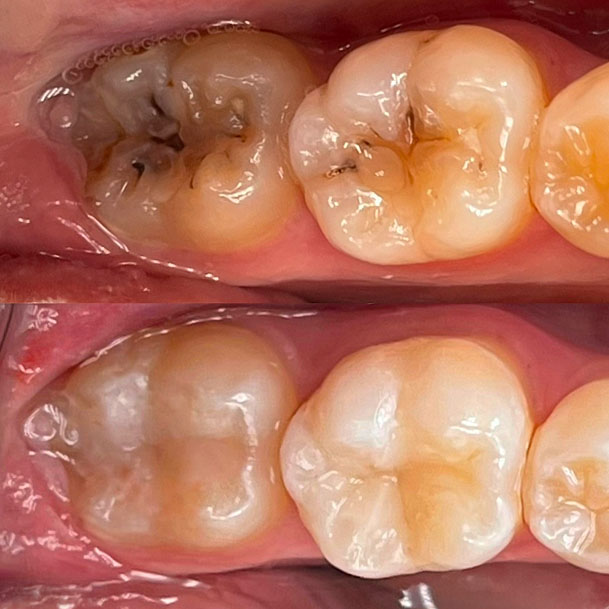
When home care reaches its limit, a clinical evaluation identifies exactly what type of staining you are dealing with and what treatment is appropriate. At Smile Lab, our team guides patients through options based on their specific stain type, enamel condition, and goals.
Professional cleaning and polishing: Removes hardened plaque and calculus that traps surface pigments. The polish step smooths the enamel surface, which slows future stain accumulation. This is the most effective first step for most patients with brown surface discoloration.
Air polishing for stubborn surface stains: Uses controlled pressure and fine particles to lift staining from coffee, tea, or tobacco without damaging enamel. Particularly effective for stains that resist standard cleaning.
In-office teeth whitening: Our teeth whitening treatment can make teeth 5 to 7 shades brighter and is typically completed in 2 hours. It targets deeper surface discoloration that home methods cannot reach, and because whitening can be done in a single day, it uses professionally regulated agents to minimize sensitivity.
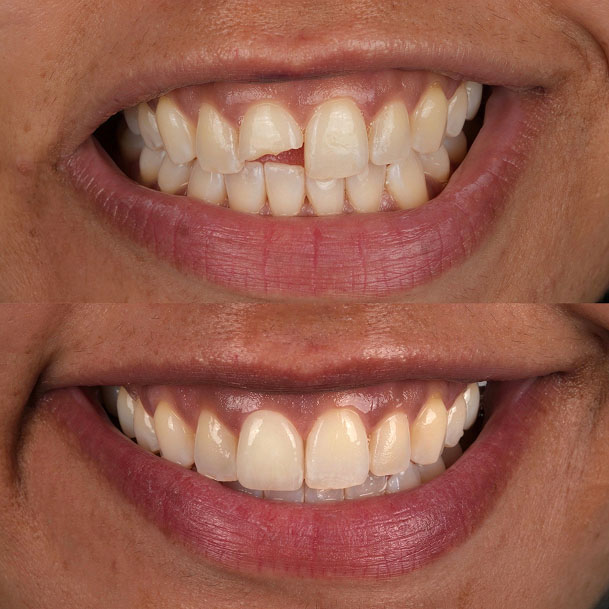
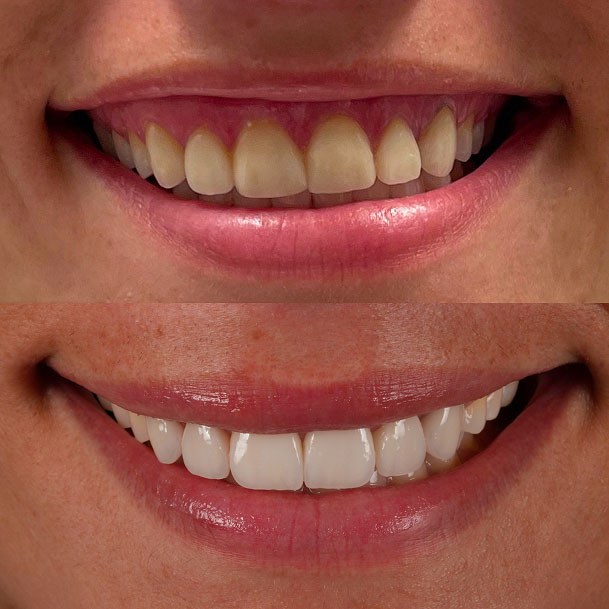
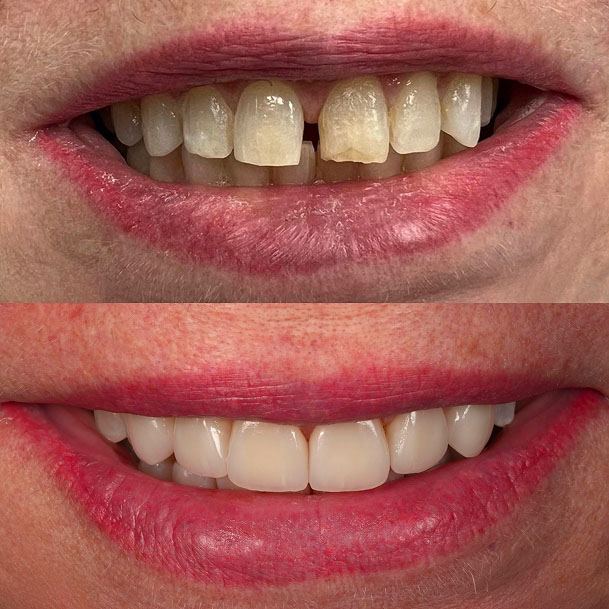
Porcelain veneers: For patients whose discoloration is intrinsic or whose enamel is significantly damaged, porcelain veneers cover the tooth surface entirely and restore a uniform, bright appearance. This is a longer-term cosmetic solution, not a first-line treatment.
Every case is different. The right approach depends on whether the discoloration is extrinsic, intrinsic, or due to an underlying issue such as early decay or gum disease. Whatever the cause, our team combines modern technology with a gentle, enamel-safe approach — the goal is a brighter smile without unnecessary risk to your teeth.
Frequently Asked Questions
Can brown stains on teeth be removed naturally?
Yes, surface stains from coffee, tea, tobacco, and plaque buildup often improve with baking soda, stain-control toothpaste, consistent flossing, and rinsing with water after meals. Natural methods do not work on intrinsic stains that are embedded within the tooth structure.
Why do brown stains keep coming back even after brushing?
Brown stains return when plaque is not fully removed during brushing, trapping new pigments from food and drinks. Inadequate flossing, enamel wear, and frequent coffee or tea intake all increase the rate of stain recurrence.
Does baking soda remove brown stains safely?
Baking soda is safe when used sparingly, two to three times per week maximum, with gentle pressure. Overuse or hard scrubbing can thin enamel and worsen discoloration over time.
How do I get rid of brown stains on teeth near the gums?
Staining near the gumline is often caused by tartar buildup rather than surface pigment alone. Home care can slow it, but a professional cleaning is usually needed to remove calcified deposits in that area.
Are brown stains a sign of tooth decay?
Not always, but they can be. Surface stains from diet and plaque are common and generally not a sign of decay. Dark spots that are pitted, tender, or associated with bleeding gums should be evaluated by a dentist.
When should I see a dentist for brown stains?
If staining does not improve after four to six weeks of consistent home care, or if it appears inside the tooth or is accompanied by sensitivity or gum changes, a clinical evaluation is the next step.
How to remove stains from teeth instantly?
You can’t fully remove stains instantly with natural methods. Baking soda and stain-control toothpaste require weeks of consistent use. For same-day results, professional cleaning and polishing or in-office whitening are the only options that work in a single visit
How to remove fluoride stains from teeth naturally?
Fluorosis stains generally can’t be removed naturally. They form inside the tooth (intrinsic), so natural remedies won’t lighten them. Cosmetic options like bonding or veneers are typically needed.
How to whiten teeth at home?
The natural methods in this guide (baking soda, stain-control toothpaste, and oil pulling) are effective ways to whiten teeth at home without professional treatment. For faster results, an at-home whitening kit with peroxide can be layered on top of these habits.
How to naturally whiten teeth?
To naturally whiten teeth, the same approach used for brown stains applies here: baking soda, stain-control toothpaste, and consistent oral hygiene lift surface pigment regardless of color. If you want to remove yellow stains from teeth naturally, follow the same routine: yellow discoloration from food, drinks, and plaque responds the same way brown surface stains do.
Written by Dr. Waise Ebrahimi, DDS (UCSF School of Dentistry). Dr. Ebrahimi is the founder of Smile Lab and has treated thousands of patients for cosmetic and general dental concerns in Manhattan.

11/02/2015


11/02/2015
11/02/2015