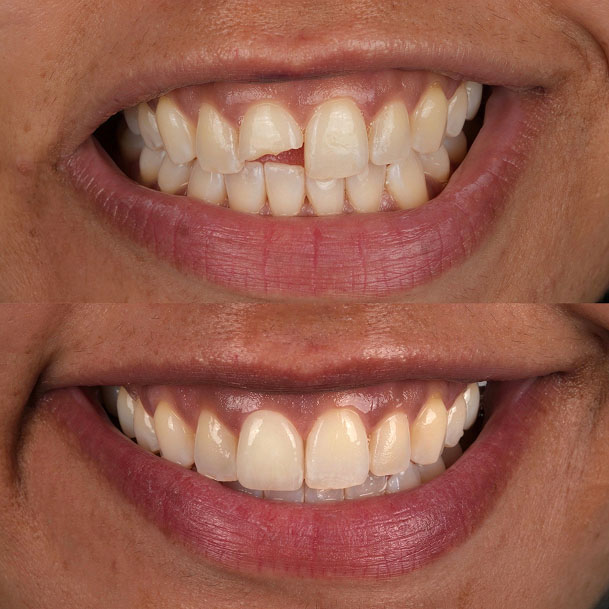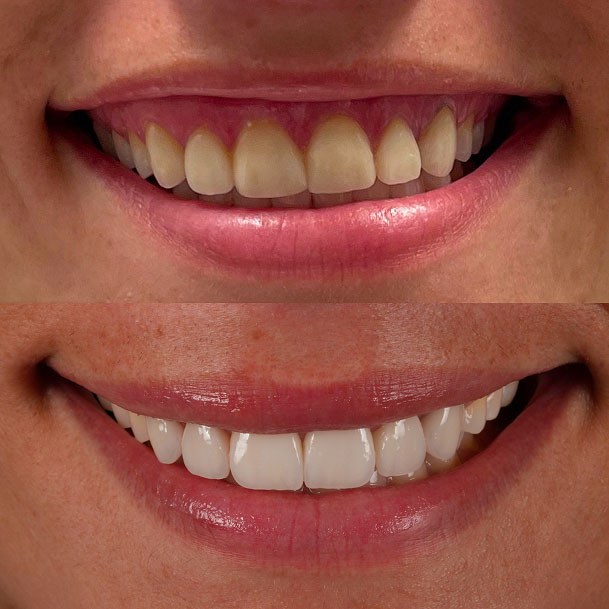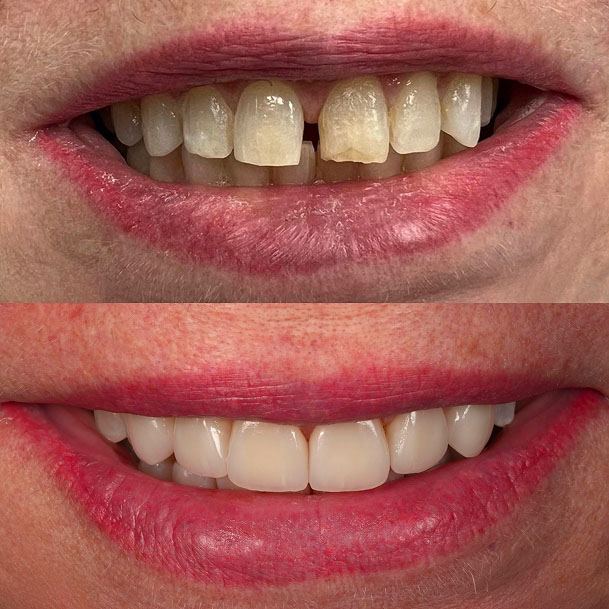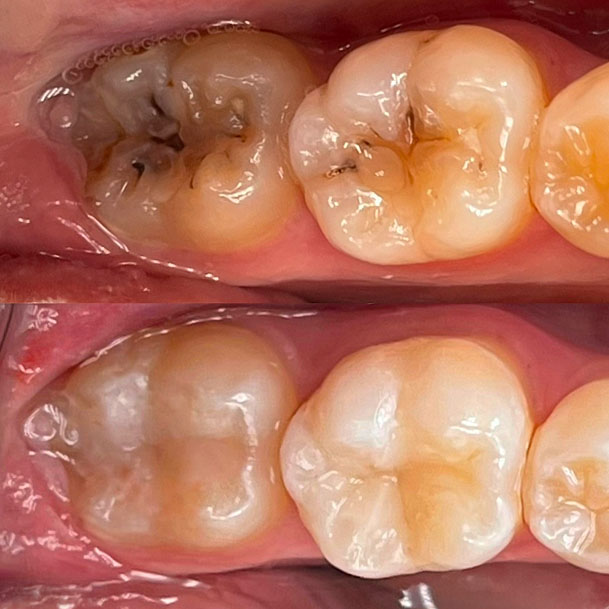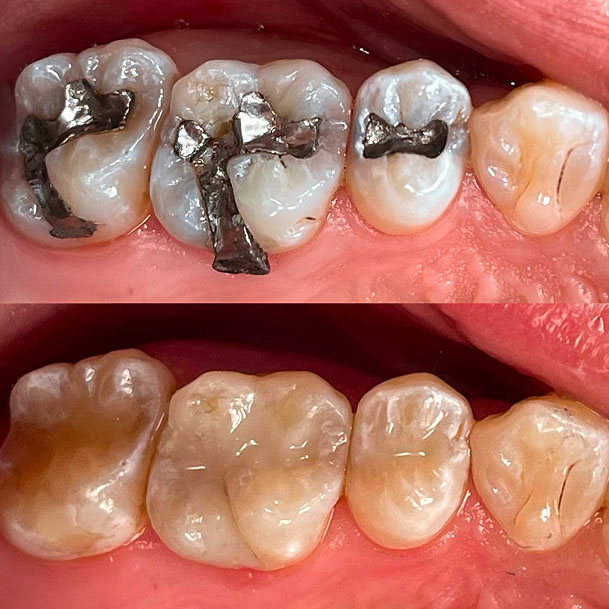

If you are asking, “How long does it take to fill a cavity?” a small, shallow spot on an easy-to-reach surface often takes 20 to 30 minutes. Deep decay or a back molar can run closer to a full hour.
How long does a cavity filling take when more than one tooth is involved? Two small repairs often fit into one visit. You may split several affected teeth across separate appointments for comfort and accuracy.
Filling Time by Size, Location, and Number of Teeth
Filling time depends on how deep the decay runs, where the tooth sits in your mouth, which material is selected, and whether more than one area needs care.
A small spot on a front tooth is easier to reach. Working on a back molar takes longer because the surface sits farther back and must withstand heavier chewing pressure.
How long does a small cavity filling take? Usually 20 to 30 minutes, since less tissue needs removing and the dentist can shape the restoration quickly. How long does it take to get a filling on a deep or awkwardly placed tooth? Plan for 45 to 60 minutes.
| Situation | Typical appointment time | What drives the time |
|---|---|---|
| Small, shallow cavity on a front tooth | 20 to 30 minutes | Easy access, little tissue to remove, quick shaping |
| Medium cavity on a premolar | 30 to 45 minutes | More decay removal and layering of material |
| Deep cavity on a back molar | 45 to 60 minutes | Harder to reach, more material, bite must handle chewing force |
| Cavity between two teeth | 45 to 60 minutes | A band or wedge is needed to rebuild the contact point |
| Two cavities in one visit | 40 to 90 minutes | One numbing period may cover both if they sit side by side |
| Four cavities in one visit | 80 minutes to 2 hours or more | Often split across two appointments to limit numbing |
| Lab-made inlay, onlay, or ceramic restoration | Two visits, 2 to 3 weeks apart | The restoration is fabricated outside the mouth |
These are general estimates, not guaranteed appointment lengths. Patients planning preventive care during the same visit can also learn when a cleaning and filling can be completed on the same day. If you’re curious about the cleaning portion alone, see how long a teeth cleaning takes.
A Smile Lab dentist can give you a more specific estimate after examining the affected area.

What Is a Cavity Filling and Why Is It Needed?
A cavity is a hole that forms after decay weakens and breaks down the outer structure of a tooth. Early damage may cause no symptoms, but a deeper problem can lead to sensitivity, pain, infection, or tooth loss. Diet also plays a role, and the link between sugar and cavities is one of the most common drivers of new decay.
To repair the damage, the dentist removes the decayed tissue and restores the open space with a durable material. The repair protects the remaining structure and lets you bite and chew normally.
How long does it take to fix a cavity once it’s found? For most single-tooth repairs, one appointment is enough. A cavity filling suits small to medium areas of decay, while a badly weakened tooth may need an inlay, onlay, crown, a root canal procedure, or another form of care.
Tooth decay affects children and adults throughout the United States. The CDC Oral Health Surveillance Report provides national estimates for decay across different age groups.
What Our Patients Say
EXCELLENT Based on 2276 reviews
 Posted on Google
 Jou Min Chen (Jumin)I've been taking all my treatments over here for over a year now and so far I'm pretty satisfiedPosted on Google
 nikhil keswaneyDr basseri was amazing he took into account my fiances anxitey i to account and performed the filling even after hours he definitely earned 2 permenant patients.Posted on Google
 AkusaBeautiful experience! For my first dental visit- I had a smooth experience. Everyone was super nice. From the dentist, to the receptionist… all of the above.My teeth feels amazing. Super patient and explains everything clearly. I recommend, and I will definitely be back!Posted on Google
 Brynden FosterThis team is so helpful and kind! I always feel like a VIP coming for my cleaning and I couldn’t recommend them more.Posted on Google
 bhanu dattastaff was very helpful and they explained the procedure and payment options in a friendly wayPosted on Google
 Robina ShieldsMy experience with Smile Lab Dentistry Union Square "Wonderful", right down to the teeth cleaning.. that will make a person smile.Posted on Google
 Peter ChauLove coming here as a patient. Everyone here is super nice and thorough. I had my wisdom teeth done here which was an excellent experience. I now commute all the way to the city just to get my regular check ups here because it’s worth the trip. Also, I never had a hygienist floss my teeth before this place
Improve your smile today
What Happens During the Appointment?
How long does a tooth filling take step by step? The breakdown below shows how the minutes are allocated. These ranges reflect typical chair time and vary by practice and patient.
| Step | Time | What happens |
|---|---|---|
| 1. Examination and diagnosis | 2 to 5 minutes | Visual check and X-ray to confirm how far the decay has spread |
| 2. Numbing the area | 5 to 10 minutes | Local anesthetic is placed and given time to take full effect |
| 3. Removing the decay | 5 to 15 minutes | Damaged tissue is cleared while healthy structure is preserved |
| 4. Cleaning and preparing | 2 to 5 minutes | Debris is removed and the surface is conditioned for bonding |
| 5. Placing the material | 5 to 15 minutes | Composite is layered and cured, or another material is set in place |
| 6. Shaping, polishing, bite check | 3 to 8 minutes | Contours are refined, and high spots are adjusted with marking paper |
| Total, one tooth | About 20 to 60 minutes | Adds up to roughly 20 to 60 minutes for one straightforward filling |
1. Examination and Diagnosis (2 to 5 minutes)
The dentist examines the area and may take an X-ray to see how far the decay has spread. Imaging can also reveal damage between adjacent surfaces that a standard examination would miss.
How long does it take for a dentist to fill a cavity after this point? The dentist selects the restorative material and confirms whether the work can be finished during that same visit.
2. Numbing the Area (5 to 10 minutes)
The dentist places a local anesthetic near the affected tooth. You may feel a brief pinch or pressure as the medication goes in. The dentist waits for the area to go fully numb before starting and can add more anesthetic if you still feel sharp discomfort.
3. Removing the Decay (5 to 15 minutes)
The dentist removes the damaged tissue with a small drill or another instrument. Healthy structure is preserved wherever possible.
How Long Does It Take to Remove a Cavity?
Only the damaged portion comes out, not the whole tooth. This step usually accounts for 5 to 15 minutes of the visit.
A shallow area clears quickly. Serious damage or a difficult location takes more time and care, which is where longer appointments usually come from.
4. Cleaning and Preparing the Area (2 to 5 minutes)
Once the dentist removes the decay, they clean the open space to remove loose material and debris. The dentist may also condition the surface so the restorative material bonds securely. Keeping the area dry matters most when using composite resin.
5. Placing the Restorative Material (5 to 15 minutes)
The selected material goes into the prepared space. The dentist adds composite resin in thin layers, and each layer hardens under a curing light before applying the next. Other materials set through a chemical reaction, or are made outside the mouth and bonded into place later.
6. Shaping, Polishing, and Checking the Bite (3 to 8 minutes)
The dentist shapes the restoration to follow the tooth’s natural contours, then polishes the surface to remove rough edges. You will usually bite on marking paper so the dentist can find and adjust any spot that sits too high.
Getting a Cavity Filled at Smile Lab
Same-visit repair is the norm for small and medium decay. The team reviews your X-rays, confirms the best material for the tooth, and gives you a time estimate before any work starts, so you know whether to plan for 30 minutes or a full hour.
General dentistry, cosmetic treatment, and oral surgery all come from one office, which matters when a tooth needs more than a straightforward repair. Digital imaging helps confirm how deep the decay runs before treatment begins.

How the Material Affects Appointment Length
The material used affects placement time, hardening time, appearance, and the number of visits required. The American Dental Association frames the choice as a shared decision, weighing cavity size and location, appearance, expected lifespan, and cost.
| Material | Placement and setting | Visits needed | Best suited for |
|---|---|---|---|
| Composite resin | Layered and light-cured; takes longer to place because the tooth must stay dry | One | Small to medium cavities where appearance matters |
| Amalgam | Faster to place than other materials; continues hardening after the visit | One | Back teeth under heavy chewing pressure |
| Glass ionomer | Sets quickly; light-cured versions have a snap-set property | One | Baby teeth, root surfaces, low-pressure areas |
| Porcelain or ceramic (lab-made) | Bonded and set at placement | Two, 2 to 3 weeks apart | Larger restorations, inlays, and onlays |
| Ceramic (same-day milled) | Bonded and set at placement | One, plus in-office milling time | Larger repairs at practices with milling technology |
| Gold | Cemented and set at placement | Two, 2 to 3 weeks apart | Long-term restorations needing maximum durability |
Composite takes longer to place than metal because the tooth has to stay clean and dry while the material is layered and cured. Amalgam takes less time to place than other fillings, which is part of why it is still used for patients who find it hard to sit still.
Glass ionomer sets quickly, and light-cured versions have a snap-set property that makes them a common choice for children. Porcelain, ceramic, and gold fillings are usually made in a laboratory, which means one visit to prepare the tooth and a second, normally two to three weeks later, to bond the finished piece.
Some practices produce ceramic inlays or onlays during a single appointment using computer-aided design and milling, which adds in-office fabrication time to the visit.
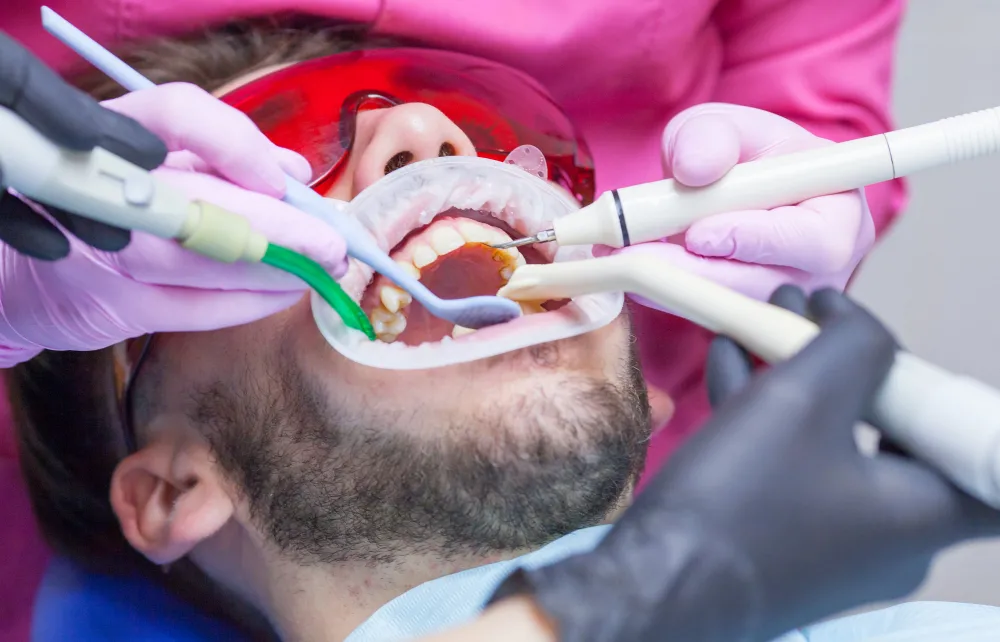
You should not feel sharp pain during the procedure because local anesthesia blocks sensation in the area.
You may still notice pressure, vibration, water, or movement. Tell the dentist immediately if you feel pain so they can provide more anesthetic.
Mild gum soreness or sensitivity after the visit is common. These symptoms are usually temporary.
Does Getting a Filling Hurt?
You should not feel sharp pain during the procedure because local anesthesia blocks sensation in the area.
You may still notice pressure, vibration, water, or movement. Tell the dentist immediately if you feel pain so more anesthetic can be provided.
Mild gum soreness or sensitivity after the visit is common. These symptoms are usually temporary.

How Long Will the Numbness Last?
Numbness often wears off in about two hours, though the exact duration varies. The medication used, dose, injection location, and individual response all affect how long it lasts.
Avoid chewing while your lips, cheek, or tongue remain numb. You could bite the soft tissue without realizing it.
Wait until normal sensation returns before eating foods that require heavy chewing. Be careful with hot drinks because it is harder to judge their temperature.
Aftercare and Recovery
Follow your dentist’s instructions, since aftercare differs based on the material and the complexity of the procedure. Sedation changes the picture because it takes longer to clear than local anesthesia.
Eating After the Appointment
A light-cured composite restoration is hardened before you leave. You can usually eat once the numbness has worn off, unless your dentist gives different instructions. Waiting for normal sensation reduces the risk of accidentally biting your cheek, lip, or tongue.
Begin with softer foods if the area feels tender. For more detailed guidance, review what you can eat after a filling, including which foods may irritate a sensitive area.
Avoid very hard or sticky foods until chewing feels comfortable. Amalgam and other chemically setting materials may require added precautions while they continue to harden. Follow the instructions provided at the office.
Brushing and Flossing
Continue brushing twice a day with fluoride toothpaste, since fluoride helps remineralize teeth and protects the margins around a restoration. Clean the restored area gently, but do not avoid it. Floss carefully around the repaired surface. If the floss repeatedly catches, tears, or cannot pass between the teeth, contact the office so we can check the contact point.
Sensitivity After the Procedure
Minor sensitivity to pressure, cold, heat, or sweet foods may occur after the appointment. Gum soreness near the injection site is also possible. These symptoms often improve within several days. Deeper work may take a week or two to settle.
A restoration that feels too high can cause pain when biting. The dentist can usually correct this with a small adjustment.
When to Contact the Dentist
Contact the office if you develop:
- Severe or worsening pain
- Facial or jaw swelling
- Fever, chills, or other signs of infection
- Pain whenever you bite
- Numbness that lasts much longer than expected
- A cracked, loose, or missing restoration
- Sensitivity that does not improve
These symptoms may indicate that the bite needs adjustment, the decay reached close to the nerve, or another issue requires care.
How Long Do Fillings Last?
The lifespan of a restoration depends on the material, its size and location, oral hygiene, bite pressure, and habits such as grinding or chewing ice.
A retrospective study of 967 direct restorations reported median survival times of 11.8 years for amalgam, 11 years for composite resin, and 6.8 years for glass ionomer. These figures are study findings, not guarantees for an individual patient.
A 2024 review found that restoration lifespan depends on a combination of tooth-related, patient-related, and dentist-related factors, including moisture control during placement and the technique used.
A small repair may last longer than a large one because more natural structure remains. Work on molars also faces greater chewing pressure than work near the front of the mouth.
Regular dental exams and professional cleanings allow the dentist to look for cracks, worn edges, leakage, or new decay around the restored surface.
Frequently Asked Questions
How Long Does It Take to Get a Tooth Filled?
Plan for up to an hour for one straightforward restoration. This includes numbing, removing the decay, placing the material, and checking your bite.
How Long Does It Take to Fill a Small Cavity?
A small, accessible area often requires 20 to 30 minutes of chair time, though numbing and the final bite check still affect the full appointment length.
How Long Does It Take to Replace a Filling?
Replacing an old restoration usually takes about as long as placing the original, roughly 30 to 60 minutes. The dentist removes the worn material, checks for new decay underneath, and places fresh material.
The visit runs longer if decay has spread beneath the old filling, or if the tooth now needs a larger restoration such as an onlay or crown.
Can I Return to Work Afterward?
Most people return to routine activities immediately when only local anesthesia is used. Speaking and eating may feel awkward until the numbness wears off. Sedation requires more recovery time and may affect when you can return to work.
Can I Drive After the Appointment?
Ask the office before driving if you received sedation or medication for anxiety. Follow the transportation instructions given before the procedure. You may need another adult to drive you home.
Why Does My Bite Feel Different?
The new restoration may sit slightly higher than the surrounding surface. This can make the repaired tooth contact first when you bite, a common cause of tooth pain after a filling. Contact your dentist if the bite does not feel normal. A small adjustment can often correct the problem.
Can a Cavity Be Too Large for a Filling?
Yes. Extensive decay may leave too little healthy structure to support a standard restoration. Based on the extent of the damage and the condition of the nerve, the dentist may recommend an inlay, dental onlay, crown, root canal, or extraction.
If decay has reached or inflamed the pulp, the dentist may instead recommend a root canal procedure to remove the damaged tissue and preserve the tooth.
Call now to Schedule Your Appointment
At Smile Lab, you will receive experienced & professional dental implant services in a supportive
and high-tech environment, ensuring you get the best care possible.
Or
Complete The Form Below
What to Expect From Your Appointment
You now know the three things that set the clock: how much decay there is, where the tooth sits, and which material the dentist selects.
The visit usually includes an examination, numbing, decay removal, cleaning, material placement, shaping, and a final bite check. How long do fillings take in total? For one tooth, 20 to 60 minutes.
Temporary numbness and mild sensitivity are the only after-effects most patients notice.
Early care can stop the damage from spreading deeper or weakening the tooth further. If you need an examination or restoration, book an appointment and the team will confirm a time estimate before treatment starts.