
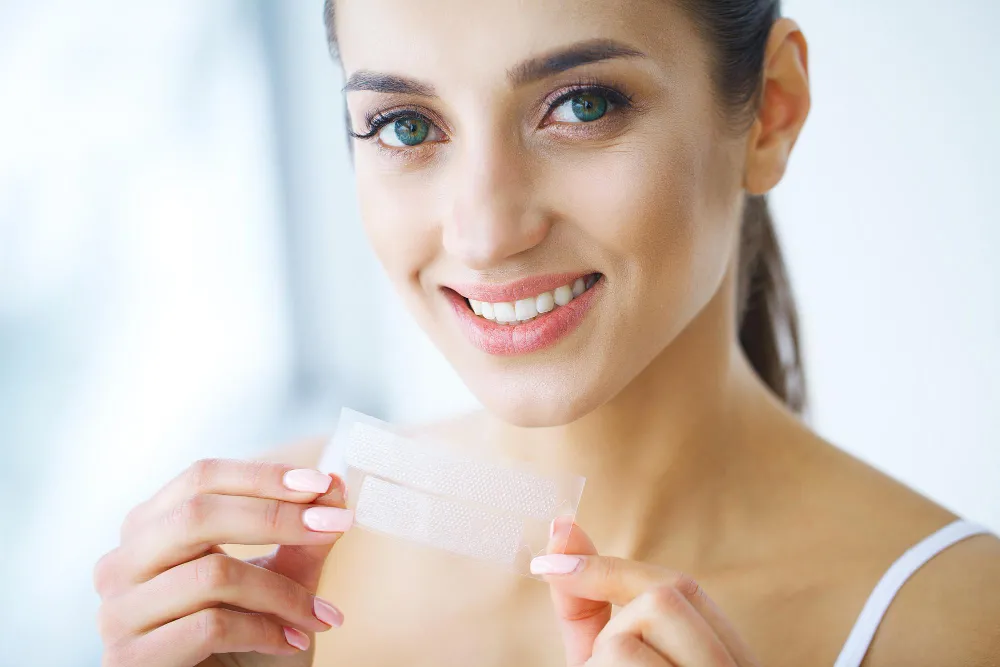
Yes, brush your teeth before using whitening strips. But don’t do it right before. Wait at least 30 minutes after brushing before you apply the strips. After you take them off, wait another 30 minutes before brushing again.
Key Takeaways
- Brush your teeth before using whitening strips, but wait at least 30 minutes before applying them.
- After removing whitening strips, rinse with water and wait another 30 minutes before brushing again.
- The biggest factor affecting comfort is timing. Brushing too soon before or after strips can increase tooth sensitivity and gum irritation.
- Floss before brushing and applying strips so the whitening gel can reach the tooth surface more evenly.
- Avoid coffee, tea, red wine, and dark sauces for 30 to 60 minutes after whitening because enamel is temporarily more porous.
What Are Whitening Strips and How Do They Work?
Whitening strips are thin plastic strips coated with a whitening gel. That gel contains either hydrogen peroxide or carbamide peroxide, the same active ingredients used in professional whitening treatments, just at a lower concentration.
When you press the strips against your teeth, the peroxide penetrates the enamel and breaks apart the compounds responsible for discoloration. The result is a gradual lightening of surface stains from coffee, tea, wine, and aging — though deeper or set-in discoloration may need a different approach.
For the gel to work properly, it needs direct contact with clean enamel. Anything sitting on the surface of your teeth, plaque, food debris, or residue from toothpaste, reduces how evenly the gel can absorb.
Should You Brush Before or After Whitening Strips?
Brush before, not after. And wait before applying the strips.
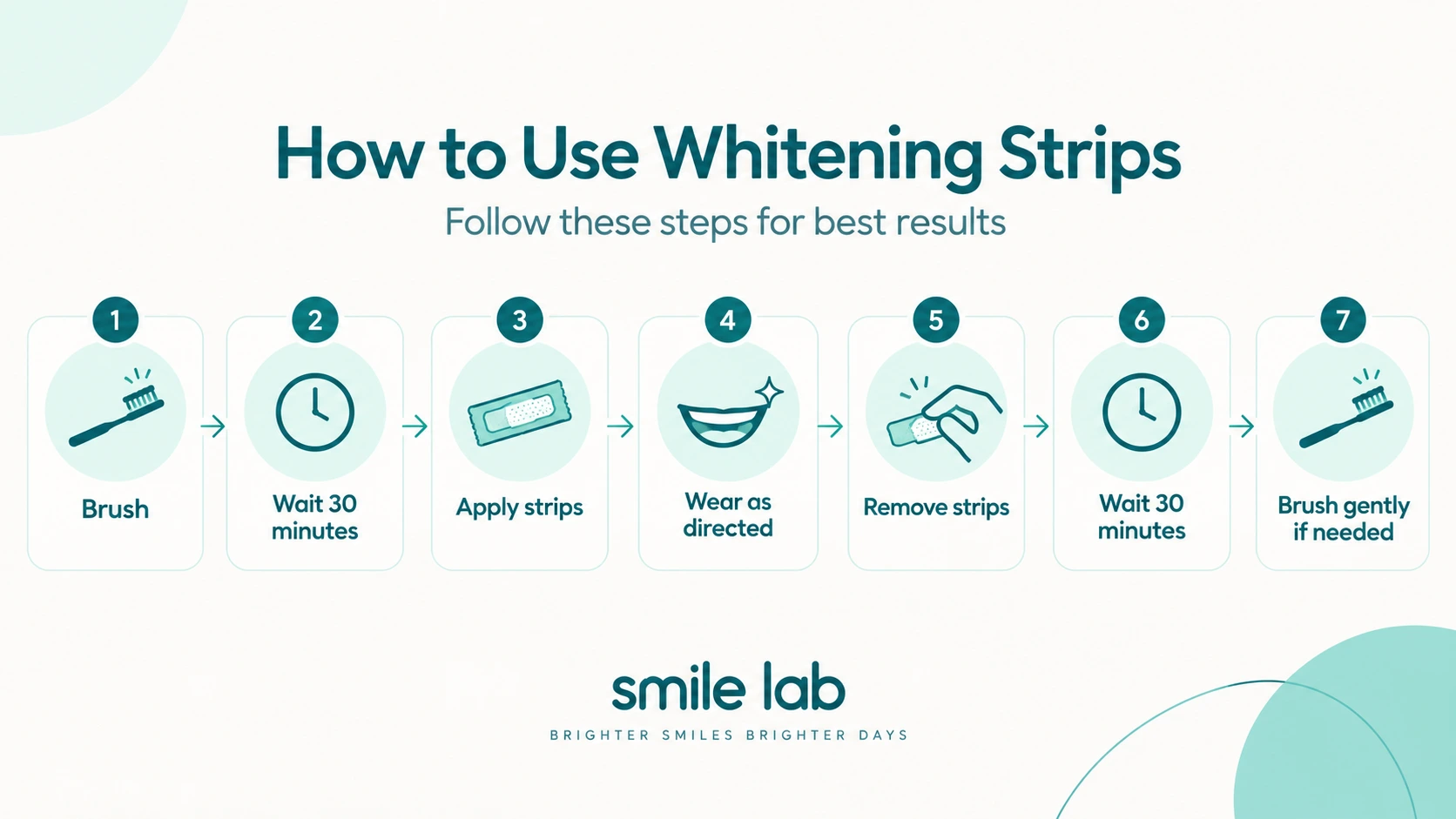
Here’s the quick timing rule:
Brush → wait 30 minutes → apply strips → wear as directed → remove strips → wait 30 minutes → brush gently if needed
The gel spreads more evenly, and the strips stay in place longer on a clean, dry surface. It also helps the strips adhere more consistently, which means more uniform results across all your teeth.
The reason you wait 30 minutes after brushing is that brushing temporarily opens the microscopic pores in your enamel, making your gums more reactive. Applying a peroxide-based strip immediately after brushing means the bleaching agent contacts more exposed enamel, which increases the risk of sharp sensitivity and gum irritation.
Waiting 30 minutes lets your enamel settle and gives your gums time to calm down. Your teeth stay clean from brushing, but the surface is no longer agitated.
How to Brush Before Using Whitening Strips
The technique matters as much as the timing.
- Use a soft-bristled toothbrush. Hard bristles cause more enamel abrasion and leave gums more reactive.
- Use a standard fluoride toothpaste, not a whitening or abrasive formula. Whitening toothpastes contain hydrogen peroxide or gritty particles that can clash with the strip formula and increase irritation.
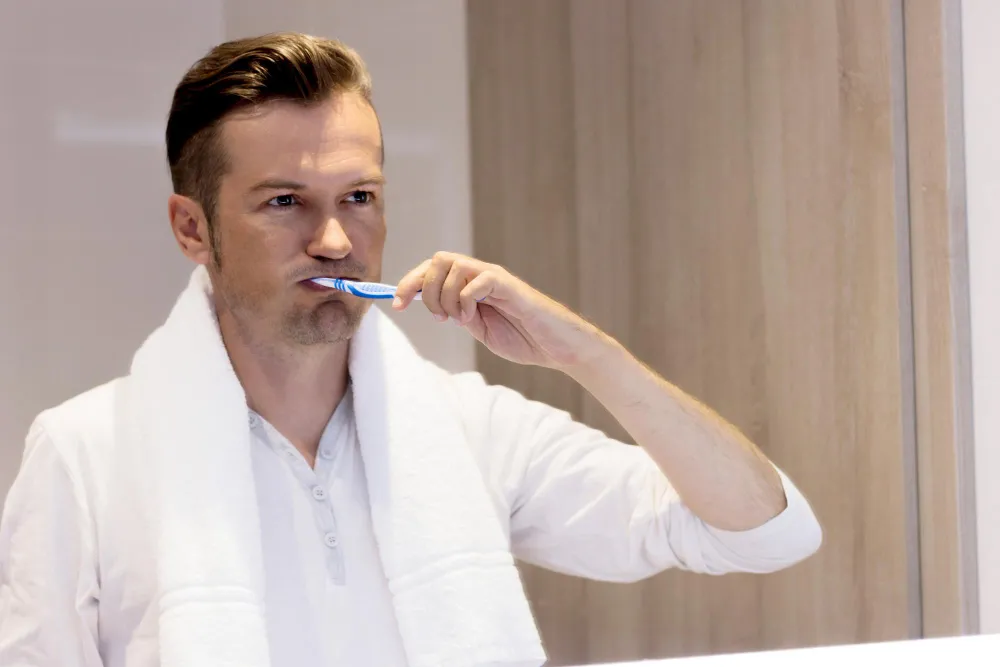
- Brush gently for two minutes, covering all surfaces: front, back, and biting edges.
- Rinse thoroughly afterward so no toothpaste residue is left behind. Residue can interfere with strip adhesion.
- Wait the full 30 minutes before applying the strips.
Some people also find it helps to gently pat their teeth dry with a tissue just before applying the strips. Moisture on the tooth surface can reduce adhesion, especially with thinner strip formulas.
What Our Patients Say
11/02/2015
11/02/2015
11/02/2015
What to Avoid Before Applying Strips
A few common mistakes that cause sensitivity or uneven results:
Brushing immediately before. The most frequent error. Even 5 or 10 minutes isn’t enough. The 30-minute buffer is the minimum.
Eating acidic foods right before brushing. Citrus, soda, and vinegar-heavy foods temporarily soften enamel. If you brush too soon after eating them and then apply strips, you’re compounding the exposure. Wait at least 30 to 60 minutes after acidic food before brushing, then wait again before applying the strips.
Use whitening toothpaste right before the strips. Two whitening agents working at once increase the chance of irritation and can produce uneven bleaching.
Skipping the wait. It feels efficient to brush and apply immediately. It isn’t. This is the leading cause of whitening-related sensitivity, and it’s one reason many people end up not brushing their teeth at the right times around their oral care routine.
Gum Graft Recovery: How Long Does It Take?
The typical recovery timeline for gum grafting surgery involves 1-2 weeks for initial healing. Full recovery takes around 4-6 weeks. The exact timeline depends on how your body heals. You must follow the doctor's instructions to speed up the recovery process. Moreover, it is suggested that you avoid sticky, hard food and smoking, as these can damage your gums again by stimulating bacterial infection.
Brushing Your Teeth After Using Whitening Strips
After removing the strips, rinse your mouth with water to clear any remaining gel. Then wait at least 30 minutes before brushing.
Right after whitening, your enamel is temporarily more porous. Brushing too soon can wear it down more easily and increase sensitivity. Waiting gives your enamel time to re-harden and rehydrate.
When you do brush, use a soft-bristled toothbrush and a standard fluoride toothpaste. Skip whitening or gritty toothpastes for this session. They’re too abrasive on enamel that’s just been exposed to peroxide.
Should You Use Mouthwash Before or After Whitening Strips?
Use mouthwash after whitening, not before.
Mouthwash used immediately before applying strips, particularly formulas with alcohol or strong antiseptics, can irritate gum tissue and make your enamel more reactive to the bleaching gel.
After you remove the strips, wait 30 minutes, brush gently, then follow with an alcohol-free mouthwash. An alcohol-free formula rinses away any residual peroxide without drying out your mouth or adding more irritation.
Should You Floss Before or After Whitening Strips?
Floss before applying strips, and do it before you brush.
Removing debris between your teeth allows the strip gel to reach the full surface of each tooth. If there’s plaque or food trapped between teeth, those areas won’t whiten evenly.
The order to follow: floss first, then brush, then wait 30 minutes, then apply the strips.
After removing the strips, wait at least 30 minutes before flossing again. Post-whitening gum tissue is temporarily more sensitive, and flossing too soon can cause irritation or minor bleeding.
Special Considerations for Sensitive Teeth
If you already have tooth sensitivity or gum issues, take a few extra precautions:
- Choose a strip formula designed for sensitive teeth. These use a lower peroxide concentration and are less likely to cause a sharp reaction.
- Use a desensitizing toothpaste for a few days before you start a whitening cycle. Some people also apply a thin layer of desensitizing gel to their teeth for 10 to 15 minutes before the strip session, which can reduce the stinging sensation.
- Brush only with a soft-bristled toothbrush, and use lighter pressure than usual.
- If you brushed very recently and can’t wait the full 30 minutes, rinse thoroughly with water instead of brushing again.
- Don’t extend the wear time beyond what the instructions state. Longer exposure doesn’t improve results for sensitive teeth; it just increases irritation.
- Space out your sessions. If you experience discomfort after a session, skip a day before the next one.
Best Time of Day to Use Whitening Strips
Evening tends to work better for most people.
After whitening, your enamel is temporarily more porous and more likely to stain. If you whiten in the evening, you’re less likely to consume coffee, tea, or red wine immediately afterward, and your teeth have several hours to remineralize before your next meal.
Avoid applying strips first thing in the morning, right after waking up. Saliva levels are lower overnight, which means your mouth is drier and your teeth may be more reactive when you start.
How to Use Whitening Strips Safely for the Best Results
- Store strips at room temperature and check the expiry date before use. Expired strips may contain degraded peroxide, which can produce uneven results.
- Avoid staining foods and drinks, particularly coffee, tea, and red wine, for at least 30 to 60 minutes after whitening. This window is sometimes called the “white diet” period. Stick to water and light-colored foods.
- Visit your dentist for a routine cleaning before starting a whitening cycle — in some cases, a cleaning and whitening session can be scheduled on the same day.
- Follow the product instructions for wear time and session frequency. Most strip products are designed for daily use for 7 to 14 days. Overusing them doesn’t accelerate results; it increases the risk of enamel damage.
- Repeat cycles every few months, depending on your diet and habits. In between, a whitening mouthwash or occasional touch-up can help maintain brightness.
Frequently Asked Questions
Should you brush before or after whitening strips?
Brush before. Apply the strips at least 30 minutes after brushing so your enamel and gums have time to settle. After removing the strips, wait another 30 minutes before brushing again.
How long after brushing should you wait to use whitening strips?
At least 30 minutes. Brushing temporarily opens the pores in your enamel and leaves your gums more reactive. The 30-minute window lets everything calm down before peroxide is applied.
Can you put on whitening strips immediately after brushing your teeth?
No. Applying strips right after brushing increases the risk of sensitivity and gum irritation. The 30-minute wait is not optional if you want a comfortable whitening session.
Should you use Crest White Strips before or after brushing?
Crest and most major strip brands recommend brushing before, not after, application. Their own instructions advise waiting after brushing before applying the strips. Follow the 30-minute rule regardless of the brand.
Should you use mouthwash before or after whitening strips?
After the strips come off, use an alcohol-free mouthwash, not before. Mouthwash before whitening, especially alcohol-based formulas, can irritate gum tissue and make enamel more reactive.
Should you floss before or after whitening strips?
Floss before. Floss first, then brush, then wait 30 minutes before applying the strips. After removing the strips, wait at least 30 minutes before flossing to protect sensitive gum tissue.
How long should you wait to eat or drink after whitening strips?
At least 30 to 60 minutes. Avoid coffee, tea, red wine, and dark-colored sauces during this window. Stick to water. Enamel is temporarily more porous right after whitening and will absorb staining pigments more readily.
Are whitening strips safe for sensitive teeth?
Yes, if you use them correctly. Choose a sensitive-formula strip, respect the timing rules, and consider using a desensitizing toothpaste for a few days before you start. If sensitivity persists across multiple sessions, talk to your dentist about professional whitening options that can be calibrated to your sensitivity level.
How often should you use whitening strips?
Follow the product guidelines, usually once daily for 7 to 14 days. Avoid overuse to protect enamel. Repeat cycles every few months based on your diet and lifestyle habits.
Get Professional Teeth Whitening at Smile Lab Dentistry
Whitening strips can make your teeth shine and look bright, but only if you use them carefully. Using them right after brushing or flossing can cause severe risks. Brushing your teeth not only removes the debris but also damages your enamel.
Moreover, your gums also become more vulnerable to cleaning agents in the gel, which can further lead to gum swelling or other problems. Therefore, it is suggested to use these whitening strips after 30 minutes of brushing. Apply them for a specific period as written in the instructions. Overuse can also affect your teeth, along with the removal of stains from enamel.
If you are looking for expert guidelines regarding teeth whitening or other dental treatments , you can contact us at Smile Lab. Our highly experienced experts understand your dental issues and suggest solutions tailored to your specific needs.
Call now to Schedule Your Appointment
At Smile Lab, you will receive experienced & professional dental implant services in a supportive
and high-tech environment, ensuring you get the best care possible.
Or
Complete The Form Below
Form that is used on Blog Posts