Reviewed by Dr. Waise Ebrahimi, DDS. Dr. Ebrahimi is a graduate of the University of California, San Francisco School of Dentistry and the founder of Smile Lab in New York City.
Key Takeaways
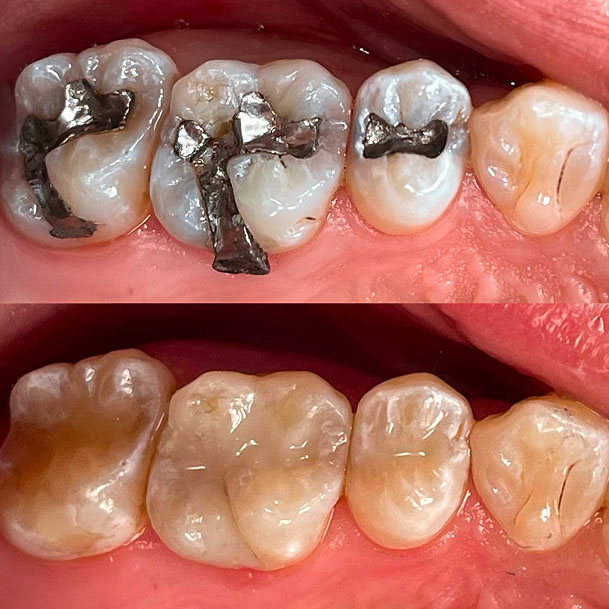
- Gold fillings are safe, mercury-free, and BPA-free. They are often used for back teeth because they handle heavy chewing forces well.
- The typical gold tooth filling price ranges from $400 to $1,500 or more without insurance.
- Cost depends on restoration size, tooth location, current gold prices, and whether a lab-made restoration is needed.
- Gold restorations usually require two appointments. The dentist first prepares the tooth and takes an impression, then places the custom restoration once the lab has fabricated it, usually within 1 to 3 weeks.
- With proper care, gold can last 20 to 30 years or longer. In most cases, this exceeds composite, amalgam, or ceramic options.
- Gold is most practical for molars and premolars, where durability matters more than appearance. For a visible front tooth, composite or ceramic is usually the better fit because it matches natural tooth color.
- Dentists still offer gold fillings today. Composite is more common now because it is tooth-colored and can be placed in one visit, but gold remains an option in restorative dentistry.
What Are Gold Fillings?
Are gold fillings real gold? Yes, but not pure gold. Gold restorations are made from alloys, not solid gold. The typical mix combines gold with metals like platinum, silver, palladium, or copper. Pure gold is too soft to withstand constant biting pressure, so the alloy gives these restorations strength and longevity.
How much gold is in a tooth filling depends on the alloy category. By ADA classification, high noble alloys contain at least 40% gold and at least 60% precious metals overall. Noble alloys contain at least 25% precious metals. Non-noble alloys contain less than 25% precious metals. The higher the gold content, the more corrosion-resistant and biocompatible the restoration tends to be.
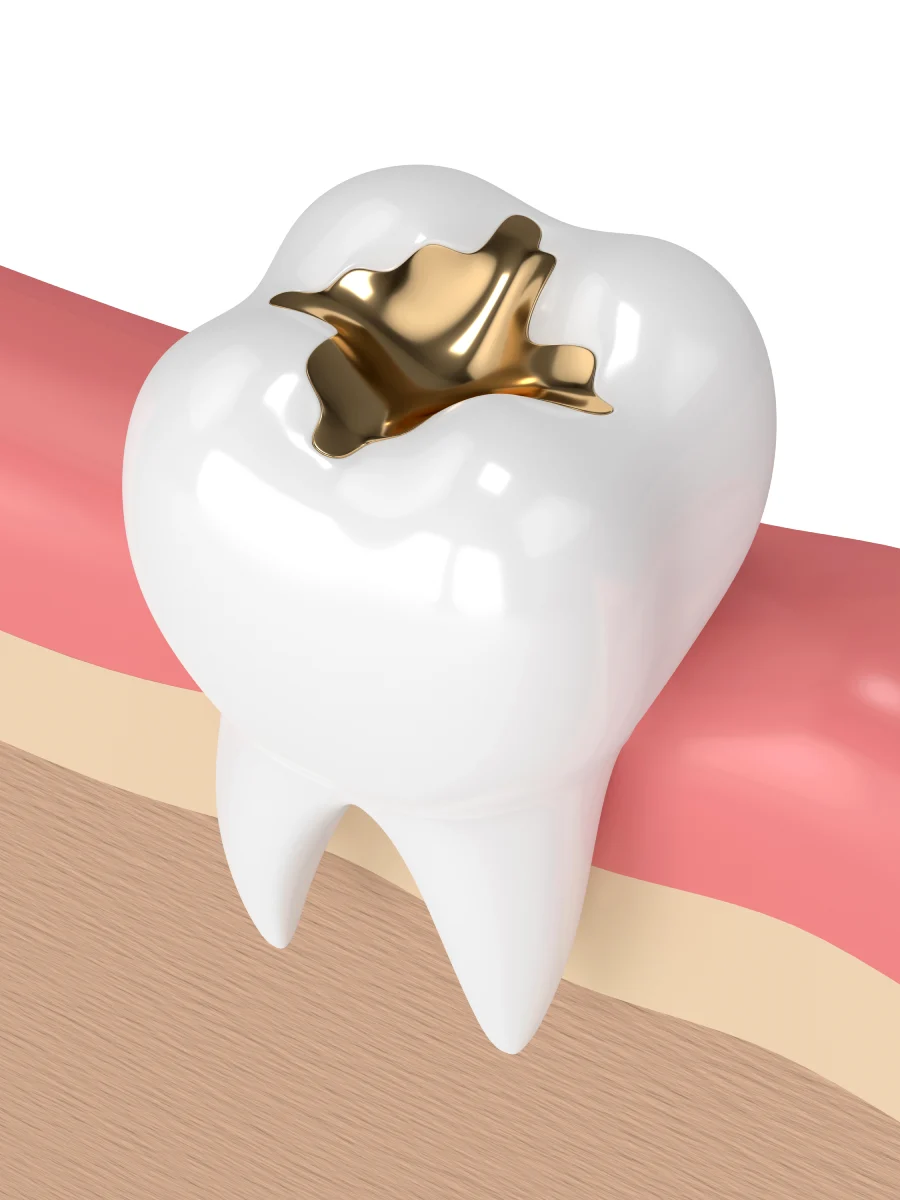
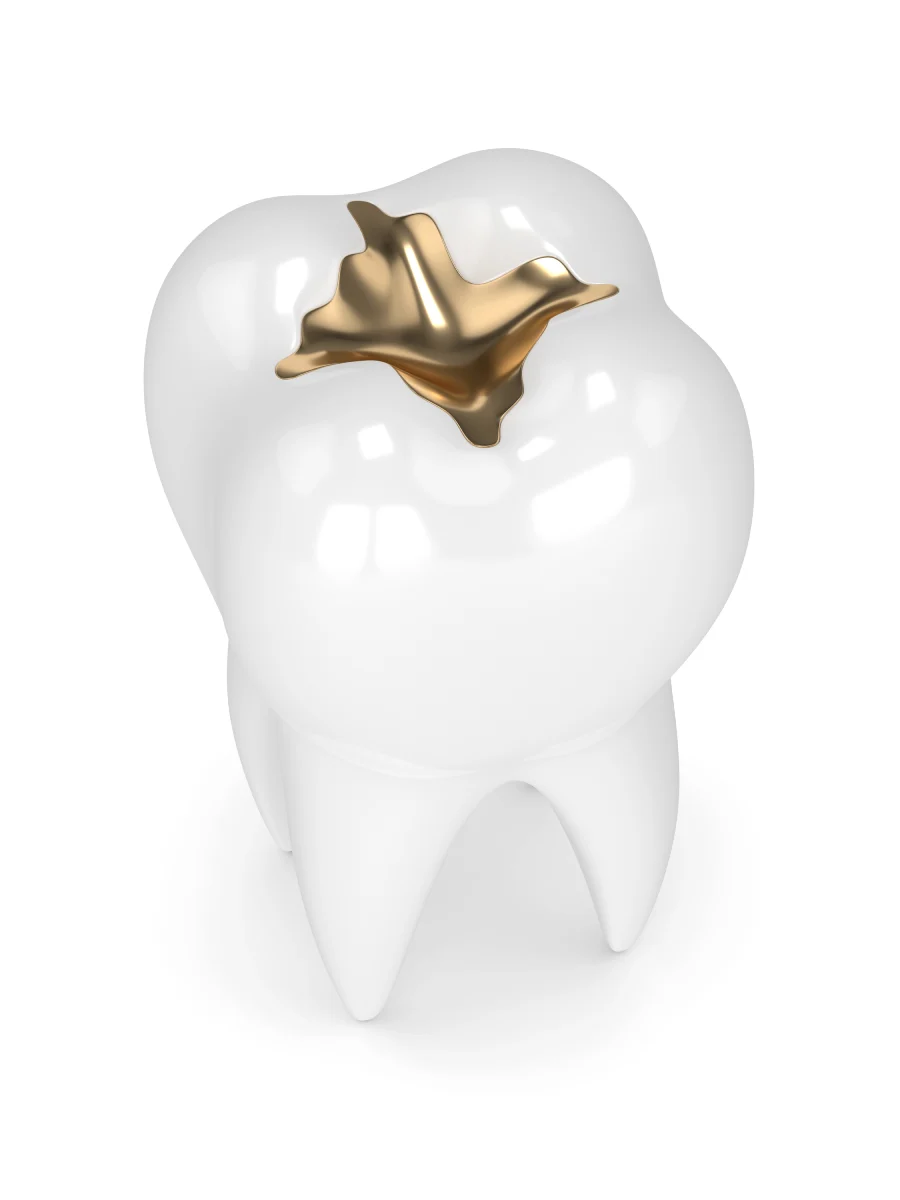
Depending on how much tooth structure remains, your dentist may place a gold inlay (which fills within the cusps of the tooth), a gold dental onlay (which covers one or more cusps), or a full dental crown.
Gold crowns are also among the most common restorations used to protect a tooth after aroot canal, when significant structure has been removed. Each is custom-fabricated in a dental lab to fit the exact contours of your prepared tooth.
They are particularly well-suited for molars and premolars, where chewing forces are greatest, and for people who grind their teeth at night. Gold cavity restorations resist corrosion and maintain their shape under pressure, which is why they’re a durable choice for teeth that take heavy chewing loads.

Why Do People Get Gold Fillings? Key Advantages
Why do people get gold fillings when composite is faster and cheaper? Because gold tooth restorations offer functional and longevity benefits that no other filling material fully matches.
1. Incredible Longevity and Strength
How long do gold fillings last compared to other materials? Approximate lifespans by filling type:
- Composite fillings: around 7 to 10 years
- Amalgam: 10 to 15 years
- Gold inlays, onlays, and crowns: 20 to 30 years or longer, with some lasting 50 years
The strength of these restorations makes them particularly effective in high-pressure chewing areas. They resist corrosion and fracture far better than other materials, which makes them a strong, long-term investment for your dental health.
2. Precision Fit and Minimal Wear
Gold is a malleable metal that can be shaped into a precise fit, reducing the chance of gaps between the restoration and the tooth. Tighter margins mean less risk of decay forming underneath.
Gold also wears at a rate close to that of natural enamel, which is gentler on the opposing tooth. Materials like porcelain can be more abrasive over time and cause enamel wear on opposing teeth.
3. Less Tooth Sensitivity
Gold restorations are less likely to cause the temperature sensitivity that some patients experience with silver amalgam. If you have sensitive teeth or you’ve had post-treatment discomfort with other materials before, this is worth factoring into your decision.
4. Aesthetic Appeal for Some Patients
While gold restorations won’t blend in the way tooth-colored materials do, they make a deliberate visual statement. In many communities and cultures, gold teeth are a recognized symbol of style, individuality, or personal expression.
What Our Patients Say

11/02/2015


11/02/2015
11/02/2015
I never thought I’d actually look forward to a dentist appointment, but this practice has completely changed the game. From the moment you walk in, the modern decor and calming ambiance make it feel more like a high-end boutique or a spa than a dentist’s office.
What Are the Disadvantages of Gold Teeth?
Cost, appearance, and the number of visits required are the main trade-offs to weigh.
- Higher Upfront Cost
Gold is a premium material, and the gold tooth filling price reflects it. Out-of-pocket, expect to pay $400 to $1,500 or more for a gold filling or inlay, depending on the size of the restoration, the tooth’s location, and current gold prices. Gold prices fluctuate, so pricing isn’t fixed like composite pricing. If you are specifically considering a gold crown, we break down the full cost of dental crowns in NYC with a detailed breakdown by material. Before any work begins, you’ll receive a clear cost breakdown so there are no surprises.
- Aesthetic Considerations
Gold is visible. For back molars that are out of plain sight, most patients don’t mind. For teeth that show when you speak or smile, a tooth-colored option is usually the better fit. A gold filling for front teeth is uncommon for this reason; composite or ceramic is almost always preferred there.
- Multiple Appointments Needed
Unlike composite, gold restorations require at least two visits because they are custom-fabricated in a lab. See the step-by-step breakdown in the next section to know what to expect at each appointment.
- Galvanic Sensitivity
If a gold restoration is placed directly next to a silver amalgam restoration in the same area of your mouth, the two metals can interact with saliva to create a mild electric current. This can cause a brief, sharp sensation. It’s uncommon and not dangerous, but worth flagging to your dentist if you have existing amalgam nearby.
The Gold Filling Procedure: What to Expect at Each Appointment
Because a gold tooth filling is custom-made in a dental laboratory, the procedure runs across two visits. Here’s what happens at each stage:
Visit 1: Preparation and impression
1. The dentist numbs the area and removes any decay from the tooth.
2. The tooth is shaped to receive the inlay, onlay, or crown.
3. A digital scan or physical impression of the prepared tooth is taken.
4. A temporary filling is placed to protect the tooth while the lab fabricates your custom restoration, usually within 1 to 3 weeks.
Visit 2: Placement and bite check
1. The temporary filling is removed and the tooth is cleaned.
2. Your custom gold restoration is checked for fit and margin accuracy.
3. It is cemented into place with dental adhesive.
4. Your bite is checked and adjusted so the restoration sits comfortably against the opposing teeth.
For a full breakdown of appointment length by filling type, see our guide on how long a filling appointment takes.
Are Gold Fillings Safe?
Gold restorations are safe and well-studied, and dentists still recommend them for three specific reasons.
- Non-Allergic
Gold is highly biocompatible, meaning it integrates well with your body’s tissues without triggering inflammation or rejection. According to the National Institutes of Health (NIH), gold allergies are rare, especially when high-quality alloys are used. In rare cases, a reaction may occur, with symptoms including gum irritation, redness, or swelling around the restoration. Discuss any known metal sensitivities with your dentist before proceeding.
- Are Gold Fillings Toxic? No Mercury or BPA
No. Unlike amalgam, gold does not contain mercury, so patients wondering whether gold fillings have mercury can be reassured: no. Gold also contains no BPA, which some resin composites do. Both mercury (in amalgam) and BPA (in some composites) have raised ongoing questions among researchers and regulators. Gold avoids both.
- A Long Clinical Track Record
Gold has been used in dental restorations for well over a century, with a safety record that no other filling material can match in longevity.
How to Care for a Gold Restoration
Care is the same as for natural teeth: brush twice daily, floss or clean between teeth every day, and keep regular checkups so your dentist can monitor the margins and gum line. Avoid using the restored tooth to crack ice or bite hard objects. If you grind or clench at night, a night guard will protect both the restoration and the tooth underneath it.

Does Dental Amalgam Contain Gold?
Standard amalgam alloy, defined by ANSI/ADA Specification No. 1 (ISO 24234), is composed primarily of silver, tin, and copper, with only small amounts of other metals such as palladium, indium, or zinc. Gold is not a standard component, so a routine amalgam filling is not a gold restoration and should not be confused with one.
If you want gold as your filling material, ask your dentist specifically for a gold inlay, onlay, or crown. That is a separate type of restoration made from a gold-based alloy and custom-fabricated in a dental lab.
Do Dentists Still Use Gold Fillings?
Yes. Gold fillings remain a current, actively offered option in restorative dentistry across the US. Composite and ceramic have become more common because they blend with natural tooth color and can be placed in a single visit, but gold has not been phased out.
Gold is still the material of choice for many second molars, patients with heavy bite forces, and situations where a restoration needs to last as long as possible. If a dentist tells you gold fillings are no longer available, that reflects their practice’s preference, not the state of the field.
Will Insurance Cover a Gold Filling?
Coverage depends on your plan. Most PPO dental plans classify fillings as a basic or major restorative benefit and will reimburse a percentage of the cost after your deductible is met. Because gold sits at the top of the price range, many insurers apply an “alternative benefit” clause: they pay what they would have paid for a composite filling, and you cover the difference.
Before scheduling a gold restoration, ask your dentist’s office for a pre-treatment estimate. They can submit the treatment code to your carrier and confirm exactly what portion the plan will cover, so you can budget the out-of-pocket balance before work begins.
Gold Fillings vs Other Materials: What’s Right for You?
Before choosing a dental filling material, compare the options side by side. Strength, aesthetics, safety, longevity, and cost all trade off differently depending on which tooth needs treatment and your priorities.
| Filling Type | Strength & Durability | Aesthetics | Biocompatibility & Safety | Typical Lifespan | Typical Cost per Filling | Other Notes |
|---|---|---|---|---|---|---|
| Gold | Extremely strong; ideal for heavy chewing areas | Visible; appeals to some as a style choice | Highly biocompatible; no mercury or BPA | 20 to 30 years (some 50+) | $400 to $1,500+ | Requires multiple visits; premium cost |
| Composite | Less durable; prone to wear over time | Tooth-colored; blends well | Generally safe; some may contain BPA traces | 7 to 10 years | $150 to $450 | One-visit placement; lower cost |
| Amalgam | Strong, but expands and contracts with temperature changes | Silver-gray; highly visible | Contains mercury; potential safety concerns | 10 to 15 years | $100 to $300 | Cost-effective; often used in back teeth |
| Ceramic | Strong, but can be brittle and abrasive to opposing teeth | Excellent tooth match; very aesthetic | Biocompatible and metal-free | 10 to 20 years | $500 to $1,500 | More fragile; usually pricier than composite |
For back teeth that take the most pressure, gold is often the most durable long-term choice. For teeth that show prominently when you speak or smile, composite or ceramic are worth considering instead. Your dentist can help you weigh the tradeoffs based on which tooth needs treatment, how much healthy structure remains, and your bite pattern.
Get Your Teeth Filling Schedule in Union Square
Gold fillings are a trusted and safe option for dental restorations. With more than a century of use and support from modern dental research, gold provides exceptional strength and lasting value. While the upfront cost and visibility might not be ideal for everyone, the benefits usually outweigh the drawbacks, especially for those who care about durability and long-term oral health.

Frequently Asked Questions About Gold Tooth Fillings
Is gold filling still a common choice compared to composite?
Not as common as composite, but still a legitimate and actively offered choice. Composite has become more popular because it’s tooth-colored and can be placed in a single visit, but many dentists still recommend gold for molars and patients with heavy bite forces, where its durability matters more than aesthetics.
Can I have a gold filling if I have a metal allergy?
In most cases, yes. Gold alloys are highly biocompatible, and true allergic reactions are rare. That said, gold restorations aren’t pure gold; they’re alloyed with metals like platinum, silver, palladium, or copper, and in rare cases, one of these can trigger a reaction. If you have a known metal allergy, tell your dentist beforehand so they can review the specific alloy or suggest a patch test first.
What's the difference between amalgam and a gold filling?
They’re different materials entirely. Amalgam is a silver-colored mix of mercury, silver, tin, and copper, mixed chairside and placed in a single visit. A gold filling uses a gold-based alloy that’s custom-fabricated in a dental lab and placed over two appointments. Gold generally costs more and lasts longer; amalgam is more affordable but contains mercury and lasts less.
How much gold is in a tooth filling?
Most dental gold restorations use a “high noble” alloy, which, by ADA standards, must contain at least 40% gold, often more. Lower-tier alloys use less. In practice, this means a typical gold filling is a metal blend, not solid gold, with roughly a third to just under half of its weight coming from gold itself. The exact classification tiers and percentages are covered above.
Do gold fillings ever need to be replaced?
Eventually, yes, though it typically takes decades. With proper care, gold fillings last about 20 to 30 years on average, and some have been documented to last 50 years or more. This is longer than composite (7 to 10 years), amalgam (10 to 15 years), or ceramic (10 to 20 years) in most cases, so replacement is rarely a near-term concern.
What if my insurance won't fully cover a gold filling?
This is common, since many insurers apply an “alternative benefit” clause for gold: they reimburse what they would have paid for a composite filling, and you cover the difference. Ask your dentist’s office for a pre-treatment estimate before scheduling so you know the out-of-pocket cost.
Call now to Schedule Your Appointment
At Smile Lab, you will receive comfort focused professional dental care in a supportive
and high-tech environment, ensuring you get the best care possible.
Or
Complete The Form Below
Form that is used on Blog Posts