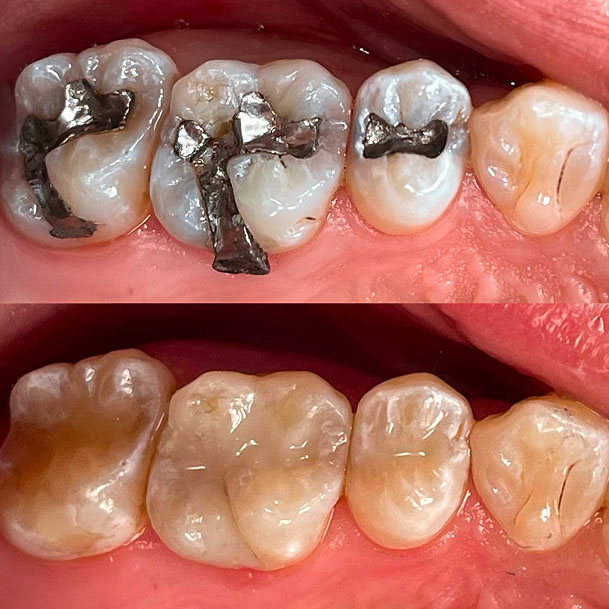
We examine the affected area, check your symptoms, and take X-rays before recommending anything. Treating a crack early helps prevent further fracture, infection, and eventual loss.
Almost every fracture is repairable. Out of pocket, costs range from roughly $175 for simple reshaping to around $7,500 for a full extraction and implant replacement.
This guide covers what dentists do to fix cracked tooth damage, what each option costs, how long the work takes, how long the repair lasts, and how to decide which route you’ll likely need.

Infected Root Canal
What is a Cracked Tooth?
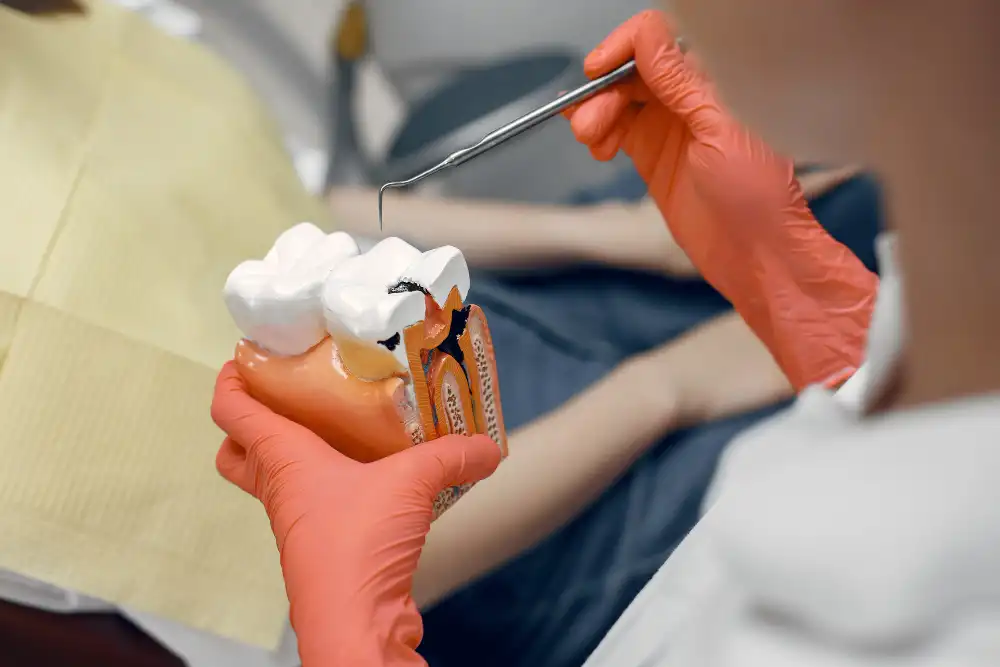
A crack is any break or split in the enamel or the deeper layers underneath, the same categorization used by the ADA. It can be a faint line affecting only the outer surface, or it can run far enough to reach the root.
Warning signs include sharp pain when you bite down, sensitivity to hot or cold, swelling around the gum line, or a molar that has split in half with no pain. Any one of these is reason enough to get checked.
Common causes include biting hard foods such as nuts, candy, or ice; trauma from accidents or sports; grinding, known clinically as bruxism; large existing fillings that leave less natural structure behind; and ordinary wear with age. Risk climbs over time, since enamel thins and older restorations leave less structure holding everything together.
Not every crack needs treatment. A faint craze line that doesn’t hurt or catch on your tongue is often watched at regular checkups rather than repaired right away.
Chipped or Cracked: Which One Do You Have?
A chip is a piece of enamel that has broken away, leaving a rough edge you can usually feel and often see. A crack is a line or fracture that may travel inward and downward without any piece coming off at all.
The distinction matters because a chip is frequently cosmetic and stable, while a crack can widen under normal chewing pressure. Repair options overlap heavily, so the same five routes below cover both.
What Our Patients Say
EXCELLENT Based on 2276 reviews
 Posted on Google
 Jou Min Chen (Jumin)I've been taking all my treatments over here for over a year now and so far I'm pretty satisfiedPosted on Google
 nikhil keswaneyDr basseri was amazing he took into account my fiances anxitey i to account and performed the filling even after hours he definitely earned 2 permenant patients.Posted on Google
 AkusaBeautiful experience! For my first dental visit- I had a smooth experience. Everyone was super nice. From the dentist, to the receptionist… all of the above.My teeth feels amazing. Super patient and explains everything clearly. I recommend, and I will definitely be back!Posted on Google
 Brynden FosterThis team is so helpful and kind! I always feel like a VIP coming for my cleaning and I couldn’t recommend them more.Posted on Google
 bhanu dattastaff was very helpful and they explained the procedure and payment options in a friendly wayPosted on Google
 Robina ShieldsMy experience with Smile Lab Dentistry Union Square "Wonderful", right down to the teeth cleaning.. that will make a person smile.Posted on Google
 Peter ChauLove coming here as a patient. Everyone here is super nice and thorough. I had my wisdom teeth done here which was an excellent experience. I now commute all the way to the city just to get my regular check ups here because it’s worth the trip. Also, I never had a hygienist floss my teeth before this place
Improve your smile today
Cracked Tooth Repair Options and What Each One Costs
Once a fracture is confirmed, the recommendation depends on severity, position in the mouth, and whether the pulp is involved. Below are the treatment options for cracked teeth, arranged from least to most involved. Each is a standard route for treating cracked-tooth damage, from a quick polish to full replacement. If you have wondered how cracked teeth are fixed in practice, this is the full range.
1. Reshaping and Polishing
Shallow craze lines and rough edges often need nothing beyond contouring. The surface is smoothed, sharp catch points are removed, and the enamel is polished. It is the quickest fix available and takes about half an hour per tooth.
2. Bonding or Filling
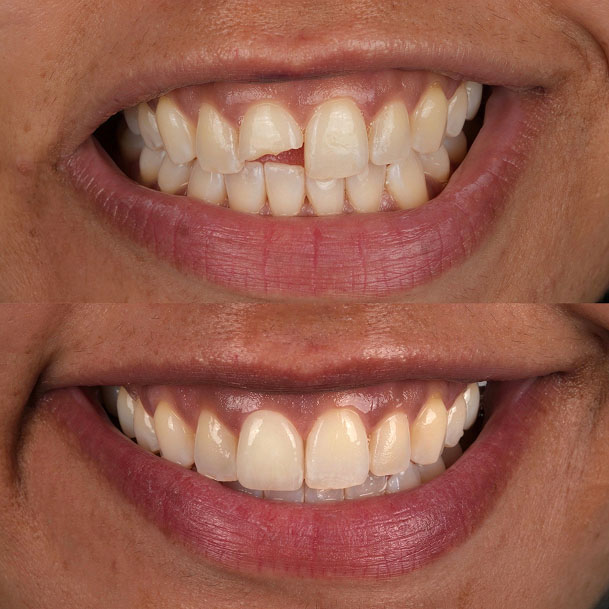
Small chips and shallow breaks respond well to tooth-colored resin. The material is applied, shaped, and cured under a light, restoring strength and appearance in one visit. This works well for filling cracked tooth surfaces where decay sits alongside the damage.
3. Onlays and Dental Crowns
When a cusp breaks away, or a large section of structure is compromised, partial coverage with an onlay or full coverage with a dental crown protects what remains.
Expect two visits: preparation and scanning first, then fitting of the permanent restoration about three weeks later. If turnaround matters to you, this comparison of same-day crowns versus lab crowns explains the trade-offs.
If you are weighing the price difference between the two, this crown cost breakdown walks through what drives the total.
4. Cracked Tooth Root Canal Treatment
When the fracture reaches the pulp, the soft tissue inside, a root canal becomes necessary. The procedure removes damaged pulp, cleans and shapes the canal, seals it, then finishes with a crown for protection. Pricing follows position in the arch, and molars cost more than incisors because they hold more canals.
For a fuller walkthrough of what happens chairside, see how long a root canal procedure typically takes.
5. Extraction and Replacement
A vertical root fracture or a fully split molar usually cannot be saved, and tooth removal becomes the only realistic path. A bone graft placed at the same time preserves the socket for an implant later, and this guide to tooth extraction healing time covers what to expect in the weeks after.
| Repair Option | When It's Used | Out-of-Pocket, Starting From | Chair Time | Warranty |
|---|---|---|---|---|
| Reshaping & polishing | Craze lines, rough or sharp edges | $175 to $450 per tooth | 30 mins per tooth | Not applicable |
| Composite bonding | Small chips, shallow surface breaks | From $950 | 1 hour | Not applicable |
| Filling (1 to 4 surfaces) | Damage combined with decay | $300 to $450 | 40 mins to 1 hour | 1 year |
| Onlay | Fractured cusp, pulp still healthy | From $1,950 | 1 hour | Not applicable |
| Crown | Major structural loss, or after a root canal | From $1,950 | 1 hr prep, 1 hr fitting 3 weeks later | 5 years |
| Resin veneer | Visible front tooth damage | From $950 | 1 hour | Not applicable |
| Porcelain veneer | Visible front tooth damage, longer lasting | From $2,300 | 1 hour | Not applicable |
| Root canal | Break reaching the pulp | $1,400 to $1,800 by position in the arch | 1.5 hrs, or 1 hr with an endodontist | Not applicable |
| Extraction with bone graft | Split tooth or vertical root fracture | $950 to $1,600 by complexity | 1 hour | Not applicable |
| Implant body | Replacing a tooth that cannot be saved | From $2,650 | 1 hour | Not applicable |
| Abutment & crown | Completing the implant restoration | From $3,300 | 1 hour | Not applicable |
Figures are starting points for patients without insurance and are confirmed in a written estimate before treatment begins. PPO coverage varies by plan.
```Prices shown are out-of-pocket starting points for patients without insurance, and every patient receives a written estimate before any work begins. If you carry a PPO plan, your covered portion will differ.
How Long Does Cracked Tooth Repair Take?
Repair timelines split cleanly into two groups. Anything placed directly in the mouth finishes the same day. Anything built in a laboratory needs a preparation visit, a wait, and a fitting visit.
Direct work covers reshaping, bonding, and fillings, all of which are completed before you leave. Laboratory work covers onlays, crowns, and porcelain veneers, which run about three weeks from preparation to fitting.
Endodontic therapy adds a step, since the canal is treated first and the protective crown follows. Implant replacement takes the longest by a wide margin because bone needs months to integrate with the implant before the final restoration goes on. Faster protocols exist in some cases, and this guide to same-day dental implant cost explains when they apply.
| Repair Option | Number of Visits | Total Time From First Appointment |
|---|---|---|
| Reshaping & polishing | 1 | Same day, about 30 minutes |
| Composite bonding | 1 | Same day, about 1 hour |
| Filling | 1 | Same day, 40 minutes to 1 hour |
| Onlay or crown | 2 | About 3 weeks |
| Porcelain veneer | 2 | About 3 weeks |
| Root canal plus crown | 2 to 3 | About 3 to 4 weeks |
| Extraction plus implant | 3 or more | 3 to 6 months, allowing for bone healing |
Cracked Molar Repair: Why Back Teeth Behave Differently
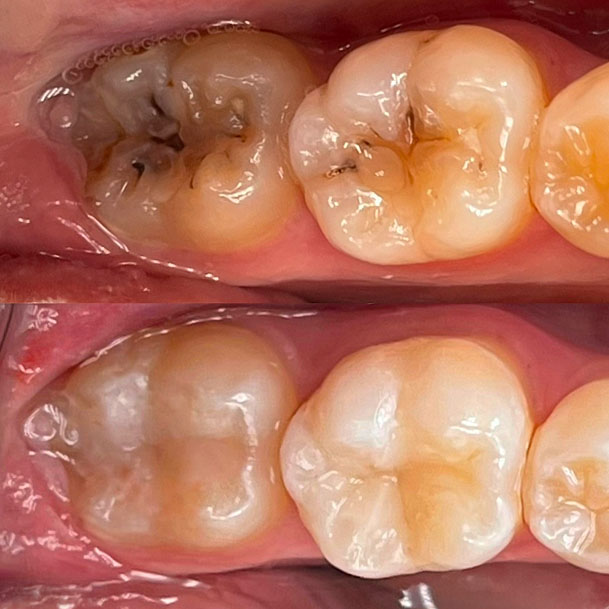
Molars absorb the heaviest chewing forces in your mouth, so cracked molar repair follows different logic than work on front teeth. Damage here usually starts as a fractured cusp around an old filling, not a clean vertical line.
Because they carry so much load, partial repairs frequently fail. A bonded patch on a surface that flexes under pressure will often loosen within months, which is why full coverage is the more durable answer.
Cracked molar treatment options fall into three tiers. A fractured cusp with healthy pulp takes an onlay or crown. If the split has reached the nerve, endodontic therapy plus a crown applies. If the fracture runs vertically into the root, the structure is not restorable.
Molars also sit where you cannot see them, so damage back there often announces itself only through pain on release, that sharp twinge when you stop biting rather than when you press down.
Cracked Front Tooth Repair
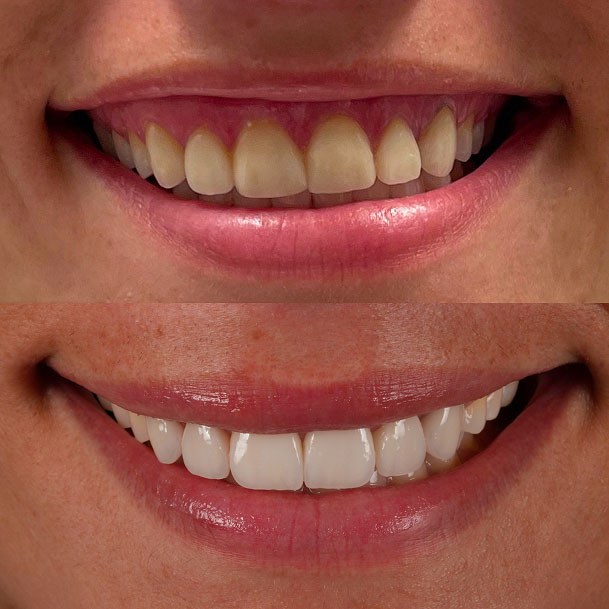
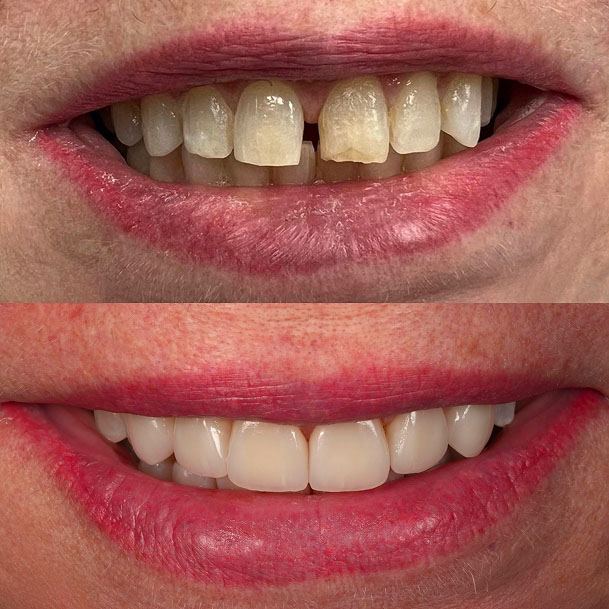
Front teeth are what people see when you speak, so cracked front tooth repair balances structure against appearance. Damage here is more visible and less load-bearing than at the back, which opens options that would not hold up on a molar. Fractured front tooth repair follows the same three routes below.
Dental Veneers
Porcelain or composite shells cover the visible surface and correct the crack and any surrounding discoloration. Each takes about an hour of chair time, with laboratory work in between.
Dental Bonding
For minor chips and superficial lines, dental bonding is the faster, lower-cost route. Resin is applied directly, shaped by hand, and cured in a single visit with no laboratory wait, and this guide on teeth bonding covers how long it holds up.
Crowns for Front Teeth
Where the break is deeper and structure has been lost, full coverage restores strength while keeping a natural look. It is the more durable choice when a veneer would sit on too little remaining enamel. If you are still deciding between the two, this guide to veneers versus crowns compares them side by side.
What Happens With a Cracked Tooth If You Ignore It
Damage that feels manageable early rarely stays that way. What happens with a cracked tooth left alone is a predictable sequence, and each stage costs more to reverse than the one before it. The same pattern holds across dental issues generally, as covered in this look at the risks of delaying emergency dental treatment.
Infection and Abscess Formation
A fracture gives bacteria a route into the pulp chamber. Once inside, infection can develop into an abscess that spreads to surrounding gum tissue and, in advanced cases, into the jaw. If a root canal has already been done and the tooth still hurts, it’s worth reading about whether an infected root canal needs to be extracted.
Tooth Loss
Cracks widen under normal chewing pressure. A fracture that could have been crowned can progress to the point where extraction is the only remaining option.
Jawbone Deterioration
Bone needs stimulation from a root to hold its volume. After a tooth is lost, the ridge underneath begins to resorb, which is why a graft at the time of extraction matters.
Increased Pain and Sensitivity
Mild discomfort turns sharp and persistent as the split deepens and exposes dentin and nerve tissue to temperature and pressure.
How Long Does a Repaired Tooth Last?
A repair is not permanent, and knowing how long dental crowns last and other options helps you weigh cost against how often you will be back in the chair.
Direct resin work sits at the shorter end of the spectrum, since composite absorbs stain and wears at the margins over time. Laboratory-made porcelain lasts considerably longer because it resists both wear and staining.
Grinding is the single biggest factor that cuts these numbers down. If you clench at night, a repair on a back tooth is under load for hours every night, and a nightguard protects the investment.
| Repair Option | Typical Lifespan | What Shortens It |
|---|---|---|
| Composite bonding | 5 to 10 years | Staining, edge wear, nail biting |
| Filling | 5 to 10 years | New decay at the margin, grinding |
| Resin veneer | 5 to 8 years | Staining and chipping at the edges |
| Onlay | 10 to 15 years | Heavy clenching, decay underneath |
| Crown | 10 to 15 years, often longer | Gum recession, decay at the margin |
| Porcelain veneer | 10 to 15 years | Impact trauma, grinding |
| Root canal with a crown | Can last decades | Reinfection, delayed crown placement |
| Implant | 20 years or more | Gum disease, smoking; the crown on top may need replacing sooner |
What Happens With a Cracked Tooth If You Ignore It
Damage that feels manageable early rarely stays that way. A cracked tooth left alone follows a predictable sequence, and each stage costs more to reverse than the last. The same pattern generally holds across urgent oral problems, as covered in this look at the risks of delaying emergency dental treatment.
Infection and Abscess Formation
A fracture gives bacteria a route into the pulp chamber. Once inside, infection can develop into an abscess that spreads to surrounding gum tissue and, in advanced cases, into the jaw. If you’ve already had a root canal and the area still hurts, it is worth reading about whether an infected root canal needs to be extracted.
Warning Signs an Infection Has Set In
An abscess produces symptoms a simple crack does not. Watch for pain that no longer comes and goes but stays constant, a bad taste or persistent bad breath, and swollen or tender gums around the affected area.
Fever, swollen lymph nodes under the jaw, or visible facial swelling mean the infection is spreading beyond the socket. Any of those signs is a same-day emergency, not something to sit on until your next routine visit. Clinical guidance on tooth fracture treats spreading infection as the point where urgency changes.
Tooth Loss
Cracks widen under normal chewing pressure. A fracture that could have been crowned can progress to the point where extraction is the only remaining option.
Jawbone Deterioration
Bone needs stimulation from a root to hold its volume. After a tooth is lost, the ridge underneath begins to resorb, which is why a graft at the time of extraction matters.
Increased Pain and Sensitivity
Mild discomfort turns sharp and persistent as the split deepens and exposes dentin and nerve tissue to temperature and pressure.

What to Expect During and After Cracked Tooth Repair
When to Book a Dental Checkup for Cracked Teeth
Book a dental checkup for cracked teeth as soon as you notice pain on biting, new sensitivity, a rough edge your tongue keeps finding, or a visible line in the enamel. Waiting rarely improves the outcome.
Book same-day emergency care if you have swelling, throbbing that keeps you awake, or a piece that has come away. Smile Lab is open 8 am to 8 pm on weekdays and 9 am to 5 pm on weekends, and same-day or next-day appointments are available in many cases. For the full list of what counts as urgent, see these dental emergency signs.
| Visit Type | What's Included | With PPO Insurance | Without Insurance |
|---|---|---|---|
| Emergency visit | Assessment of pain, swelling, or a broken piece | In network, billed to your plan | $99 flat |
| New patient exam & cleaning | Hygiene cleaning, digital X-rays, doctor exam, written plan | In network, billed to your plan | $250 |
| Specialist consultation | Oral surgery, endodontic, or implant assessment | Out of network | $99, credited toward treatment if you go ahead |
General care is in network with most major PPO plans. Specialty work, including oral surgery, endodontics, and implants, is out of network, and the specialist consultation fee is credited toward treatment if you go ahead. Cherry offers 0% financing, and you see the cost before you commit. If you are paying out of pocket, this breakdown of a dental emergency without insurance covers the flat-rate options available.
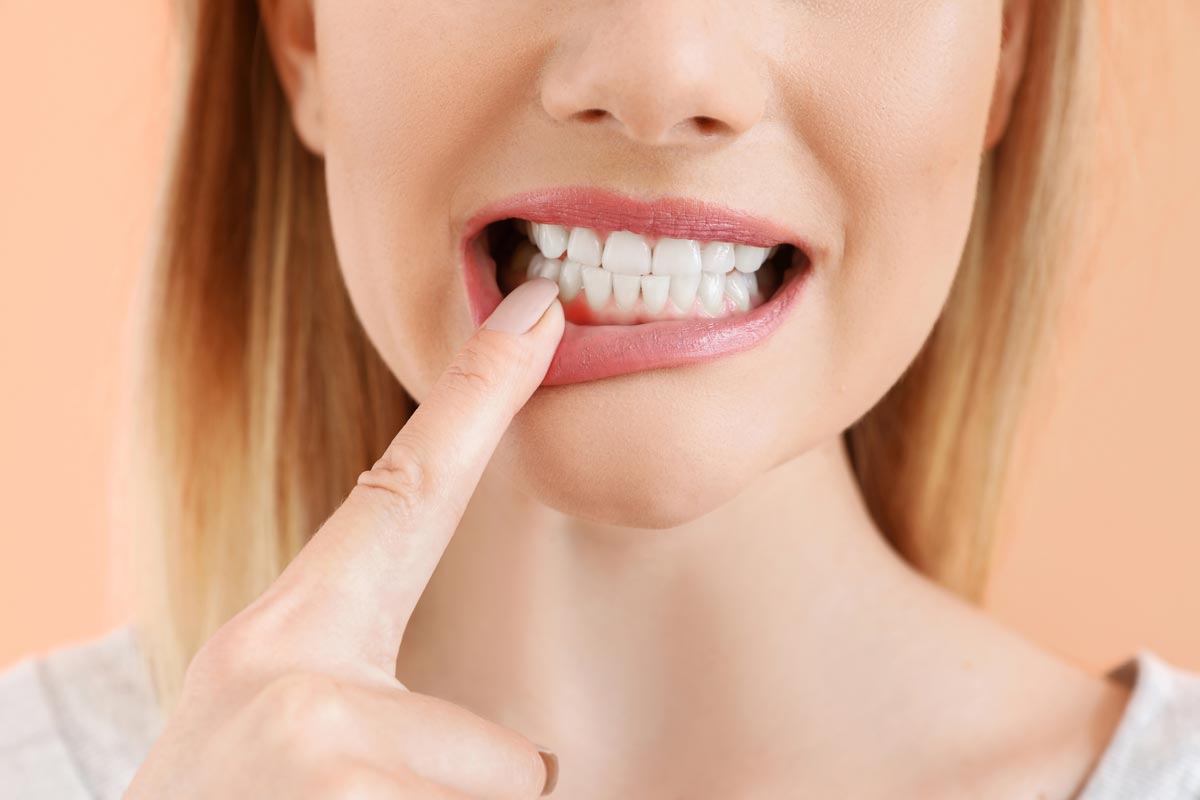
How Does a Dentist Fix a Cracked Tooth, Step by Step
What will a dentist do for a cracked tooth? The sequence stays consistent no matter which repair you need, and understanding it removes most of the uncertainty before you sit down. The answer to how a dentist fixes a broken tooth is the same, since a break and a crack follow the same evaluation process.
Diagnosis comes first, then anesthesia if the work requires it, then removal of damaged or decayed structure. The dentist either restores directly with resin in the same visit or scans for a laboratory-made crown, onlay, or veneer and fits a temporary in the meantime. The dentist cements permanent restorations at a follow-up.
Diagnosing a Fracture
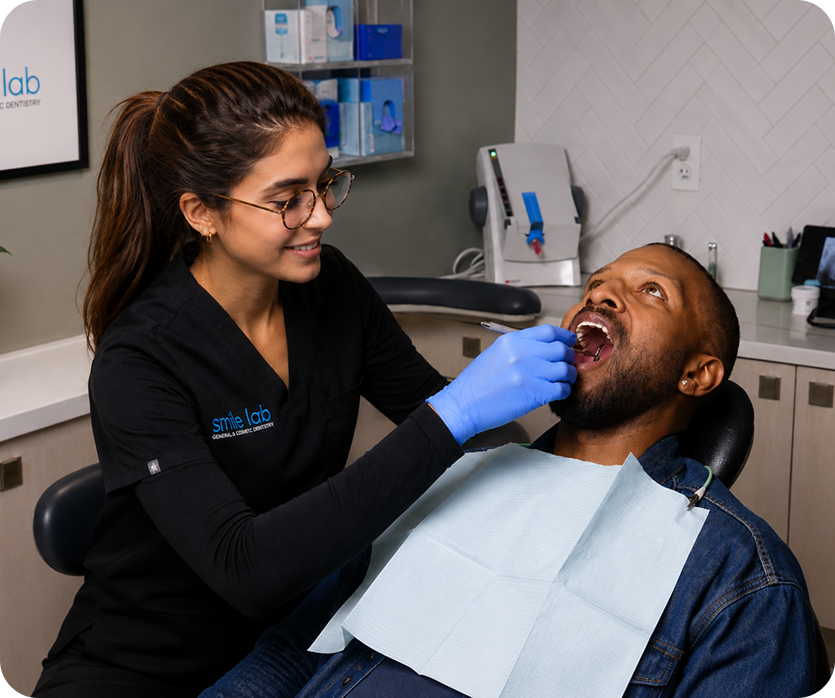
Fractures are difficult to spot, and several do not appear on standard imaging at all. Your dentist works through a sequence of checks:
- Visual examination under magnification for visible lines and edges
- A bite stick test, where you bite down and report pain on release
- Transillumination, passing light through the enamel so a crack casts a shadow
- Staining dye applied to the surface to reveal hairline damage
- X-rays to assess surrounding bone and rule out related problems
- Cone beam CT imaging, a 3D scan showing bone loss that suggests a deeper split
- Periodontal probing to measure any isolated pocket forming alongside the crack
Inflammation limited to a single site is often the giveaway for a vertical root fracture, since the split creates a narrow channel that traps bacteria. Published diagnostic research notes that no single test confirms a crack on its own, which is why dentists use several together.
The Repair Appointment
Fixing a cracked tooth usually takes one or two visits. Local anesthesia keeps things comfortable, though lighter work such as bonding or polishing frequently needs none.
Direct repairs can be finished in a single appointment. Anything made in a laboratory follows the timeline covered above.
Recovery Afterwards
Mild sensitivity to hot and cold for a few days is normal and settles on its own. Avoid chewing hard foods on that side, keep up with brushing and flossing, and attend any follow-up.
Most people return to their routine the same day, particularly after bonding, polishing, or veneer placement. Root canals and extractions can cause tenderness for several days, and what to eat after a root canal covers the softer-food period that follows.
What to Do Before Your Appointment
Fixing a cracked tooth is not a do-it-yourself job. You cannot repair a fracture at home, and no rinse or paste will close one. Enamel contains no living cells that can regenerate, so the damage does not reverse itself. What you can do is stay comfortable and avoid making things worse, and this guide to emergency tooth pain relief covers the same ground in more depth.
Rinse with warm salt water to keep the area clean. Hold a cold compress against the outside of your cheek to limit swelling. Over-the-counter anti-inflammatory medication helps with pain if you can take it safely.
Chew on the opposite side and skip anything hard, sticky, or very hot or cold. If a sharp edge catches your tongue, pharmacy wax can cover it temporarily. Do not apply aspirin directly to the gum, which burns the tissue rather than helping.

How to Stop Your Teeth From Cracking Again
Repairing the break solves the symptom, but complete tooth cracking treatment also means addressing what caused it. If grinding or a hard-food habit caused the fracture, the next one is only a matter of time unless you address the cause, too.
A custom nightguard is the most effective step for anyone who clenches or grinds. The American Dental Association reported that 63% of dentists saw more cracked teeth during the first year of the pandemic, driven largely by stress-related clenching.
If you play contact sports, or anything with a fall risk such as cycling or skating, a fitted mouthguard prevents the impact fractures that no amount of enamel strength will stop.
Cut the habits that load enamel past its limit. Ice, popcorn kernels, hard candy, and using your front incisors to open packaging are the four most common culprits behind avoidable breaks.
Regular examinations catch craze lines and early cusp fractures while they are still cheap to fix. Large old fillings are worth reviewing too, since a filling covering most of the chewing surface leaves little natural structure to resist flexing.
Common Types of Cracks Dentists Deal With
- Craze Lines: Superficial lines in the enamel only. Usually cosmetic and need no repair.
- Fractured Cusp: Part of the chewing surface breaks away, often around an existing filling. Typically restored with an onlay or crown.
- Cracked Tooth: A vertical break running from the biting surface toward the gum line. Frequently needs endodontic therapy followed by coverage.
- Split Tooth: The break has separated the structure into distinct segments. Extraction is the usual outcome.
- Vertical Root Fracture: Starts below the gum line and travels upward. Often symptomless until infection develops, and almost always requires removal.
| Crack Type | What's Happening | Usual Repair | How Urgent |
|---|---|---|---|
| Craze lines | Fine lines in the enamel surface only | Polishing, or nothing at all | Routine |
| Fractured cusp | A chewing surface piece breaks away, often near an old filling | Onlay or crown | Within weeks |
| Cracked tooth | Vertical break from the biting surface toward the gum | Root canal, then a crown | Prompt |
| Split tooth | Break has separated the tooth into segments | Extraction, then implant or bridge | Urgent |
| Vertical root fracture | Starts below the gum line and travels upward | Extraction with bone graft | Urgent once symptoms appear |
Smile Lab: Your Partner for Your Dental Health
Smile Lab is a multi-specialty practice in Manhattan, built around a patient-centered approach that puts comfort and long-term oral health first.
The team provides general care, cosmetic work, and oral surgery under one roof, so a fracture that turns out to need endodontic therapy or an implant doesn’t mean a referral elsewhere.
Every patient sees the cost in writing before treatment starts, with no pressure toward work they do not need.
Frequently Asked Questions
Can a cracked tooth heal on its own?
No. Enamel cannot regenerate, so a fracture will not close on its own. Prompt repair stops it from widening and reduces the chance of infection reaching the pulp.
Can you fix cracked teeth, or do they have to come out?
Almost all are repairable. Removal is reserved for a split that has separated the structure into segments, or a vertical root fracture starting below the gum line. Everything above that line has a restorative option.
How long does cracked tooth repair take?
Bonding, fillings, and reshaping can be finished in one appointment, from 30 minutes to an hour. Crowns, onlays, and porcelain veneers take two visits about three weeks apart. Implant replacement after extraction runs across several months.
Does a fracture always hurt?
No, and that is what makes them risky. Craze lines and many vertical root fractures produce no symptoms until infection sets in, which is why examinations catch problems patients have not noticed.
Is a cracked tooth an emergency?
Treat it as urgent if there is swelling, severe pain, bleeding, or a piece has broken away- the same threshold at which a crown falling off is a dental emergency. A painless hairline crack is less pressing but still needs examining, because you cannot judge depth by looking.
How do dentists fix a cracked molar differently from a front tooth?
Back teeth often need full coverage, because a bonded patch on a surface under heavy chewing load tends to fail. The front of the mouth carries less force, so veneers and bonding hold up well there.
What happens if I wait?
A fracture that starts small rarely stays that way once it is under daily biting force. Damage that bonding could fix today may need a crown in a few months and extraction later, so cost and invasiveness both climb the longer it sits.
Call now to Schedule Your Appointment
At Smile Lab, you'll get a written estimate before any work starts, and a team that covers everything from bonding to implants under one roof.
Or
Complete The Form Below
Conclusion
Fractures aren't always painful, but they should never be ignored. Even a molar split in half with no discomfort can progress to infection or loss. Prompt cracked tooth repair relieves symptoms and preserves the natural structure you still have.
If you suspect damage or notice any of the symptoms above, book an examination. From polishing and bonding through to crowns, endodontic therapy, and implant restoration, the right cracked tooth treatment depends on depth, and depth is something only an examination can establish.