
When a tooth needs to come out, you want it done quickly, comfortably, and by someone who knows exactly what they are doing. Smile Lab Dentistry in Union Square offers tooth extraction NYC patients can book the same day.

A tooth extraction in Manhattan takes 20 to 40 minutes for a straightforward case, costs $150 to $300 nationally for a simple removal without insurance, and is performed under local anesthetic. Hence, you feel pressure rather than pain. Most patients are back to normal eating within a week.
Our priority as dentists is always to preserve what you already have. We are trained to consider every possible option to save a natural tooth, and we only remove it as a last resort.
Sometimes, though, a decayed or damaged tooth cannot be rescued. Removal becomes the only way to relieve pain and stop an infection from spreading to the bone and surrounding teeth.
In Union Square, Dr. Cameron Lewis and his team handle extractions. He takes every precaution to keep the procedure painless, and his patients regularly single out the careful post-op follow-up he provides.
Most people searching for tooth removal NYC dentists are already in pain, but taking a tooth out isn’t our first answer. At our Union Square practice, we focus our energy on saving your adult teeth first.
That includes fillings and sealants to seal cracks, and root canals to treat nerve damage before it spreads. If you are wondering whether an infected root canal needs extraction, our guide covers when treatment can save a tooth and when it cannot.
Sometimes decay has gone too far. Here are the scenarios that usually lead to removal:
These symptoms do not always mean something has to come out, but they do mean you need to get checked before the problem gets worse.
A toothache that will not go away, especially one that intensifies when you bite down, apply pressure, or eat hot and cold foods, is one of the most common reasons patients end up needing a removal. Persistent pain is rarely a sign of something minor.
It often points to deep decay, infection, or a crack that has reached the nerve. If over-the-counter pain relief is the only thing keeping you functional, call us and get it looked at today.
When decay has destroyed too much structure, or a crack extends too far below the gumline, the usual repairs for a cracked tooth may no longer hold. At that point, removal is often the safest way to clear the infection, protect the surrounding tissue, and set up a permanent replacement like a dental implant.
Dr. Cameron will always explore every option to save it first. When removal is the right call, he will tell you clearly and honestly.
A dental abscess, which is a pocket of infection at the root or in the surrounding gum, is a serious emergency that may require emergency tooth extraction and immediate attention. Signs include throbbing pain, swelling in the gum around one tooth or in the jaw, a bad taste in the mouth, and sometimes fever.
If the infection is too advanced for antibiotics or a root canal to resolve, removal clears the source before it reaches the jawbone or spreads further. If you are experiencing any of these symptoms right now, call 332-237-6453 immediately.
Not every removal is the same procedure, and the difference affects your cost, your appointment length, and your recovery. A simple removal deals with a tooth that is fully visible above the gumline and can be loosened and lifted out with an elevator and forceps.
A surgical extraction is needed when a tooth is impacted, broken at the gumline, or anchored by curved roots. Impacted third molars are the most common case, which is why wisdom teeth removal is almost always surgical. It involves a small incision, sometimes removing a small amount of bone, and often sectioning, where the tooth is cut into pieces and removed one at a time.
Your X-ray decides which one you need. You will know before your appointment, not during it.
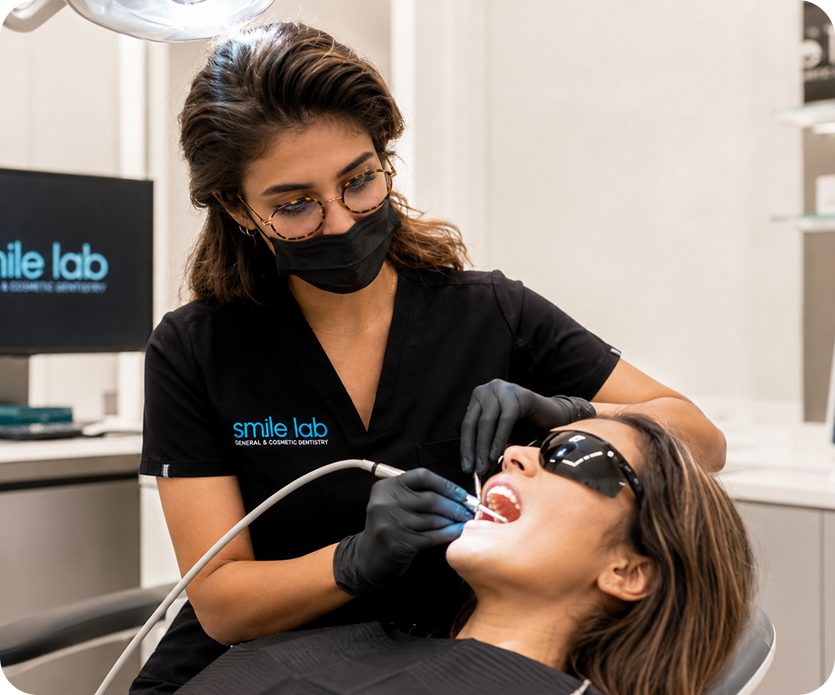
Dr. Tala Ebrahimian brings exceptional training, advanced technology, and compassionate care to every patient at Smile Lab NYC, and our full oral surgery team in Union Square is available for more complex cases.
All specialists under one roof means no more referrals across the city, no conflicting treatment plans, and faster care from start to finish. Your periodontal surgeon, endodontist, oral surgeon, and cosmetic dentist are all here, all collaborating on your care.
Open 9AM-7PM weekdays and 9-5 all weekend. Book same-day appointments online. Fit dentistry into your life, not the other way around.
Know exactly what you’ll pay before treatment begins. We accept most insurance, offer 0% financing, and never surprise you with hidden costs.
No gimmicks. No outdated methods. Just evidence-based dentistry focused on long-term oral and overall health.
Brand-new office with clean design, modern technology, and an atmosphere that feels more like a SoHo studio than a dental clinic.
A painless tooth extraction NYC patients can count on comes down to method, not marketing. We take every precaution to keep patients safe and the procedure complication-free, and we explain the process at every step. Here is a closer look at how Dr. Cameron works.
The process starts with a thorough examination to isolate what needs to come out. This may call for an X-ray or 3D imaging. Those results tell Dr. Cameron whether you need a simple or a surgical extraction. Your treatment plan is then shares your full treatment plan.
Depending on how deep the roots sit in your gums, Dr. Cameron may apply local anesthetic to the surrounding area, or sedate you fully. If sedation dentistry is the right option, it is administered through a vein in your arm.
During the procedure, you will feel firm, steady pressure as the socket is widened. The anesthetic blocks the nerves that carry pain but not the ones that register pressure, so what you feel is push and movement rather than hurt.
If you feel actual pain at any point, say so immediately, and we will stop and add more anesthetic.
Depending on the procedure, we may need to remove extra tissue or a small amount of bone to reach the tooth. A small incision in the gum is sometimes made for easier access.
Dr. Cameron uses an elevator and forceps to gradually loosen the tooth and ease it out of the socket.
Straight after, you will be given gauze to bite down on so a blood clot can form. You will also be told not to spit, smoke, or drink through a straw, so the clot can develop undisturbed.

Cost depends on three things: whether the case is simple or surgical, where the tooth sits in your mouth, and what your insurance covers. Simple removals sit at the low end. Anything involving an oral surgeon, impaction, or bone grafting costs considerably more, and our cost guide breaks down wisdom teeth removal costs in Manhattan separately.
The table below gives you real numbers before you walk in. Most major PPO dental plans are accepted, and Cherry offers 0% financing for qualifying patients paying out of pocket.
| Type of removal | What it involves | Typical US range | Our price |
|---|---|---|---|
| Simple extraction | Tooth fully visible above the gumline, loosened and lifted out | $150 to $300 | Confirmed at consultation |
| Wisdom tooth extraction | Third molar removed by an oral surgeon, often impacted | $300 to $1,100 | $1,200 |
| Surgical extraction, non-wisdom | Incision required; tooth broken at gumline or with curved roots | $250 to $900 | $1,600 |
| Extraction with bone graft | Socket preserved at the same visit, ready for a future implant | $600 to $1,200 | $950 |
| Root tip extraction | Fragment of root remaining below the gumline removed | $200 to $700 | $650 |
| Coronectomy | Crown removed, root left in place to protect a nearby nerve | $800 to $1,500 | $1,100 |
| Emergency visit, uninsured | Same-day assessment and pain relief | $100 to $250 | $99 flat |
Manhattan pricing runs above national averages, which the table reflects. We confirm every figure in writing before treatment begins. If you have PPO coverage, your plan covers emergency visits; without insurance, emergency visits are a flat $99.
Swelling peaks around 48 hours and then drops away, and you can generally return to your normal routine within a few days. Full bone healing inside the socket takes longer, but you will not feel it happening. Our guide to tooth extraction healing time covers the full timeline in more detail.
| Timeframe | What is happening | What you can do |
|---|---|---|
| First 24 hours | Blood clot forms and stabilizes; some oozing is normal | Soft cool foods, gauze, ice, rest |
| Day 2 to 3 | Swelling peaks around 48 hours, then starts to fall | Warm salt water rinses, back to light activity |
| Day 4 to 7 | Gum tissue begins closing over the socket | Most normal foods, back to work and exercise |
| Week 2 | Soft tissue largely healed; any stitches dissolve or come out | Normal diet and full brushing routine |
| Month 1 to 3 | Bone fills in beneath the gum; you will not feel this stage | Plan your replacement if you are having one |
Almost everything that goes wrong after a removal comes down to one thing: the blood clot in the socket gets dislodged. Protect it, and your recovery is uneventful. Here is what that looks like in practice.
In the first 24 hours: bite firmly on gauze for 30 to 45 minutes. If bleeding continues, place fresh gauze and bite down for another 30 minutes. Skip mouthwash entirely, including alcohol-free rinses, and avoid rinsing vigorously.
Apply an ice pack to the outside of your cheek in 20-minute intervals to reduce swelling. Avoid vigorous exercise for 24 hours, since raised blood pressure can restart bleeding.
For 72 hours: no straws, no smoking, and no alcohol. All three put suction or chemical pressure on the clot. Carbonated drinks fall in the same category, so hold off on soda for at least 48 to 72 hours and ideally the full first week.
After 24 hours: resume brushing and flossing around the extraction site, avoiding the site itself. Warm salt water rinses are the safest way to keep the area clean while it closes. If antibiotics were prescribed, finish the entire course even after symptoms clear.
Call us right away if you have heavy bleeding that will not settle, pain that gets worse instead of better after day three, swelling that continues past 48 hours, or any reaction to your medication.
Dry socket, known clinically as alveolar osteitis, happens when the blood clot breaks down or is lost before the wound closes, leaving bone exposed. It is the most common complication after removal, though it remains uncommon overall; reported incidence generally falls between 0.5% and 5% of cases.
The pattern is distinctive. Pain settles down normally, then returns and intensifies 1 to 3 days later, often with a bad taste or noticeable odor. The reversal is the signal, not the pain.
It is treatable. The socket is irrigated and a medicated dressing is placed, which relieves the pain quickly. Call us rather than waiting it out. Smoking, straws, and vigorous rinsing in the first 72 hours are the main avoidable triggers.
A missing tooth is not just cosmetic. Neighboring teeth drift into the space, the opposing tooth drops down to meet nothing, chewing changes, and the jaw joint can start to complain. Bone in the empty socket also shrinks over time.
You have options, and the right one depends on the gap’s location and how much bone remains. A dental implant replaces the root and the crown, and is the closest thing to what you lost. A bone graft at the time of removal preserves the socket for a later implant, which is why it is often done in the same visit. If you are weighing your choices, our comparison of dental implants vs bridges covers cost and longevity.
For a front tooth, we can scan a temporary flipper before your surgery so you leave with the gap filled. We map out the replacement plan at the same appointment as the removal, not months afterward.
A tooth that needs extracting won’t get better on its own — and the longer it’s left, the higher the risk of infection spreading to surrounding teeth and bone. Book your consultation at Smile Lab Dentistry today and get a clear answer and a clear plan, fast.
At Smile Lab, you’re not just a patient number.
You’re cared for by a collaborative team of highly trained specialists who actually talk to each other about your treatment.
Founder & General Dentist
Oral & Maxillofacial Surgeon
Periodontist & Implant Specialist
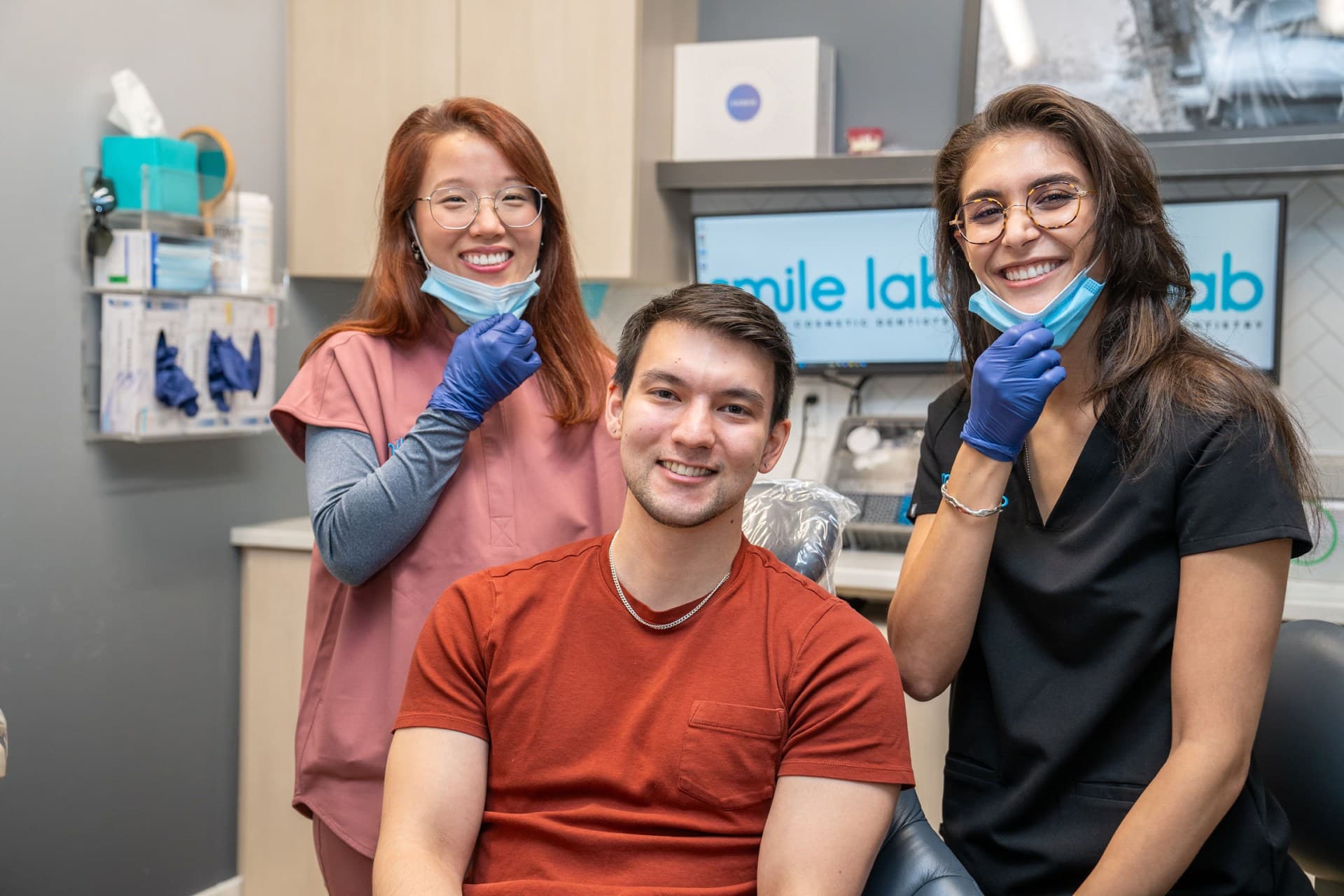
No referrals across the city, no conflicting treatment plans, and faster care from start to finish. Your periodontist, endodontist, oral surgeon, and cosmetic dentist all work in the same practice and talk to each other about your case. Our full oral surgery team in Union Square handles the more complex cases.
Fast Relief When You Need It
You don't want to wait weeks for a painful tooth. Same-day and same-week appointments are available, so you won't sit in pain waiting for a slot. We are open 9 AM to 7 PM on weekdays and 9 to 5 on weekends.
Nervous patients are the norm here, not the exception, and the whole process is built around that. Local anesthetic and sedation are both available, and the team takes the time to make sure you are settled before anything starts. Patients consistently describe it as easier than they expected.
Transparent From Day One
We confirm every figure in writing before treatment begins, and the cost table above is the same one the team works from. Cherry financing is available at 0% for qualifying patients paying out of pocket, and nothing is added at the end.

Digital imaging and surgical technology on site mean we assess your case accurately before a single instrument is picked up. That means a more precise procedure, less trauma to surrounding tissue, and faster healing. No gimmicks, no outdated methods.

Removals are delicate procedures that some clinics refuse to perform because of the risks involved. They need an experienced hand, both to keep the procedure comfortable and to avoid damage to the jawbone or gums that would need a pricier, riskier operation to correct later.
Dr. Cameron Lewis has practiced as an oral and maxillofacial surgeon for over a decade. He earned his doctorate in dental surgery from the Howard University College of Dentistry in 2007, then completed oral and maxillofacial surgery internships at New York Medical College and Jacobi Medical Center.
That background covers both straightforward and complicated cases.
Our office is near Union Square, the Flatiron District, Greenwich Village, Gramercy Park, Chelsea, and the East Village.


Cost depends on whether the case is simple or surgical, where the tooth sits, and your insurance coverage. Simple removals run $150 to $300 nationally without insurance, while surgical cases handled by an oral surgeon run higher.
The cost table above breaks down every procedure type, and tooth extraction cost NYC averages track closely with the ranges shown. You will receive a written estimate at your consultation before scheduling anything. We accept most major insurance, and flexible payment options are available.
A straightforward case takes 20 to 40 minutes from the time anesthetic is administered. Surgical cases involving impacted teeth or a tooth broken at the gumline take longer, depending on the complexity. You will get a realistic time estimate at your consultation so you can plan your day. Most patients are surprised by how quickly it is over.
For the first 24 hours, stick to soft, cool foods: yogurt, applesauce, smoothies, mashed potatoes, ice cream. For a full list of foods to avoid after extraction, our guide covers what to skip and why. Avoid anything hot, hard, crunchy, or chewy that could disturb the clot. Reintroduce softer solids over the following days as comfort allows. Most people are eating normally within a week.
Keep the pad firmly in place over the site for at least 30 to 45 minutes. That pressure is what forms the clot. If bleeding continues after you remove the first piece, replace it and bite down for another 30 minutes. Do not change it too frequently, since that disrupts clot formation. If heavy bleeding continues beyond a few hours, call 332-237-6453 right away.
Avoid it for at least 48 to 72 hours, and ideally the full first week. Carbonation can break down the clot in the socket and raise your risk of dry socket. When you do go back to it, skip the straw. Suction puts the same pressure on the clot as carbonation does, and should be avoided for the entire first week.
Avoid it for the first 24 hours, including alcohol-free rinses. During that window, the goal is protecting the clot, and rinsing too early can dislodge it. After 24 hours, gentle warm salt water rinses are the safest way to keep the site clean. Go back to your regular mouthwash once your follow-up confirms the area is healing properly.
Smile Lab Dentistry in Union Square is one of Manhattan’s highest-rated practices for oral surgery. With oral and maxillofacial surgeons on staff, modern surgical technology, same-day availability, and over 1,400 five-star reviews from patients across New York City, the practice delivers fast, comfortable care that keeps patients coming back and referring their friends and family. Call 332-237-6453 to book your consultation.
A tooth that needs to come out will not get better on its own, and the longer it is left, the higher the risk of infection reaching the surrounding teeth and bone. Book your consultation today and get a clear answer and a clear plan, fast.









No referrals across the city, no conflicting treatment plans. Tell us what you need, and we’ll get you in.