Your final total depends on the dentist, the lab that builds each shell, how many teeth you cover, the prep involved, and whether you need X-rays, decay treatment, or gum contouring first.
Because these are elective cosmetic restorations, insurance rarely covers them. A multi-tooth case can run anywhere from about $4,600 for two teeth up to $23,000 or more for a full smile line; see the exact breakdown by tooth count below.
Porcelain veneers are a long-lasting cosmetic fix for discolored, chipped, or uneven front teeth. They suit patients with healthy underlying enamel who mainly want to improve color and shape.
What is a Porcelain Veneer?
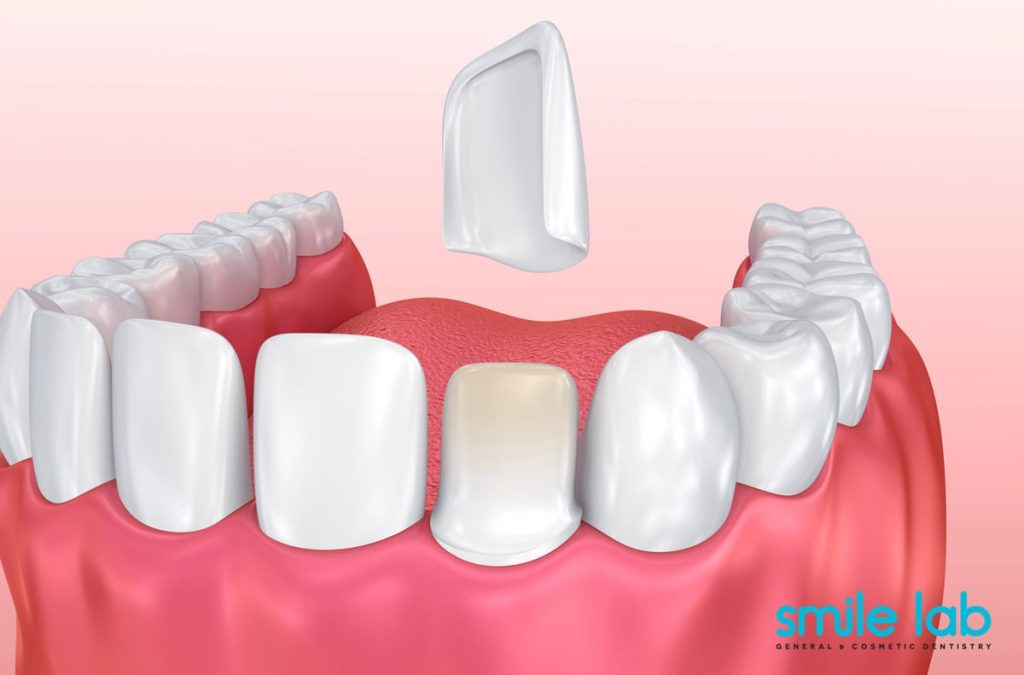
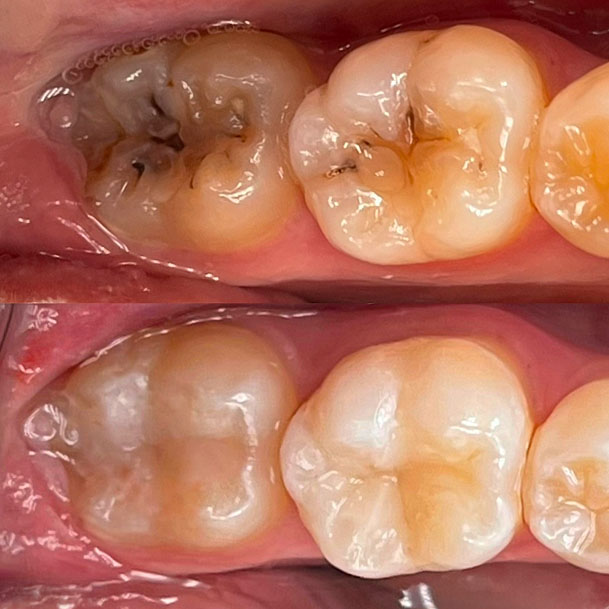
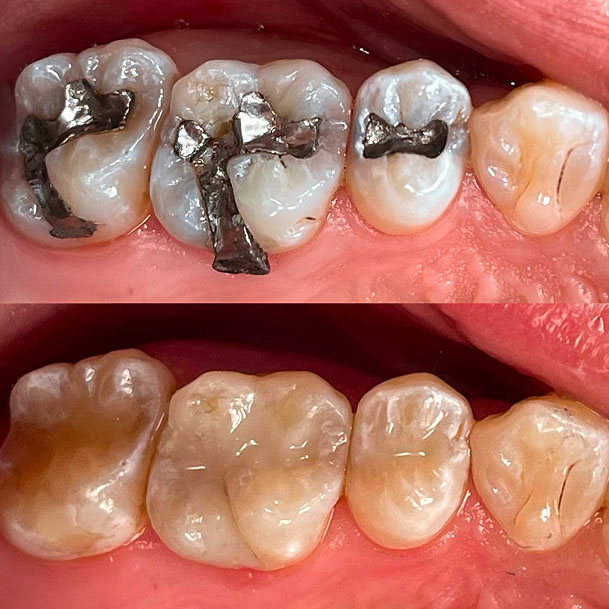
A veneer is a thin shell made from tooth-colored ceramic that bonds to the front of a tooth. It hides chips, discoloration, stains, or gaps, mostly on the front teeth that show when you smile.
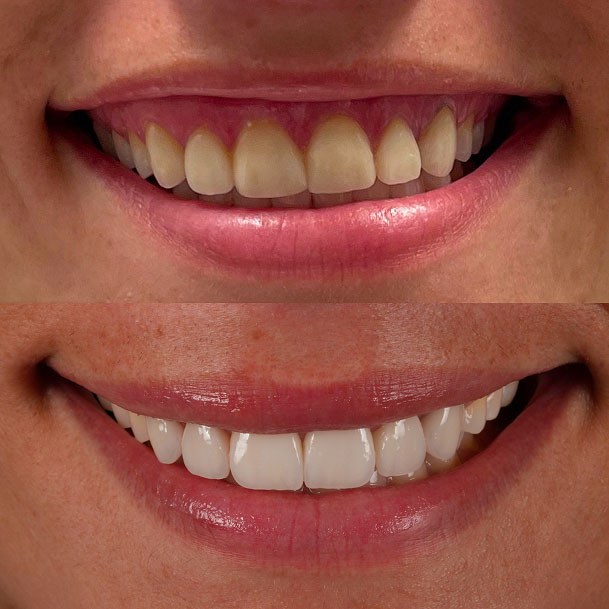
These shells match the color of your natural enamel, so the difference is hard to spot. They also resist staining better than enamel and rarely need extra upkeep.
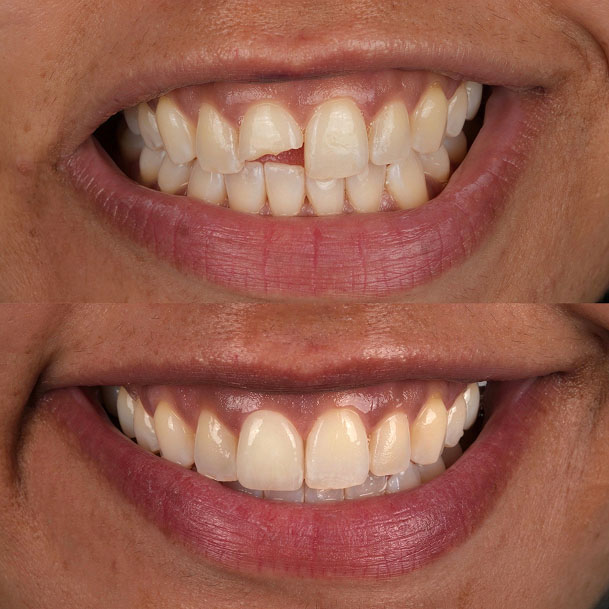
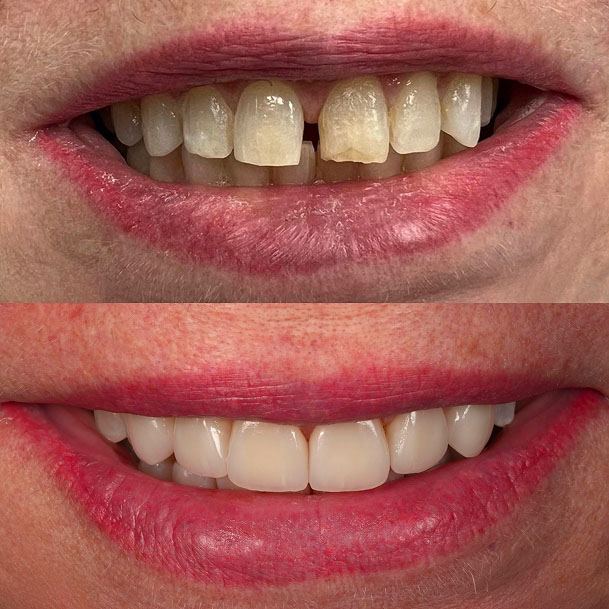
Veneers can cover a range of cosmetic flaws, including gaps, undersized or pointed teeth, discoloration, deep stains, and cracked or chipped edges.
Dental veneer costs vary widely from patient to patient, which is why the material and number of units matter more than any single figure you see online.
If color is the only concern and your teeth are otherwise healthy, professional teeth whitening is worth considering before committing to a full set of shells.
Porcelain vs Composite Veneers: What You Pay and Why
Patients often start by asking how much veneers cost before they know the material options, since the two choices fall into very different price ranges.
Porcelain veneers are lab-made ceramic shells. They cost more because each one is custom-built to match your smile and lasts longer.
Composite, or resin, shells are shaped directly onto the tooth in a single visit. They cost less up front and need less enamel removed, but they stain more easily and wear out sooner.
For patients looking for affordable veneers in NYC without giving up durability, composite is usually the better starting point. If budget is the main concern, dental bonding sits a step below composite in both cost and longevity, and it is worth comparing before you commit.
Table placement: directly below this paragraph, titled “Porcelain vs Composite Veneers at Smile Lab”
| Feature | Porcelain Veneer | Composite (Resin) Veneer |
|---|---|---|
| Cost per tooth | $2,323 | $950 |
| Material | Lab-made ceramic | Tooth-colored resin |
| Visits needed | 2 to 3 | Single visit |
| Lifespan | 10 to 15 years or more | 5 to 7 years |
| Stain resistance | High | Moderate |
| Best for | Lasting, full smile-line results | Tighter budgets or minor fixes |
Ceramic is the better long-term value for most people who want a lasting result. Resin makes sense if you are working to a tighter budget or fixing one or two minor flaws.
Full Cost Breakdown of Getting a Porcelain Veneer in Manhattan, NYC
Wondering what porcelain veneers cost in Manhattan once all the steps are added up? This is where Smile Lab is clearer than most offices: you see each line, not one lump number. That puts the porcelain veneer cost per tooth at $2,323 for ceramic and $950 for resin, with the surrounding steps folded into your plan.
Table placement: directly below this paragraph, titled “Porcelain Veneer Cost Breakdown by Step”
| Step | What Happens | Cost |
|---|---|---|
| Initial consultation | Health check plus a treatment plan and exact quote | Complimentary |
| Digital X-ray / 3D imaging | Images to confirm the condition of each tooth | Included in workup |
| Tooth preparation | Minimal enamel removed, impression sent to the lab | Included in veneer price |
| Veneer placement | Temporary shell fitted, permanent bonded weeks later | $2,323 porcelain / $950 resin (per tooth) |
| Additional procedures | Only if a tooth needs work first, such as a root canal | Varies by case |
| Follow-up visits | Short checks to fine-tune fit | $60 to $100 |
Looking at the full price of porcelain veneers this way, rather than as one lump number, makes it easier to see what you are paying for at each stage.
At the initial consultation, your dentist checks your oral health and confirms whether shells are right for you. During preparation, the dentist shaves a small amount of enamel so each shell sits flush, then sends an impression to the lab.
During the two to three week wait, the temporary shell lets you go about daily life normally, though it is not as strong as the final piece, so avoid biting into anything hard with it in place. Any prep work needed first, such as a root canal, is billed separately based on the case. Short follow-up visits confirm the fit.
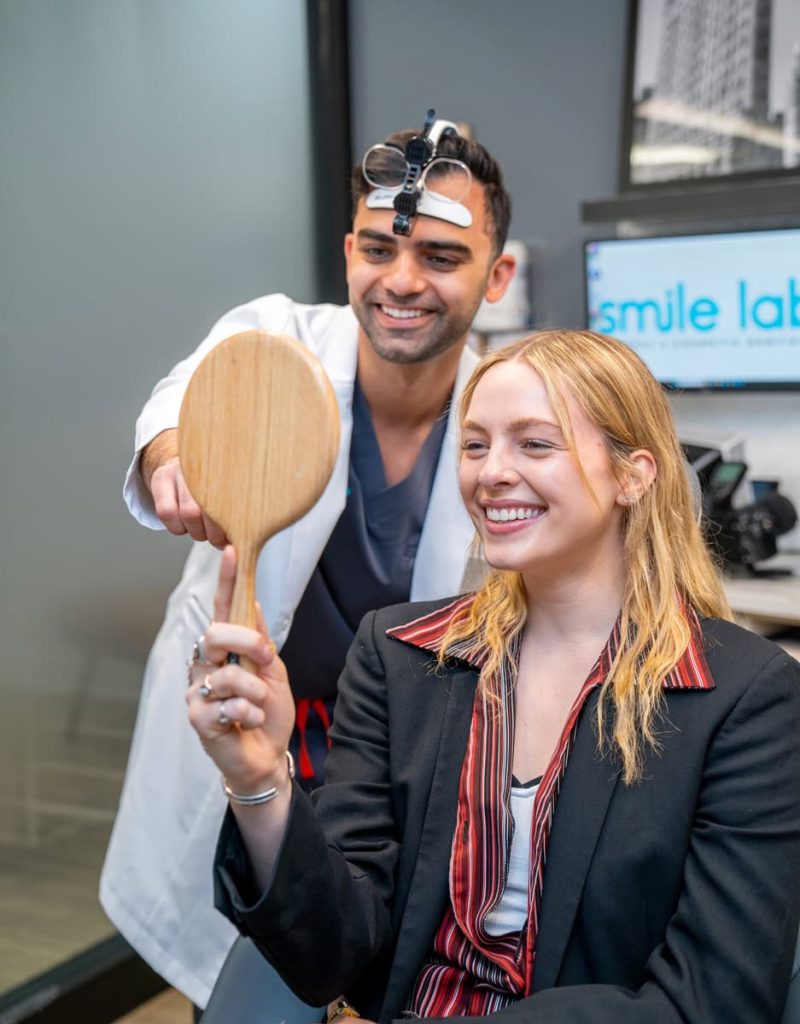
How Much Do Veneers Cost for 2 Front Teeth or a Full Smile?
Porcelain veneers cost NYC patients more per unit than the national average, but the total still scales with how many you cover. Most people do not cover every tooth. The visible smile line is usually six to ten teeth across, and many patients treat only the front pair. 2 front teeth veneers cost less than a full arch because they involve less lab work.
The table below multiplies the Smile Lab per-tooth rate across the counts patients ask about most. Use it as a planning estimate; your exact quote comes from the consultation.
Table placement: directly below this paragraph, titled “Veneer Cost by Number of Teeth at Smile Lab”
| Teeth Covered | Porcelain Total | Composite Total | Typically Used For |
|---|---|---|---|
| 2 (front pair) | $4,646 | $1,900 | Closing a single gap or matching two chipped front teeth |
| 4 | $9,292 | $3,800 | The four units most visible in a narrow smile |
| 6 | $13,938 | $5,700 | A standard smile line for most patients |
| 8 | $18,584 | $7,600 | A wider smile line where the premolars show |
| 10 | $23,230 | $9,500 | Full upper arch coverage on a broad smile |
Average Cost of Porcelain Veneers: What Drives the Number
Why do two people pay different amounts? The average cost of porcelain veneers in NYC shifts with a few factors. Material is the big one, since ceramic costs more than resin because of the lab work and durability.
Count matters too. A single unit is a fraction of what a full smile line of eight runs, because each shell carries its own lab fee.
Dentist skill also moves the price, because a cosmetic dentist with a strong track record and an eye for shade and shape charges more, and it shows in the result.
Manhattan pricing tends to run above the national average, consistent with NYC dental pricing across most procedures, due to higher overhead and steady demand for top cosmetic work.
What Actually Happens to Your Teeth When You Get Veneers?
This is the second question patients ask, right after price, and it deserves a straight answer. For ceramic shells, we remove roughly 0.3 to 0.5 mm of enamel from the front of each tooth so the shell sits flush instead of bulking out your smile.
That removal is permanent. Once you go ahead, each prepared tooth will always need to be covered. If you want the full picture on what’s permanent versus reversible, that question has its own breakdown.
Composite is different. Prep is minimal, and in many cases little or no enamel comes off, which keeps the option closer to reversible.
Is it painful? No. Preparation is done under local anesthesia, and most patients report mild sensitivity for a few days that settles on its own.
Recovery is short. You wear a temporary while the lab works, usually one to two weeks, and once the permanent shells are bonded, most people are back to eating and speaking normally within a day or two.
Veneers vs Whitening, Bonding, Crowns, and Aligners
Whitening fixes color and nothing else, so it is worth ruling out before you commit to a full set of shells. If your enamel is structurally sound and staining is the only complaint, it is faster and far cheaper as a first step.
Bonding handles small chips or gaps in one visit. It is less durable and stains sooner, so it fits minor fixes rather than a full smile line.
A dental crown covers the whole tooth and is the right call when there is structural damage or decay. A veneer only covers the front surface, so it assumes the tooth underneath is sound.
If your issue is alignment rather than appearance, straightening with clear aligners first gives a better foundation and can reduce how many shells you end up needing.
Does Insurance Cover Veneers, and Can You Finance Them?
Most dental plans treat cosmetic shells as elective, so coverage usually does not apply when the goal is purely appearance. That holds across NYC and nationwide.
If a restoration also repairs a tooth damaged by injury or decay, a plan may cover part of the cost. Ask your provider for a pre-treatment estimate to find out.
Smile Lab works with Cherry for patient financing, including 0% payment options, so you can spread the cost over time instead of paying all at once.
How Long Do Porcelain Veneers Last?
With basic care, ceramic shells last 10 to 15 years, and often longer. Their surface resists stains and wear, so they hold their look with regular brushing, flossing, and checkups. Resin lasts around 5 to 7 years and needs replacing sooner.
Grinding is the single biggest thing that shortens a shell’s lifespan, so wear a nightguard if you grind. Biting ice, fingernails, or pen caps runs a close second, and gum recession around the margins can expose the edge over time.
Top 4 Benefits of Getting Porcelain Veneers in NYC
1. They Look Like Your Own Teeth
Once bonded, a shell is hard to distinguish from the tooth next to it. How well it disappears depends on the ceramist’s skill.
2. Placement Is Quick and Mostly Painless
Compared with other cosmetic and orthodontic work, the process is straightforward and comfortable. A three-year clinical follow-up of porcelain veneers found nearly all restorations still intact at review, which may help ease any nerves you have.
3. They Resist Stains Better Than Natural Teeth
Ceramic holds its brightness for years with less upkeep than enamel. You still need routine checkups to keep your smile in good shape.
4. They Fix Several Problems at Once
Shells hide stains and cover damage from wear or trauma. Chips, cracks, and gaps that might otherwise require separate fillings can often be handled in a single cosmetic step.
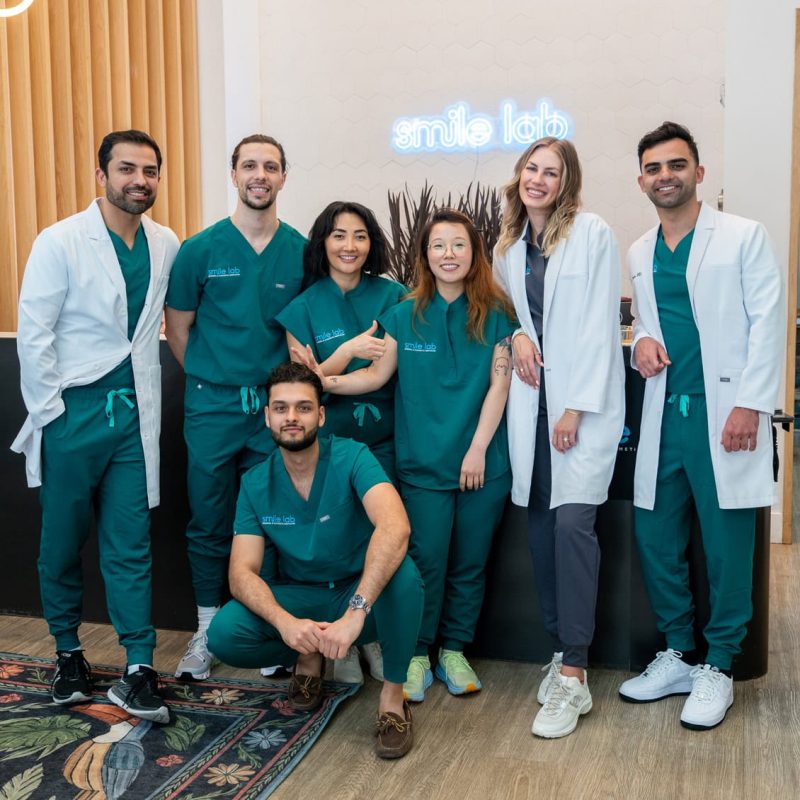
How to Choose a Cosmetic Dentist for Veneers in NYC
Enamel removal cannot be undone, so who does the work matters as much as the material. Before you commit, ask a few direct questions.
Ask how many cases the dentist places each year, and ask to see before-and-after photos of their own patients, not stock images. Ask which lab builds the shells and what ceramic they use. Ask for a written treatment plan with pricing before any prep begins, and ask who absorbs the cost if a shell chips or the shade comes back wrong.
A few things should give you pause. Pressure to start the same day without a consultation is a warning sign, since a sound plan needs imaging and a bite check first.
Pricing well below the NYC range with no explanation of the material usually means a cheaper lab, a thinner shell, or a quote that climbs later. So does a consultation that jumps to cosmetics without examining your gums and bite.
Why Patients Choose Smile Lab for Veneers in NYC
Placing these shells well takes more than good materials. The most common problem is getting shells back from the lab that don’t quite match the color or texture of your natural teeth, then bonding them anyway. A skilled cosmetic dentist catches that before it happens.
When it comes to porcelain veneers in NYC, the person placing them matters as much as the material. The Smile Lab cosmetic team works on these cases regularly and can manage complications as they arise, including cases that require minor surgical intervention.
Patients searching for veneers near them in Manhattan often land here because the Union Square office keeps consultations, imaging, and placement under one roof. Whether you search for porcelain veneers in New York or NYC, the practice is easy to reach from anywhere in the city.
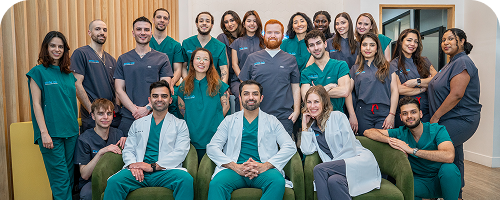
This page is authored and reviewed by Dr. Waise Ebrahimi, DDS, lead dentist at Smile Lab NY. Dr. Ebrahimi trained at the University of California, San Francisco, and practices in affiliation with Mount Sinai. He leads Smile Lab’s clinical team across cosmetic and general dentistry.
Call now to Schedule Your Appointment
Smile Lab is open weekdays and weekends, accepts most PPO plans, and offers same-day appointments for new and existing patients. If you are ready to take the next step, call or book online to schedule your first visit.
Complete The Form Below
Related Posts
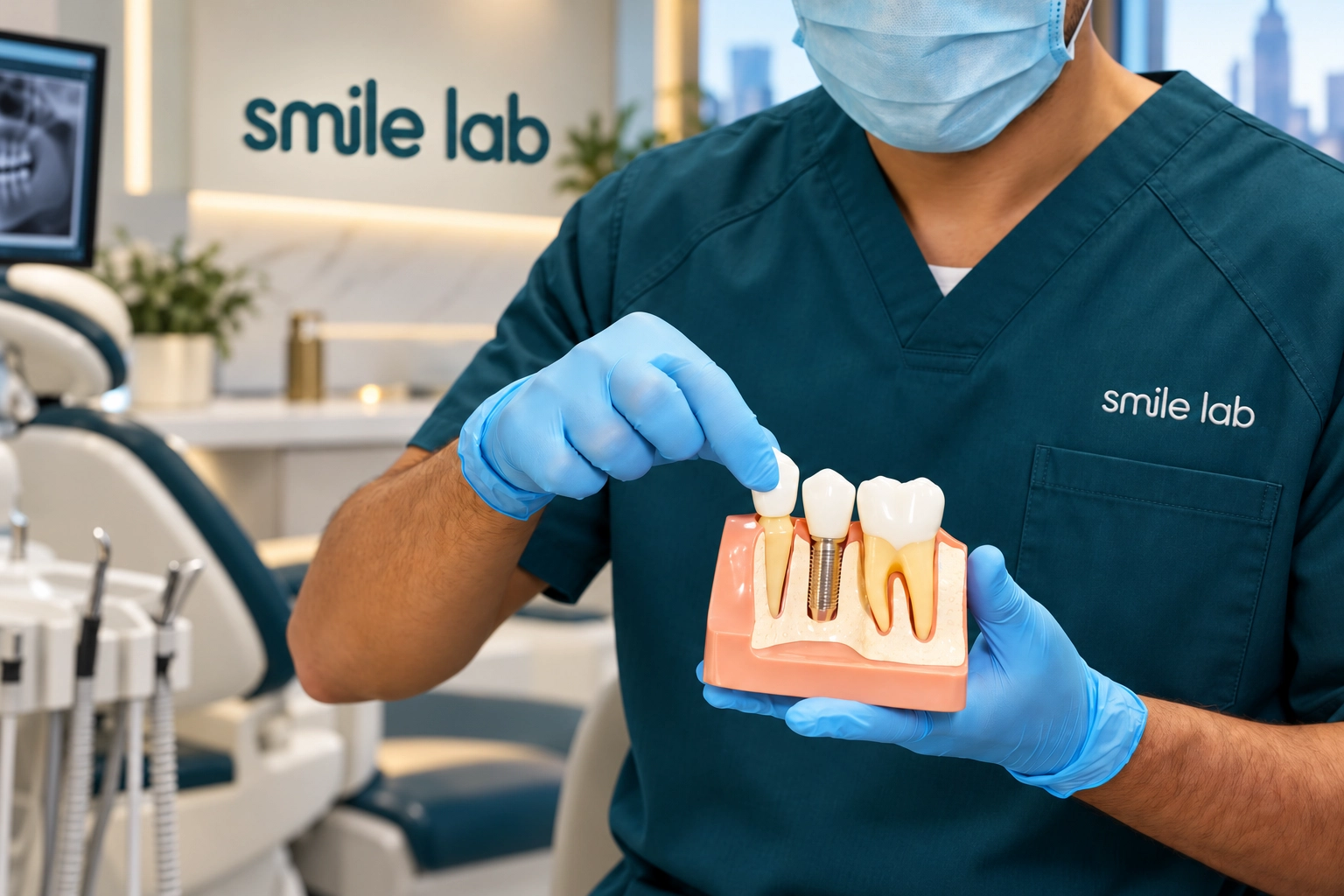
Care and Maintenance of Dental Implants: Cleaning Guide
Proper dental implant maintenance starts with brushing twice daily for two minutes using a soft-bristled or electric toothbrush, gentle circular motions, and non-abrasive toothpaste. Angle your brush about 45 degrees toward the gumline, and avoid charcoal or harsh whitening formulas.
Clean between teeth and under bridges daily with implant-safe floss, coated interdental brushes, or a water flosser on a gentle setting, especially with full-mouth restorations. An alcohol-free antimicrobial rinse may help if your dentist recommends it, but it cannot replace daily cleaning.
Dental Codes for Implant Bridges: Abutments and Crowns
A dental implant bridge uses several CDT codes, with each part and tooth position coded separately. Common dental codes for implant bridges include D6056 for a prefabricated abutment and D6057 for a custom abutment, both of which include placement. Retainers use D6068–D6074 and D6194–D6195 when supported by abutments, or D6075–D6077, D6098–D6099, and D6120–D6123 when attached directly to implants. These codes cover ceramic, porcelain-fused-to-metal, cast metal, and titanium options.