Medically reviewed by Dr. Waise Ebrahimi, DDS
At Smile Lab NYC, we evaluate your gums, bite, tooth position, and overall smile before recommending treatment. Below, we explain what can cause long or prominent teeth, which dental procedures may help, and what each option involves.
Why Do Some People Have Longer Teeth?
Elongated teeth develop from a mix of genetic and environmental factors. In most cases, gum recession drives it. According to the National Institutes of Health, receding tissue exposes more tooth surface, making the crown appear longer than usual.
Can teeth actually grow longer? Not in the way most people assume. When teeth look longer, it is not new growth; more of the existing tooth is simply visible as the gumline changes, the same recession process described above.
Other contributing factors include:
- Misaligned bites, known as overjets or malocclusions
- Childhood habits such as tongue thrusting and thumb sucking
- Enamel wear from grinding, which shortens some edges and leaves untouched ones looking longer by comparison
A less common cause is macrodontia, a condition in which one or more teeth are genuinely larger than average. According to the Cleveland Clinic, isolated macrodontia is uncommon, but when it occurs, it can noticeably change the balance of a smile, and the fix differs from the recession-driven scenarios that account for most cases.
Genetics play a role too. Some people are simply born with longer front teeth, and the proportion becomes more noticeable with age as tissue naturally recedes. Pinpointing the cause matters, because it decides the fix. A full clinical exam reveals whether elongated teeth are a normal variation or a condition that needs attention.
Why Are My Front Teeth Longer Than the Rest?
Most people do not think every tooth looks long. They notice one or two, usually the central incisors, which look like large front teeth against smaller neighbors. If you have noticed your front teeth are longer than the rest of your smile, you may be looking for a single label for the pattern. In practice, there isn’t one clinical term; clinicians describe it by cause rather than diagnosis, and three explanations account for most cases.
- Uneven recession. Tissue rarely pulls back evenly. A single tooth can lose more gumline coverage than its neighbors, exposing more of that one tooth while the rest stay intact.
- Uneven wear. Grinding flattens some biting edges faster than others. The tooth that looks long often is not; it is simply the only one still at its original height.
- Proportional illusion. Undersized neighbors make a normal central incisor read as oversized, and long incisors are frequently the by-product of small laterals rather than any true length difference. Peg laterals and retained baby teeth are the common culprits, and both are more frequent than people expect.
Wondering how to fix one tooth longer than the other? The answer follows the cause. Recession points toward contouring or grafting. Wear points toward bonding or a crown. Small neighbors get built up rather than shortening a perfectly healthy tooth. Filing down a sound tooth to match a smaller one is invasive and rarely the right choice.
Top Procedures for Long Teeth Treatment
Your plan depends on the cause and the outcome you want. Here are six professional options and what each involves.
1. Gum Contouring (Gingivoplasty)
Gum contouring suits people whose long front teeth stem from an uneven or receded gumline. The procedure reshapes the tissue to restore symmetry and reduce the appearance of excess tooth length, and in some cases, laser gum treatment offers a more precise, minimally invasive approach.
Cases covering one to three teeth typically take under an hour under local anesthetic, with initial healing usually running one to two weeks. According to the American Academy of Periodontology, contouring improves aesthetics and helps guard against further periodontal disease.
2. Orthodontic Treatment
If elongated teeth result from bite problems or misalignment, orthodontics may be the most effective route. Braces or clear aligners reposition the arch to create a more balanced smile.
The American Association of Orthodontists advises wearing aligners 20 to 22 hours a day for best results, with most cases finishing inside 12 to 24 months. The AAO also notes that correcting overjets and malocclusions improves oral health and jaw function.
3. Veneers
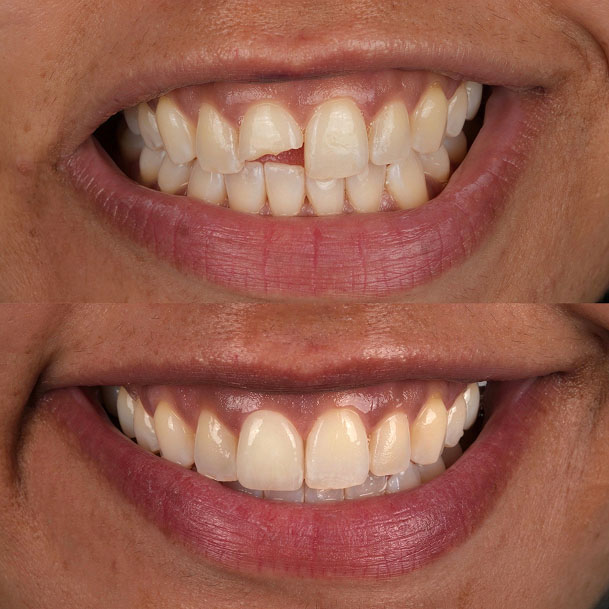
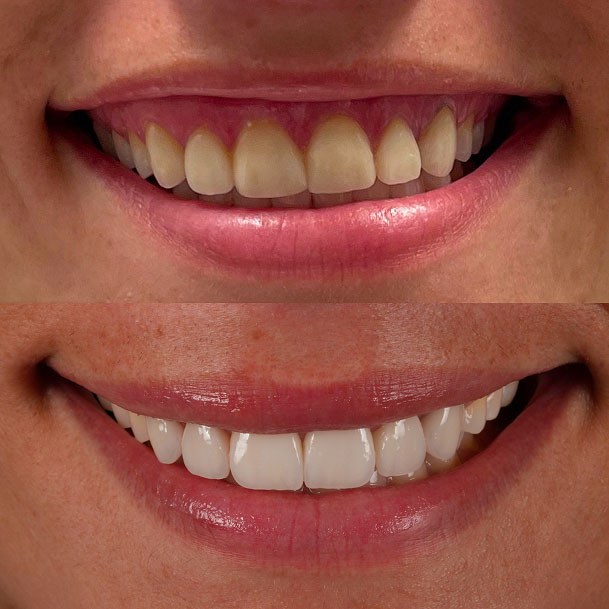
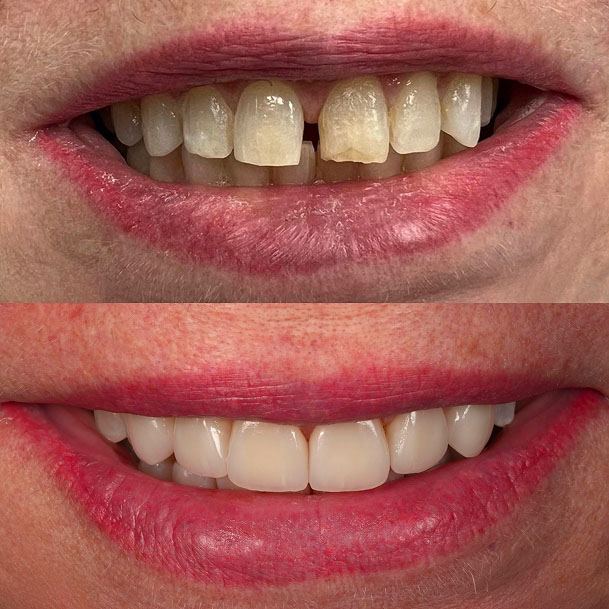
For a cosmetic fix, dental veneers offer a strong solution. Thin porcelain shells bond to the front surface, masking length and creating a uniform look across the arch.
Expect two visits roughly three weeks apart. According to the American Dental Association, porcelain veneers typically last 10 to 15 years with proper care, though patients weighing whether veneers are permanent should know the procedure removes a thin layer of enamel first. Veneers work best when the tooth is structurally sound and only the appearance needs adjusting. A resin option costs less but wears faster.
4. Dental Crowns
When wear, trauma, or structural damage is behind the change, crowns restore natural shape and strength. Dental crowns encase the whole tooth and are custom-made to blend with the rest of your smile.
The prep appointment takes about an hour per tooth, with the final crown fitted roughly three weeks later once the lab finishes it. Patients often ask how long crowns last once they’re in place, and durability depends largely on material and bite habits.
5. Tooth Recontouring (Enameloplasty)
Recontouring is a simple, non-surgical option for minor cases. It removes small amounts of enamel to reshape the edge and create a more balanced line.
It usually takes around 30 minutes per tooth in a single visit, often without anesthetic. One caveat: enamel does not regenerate, as the American Dental Association confirms, so the change is permanent and the amount removed must be conservative.
6. Gum Grafting
When recession is advanced and contouring cannot help, a gum graft rebuilds lost tissue. A small amount of tissue is placed over the exposed root, shortening the visible crown and reducing sensitivity. When patients describe long tooth roots showing at the gumline, this procedure usually resolves it, since the goal is to cover the exposed root surface rather than shorten the crown itself.
Consider this option when the root surface is already exposed and at risk of decay, rather than when the concern is purely cosmetic.
| Procedure | Best For | Cost | Time Involved |
|---|---|---|---|
| Gum Contouring | Uneven or receded gumline, 1 to 3 teeth | $550 | Under 1 hour, 1 to 2 weeks healing |
| Tooth Recontouring | Minor edge reshaping | $175 to $450 per tooth | 30 minutes per tooth, single visit |
| Bonding | Building up undersized neighboring teeth | $950 | Single visit |
| Veneer (Resin) | Budget cosmetic masking | $950 per tooth | 1 hour |
| Dental Crown | Worn or structurally damaged teeth | $1,950 | 1 hour prep, fitted 3 weeks later |
| Veneer (Porcelain) | Long-term cosmetic correction | $2,323 per tooth | 1 hour prep, fitted 3 weeks later |
| Clear Aligners | Bite problems and misalignment | $6,000 | 12 to 24 months depending on case |
| Gum Grafting | Advanced recession with exposed root | Quoted at consultation | 4 to 6 weeks full recovery |
How to Fix Big or Oversized-Looking Front Teeth
If the concern is size rather than length, the fix depends on whether the teeth are genuinely oversized or just appear that way next to smaller neighbors. A photo and bite exam separate the two.
In true macrodontia, tooth recontouring can reduce edge and side dimensions, and a veneer or crown then restores a natural shape. When the neighbors are the real issue, bonding or veneers on the laterals are the more conservative fix and often produce a more balanced smile without touching a healthy central incisor.
For patients who dislike drilling down healthy enamel, a no-grinding approach is often available. Building up small neighboring teeth, adding minimal side veneers, or reshaping the gumline can correct proportions while leaving the larger teeth intact. Because enamel does not grow back, the least invasive plan that solves the problem is usually the right one.
What Our Patients Say

11/02/2015


11/02/2015
11/02/2015
I never thought I’d actually look forward to a dentist appointment, but this practice has completely changed the game. From the moment you walk in, the modern decor and calming ambiance make it feel more like a high-end boutique or a spa than a dental office.
Gum Graft Recovery: How Long Does It Take?
Initial healing after grafting surgery typically takes 1 to 2 weeks, though this varies by patient and by how much tissue was involved. Full recovery generally takes a few more weeks, and your periodontist can give you a timeline specific to your case at the consultation. Following your surgeon's instructions speeds this up considerably. Avoid sticky and hard foods along with smoking during the healing window, since both can irritate the site and raise infection risk.
Are Long Front Teeth Normal?
Long front teeth are not always a cause for concern. In many cases, they are simply part of your natural anatomy, and no intervention is needed.
In fact, the central incisors are designed to sit very slightly longer than the lateral incisors in a natural smile, so if you have wondered whether your front teeth should be longer than the rest, a small difference is normal and often considered attractive.
Sometimes, though, longer teeth create trouble with chewing or speaking, and that alone is worth a professional opinion. If the change happened over time and you notice bleeding or discomfort at the gumline, it may signal an underlying problem.
Those symptoms often point to recession or periodontal disease. A professional assessment identifies the cause and determines whether you need care. Early diagnosis prevents further damage and protects your smile’s health and appearance.

Why DIY Fixes for Long Teeth Are Risky
The internet is full of home remedies for tooth concerns. For elongated teeth, professional care is the only safe option. Common myths include:
- Filing down enamel at home
- Using over-the-counter whitening strips to reduce the appearance of long teeth
Both cause irreversible harm, including sensitivity, permanent enamel loss, and infection. Reducing damage to prominent teeth means protecting the enamel you still have, not grinding more of it away with a nail file.
Professional procedures such as reshaping, orthodontics, and restorative work happen under controlled conditions with sterile instruments and imaging. These options are safe and deliver predictable, lasting results.
How to Fix Long Teeth: Choosing the Right Procedure
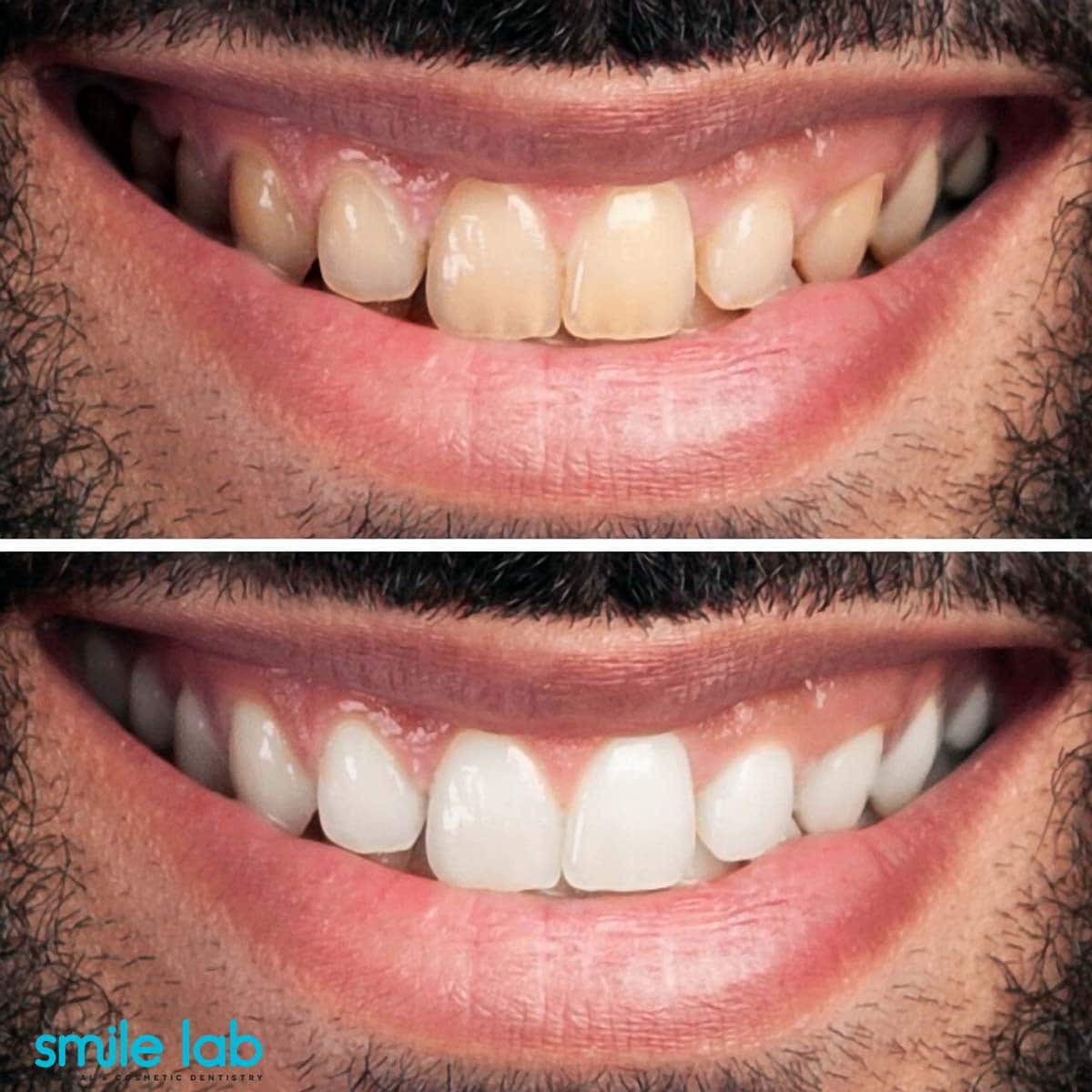
Fixing long teeth starts with a full evaluation. A skilled dentist examines your gumline, bite, and overall oral health before recommending a treatment plan.
If recession is the driver, contouring or grafting is likely the answer. If misalignment is behind it, orthodontics takes priority. If wear has flattened neighboring edges, restorative work levels the arch; for patients weighing veneers vs. crowns, the choice usually comes down to how much of the tooth needs covering. Each case is different.
Diagnostic tools including X-rays, 3D imaging, and bite analysis let clinicians assess the full extent of the issue. That means the plan targets the underlying cause, not just the symptom you noticed in the mirror.

Consider Smile Lab for Your Smile Concerns
The practice offers a full range of solutions for concerns like long front teeth, recession, and bite misalignment. The clinical team uses modern imaging and techniques to restore balance.
Whether you need a cosmetic improvement or a functional repair, Smile Lab builds personalized plans around your situation, weighing health and aesthetics together rather than treating them as separate goals.
From the first consultation through final follow-up, we explain each step before you decide anything.

Call now to Schedule Your Appointment
At Smile Lab, you will receive experienced, professional cosmetic and restorative dental care in a supportive, high-tech environment, ensuring you get the best care possible.
Or
Complete The Form Below
Form that is used on Blog Posts