The better choice depends on bone volume, gum health, the condition of nearby teeth, your treatment timeline, and whether you want to avoid surgery. At Smile Lab, we can evaluate these factors together so the recommendation fits both your oral health and long-term restorative needs.
Key Takeaways
- An implant-supported crown replaces the missing root and stands independently, while a traditional fixed restoration relies on nearby teeth for support.
- Implant treatment usually costs more upfront and takes longer, but it can help preserve jawbone and avoid reshaping healthy adjacent teeth.
- A tooth-supported restoration is typically faster and avoids implant surgery, making it useful when nearby teeth already need crowns or when treatment time matters.
- The better option depends on bone volume, gum health, the condition of neighboring teeth, bite, budget, and comfort with surgery.
- Front-tooth cases need extra attention to appearance, gum position, and tooth preservation, so plan treatment around the full area rather than the missing tooth alone.
Dental Implant vs. Bridge: Key Differences
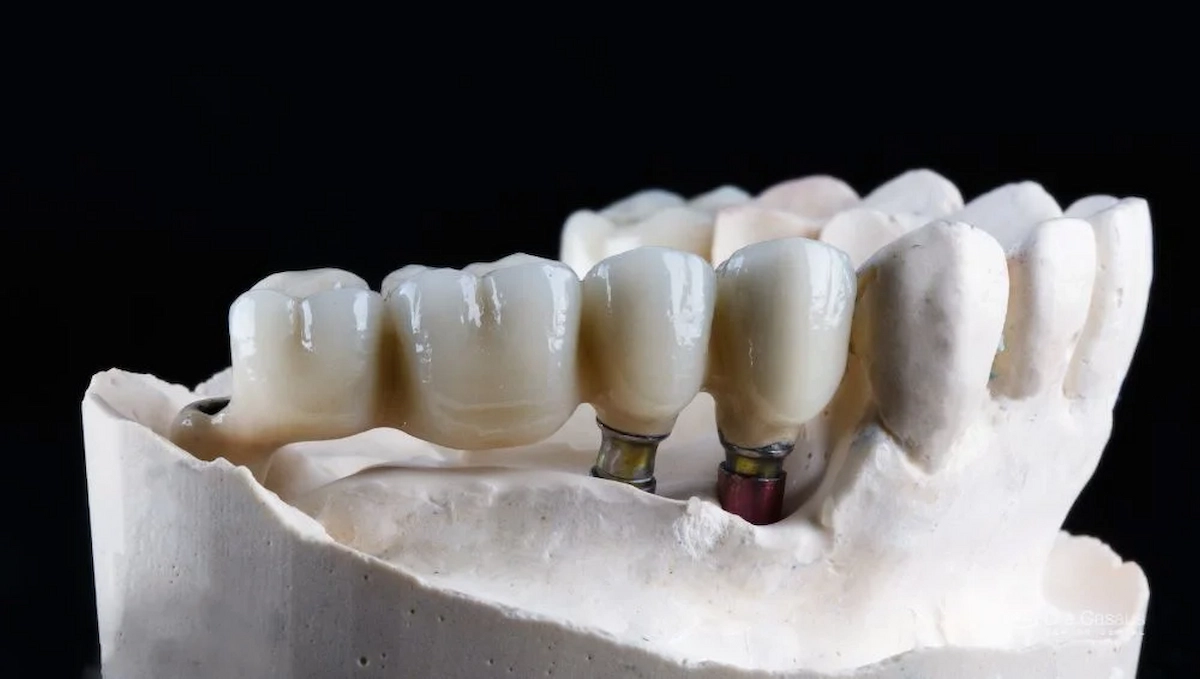
An implant replaces the missing tooth root with a post in the jawbone and supports a crown above it. The main parts of implants include the fixture, abutment, and final crown. A traditional fixed restoration fills the space with an artificial tooth supported by crowns placed over neighboring teeth.
The main difference is support. One option stands independently, while the other depends on adjacent teeth. Implant-based treatment also requires surgery and several months of bone healing in many cases.
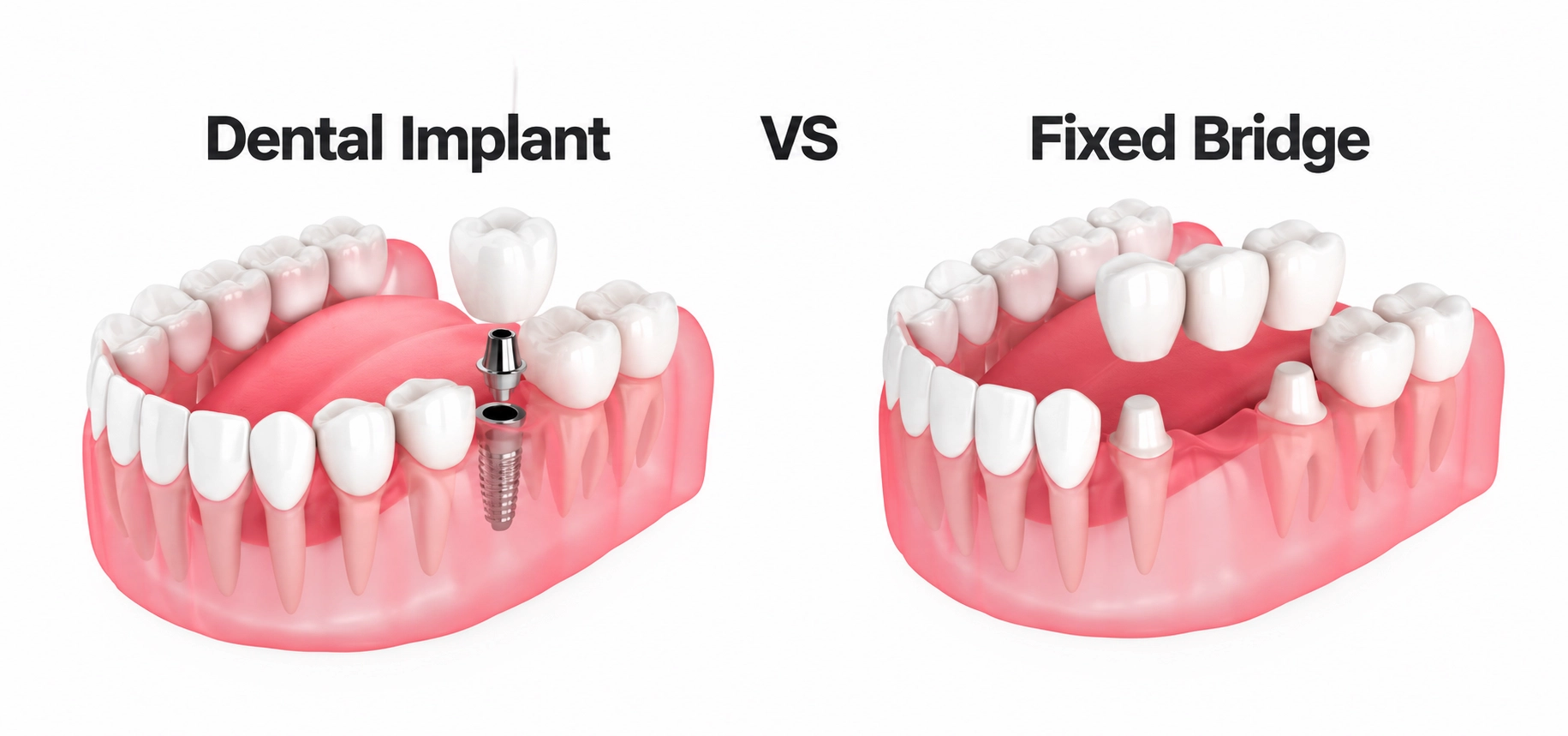
Dental Implant vs. Bridge Pros and Cons
Neither treatment is better for every person. The condition of the missing-tooth area and surrounding teeth often matters more than the treatment name.
Dental Implant Advantages and Drawbacks
An implant-supported crown can replace a tooth without reshaping healthy neighboring teeth. It also transfers chewing forces into the jawbone through the fixture, which helps maintain support in the area.
The tradeoff is a longer treatment process. Placement requires oral surgery, and some patients need bone grafting before or during treatment. Risks can include infection, damage to nearby structures, nerve injury, tooth implant side effects, and failure of the bone to integrate with the fixture.
Dental Bridge Advantages and Drawbacks
A fixed bridge can replace a missing tooth without placing a post into the jaw. Treatment usually finishes faster because there is no waiting period for osseointegration.
This approach requires the dentist to prepare the supporting teeth for crowns. Decay, fractures, or gum disease around those teeth can affect the restoration over time. Cleaning beneath the artificial tooth also requires extra attention.
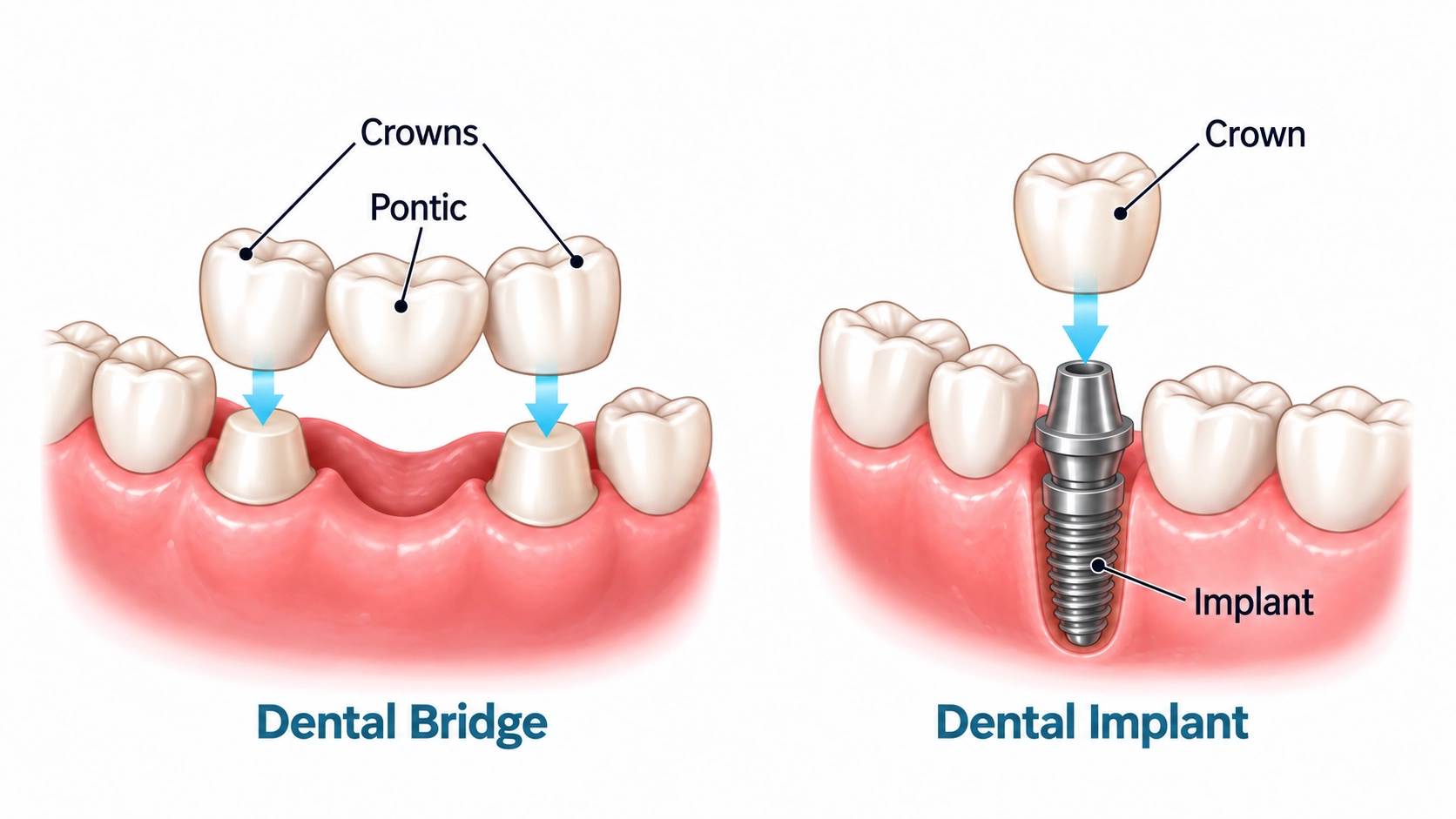
Cost, Longevity, and Treatment Time
Price matters, but the initial fee does not tell the whole story. Long-term maintenance, future replacement, supporting tooth health, and additional procedures can change the total cost over time.
Dental Implant vs. Bridge Cost
At Smile Lab, the implant body costs $2,650, while the abutment and crown cost $3,300. That brings the total for a single implant restoration to $5,950 before any added procedures, such as bone grafting.
A Maryland bridge starts at $3,200, with the final cost depending on the number of teeth involved. The lower upfront price can make it appealing, but the better value depends on the condition of nearby teeth, expected lifespan, maintenance needs, and whether additional treatment is required.
Which Option Lasts Longer?
Implant-supported restorations can often last 20 years or longer with good oral hygiene and regular dental care. Traditional fixed bridges usually last about 5 to 15 years before they may need repair or replacement.
Longevity still depends on oral hygiene, bite forces, gum health, smoking, and regular dental care. No restoration is maintenance-free.
Which Treatment Takes Longer?
A tooth-supported restoration can often be completed much faster because it doesn’t require bone integration. Implant-based treatment commonly takes several months from placement to the final crown because the bone must heal around the fixture. The full tooth implant timeline can vary if extraction, bone grafting, or additional healing is needed.
For someone balancing dental visits with work and a busy NYC schedule, that difference can affect the decision.
Pain, Surgery, and Recovery
Dental implant placement requires oral surgery to insert the fixture into the jawbone, so recovery may include swelling, soreness, and mild bleeding for several days. The dental implant recovery time varies based on the procedure, healing response, and whether additional treatment was performed.
A bridge does not require surgery, but the supporting teeth must be reshaped for crowns, which can cause temporary tooth and gum sensitivity. Both procedures are typically performed with local anesthesia, and discomfort is usually managed with over-the-counter or prescribed pain medication.
What Is More Painful, a Bridge or Implant?
Implant placement generally involves more postoperative healing because the dentist works with the gum and jawbone. After surgery, swelling, soreness, and temporary discomfort can occur.
A traditional bridge avoids implant surgery, though prepared teeth and gums may feel sensitive for a short time. Pain tolerance and treatment complexity vary, so individual experiences differ.
Effects on Teeth and Jawbone
The health of the surrounding structures can be a major reason to choose one approach over another.
Effects on Nearby Teeth
A traditional bridge usually relies on the teeth next to the gap. Those teeth must be strong enough to support the restoration, and they are typically reshaped for crowns.
An implant-supported crown does not need those neighboring teeth for support. This can help when adjacent teeth are healthy and preserving natural tooth structure is a priority.
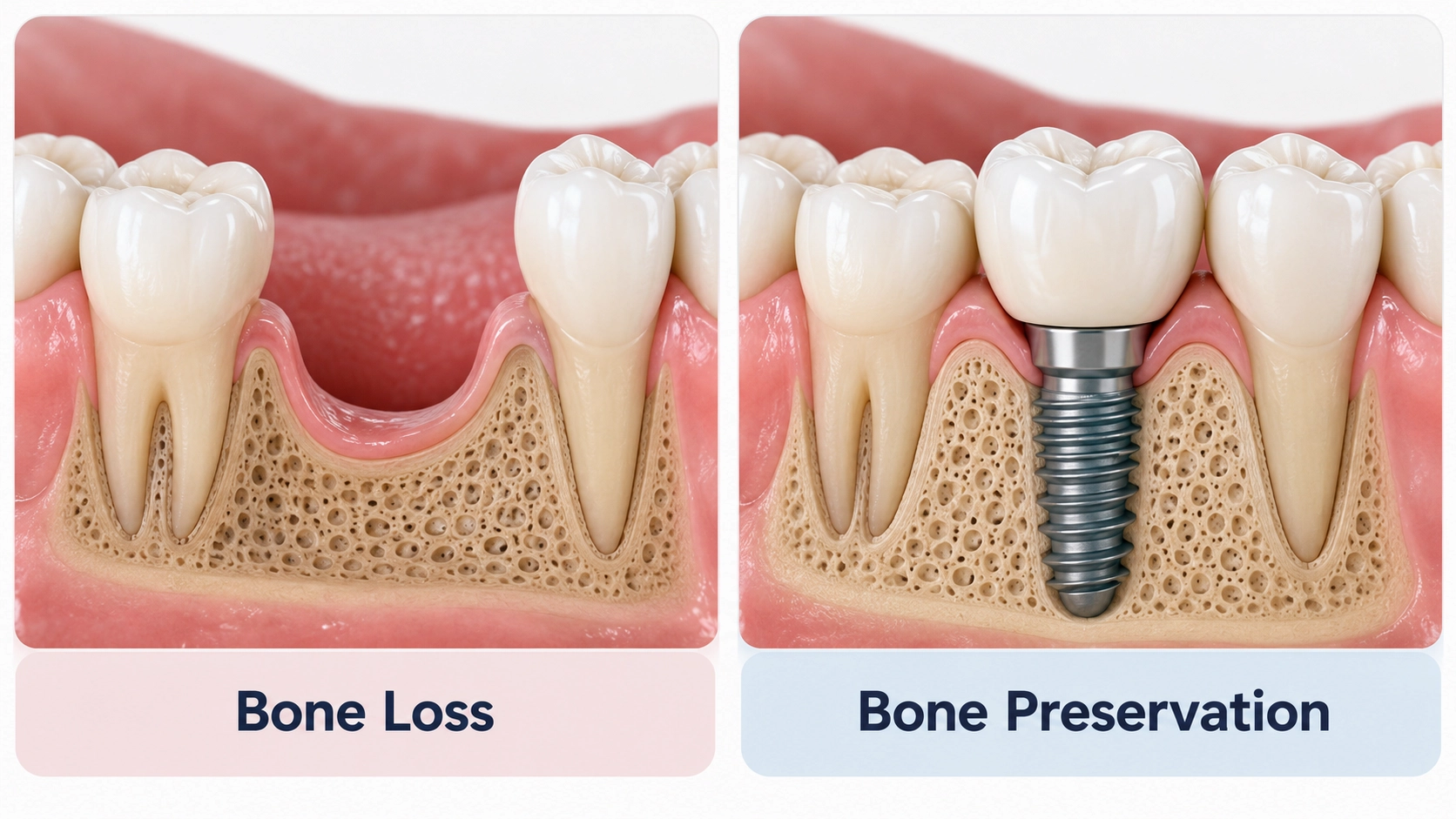
Bone Loss and Bone Preservation
An implant fixture transfers force into the jawbone where the tooth root once sat. This can help preserve bone in the missing-tooth area.
A tooth-supported restoration replaces the visible tooth but does not replace its root. By restoring support within the jaw, an implant can help preserve existing bone and reduce the risk of future bone loss compared with a conventional bridge.
Should I Get a Dental Implant or a Bridge?
An implant is often preferred when the neighboring teeth are healthy, there is enough jawbone for support, and you want to avoid reshaping nearby teeth. It may also be a better fit when long-term bone preservation and independent tooth replacement are priorities.
A bridge may make more sense when the teeth beside the gap already need crowns, when bone volume is limited, when surgery is not preferred, or when a faster treatment timeline matters.
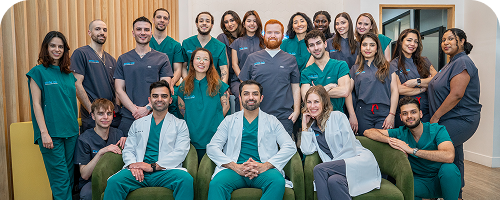
At Smile Lab, Dr. Waise Ebrahimi evaluates bone support, gum health, bite, adjacent teeth, and medical history to determine the best option for the area.
Why Might an Implant Not Be Recommended?
This option may not be the first choice when there is not enough bone for support, oral tissues are unhealthy, healing may be impaired, or the patient does not want surgery. Bone grafting can make treatment possible in some cases, but it adds another procedure and can extend the timeline. In other cases, healing or osseointegration problems can contribute to failed dental implants.
Why Might a Bridge Not Be Recommended?
A tooth-supported restoration may be less appealing when the teeth beside the gap are healthy and would need significant preparation only to support the replacement. Weak or damaged supporting teeth can also make this approach less predictable.
Dental Bridge vs. Implant for Front Teeth
Front teeth add another priority: the restoration must fit the gum line and surrounding teeth naturally. Bone volume, gum position, tooth color, bite, and the condition of adjacent teeth can all affect the result.
Appearance and Tooth Preservation
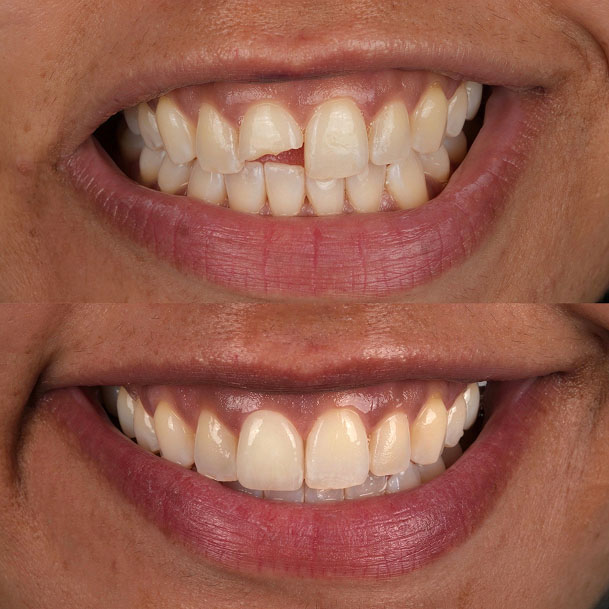
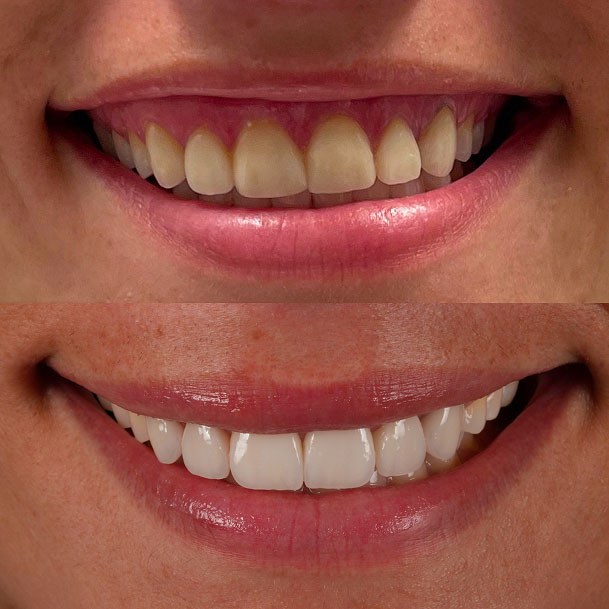
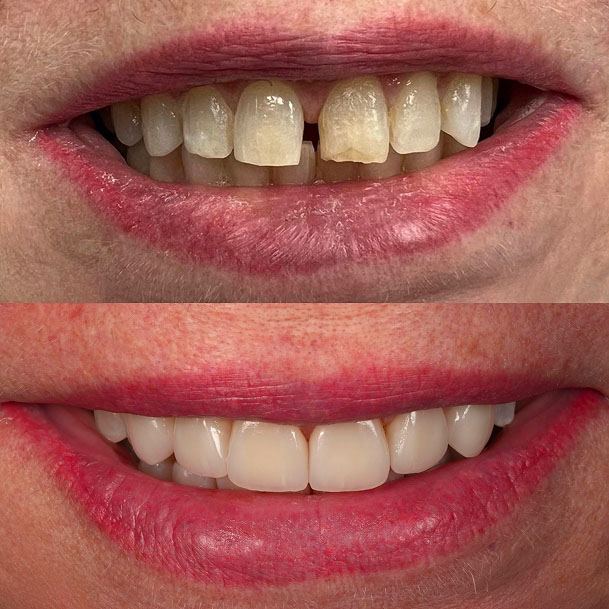
An implant-supported crown can preserve neighboring front teeth because they don’t need to support the replacement. A traditional bridge can still produce a natural-looking result and may be useful when those nearby teeth already need restorative treatment.
The right approach depends on the full area, not simply which tooth is missing.
Dental Implant vs. Bridge vs. Flipper
A flipper is a removable partial denture that can temporarily fill a visible gap. It may be useful during healing or while a long-term restoration is being planned, but it does not provide the same fixed support as an implant-supported crown or traditional bridge.
Dental Bridge vs. Implant vs. Denture
Dentures can replace several teeth or a full arch without requiring an individual restoration for every missing tooth. Fixed bridges work well in selected spaces with appropriate support, while implant-based treatment can replace individual teeth or support larger restorations.
The best next step is an exam that evaluates your bone, gums, bite, and neighboring teeth together. If you are deciding between these options, Smile Lab in Union Square can evaluate the area and explain what each approach would involve in your specific case.