
The process usually includes planning, tooth removal or grafting when needed, placement, healing, and the final restoration. If you are still researching the treatment itself, you can also learn what dental implants are and whether they are safe. At Smile Lab, the expected schedule depends on your bone, gum health, treatment area, and whether preparatory care is needed.
Key Takeaways
- The full dental implant process often takes about 3 to 9 months, while extraction, bone grafting, or slower healing may extend treatment to 6 to 12 months.
- Placement itself is usually brief, but osseointegration often takes 3 to 6 months as the jawbone heals around the implant post.
- Bone quality, gum health, treatment location, and the number of implants can affect the total timeline.
- Some patients may qualify for immediate or same-day placement, but the final crown usually still requires a normal healing period.
- Temporary teeth may be available during healing, especially when replacing a visible front tooth.
How Long Does a Dental Implant Procedure Take?
A single dental implant procedure often takes about 30 to 60 minutes, but the full process usually takes 3 to 9 months. Most of that time comes from healing as the jawbone bonds with the implant post.
Tooth Implant Timeline From Start to Finish
A typical timeline includes:
- Consultation and imaging
- Extraction, if needed
- Bone grafting, if needed
- Implant placement surgery
- Osseointegration and healing
- Abutment placement and the final crown
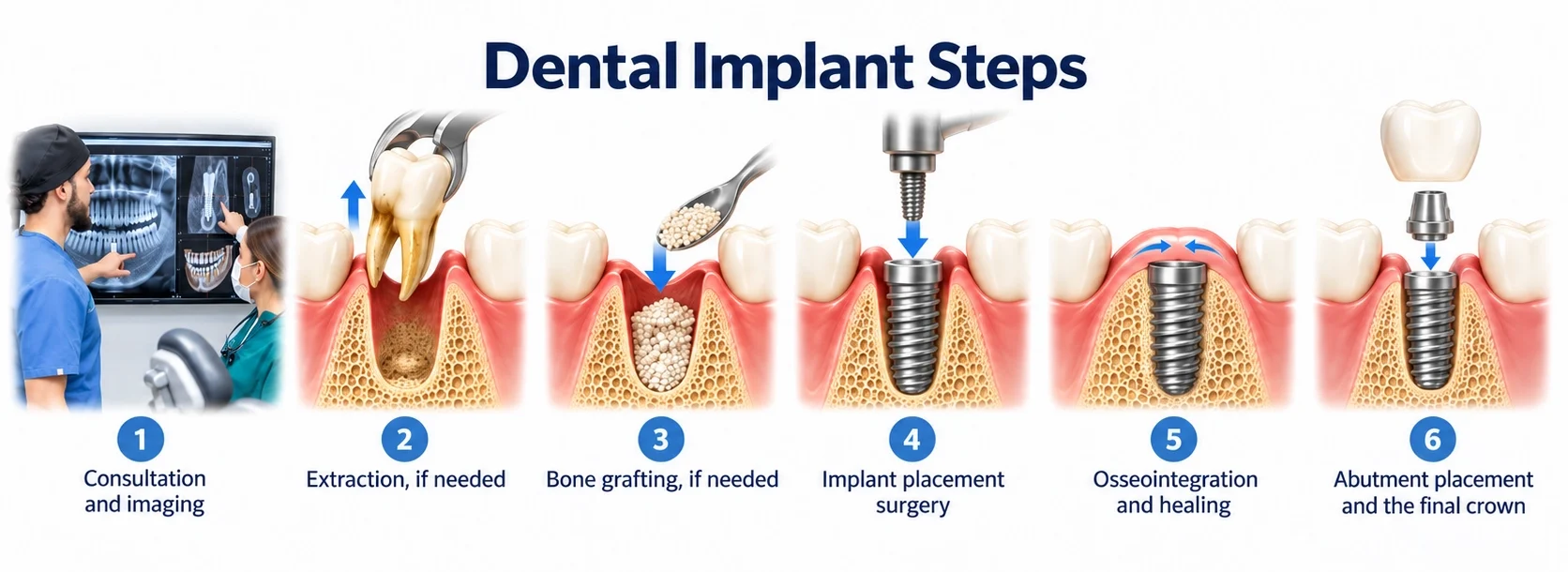
Exact healing time depends on your bone, gums, overall health, and the procedures needed before placement.
Consultation and Treatment Planning
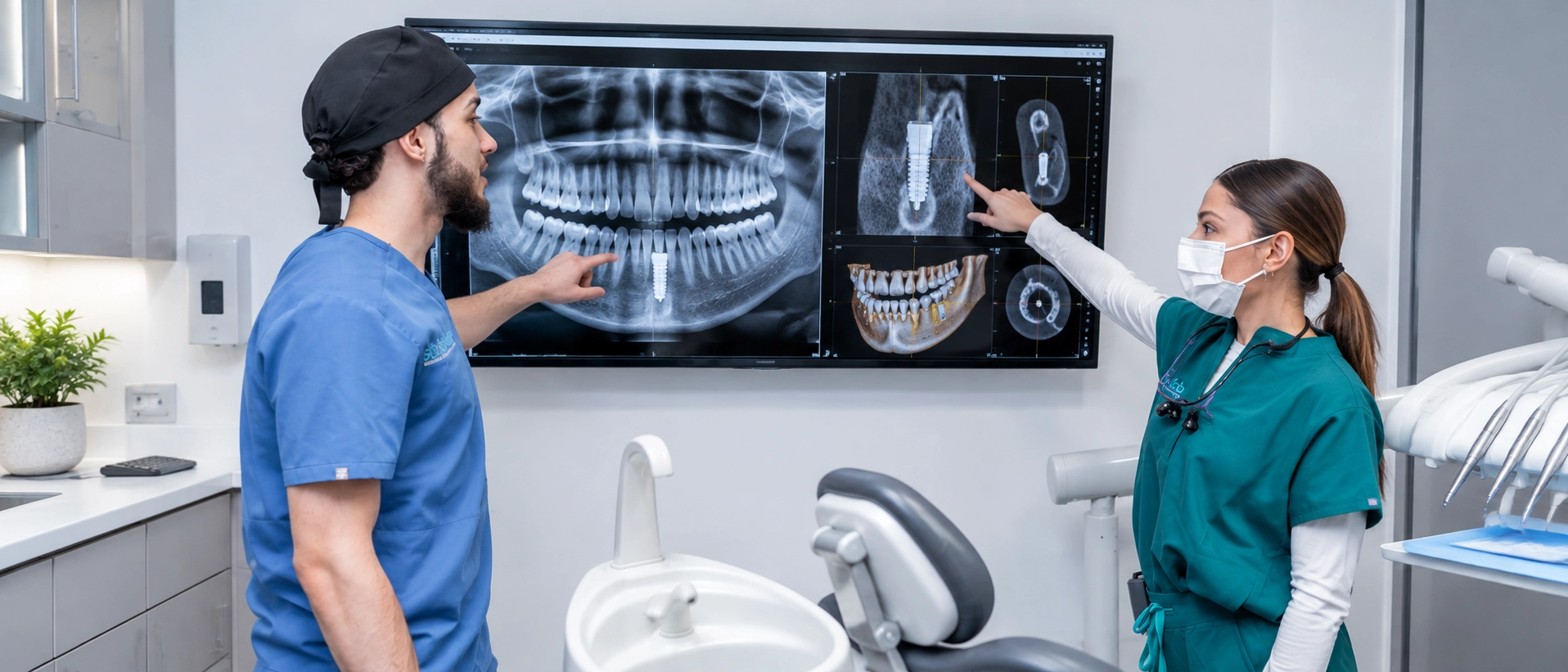
The first visit includes an evaluation of your teeth, gums, jawbone, bite, and medical history. Imaging helps determine whether enough bone is available and whether nearby tooth roots or other structures affect treatment.
Dr. Waise Ebrahimi, who is certified in dental implant placement, uses these findings to plan care around the condition of the individual implant site rather than applying the same schedule to every patient.
Tooth Extraction and Implant Timing
If the damaged tooth is still present, extraction may come first. Some people can receive the new post during the same appointment, while others need the socket to heal before moving forward.
Active infection, bone quality, and initial stability can all affect this decision.
Bone Grafting, If Needed
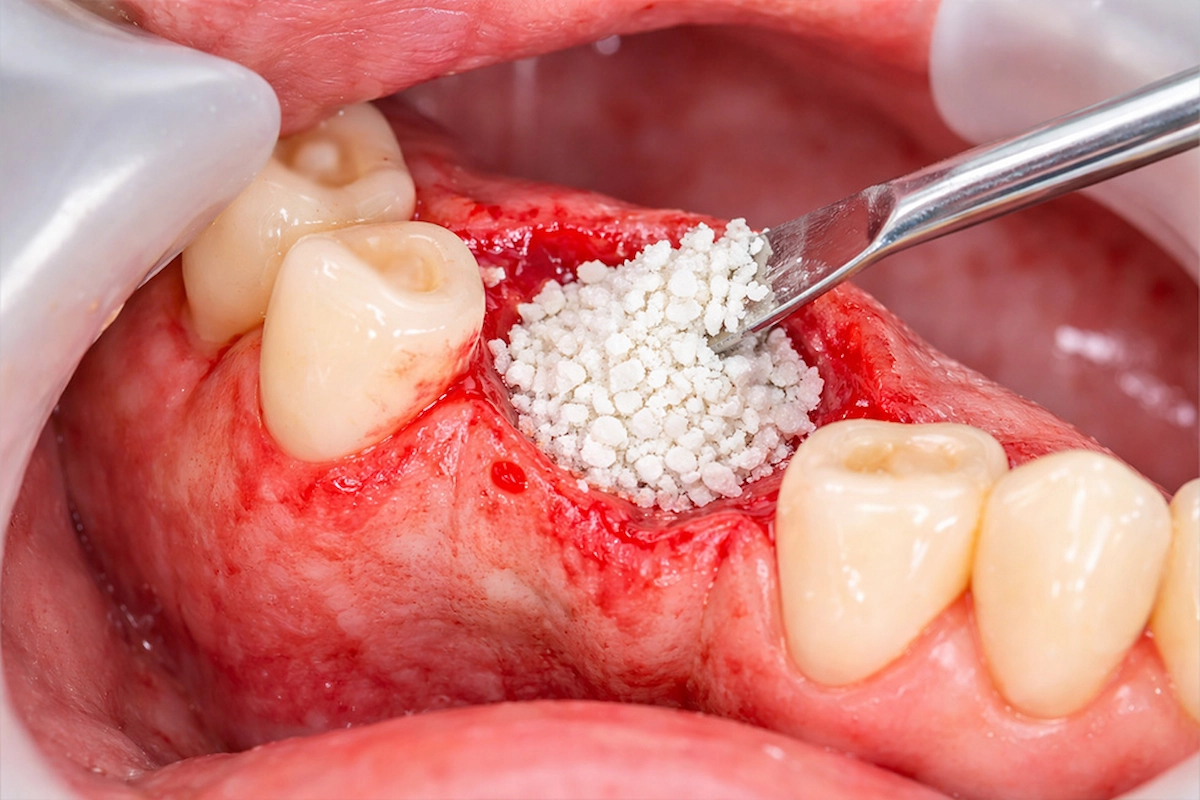
Bone grafting may be needed when the jaw does not provide enough support for the replacement. A small graft may sometimes be completed during placement, while larger grafts can require several months of healing before treatment continues.
This step is one reason some cases take more months from start to finish than others.
Implant Placement and Osseointegration
During dental implant placement, the dentist creates space in the jaw and positions the post that replaces the missing root. The dentist uses local anesthesia, and the procedure is usually much shorter than recovery. A separate guide explains what to expect during your dental implant procedure in more detail.
The next stage is called osseointegration. The jawbone grows around and bonds with the implant surface, creating support similar to natural tooth roots. This phase often takes about 3 to 6 months.
Abutment and Final Crown
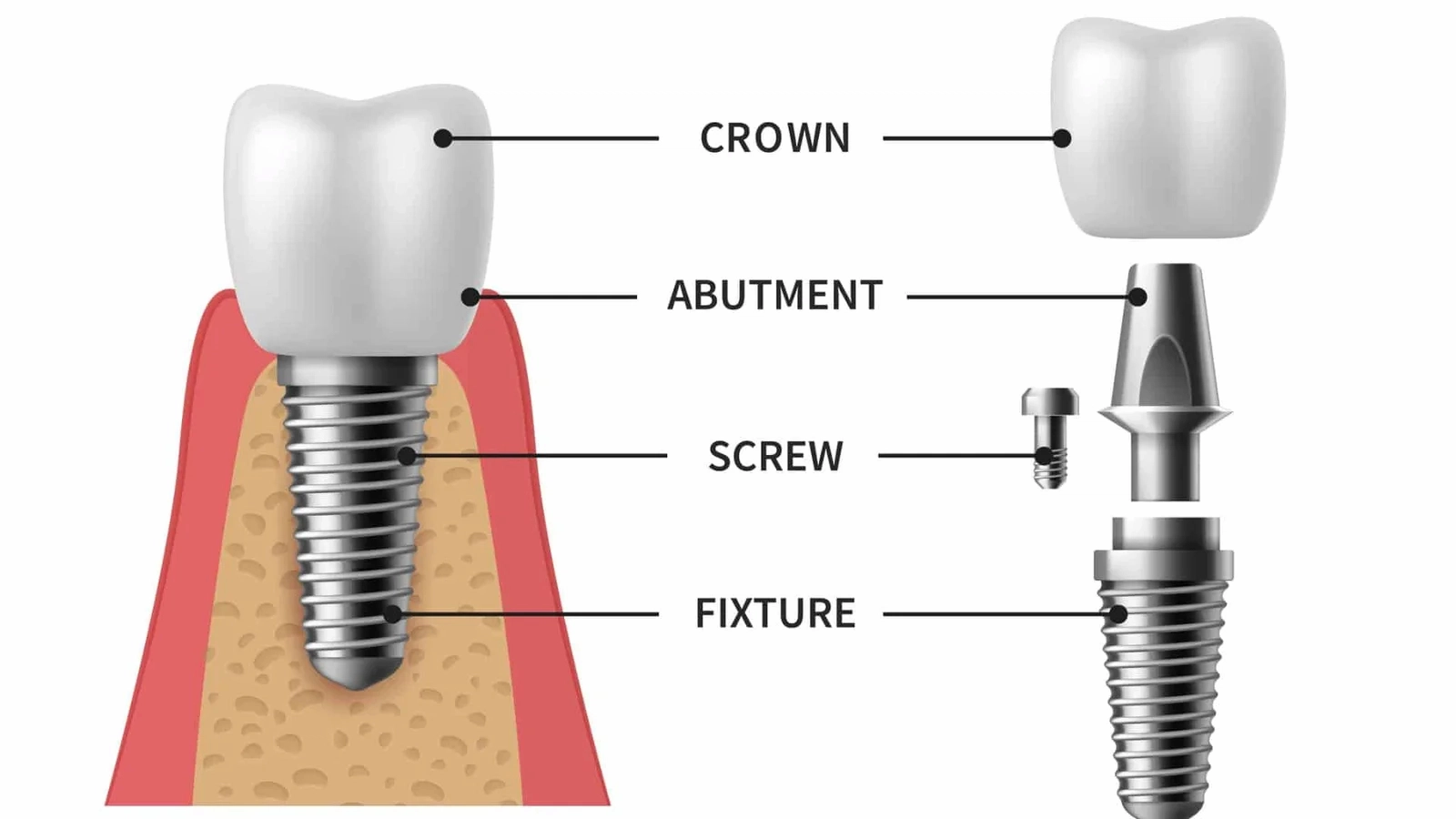
Once the fixture is stable, an abutment connects it to the artificial tooth. When separate abutment placement is required, the gum may need about two weeks to heal before the final crown is attached.
What Can Change the Treatment Timeline?
No single schedule applies to everyone. Bone condition, gum health, the number and location of implants, smoking, active infection, and certain health conditions can change how quickly treatment progresses.
Adequate bone and healthy gum tissue help support stability and long-term success. Problems during healing can also raise the risk of implant failure, which is why follow-up care matters. If complications develop, dental implants can sometimes be removed when clinically necessary.
Can Treatment Be Done Faster?
Yes, some patients can shorten the timeline with immediate or same-day dental implants. Eligibility depends on bone quality, gum health, and whether the implant is stable enough at placement.
Immediate and Same-Day Placement
Immediate placement means inserting the post during the same visit as an extraction when the bone and surrounding tissue are suitable. Same-day treatment may also include a temporary restoration, but the fixture still needs time to integrate before it can handle normal chewing forces.
Temporary Teeth While Waiting
You do not always have to live with a visible gap during healing. Depending on the location and treatment plan, you may use a temporary tooth, partial denture, or other restoration while the area heals.
What to Expect After Surgery
Recovery from the procedure itself is much shorter than the time needed for bone integration. Read our dental implant recovery guide for a closer look at healing, soreness, and activity after surgery. Soreness, swelling, and tenderness are most common during the first few days.
How Painful Is Getting a Tooth Implant?
The area is numbed during treatment, so you may feel pressure rather than sharp pain. Post-procedure discomfort varies based on the procedure’s complexity and whether extraction or grafting was done at the same appointment.
Is a Tooth Implant Major Surgery?
Placement is a surgical procedure because the dentist accesses the jawbone. It is commonly performed as an outpatient procedure, so patients usually return home the same day.
How Many Days Should You Rest?
Some people return to normal daily activities within one or two days. More involved procedures may require additional rest, especially when several sites, extractions, or grafting are involved.
Understanding your personal timeline starts with knowing which stages you actually need. Smile Lab can evaluate the area, explain what affects your treatment time, and help you understand the steps before you decide whether treatment is right for you.