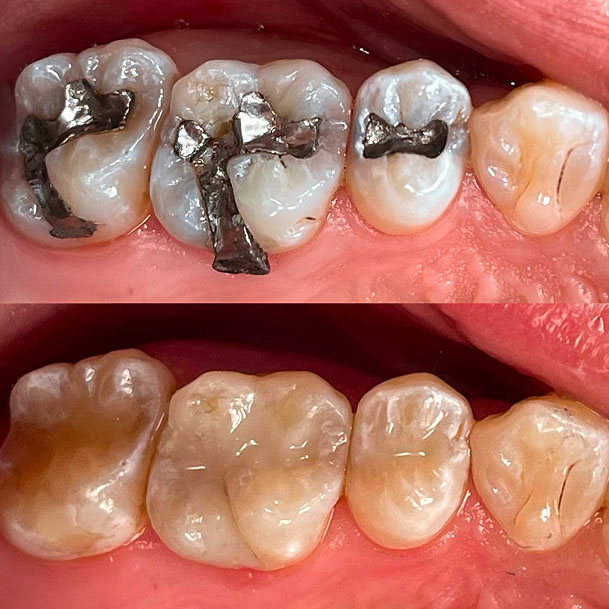
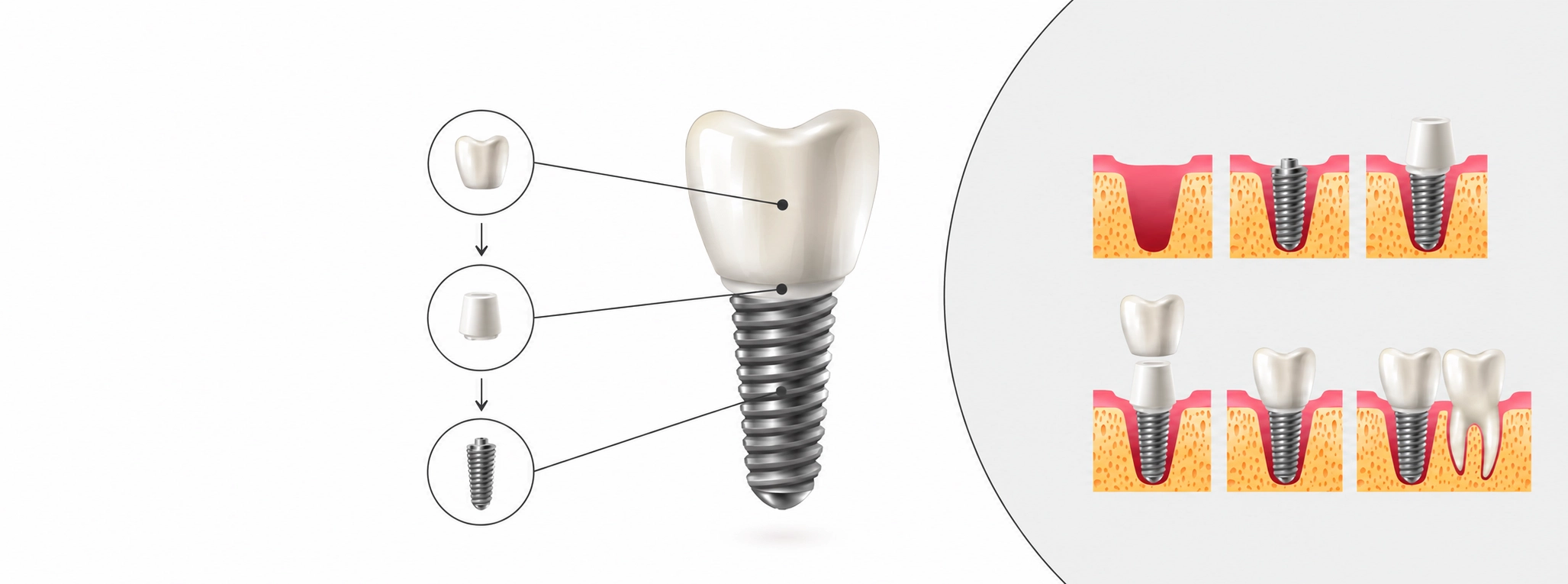
Some systems also include healing abutments, cover screws, or denture attachments. At Smile Lab, the design is selected based on your bone, gum tissue, bite, and the type of restoration you need.
Key Takeaways
- A dental implant usually includes three main components: the fixture, abutment, and crown or other final restoration.
- The fixture sits in the jawbone as an artificial tooth root, while the abutment connects it to the visible restoration.
- Some dental implant systems also include healing abutments, cover screws, prosthetic screws, or denture attachments.
- Titanium is commonly used for fixtures, while zirconia may be considered in selected cases. Crowns often use ceramic materials such as zirconia or porcelain-based restorations.
- Crowns, abutments, screws, and some attachments can often be repaired or replaced without removing the fixture from the bone.
What Are the Parts of an Implant Called?
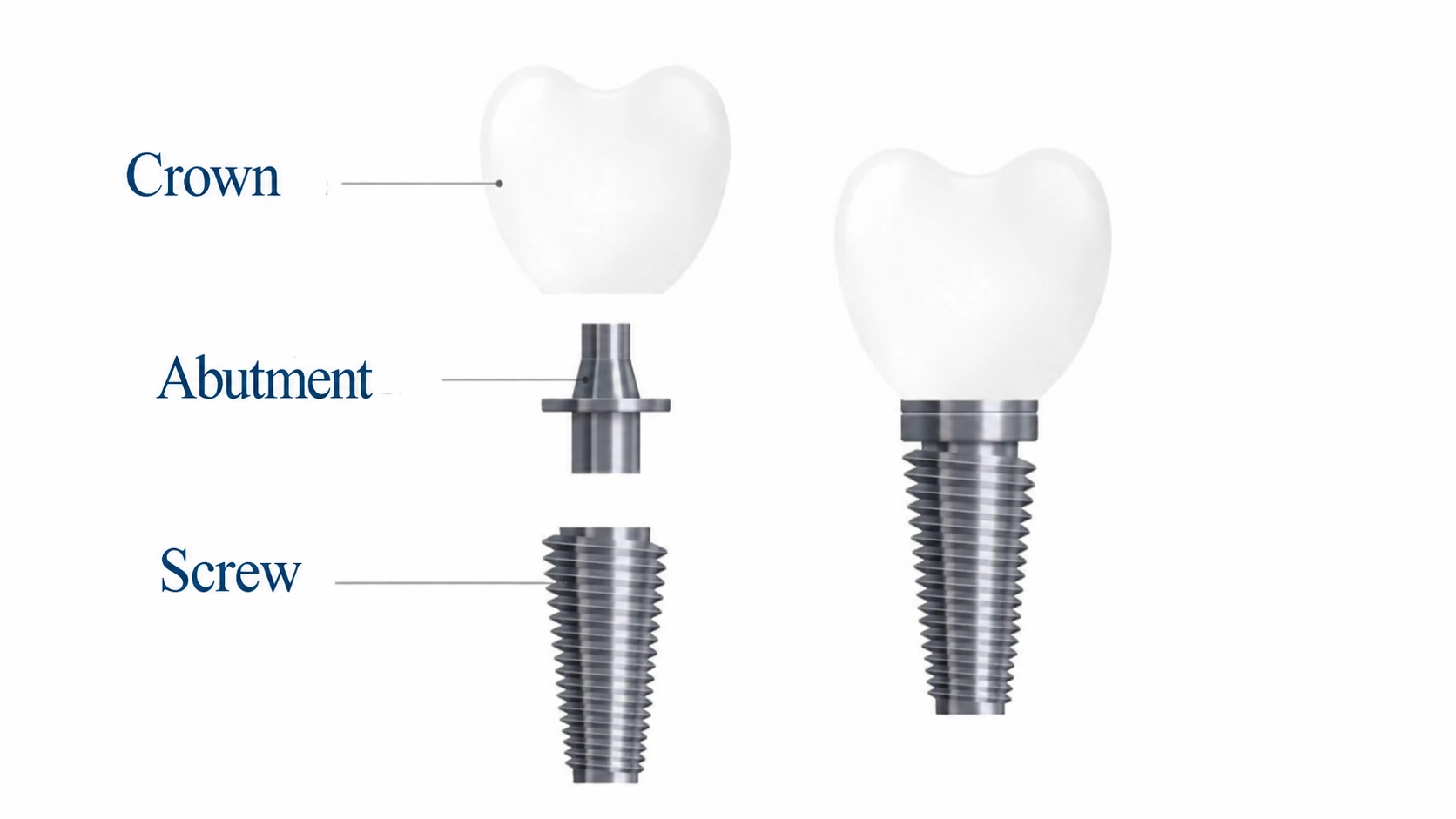
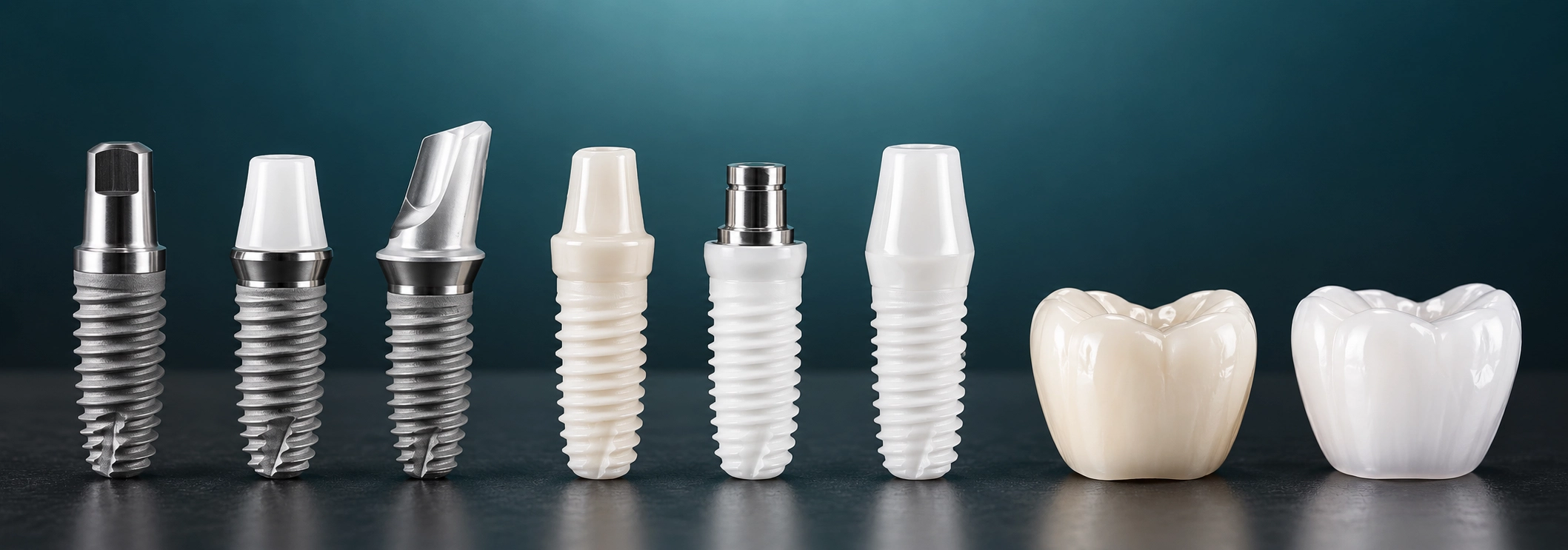
Most systems include the fixture, abutment, and final restoration. Together, these parts recreate the root and visible portion of a natural tooth.
Implant Fixture
The fixture is the implant post placed inside the jawbone. It acts as an artificial tooth root and supports the restoration.
After implant placement, bone gradually attaches to the fixture through a process called osseointegration. This connection creates the stability needed for chewing, and the full tooth implant timeline can vary based on healing and any additional procedures.
Abutment
The abutment connects the fixture below the gums to the restoration above it. Temporary abutments may be used while the gum tissue heals before placing the permanent component.
Dental Crown
The crown is the visible portion that replaces a missing tooth. It is shaped and shaded to blend with nearby natural teeth and restore biting function.
The final restoration may also be a crown bridge or denture when several teeth need replacement.
One-Piece and Two-Piece Implants
Most designs separate the fixture and abutment into two components, while one-piece systems combine them. The choice depends on bone anatomy, available space, and the planned restoration.
How Dental Implant Parts Work Together
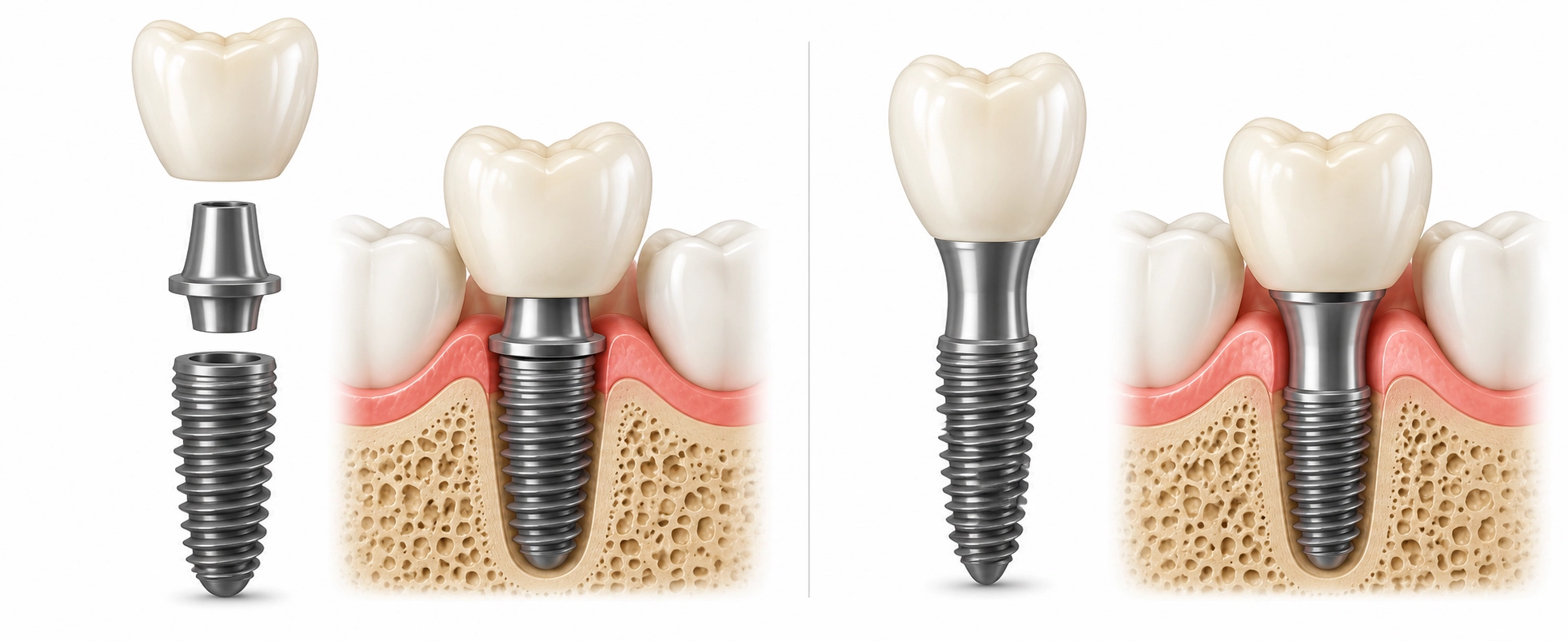
The fixture provides support inside the bone, the abutment creates the connection, and the implant restoration recreates the visible part of the tooth. The abutment and crown transfer chewing forces into the supporting bone.
At Smile Lab, Dr. Waise Ebrahimi, a certified dental implant placement specialist, evaluates bone, gum tissue, bite, and restoration needs before selecting components. Low-radiation digital imaging may help assess bone levels and position when appropriate.
Healthy bone and gum tissue also support long-term stability. Significant bone loss may affect whether grafting or another treatment step is needed and can also be associated with implant failure.
Healing abutments and cover screws protect or shape tissue during healing. Prosthetic screws may secure the final restoration and can sometimes be serviced without removing the fixture.
What Are Dental Implant Parts Made Of?
These restorations use materials selected for strength, tissue compatibility, and appearance.
Fixture Materials
Titanium is the most common material used for the fixture placed in the jawbone. Zirconia fixtures may be considered in selected cases, including for patients who prefer a metal-free option.
Crown Materials
The visible crown may be made from zirconia, porcelain, or other ceramic materials. The choice depends on strength, appearance, tooth position, and bite forces.
What Are the Three Types of Implants?
The three commonly described types differ mainly by where they gain support.
Endosteal Implants
Endosteal designs are placed directly into the jawbone and are the most common option for routine tooth replacement.
Subperiosteal Implants
Subperiosteal designs sit on or above the jawbone beneath the gums. They are less common and may be considered when standard placement is difficult.
Zygomatic Implants
Zygomatic designs anchor into the cheekbone and are generally reserved for complex cases with severe upper-jaw bone loss.
Parts of an Implant Denture
An implant-supported denture has three main components: the fixtures, the abutments or attachments, and the denture prosthesis. The fixtures sit in the jawbone and provide support. The abutments or attachments connect the fixtures to the denture, while the denture prosthesis replaces the missing teeth and visible gum area.
Some designs snap in and out for cleaning, while others stay fixed. The number and position of fixtures depend on available bone, bite, and the planned prosthesis.
What Is the Most Painful Part?
The first few days after implant placement are usually the most uncomfortable. Soreness, swelling, and pressure can peak during this early healing period, then improve as the gums and surrounding tissues recover.
Mild swelling, tenderness, and bruising can occur after treatment, while understanding common tooth implant side effects can help you distinguish expected healing from symptoms that deserve evaluation.
What Is the Most Expensive Part?
The most expensive component varies because treatment cost includes more than one physical piece. The restoration can represent a large share of the cost, especially with several crowns, a bridge, or a full denture.
Which Implant Parts Can Be Replaced?
The crown, abutment, prosthetic screw, and some attachments can often be repaired or replaced without removing the fixture. If the fixture itself develops a problem, dental implant removal may be considered in certain situations. A loose or damaged component should still be evaluated so the dentist can check the bone, bite, and connection.
If you are comparing options in Manhattan, a consultation can clarify which components you need and how they fit into your treatment plan. Smile Lab can evaluate your anatomy and explain the options clearly.