Claims that all baking soda, tartar-control, or fluoride formulas should be avoided are too broad, since safety depends on the specific formulation, concentration, pH, materials present, and brushing technique. At Smile Lab, we can match product selection to your restoration, remaining teeth, gum health, and daily cleaning routine rather than relying on a single label.
Key Takeaways
- A low-abrasive, non-whitening formula is usually the safest choice for implant-supported crowns and surrounding gum tissue.
- Fluoride can still be appropriate, especially if you have natural teeth that need cavity protection.
- Highly abrasive whitening and charcoal products may be more likely to affect restorative surfaces, so use them only if your dentist recommends them.
- Daily brushing, flossing or interdental cleaning, and professional cleanings play a bigger role in long-term implant health than any single product.
- Your crown material, exposed hardware, gum condition, and overall oral health can affect which products are best for you.
What Is the Best Toothpaste for Implants?
The best option is usually a low-abrasive formula that cleans plaque without aggressively polishing the crown or irritating the gum tissue. For most adults, fluoride remains useful because nearby natural teeth still need cavity protection. Your dentist may adjust the recommendation based on your crown material, sensitivity, and overall oral health.
Recommended Non-Abrasive Toothpaste
Look for a mild paste rather than an abrasive formula marketed for heavy stain removal. Products with the ADA Seal can provide another useful reference point because the seal requires evidence for safety and effectiveness. If you are unsure about a specific brand, bring the tube or ingredient list to your next regular dental visit.
What Toothpaste Should You Avoid?
Avoid products that feel gritty or rely heavily on abrasive particles to remove stains. Over time, aggressive polishing may affect restorative surfaces or make home care less comfortable. The goal is removing plaque consistently without using more abrasion than you need.
Whitening and Abrasive Toothpaste
Whitening toothpaste for dental implants is not automatically unsuitable, but some formulas are more abrasive than standard products. Whitening ingredients also cannot change the color of an implant crown in the same way they remove surface stains from natural teeth. If your restoration looks darker or stained, professional polishing or another treatment may be more appropriate.
Charcoal Toothpaste
Charcoal products can be abrasive, and their benefits for implant care are not well established. Baking soda can also vary in abrasivity depending on the formulation. A mild daily paste is usually a simpler choice than using either ingredient as a do-it-yourself cleaner.
Can You Use Regular Toothpaste on Implants?
Yes. You can usually use a regular product on implant-supported restorations if the formula is gentle and appropriate for your mouth. You do not necessarily need something specifically marketed for implant care.
The condition of the crown, surrounding gum tissue, and remaining teeth matters more than the label. Your dentist can recommend a suitable formula if your restoration has special material or maintenance needs.
Is Fluoride Safe for Dental Implants?
For most people, fluoride toothpaste is appropriate when implants and natural teeth are present. Fluoride helps protect the remaining teeth from decay while brushing controls plaque around the restoration.
The crown, abutment, and any exposed implant surface can involve different materials. If any hardware is exposed or you have a specialized restoration, ask your dentist which formulation best fits your situation.
Does Crown Material Affect Toothpaste Choice?
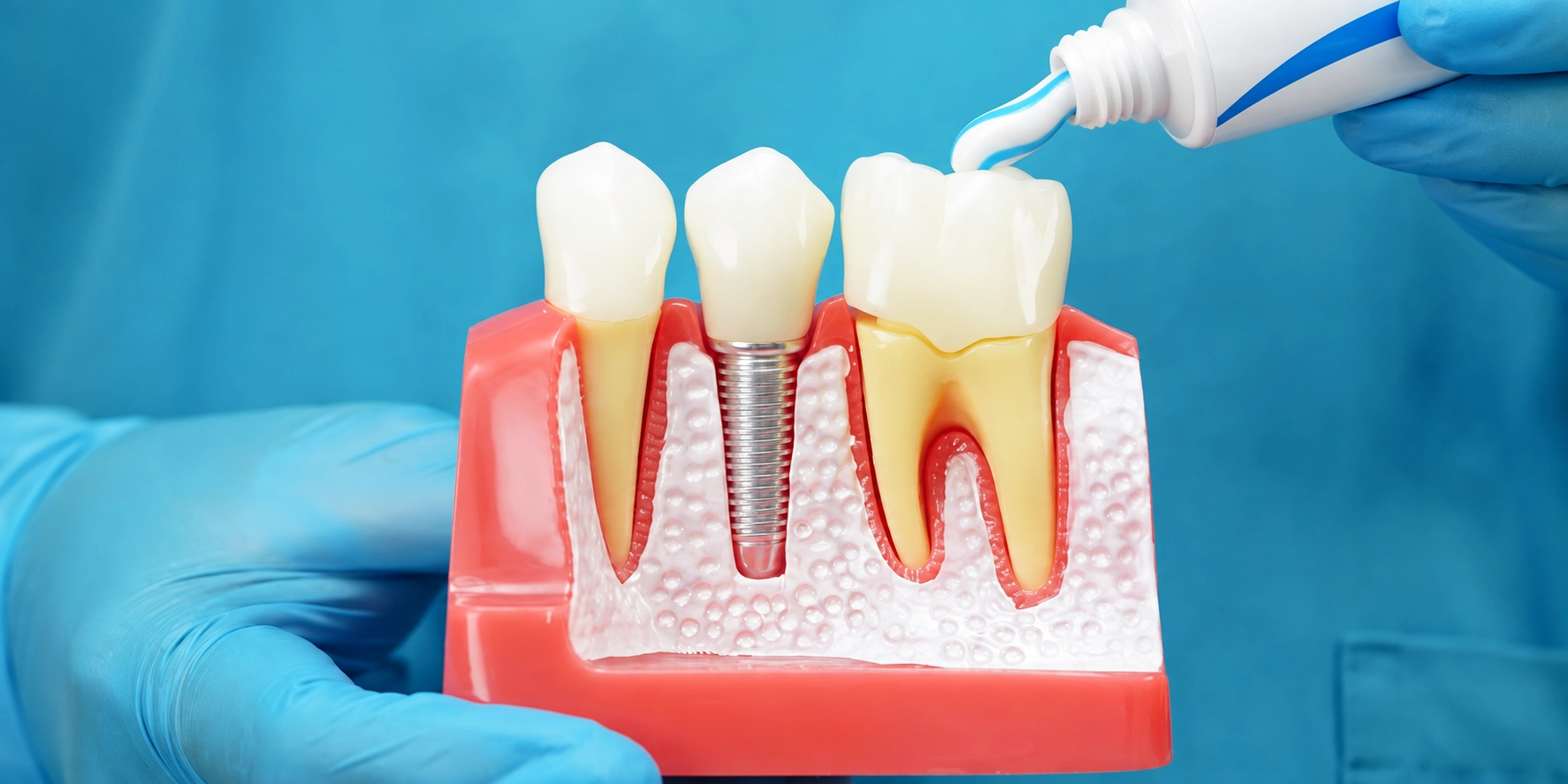
The visible crown is different from the fixture placed inside the jawbone. Since the cleaning product mainly contacts the crown and surrounding gum tissue, the restoration material can influence how cautious you should be with abrasive products.
Porcelain Implant Crowns
Porcelain has a polished surface that should be cleaned without aggressive abrasion. Use a soft brush and mild paste to help maintain that finish over the long term.
Zirconia Implant Crowns
Zirconia is strong, but its polished surface still benefits from gentle cleaning. A durable crown does not require a stronger or more abrasive product.
How Should You Clean Dental Implants?
Good daily care combines brushing with cleaning between and around the restoration. This helps control bacterial plaque near the gumline, where inflammation can develop. Consistent home care and professional cleanings can support healthy tissues and lower the risk of peri-implantitis.
Brushing Dental Implants
Brush twice a day with a soft manual or electric toothbrush and gentle pressure. Angle the bristles toward the gumline so they clean where the restoration meets the gums. Good technique matters more than scrubbing harder.
Flossing Around Dental Implants
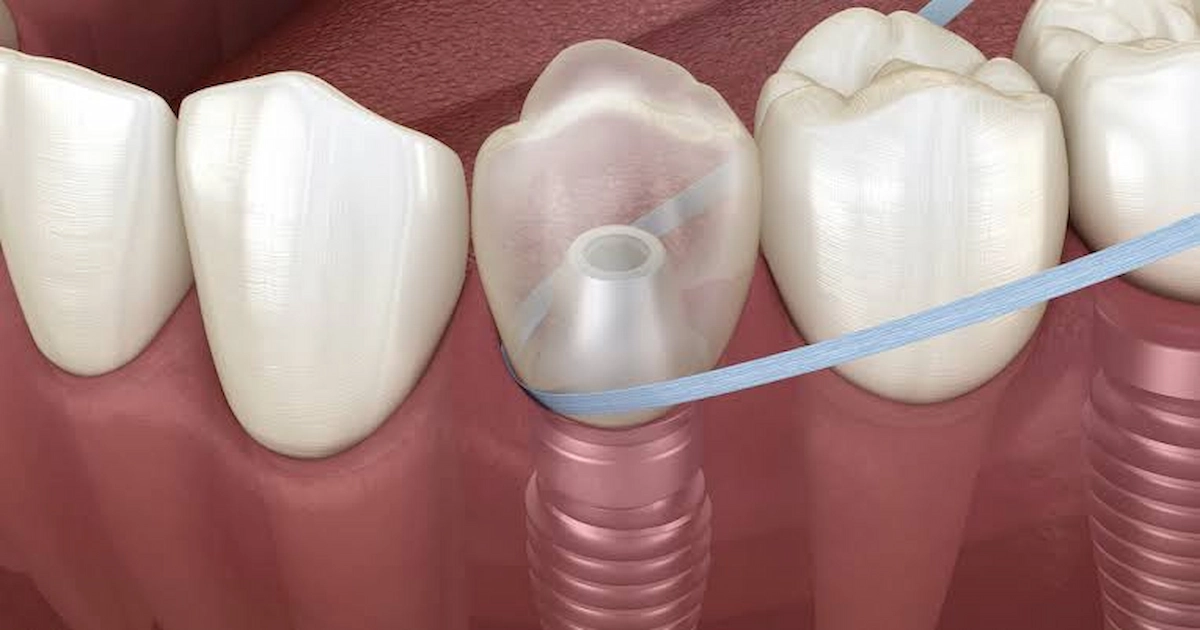
Use floss, an interdental brush designed for implant restorations, or another cleaner your dentist recommends. A water flosser may help you reach areas around bridges or restorations that are difficult to clean with string floss.
If you use mouthwash, an alcohol free option may feel more comfortable if alcohol-based rinses irritate your mouth. Daily cleaning between teeth and restorations helps remove plaque that brushing alone may miss.
What Helps Dental Implants Heal Faster?
Healing depends on stable placement, healthy tissues, plaque control, and following postoperative instructions. Stronger products or aggressive brushing will not make the area heal faster. If soreness is your main concern, understanding how to relieve dental implant pain can help you manage normal recovery without irritating the healing area.
During early recovery, keep the site clean as directed, avoid smoking, and attend follow-up appointments. Your tooth implant timeline can vary based on healing, bone quality, and whether additional procedures were needed.
These steps help ensure your implants and surrounding tissues have the conditions they need to heal properly. Following your dentist’s guidance on when you can eat normally after dental implants can also help protect the area during early recovery.
When Should You Ask Your Dentist?
Bleeding, swelling, persistent tenderness, bad taste, or difficulty cleaning around a restoration deserves a dental evaluation rather than simply switching products. Persistent or worsening symptoms can sometimes overlap with signs of a failed dental implant, so they should be assessed rather than ignored.
An early assessment can identify plaque buildup, inflammation, bite issues, or hard-to-clean areas before they become harder to manage.
At Smile Lab in Union Square, Dr. Waise Ebrahimi, a certified dental implant placement specialist, can review your restoration, gum health, and home care routine. If you want clearer guidance on daily maintenance or have concerns about an existing restoration, schedule your visit.