After surgery, follow your dentist’s instructions, protect the healing site, eat cool or lukewarm soft foods such as yogurt or mashed potatoes, and avoid hot drinks, straws, and forceful spitting during early recovery; intermittent cold compresses can help reduce swelling during the first 48 hours. For long-term protection, avoid tobacco, chewing ice or hard objects, and wear a night guard if you grind your teeth.
Schedule professional checkups and cleanings, often every three to six months depending on your needs, to monitor gum inflammation, supporting bone, and early signs of implant failure. At Smile Lab, we help patients develop personalized cleaning routines that protect their restorations and support lasting oral health.
Key Takeaways
- Proper dental implant maintenance includes brushing twice daily with a soft-bristled toothbrush, using non-abrasive toothpaste, and cleaning between teeth and around implants.
- Floss, interdental brushes, and water flossers help remove plaque and food debris, especially around implant-supported bridges and full-mouth restorations.
- Professional checkups and cleanings, often every 3–6 months, help monitor gum health, support bone, and detect early signs of complications.
- Poor oral hygiene can cause gum inflammation and peri-implantitis, which, if left untreated, may lead to bone loss and implant failure.
- With consistent care, dental implants can last for decades. Avoiding tobacco, chewing hard objects, and managing teeth grinding can help protect their long-term stability.
What Does Dental Implant Maintenance Include?
Dental implant maintenance includes brushing twice daily, cleaning hard-to-reach areas, and attending professional visits. Dental implants require proper care because bacteria can inflame the gums and affect the supporting bone. Good implant care also means checking for changes in your bite, bleeding, or loose components. Consistent home care matters more than expensive products.
Cleaning Dental Implants at Home
Daily cleaning removes plaque before it builds up around the crown and gumline. Your routine should be comfortable, thorough, and easy enough to follow on a busy morning. It takes only a few minutes once you know where plaque collects.
Brushing, Flossing, and Toothpaste
Use a soft-bristled toothbrush for two minutes, twice a day, and angle the bristles toward the gumline. Choose fluoride toothpaste that is gentle on restorations; avoid abrasive toothpaste or harsh polishing products. Clean between teeth and around the implant once daily with floss or another dentist-recommended cleaner. Do not snap floss into the gums or force it beneath a restoration.
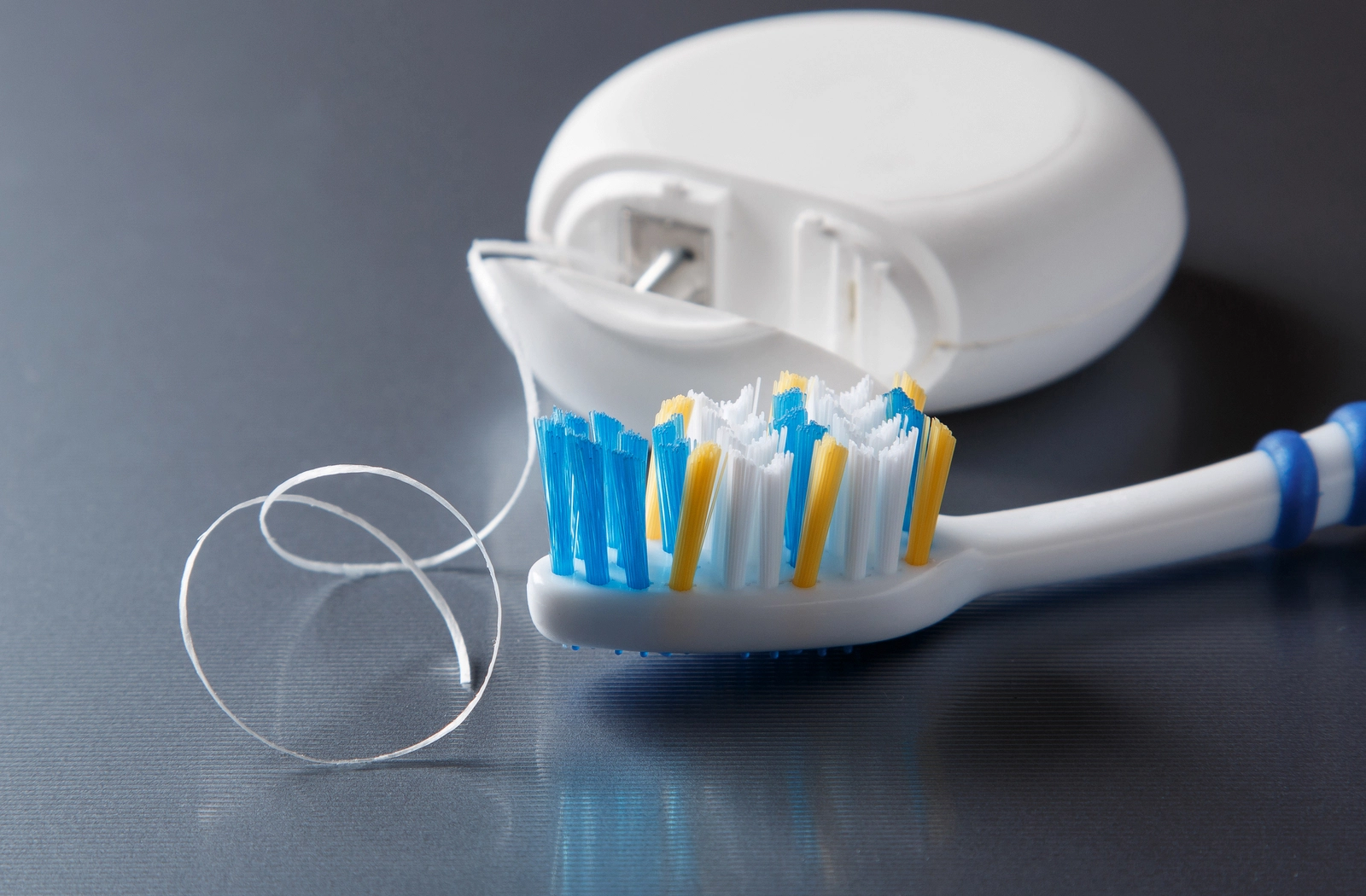
Dental Implant Cleaning Tools
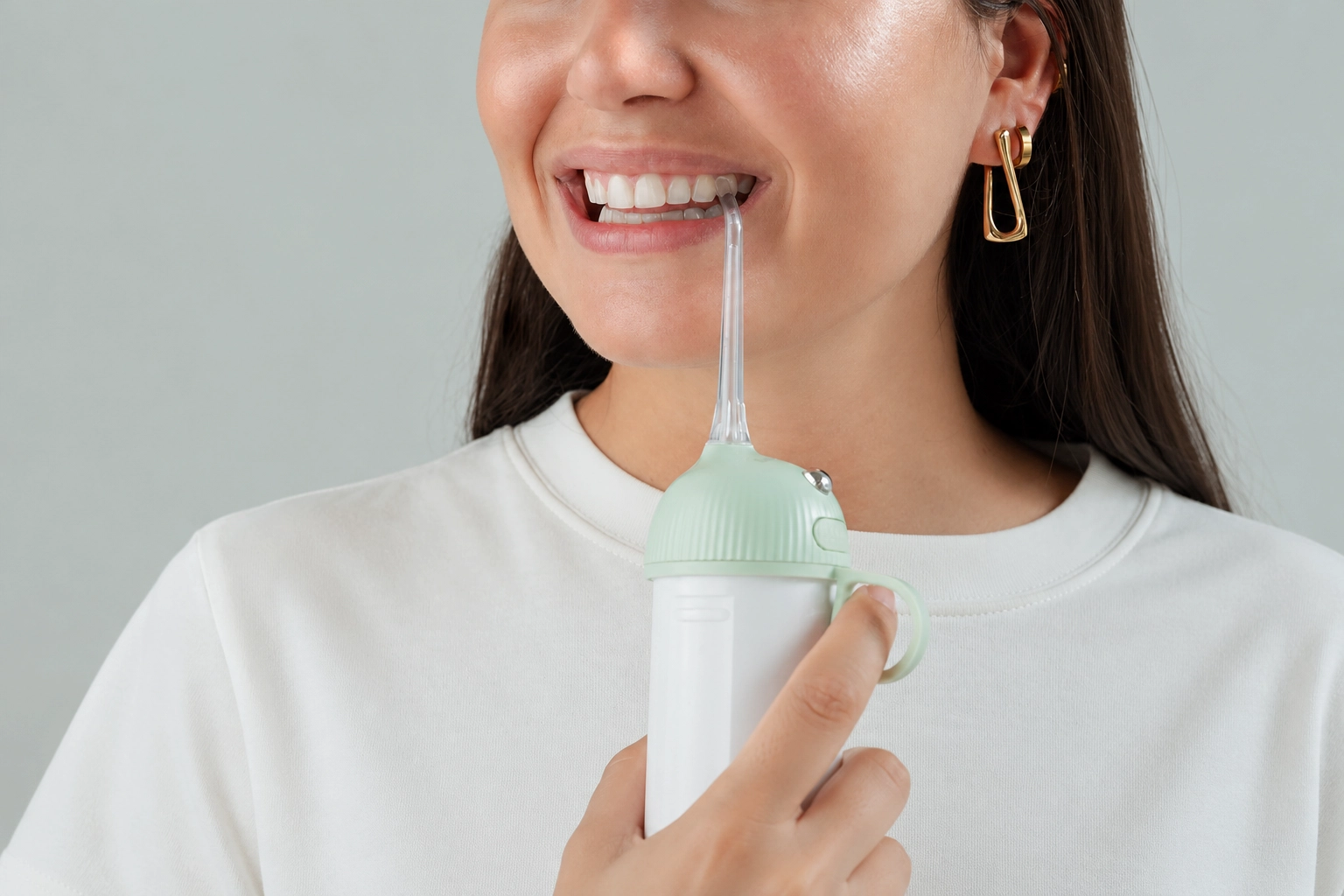
A water flosser can flush debris from hard-to-reach spaces. A coated interdental brush may help clean wider gaps, but it should slide through without force. Ask your hygienist to show you the right size and technique so you don’t scratch the implant surface or irritate the gums.
A soft brush and a well-chosen interdental tool usually do more than a cabinet full of products. Our guide to teeth-cleaning tools explains how each option works.
How to Care for Full Mouth Dental Implants
You usually clean a single tooth implant much like a natural tooth, including along the gumline and beside the crown. Full-mouth restorations require extra attention underneath a fixed bridge, where food and plaque can collect.
Depending on the design, your dentist may recommend a floss threader, small brush, or water irrigation to reach beneath it. If your denture is removable, remove it and clean it as instructed; do not try to remove a fixed bridge yourself.
Professional Dental Implant Maintenance
Even careful brushing cannot replace professional monitoring. Regular visits help catch changes you may not notice. They also allow your dental team to assess whether your cleaning routine is working.
What Happens During an Implant Checkup?
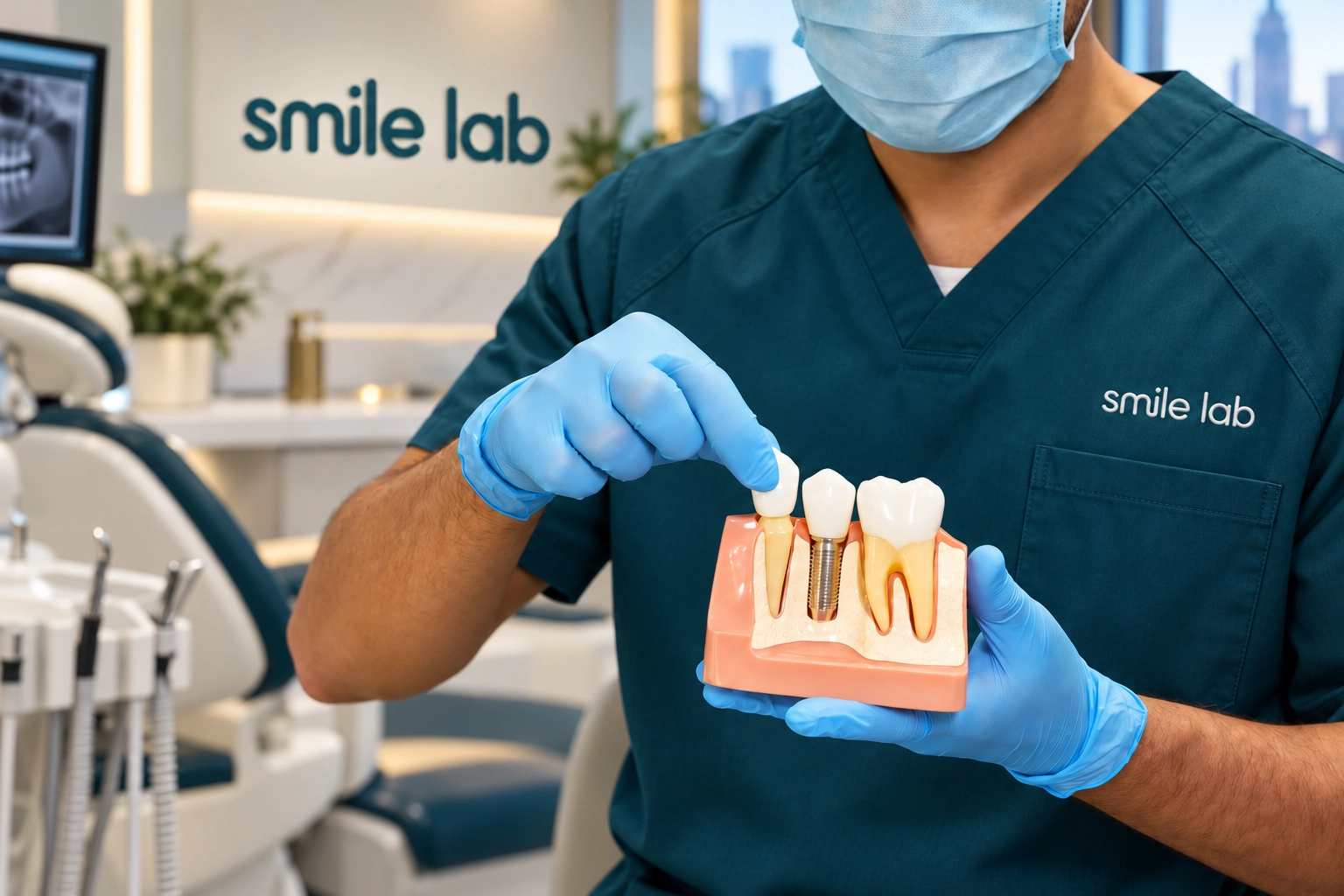
Your dentist assesses the gums, cleans areas you cannot reach, and checks the crown or bridge for looseness and wear. They may gently measure around the implant and take X-rays when clinically indicated to evaluate the supporting bone.
At Smile Lab in Union Square, Dr. Waise Ebrahimi, certified in dental implant placement, can help tailor follow-up care to your restoration and oral health.
How Often Are Professional Cleanings Needed?
Many patients return every three to six months, but the right schedule depends on gum health, past periodontal disease, and how easily plaque builds up. Your dentist may recommend shorter intervals if inflammation returns or cleaning is difficult. Treat these appointments as prevention, not as a sign that something is wrong.
Care After Dental Implant Surgery
Newly placed implants need a different routine while the surgical site heals. If you’re preparing for treatment, understanding what to expect during your dental implant procedure can help you plan for recovery.
Follow your surgeon’s post-operative care instructions about when to brush near the area, when to start gentle rinsing, and what foods to eat. Avoid disturbing stitches or chewing hard foods directly over the site. You may continue brushing unaffected teeth, but do not scrub the wound.
Is Dairy Safe After Implant Surgery?
Dairy foods such as plain yogurt are not routinely forbidden after oral surgery. A 2025 clinical trial found no significant difference in wound-healing problems between people who consumed dairy and those who avoided it. Choose cool, soft foods if permitted, and follow any personal instructions from your surgical team. Avoid using a straw until your dentist says it is safe.
Preventing Dental Implant Problems
Healthy gums support long-term success. Smoking, poorly controlled plaque, and untreated gum disease can raise the risk of complications; teeth grinding can also overload a restoration. A night guard may help if your dentist identifies grinding-related pressure.
What Happens if You Don’t Brush Implants?
Without regular cleaning, bacteria form a sticky film around the crown and gumline. The surrounding tissue may become red, swollen, or bleed, a condition called peri-implant mucositis. Early inflammation can often improve with professional care and better cleaning. If it progresses, it can affect the supporting bone.
Signs of Peri-Implantitis and Implant Problems
Peri-implantitis involves inflammation and bone loss around an implant. Persistent bleeding, swelling, pus, a bad taste, or pain deserve a dental assessment, even if the implant feels stable. You can also review tooth implant side effects to distinguish expected healing symptoms from warning signs.
A loose crown or a change in your bite can signal a mechanical problem rather than implant failure, but it still needs attention. Contact your dentist promptly instead of trying to tighten or adjust anything yourself.
How Long Can Dental Implants Last?
The titanium fixture can last decades, sometimes a lifetime, though the crown or bridge may need repair or replacement sooner. Your habits, gum health, and regular professional visits all influence longevity. The best way to keep implants healthy is to pair consistent cleaning with timely evaluation of any changes.
If you are unsure whether your cleaning tools reach every surface, a dentist can review your routine and make it easier. Schedule a consultation to discuss your restoration and a care plan that fits your life.