
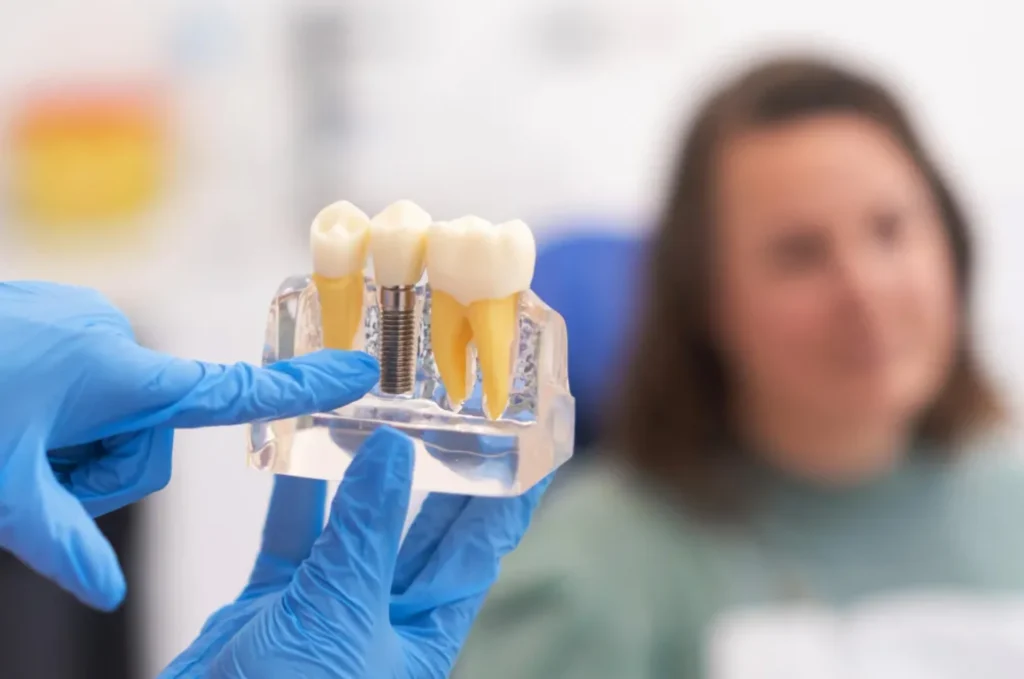
Dental implant recovery can feel uncertain when you are planning meals, work, sleep, and daily activities after surgery. Knowing what is normal, what can slow healing, and which symptoms need care can make things easier. This guide explains the process so you can protect the implant and prepare with realistic expectations.
Most people return to light daily activities within 1 to 3 days and feel significantly better within 1 week. Deeper bone healing usually takes three to six months, though the exact recovery time depends on the implant location, bone quality, treatment complexity, and your overall health.
How long to recover from dental implants also depends on whether you received one implant, several implants, an extraction, or bone grafting. Your implant procedure recovery time may differ from the average, so follow the schedule provided by your dentist.
Surgical recovery includes soreness, swelling, minor bleeding, and gum tissue closure. These symptoms should improve during the first week. Bone healing occurs through osseointegration—new bone forms around the implant, creating a stable foundation to support a replacement tooth.
The main milestones are:
Implant loading schedules vary. Bone condition, implant stability, surgical technique, and the treatment location all influence when the implant can safely support normal chewing forces.
The dental implant healing stages begin immediately after dental implant surgery and continue through early tissue repair and long-term bone integration. Symptoms should become less noticeable as healing progresses, rather than suddenly worsening.
During the first 24 hours, mild bleeding, swelling, soreness, and numbness are common. Rest with your head raised, use gauze as directed, and take pain medication according to your dentist’s instructions.
A cold pack may help control swelling during the first day. Do not rinse forcefully, spit, smoke, drink through a straw, or touch the surgical area. Suction and repeated pressure on the implant can disturb the blood clot that protects the site.
AAOMS advises patients to follow their postoperative instructions, use ice during the first day when directed, avoid vigorous rinsing, and avoid smoking because it can interfere with clotting and healing.
Swelling often becomes most noticeable within the first two or three days before it begins to decrease. Mild bruising, jaw stiffness, and tenderness may continue during the first week.
Continue eating soft foods and clean the surrounding teeth without scrubbing the incision. You can usually return to routine tasks as your comfort improves.
The gums should look and feel calmer during this stage. You may feel fully recovered even though the implant is still becoming secure within the bone. Your sutures may dissolve on their own or require removal, depending on which type your dentist used. Do not pull at a loose suture. Contact the office if it causes irritation or if the incision begins to open.
The later healing process for dental implants centers on osseointegration and bone remodeling. The implant must remain stable while bone grows and matures around its surface.
Healing may differ between the upper and lower jaws because bone density and anatomy vary. Research commonly describes longer conventional healing periods in the upper jaw than in the lower jaw, but your dentist must determine the correct timing for your case.
The permanent crown, bridge, or implant-supported prosthesis is placed after testing confirms that the implant can handle chewing forces. This final step completes the planned dental implant treatment. Some cases allow earlier placement, while grafting or limited implant stability may require a longer wait.
Most discomfort is manageable with the pain-control plan provided by your dentist. Soreness is often strongest during the first two or three days and should become less noticeable as the first week progresses.
Dr. Waise Ebrahimi is certified in dental implant placement and plans treatment around the condition of the surrounding bone and soft tissue. Patients still comparing providers can also learn how to choose a dental implant specialist in NYC. Careful planning helps set realistic expectations for tooth implant recovery, though no procedure can promise a pain-free experience.

Expected short-term symptoms may include:
These symptoms should remain manageable and improve over time.
Pain should become easier to control each day. Swelling should also begin to settle after the first few days rather than continuing to grow. Call your dentist if discomfort worsens after it has begun to improve. A sudden change may need an examination even when the earlier part of healing seemed normal.
Plan to rest for the remainder of the surgery day and keep the following day light when possible. People with office-based jobs often return within 1 to 3 days, whereas physical work, sedation, long commutes, or complex treatment may require more time.
One full day of rest may be enough after straightforward implant placement. Two or three days may feel more realistic if you receive several implants, develop noticeable swelling, or need stronger medication.
A desk-based role may require only one to three days away from work. Jobs involving lifting, bending, frequent speaking, or constant movement may require a longer break. A crowded Manhattan commute can also make the first days more tiring. Remote work or a lighter schedule may help when available.
Light walking is often reasonable after the first day if you feel steady. Delay running, heavy lifting, intense cycling, and strenuous gym sessions for several days or as directed. Exercise can restart bleeding or throbbing by raising blood pressure. Stop and rest if activity causes fresh bleeding, swelling, or discomfort near the surgical site.
Choose cool or lukewarm soft meals for the first few days, then add firmer textures as comfort returns and your dentist allows. Your food choices should maintain adequate nutrition without irritating the incision or applying direct chewing force to the area.
Choose eggs, oatmeal, soft fish, yogurt, applesauce, mashed potatoes, cooked vegetables, and lukewarm soups. Smoothies can also work, but eat them with a spoon rather than a straw.
A soft diet does not need to consist only of liquids or sweets. Protein, water, and balanced meals support normal tissue repair.

Avoid chips, nuts, seeds, popcorn, crusty bread, sticky candy, and very hot foods while the site remains tender. These foods can irritate the incision or become trapped around it. Dairy is not automatically prohibited after a dental implant procedure. Your dentist may limit it because of nausea, medication instructions, digestive sensitivity, or another case-specific reason.
Proper care cannot force the body to heal faster, but it can reduce avoidable setbacks. Keep the surgical site clean, follow medication instructions, protect the area from pressure, and attend each scheduled check.
Avoid brushing directly over a fresh incision unless your dentist tells you otherwise. Clean the surrounding teeth carefully and use any prescribed rinse exactly as directed. Gentle oral hygiene helps control plaque without damaging the clot or healing gum tissue. Normal brushing and flossing can resume gradually as the area heals. Afterward, routine professional cleanings help protect the implant and support long-term oral health.
Rest, stay hydrated, take medication as directed, and follow your postoperative care plan. Do not smoke, use a straw, rinse aggressively, or chew directly over the implant. These steps help prevent infection and limit movement during the early healing process. They also protect the tissues while they begin attaching around the implant.
Healthy meals, enough sleep, careful cleaning, and well-managed medical conditions support normal healing. Smoking cessation matters because smoking can reduce blood flow and interfere with tissue repair.
At Smile Lab in Union Square, follow-up visits allow the team to assess the site rather than rely solely on how it feels. These visits help confirm when you can expand your diet, resume activity, and move toward the next treatment stage.
Recovery may take longer when treatment includes grafting, several implants, limited bone, or health factors that interfere with tissue repair. These factors should be considered before your dentist estimates your personal timeline.
A bone graft for teeth can add several months to treatment, depending on its size and location. In some cases, the graft and implant heal together. In others, the graft must mature before implant placement.
Hard- and soft-tissue grafting may be required when the treatment area lacks enough support for predictable implant placement.
Several implants may cause more swelling and tenderness than a single implant. You may also need a longer soft-food period or more time away from physically demanding work.
Full-mouth dental implant treatment often includes one to two weeks of early surgical recovery followed by several months of bone integration. Extractions, grafts, temporary teeth, and the number of implants can all change that estimate.
Temporary teeth may restore appearance and limited function during healing. They do not mean the implants are ready for unrestricted chewing.
Smoking, uncontrolled diabetes, active gum disease, poor plaque control, and some medications may slow healing or increase complication risks. Share your full medical history and medication list with your dentist before treatment.
Call your dentist if pain, bleeding, or swelling becomes worse instead of gradually improving. Prompt evaluation is also appropriate for fever, pus, a persistent bad taste, increasing redness, unusual numbness, or movement near the implant.
Possible signs of infection include swelling that increases after several days, drainage, fever, chills, and worsening tenderness. These symptoms do not automatically mean the implant has failed, but the site should be examined.
Contact the office for bleeding that does not slow with firm gauze pressure and rest. An implant, graft, healing cap, suture, or temporary tooth that feels loose also needs professional assessment. Do not repeatedly test the area with your tongue or fingers.
Knowing what to expect can make treatment feel more manageable, especially if fear or a difficult past dental experience has made you hesitant. Schedule a Consultation to discuss your procedure, expected timeline, and follow-up needs with the Smile Lab team.