You must itemize on Schedule A, and your eligible medical expenses must exceed 7.5% of your adjusted gross income (AGI). The amount above that threshold may lower your taxable income. A tax professional can help you determine whether you qualify.
Key Takeaways
- Restorative dental implants may qualify for tax savings in 2026 when they replace missing teeth or treat dental problems.
- You must itemize on Schedule A, and your eligible medical costs must exceed 7.5% of your AGI.
- Qualifying expenses may include implant surgery, bone grafts, crowns, X-rays, and related care.
- You can’t claim costs paid with tax-free HSA or FSA funds, or reimbursed by another source, again.
- Eligible adults age 65 or older may qualify for a separate federal tax break of up to $6,000
Medically Necessary vs. Cosmetic Implants
Implants can replace lost teeth, restore chewing, and improve oral health. If you’re exploring treatment, understanding what dental implants are and whether they’re safe can help you weigh your options. These benefits help show why the treatment may qualify as medical care.
Procedures done solely to improve appearance usually do not qualify. Your dental records can help explain why you need treatment.
Eligible Implant Procedures and Costs
Qualifying treatment expenses may include:
- Implant placement surgery
- Bone grafts needed for treatment
- Abutments and dental crowns
- Dental X-rays and exams
- Tooth removal linked to treatment
At Smile Lab, a single dental implant costs $2,650 for the implant body, plus $3,300 for the abutment and crown, bringing the total to $5,950. Bone grafting, extractions, or other procedures may add to the final cost. Treatment options may also include same-day dental implants, which allow eligible patients to receive a temporary tooth on the day of implant placement.
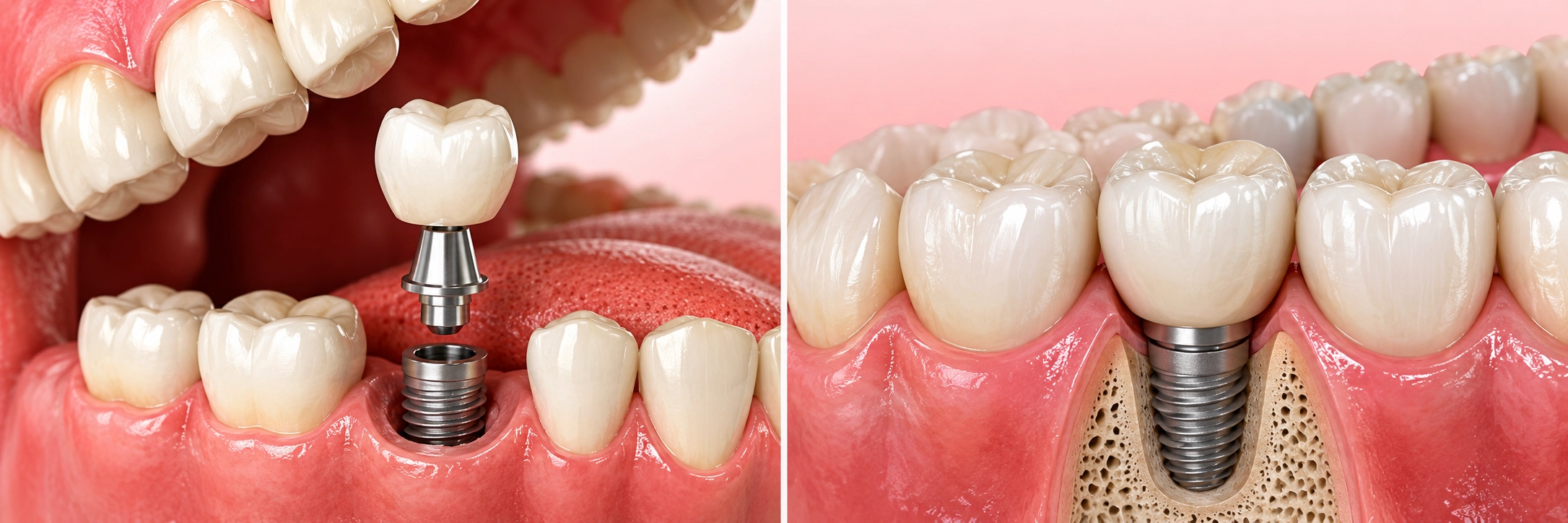
These expenses may qualify as medical costs under IRS rules when the treatment restores dental health or function. After surgery, following dental implant post-op instructions can help protect the healing area and support recovery. The amount you can claim depends on your income, total eligible expenses, and filing method.
What Are the IRS Deduction Rules?
The IRS sets income and filing rules for dental implant tax deductions. You must meet both requirements to claim eligible costs.
The 7.5% Adjusted Gross Income Rule
Your total eligible medical costs must exceed 7.5% of your adjusted gross income (AGI). Expenses above this limit may lower your taxable income if you itemize.
For example, if your AGI is $80,000, the limit is $6,000. If your qualifying costs total $12,000, you may claim $6,000.
Standard vs. Itemized Deductions
You must itemize on Schedule A to claim medical expenses. If you take the standard deduction, you cannot claim these costs separately.
Other tax benefits, such as student loan interest, follow different rules. A tax professional can help you choose the best filing method.
How Much Can You Save on Taxes?
Your potential tax savings depend on your income, medical costs, and tax rate. Here is a simple example:
| Calculation | Amount |
|---|---|
| Annual AGI | $80,000 |
| 7.5% AGI Threshold | $6,000 |
| Total Eligible Medical Costs | $12,000 |
| Amount Potentially Deductible | $6,000 |
If your federal marginal tax rate is 22%, this could lower your federal tax bill by approximately $1,320, assuming the full deduction provides an additional tax benefit.
This assumes itemizing provides the full extra tax benefit. Your actual savings may be less. The eligible amount reduces your taxable income, not your tax bill dollar for dollar. If you’re comparing treatment options, reviewing same-day dental implant costs can help you estimate your expenses before assessing potential tax savings.
How to Claim Dental Implant Tax Deductions
You can report eligible medical costs on your tax return by following these steps:
- Save dental bills, receipts, and payment records.
- Add all eligible medical costs for the year.
- Subtract 7.5% of your AGI.
- Report the remaining amount on Schedule A.
- Compare your itemized total with the standard deduction.
Keep copies of your records in case the IRS asks for proof. The year you pay for treatment also affects when you can claim it.
Insurance, HSA, and FSA Payments
You cannot claim costs that another source has paid or reimbursed. Expenses paid with tax-free money from a health savings account (HSA) or flexible spending arrangement (FSA) also don’t count toward itemized medical deductions.
You can still use these accounts to pay for eligible dental care with tax-free funds.
Are Dental Implants Tax Deductible for Seniors?
Yes. Seniors can claim eligible dental expenses under the same IRS rules as other taxpayers. Being over 65 doesn’t automatically make treatment eligible.
Seniors with lower income may reach the 7.5% threshold with fewer medical costs. They must still itemize to claim these expenses.
Frequently Asked Questions
Are Full-Mouth Dental Implants Tax Deductible?
Yes. Full-mouth implants may qualify when they replace missing teeth or restore chewing. Treatments such as All-on-8 dental implants can restore a full arch of teeth and may qualify when they meet IRS medical expense rules. The same IRS income and filing rules apply.
Can You Deduct Financed Dental Implants?
Yes. Eligible treatment costs may qualify even if you finance them. The tax year you can claim them depends on how and when the dental office receives payment.
For example, qualifying care charged to a credit card generally counts in the year of the charge. Interest on financing is generally not an eligible medical expense.
Planning Your Dental Implant Treatment
Knowing the cost of dental implants in Manhattan can help you plan your next steps. A dental exam can also show what you need to restore function and protect your teeth.
At Smile Lab in Union Square, Dr. Waise Ebrahimi, a certified dental implant placement specialist, can assess your oral health and explain your options. Review the treatment plan, costs, and expected results before deciding.
If you’re considering replacing missing teeth in Manhattan, schedule a consultation to learn which options best fit your needs.