
A deep cleaning, known clinically as scaling and root planing, clears bacteria and hardened tartar from below the gumline once the pockets around your roots measure deeper than 4 millimeters, the threshold Dr. Anastasiya uses for periodontal charting at Smile Lab. We complete it across two visits at our Union Square office using local anesthetic, then re-measure your pocket depths at a follow-up roughly three months later. This is the stage where early periodontal disease can still be reversed without surgery.

Scaling and root planing is a non-surgical procedure that treats periodontal disease at its source: the bacteria living under your gumline where a toothbrush cannot reach.
It becomes necessary once gum pockets, the spaces between your tooth and the surrounding tissue, exceed 4 millimeters in depth. Heavy tartar buildup, bleeding, and inflammation usually appear alongside that measurement.
The procedure has two halves:
Scaling: Removing plaque and calcified tartar from above and below the gumline, eliminating the bacterial colonies in and around the tooth root.
Root Planing: Smoothing the rough spots on the root surface so bacteria have nothing to latch onto as your tissue heals and reattaches.
Here in Union Square, Dr. Anastasiya Guzchenko leads our periodontal therapy team. She would rather catch pocket depth changes at 4mm than treat bone loss at 7mm.
She screens every patient for bleeding and inflammation that could signal early disease, and schedules periodontal therapy as soon as she spots deterioration rather than waiting for it to worsen. If your pockets turn out to be shallow and healthy, a standard hygiene visit is all you need instead.
Periodontal charting comes with vocabulary most patients hear for the first time in the chair. Here is what each term actually means, so nothing in your treatment plan reads like a foreign language.
| Term | What it means |
|---|---|
| Plaque | A soft, pale film of bacteria and food debris that forms daily. Brushing and flossing remove it. |
| Tartar (calculus) | Plaque that has hardened onto the tooth surface. Only instruments can remove it, not a toothbrush. |
| Gum pocket | The space between your root and the surrounding tissue. Healthy pockets measure 3mm or less. |
| Probing depth | The millimetre reading your hygienist calls out while charting each pocket. |
| Gingivitis | Early inflammation of the tissue. Reversible with treatment and consistent home care. |
| Periodontitis | Advanced infection that has reached the bone. Manageable, but the bone loss is permanent. |
| Prophylaxis | A routine hygiene visit for healthy pockets, typically every six months. |
| Scaler | The hand instrument used to lift tartar off the root surface. |
| Ultrasonic scaler | A vibrating tip with a water spray that breaks up heavy deposits and flushes debris. |
| Periodontal maintenance | The shorter follow-up visit, usually every 3 to 4 months, after scaling and root planing. |
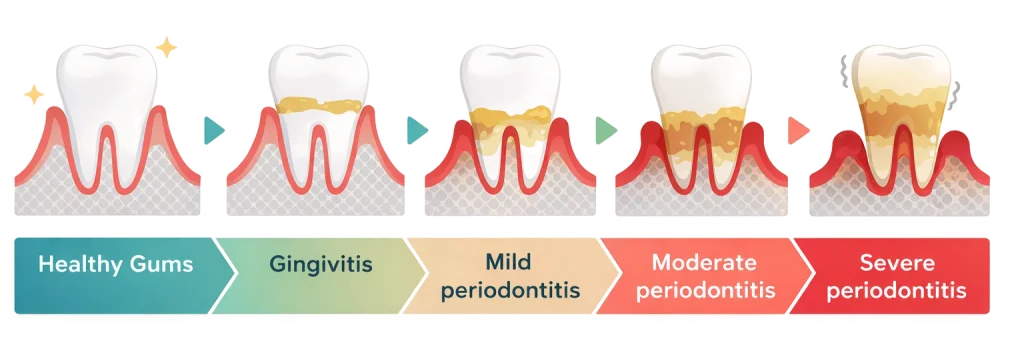
Periodontal disease often feels harmless at first because it rarely hurts. Over time it widens the pockets between adjacent teeth, trapping more tartar, and feeding bacterial growth near your roots.
Left alone, that bacteria drives the condition forward into gingivitis and then periodontitis, the advanced form that erodes the bone anchoring your roots in place.
As it advances, roots lose their support, teeth loosen and shift, and tooth loss follows. Periodontal disease is a leading cause of tooth loss in adults, and it usually progresses silently, with pain typically appearing only during acute flare-ups. Source: StatPearls, NCBI
Scaling and root planing clears the pockets and smooths the root surface, cutting off the foothold bacteria need to keep advancing. Caught early, it can reverse the process entirely.
Periodontal disease affects an estimated 47% of adults over 30 and 70% of adults over 65 in the United States, and roughly 9% of adults have the advanced form.
Some people develop pocket depth problems despite brushing and flossing well. According to the National Institute of Dental and Craniofacial Research, tobacco use is the single biggest risk factor, and it also makes periodontal therapy less likely to succeed.
Other established risk factors include older age, diabetes, and genetics. Hormonal changes during puberty, pregnancy, or menopause raise risk in women, and the condition is more common and more severe in men than in women.
Stress, rheumatoid arthritis, cardiovascular disease, obesity, and HIV, along with several of the medications used to manage them, are also associated with periodontal disease. Medications that cause dry mouth matter too, since saliva is part of your natural defense.
If two or more of these apply to you, mention it at your evaluation. It changes how often you should be re-charted, not just how you are treated. Left unaddressed, these risk factors are often what pushes a case toward more advanced periodontal disease treatment.
Patients often ask why they cannot simply book a standard hygiene appointment instead. The two procedures look similar from the chair, but they treat different problems and follow different schedules.
| Routine hygiene visit | Scaling and root planing | |
|---|---|---|
| Treats | Healthy tissue, preventive | Active periodontal disease |
| Pocket depth | 3mm or less | Deeper than 4mm |
| Reaches | At and just below the gumline | Full root surface below the gumline |
| Anesthetic | Not needed | Local anesthetic, standard |
| Appointments | One, 30 to 50 minutes | Two, about an hour each |
| Follow-up interval | Every 6 months | Every 3 to 4 months |
| Root planing included | No | Yes |
All specialists under one roof means no more referrals across the city, no conflicting treatment plans, and faster care from start to finish. Your periodontal surgeon, endodontist, oral surgeon, and cosmetic dentist are all here, all collaborating on your care.
Open 9AM-7PM weekdays and 9-5 all weekend. Book same-day appointments online. Fit your appointments into your life, not the other way around.
Know exactly what you will pay before your procedure begins. We accept most insurance, offer 0% financing, and never surprise you with hidden costs.
No gimmicks. No outdated methods. Just evidence-based care focused on long-term oral and overall health.
Brand-new office with clean design, modern technology, and an atmosphere that feels more like a SoHo studio than a clinic.
At Smile Lab, you’re not just a patient number. You’re cared for by a collaborative team of highly trained specialists who actually talk to each other about your treatment.
Founder & General Dentist
Oral & Maxillofacial Surgeon
Periodontist & Implant Specialist
From your first visit to your final follow-up, we keep the process comfortable, clear, and stress-free, so you can focus on getting better rather than feeling nervous.
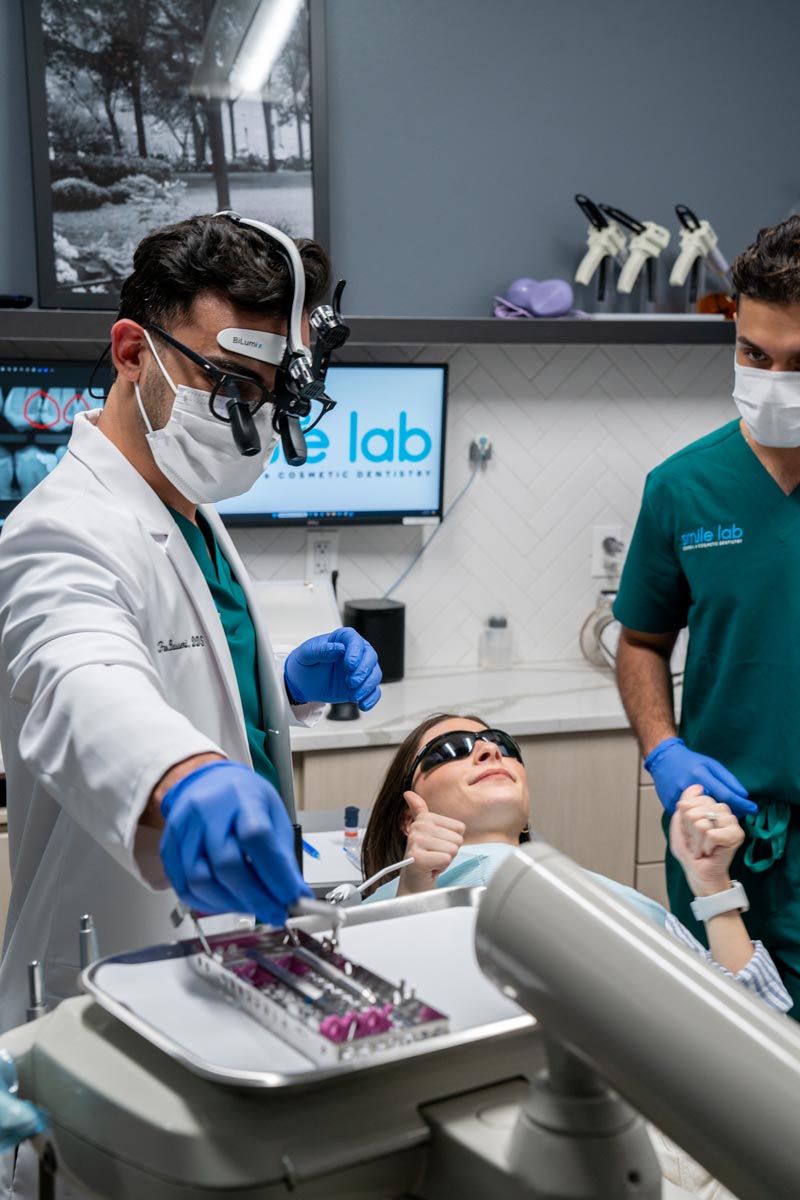
Scaling and root planing sounds intimidating. Dr. Anastasiya and her team walk you through every step, offer anesthetic options that suit you, and make sure you never feel rushed, pressured, or in unnecessary pain.
What starts as slight bleeding or sensitivity can quietly progress into advanced periodontal disease and eventually tooth loss. Periodontal therapy stops that damage in its tracks, clearing out the bacteria and buildup brushing simply cannot reach. Protect your smile now so you do not lose it later.
Periodontal disease does not stay in your mouth. The inflammation driving it can worsen inflammation elsewhere in the body, and periodontal disease shares risk factors with chronic conditions such as heart disease, stroke, and diabetes, including smoking, obesity, and high blood pressure. Source: NIDCR. Treating your gums is one of the more useful things you can do for your general health.
We take every precaution to protect our patients, and we are direct about what happens at each stage. Here is Dr. Anastasiya’s exact sequence.
She examines your mouth thoroughly, probing pocket depths around each root and assessing the surrounding tissue. Digital X-rays or 3D imaging may follow, giving the team a clear read on bone levels before anything else happens.
Once she confirms the pockets warrant treatment, the area is numbed with local anesthetic so you feel nothing during the procedure. Patients who are especially anxious can discuss sedation options in advance, which may affect your total cost.
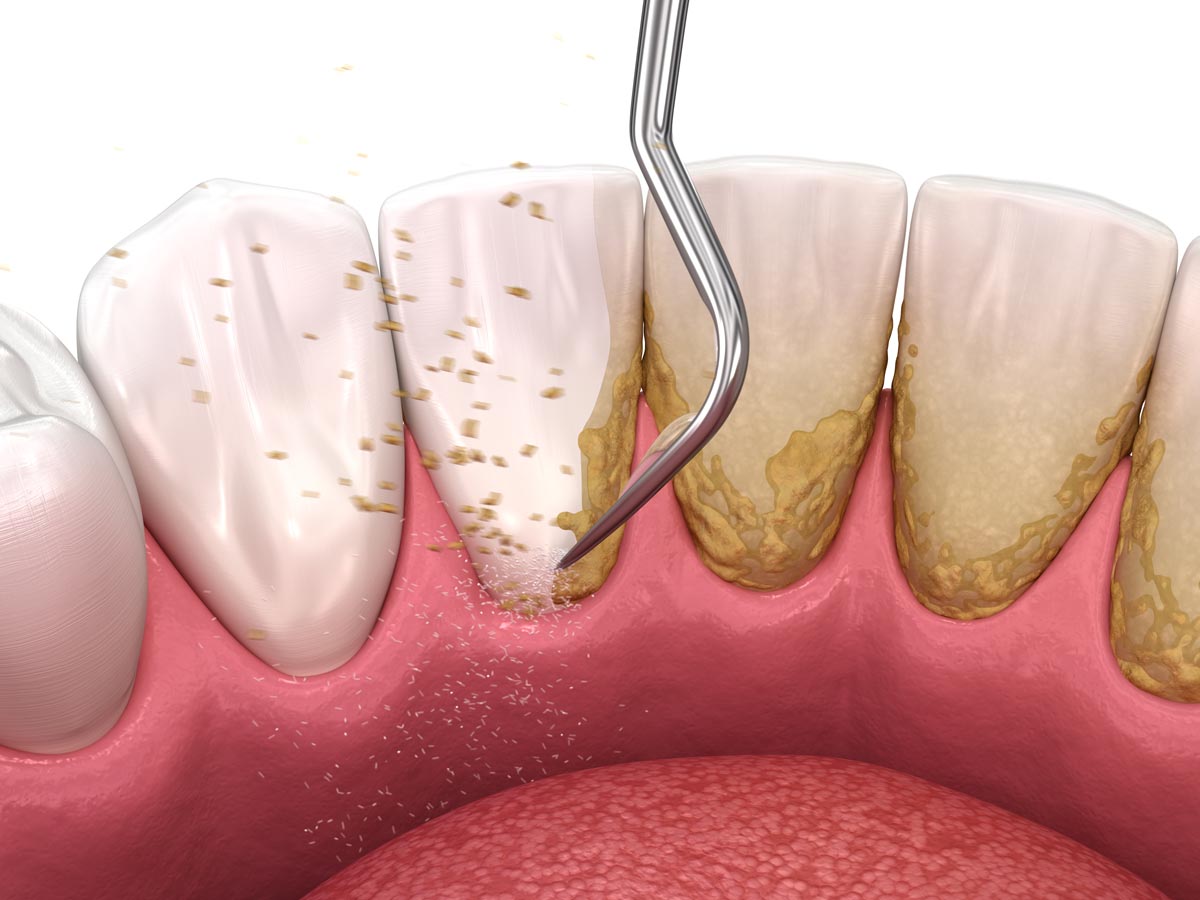
With the area numb, Dr. Anastasiya uses hand scalers to lift tartar out of the widened pockets. An ultrasonic device with a vibrating tip and water spray is often used alongside them to flush loosened debris away.
She then smooths the root surfaces to remove the rough texture bacteria cling to. Smoother roots let your tissue heal and reattach, which reduces pocket depth over the following weeks.
Follow-up Care: You will feel some sensitivity for a day or two. Dr. Anastasiya may prescribe antibiotics or an antimicrobial rinse, and you return roughly three months later for periodontal maintenance so she can re-chart your pockets and confirm the tissue is responding.
If charting shows the disease has already reached the bone, LANAP laser therapy may be the next step rather than repeat scaling.

Most people go back to work the same day. The numbness wears off within a few hours, and the tenderness that follows is manageable with over-the-counter pain relief.
For the first two or three days, stick to softer foods and skip anything spicy or acidic, so citrus, tomatoes, juice, pickles, and red wine. Hard and crunchy items are worth avoiding for the same window.
Rinsing with warm salt water several times a day helps the tissue settle, and an ice pack takes down any swelling. Sensitivity to hot and cold is normal early on and fades as the tissue tightens back around your roots.
Call the office if bleeding continues past a few days or if discomfort increases rather than improves.
Pricing depends on how advanced the disease is and how much of the mouth needs work. Out-of-pocket pricing at the Union Square office is below, including the periodontal maintenance visit that follows. For a broader look at what a deep cleaning typically costs across Manhattan, see our full pricing breakdown.
| Service | What it covers | Time | Price |
|---|---|---|---|
| Scaling and root planing | Full course plus the periodontal maintenance visit that follows | Two 1-hour visits, plus 30 mins at 3 months | $1,400 |
| New patient exam and hygiene visit | Charting, digital X-rays if needed, exam, treatment plan | 50 mins | $250 |
| Recall exam and hygiene visit | Routine preventive visit for healthy pockets | 30 to 50 mins | $250 |
| Gingivectomy, 1 to 3 teeth | Reshaping overgrown tissue where indicated | Varies | $550 |
0% financing through Cherry is available if you would rather spread the cost. You get a written estimate before anything is scheduled.

Your gums are the most sensitive part of your mouth. They can bleed easily and cause complications that may end up making the deep cleaning process much more difficult. In extreme cases, some complications might even end up requiring surgical intervention, though for many patients, LANAP laser therapy offers a minimally invasive alternative to traditional gum surgery.
Thus, you need the person carrying out your procedure to be a professional that has tons of experience in dealing with complications as safely as possible.
Someone like Dr. Anastasiya Guzchenko, who has over a decade of experience when it comes to conducting deep teeth cleanings and has hundreds of satisfied patients who remain connected with Smile Lab, NYC to this day.
She’s also a distinguished alumna of New York University’s College of Dentistry, who has a knack for remaining calm in pressure situations.
Schedule your appointment today! The Smile Lab Dental Office is near:
Common signals include bleeding or swollen gums, persistent bad breath, pockets deeper than 4 millimeters, and visible tartar along the gumline. The only way to know for certain is a periodontal charting appointment, where Dr. Anastasiya measures each pocket and recommends the procedure only if the numbers justify it.
Common signs that you may need a deep cleaning include bleeding or swollen gums, persistent bad breath, gum pockets deeper than 4 millimeters, or visible tartar buildup along the gumline. The best way to know for sure is to schedule an evaluation with Dr. Anastasiya, who will conduct a thorough examination and only recommend a deep cleaning if it’s truly necessary.
Local anesthetic is administered first, so you should feel little to no pain during the appointment. Mild soreness over the next few days is normal. Dr. Anastasiya provides aftercare instructions and will prescribe antibiotics or an antimicrobial rinse if your case calls for it.
Two appointments, each running about an hour, usually split by quadrant or half the mouth. A shorter periodontal maintenance visit follows about three months later so your pocket depths can be re-measured and the tissue response confirmed.
Cost depends on the severity of disease and how much of the mouth requires work. Out-of-pocket pricing is listed above, and you receive a written estimate covering every line item before anything is scheduled.
In the early stages, often yes. Gingivitis is reversible, and periodontal therapy combined with consistent home care resolves most of these cases. Once bone loss has occurred, the goal shifts to halting progression rather than reversing it, which is why the depth of your pockets at diagnosis matters so much.
Most patients move onto a periodontal maintenance schedule every 3 to 4 months rather than the standard 6-month interval. That cadence keeps pockets from deepening again. Dr. Anastasiya sets the interval based on how your tissue responds after the initial procedure.
Pockets deepen, bone loss continues, and teeth loosen. The treatments that follow, gum surgery, extractions, and implants, cost several times more than scaling and root planing and take considerably longer to recover from. For a closer look at how long you can keep your teeth with gum disease, see our full guide.
You deserve dental care that respects your time, your health, and your standards. Book your free consultation today & experience the Smile Lab difference.









Book My Appointment