Fixed restorations typically require several months of treatment, but the implant itself can last for decades with good oral hygiene. Removable tooth replacements typically last about 5 to 10 years and should be removed at night. The right choice depends on bone health, remaining teeth, budget, and whether you prefer a fixed or removable solution.
Key Takeaways
- Fixed implant restorations provide stable replacement teeth and can help prevent bone loss without relying on neighboring teeth.
- Removable partials usually cost less upfront and can replace several missing teeth without surgery.
- Implant treatment requires surgery and healing, while a removable appliance can often be completed within weeks.
- The right option depends on bone health, remaining teeth, budget, treatment goals, and preferred level of stability.
- Both require consistent oral hygiene, while removable appliances also need daily removal and periodic adjustment or replacement.
Dental Implants vs. Partial Dentures Compared
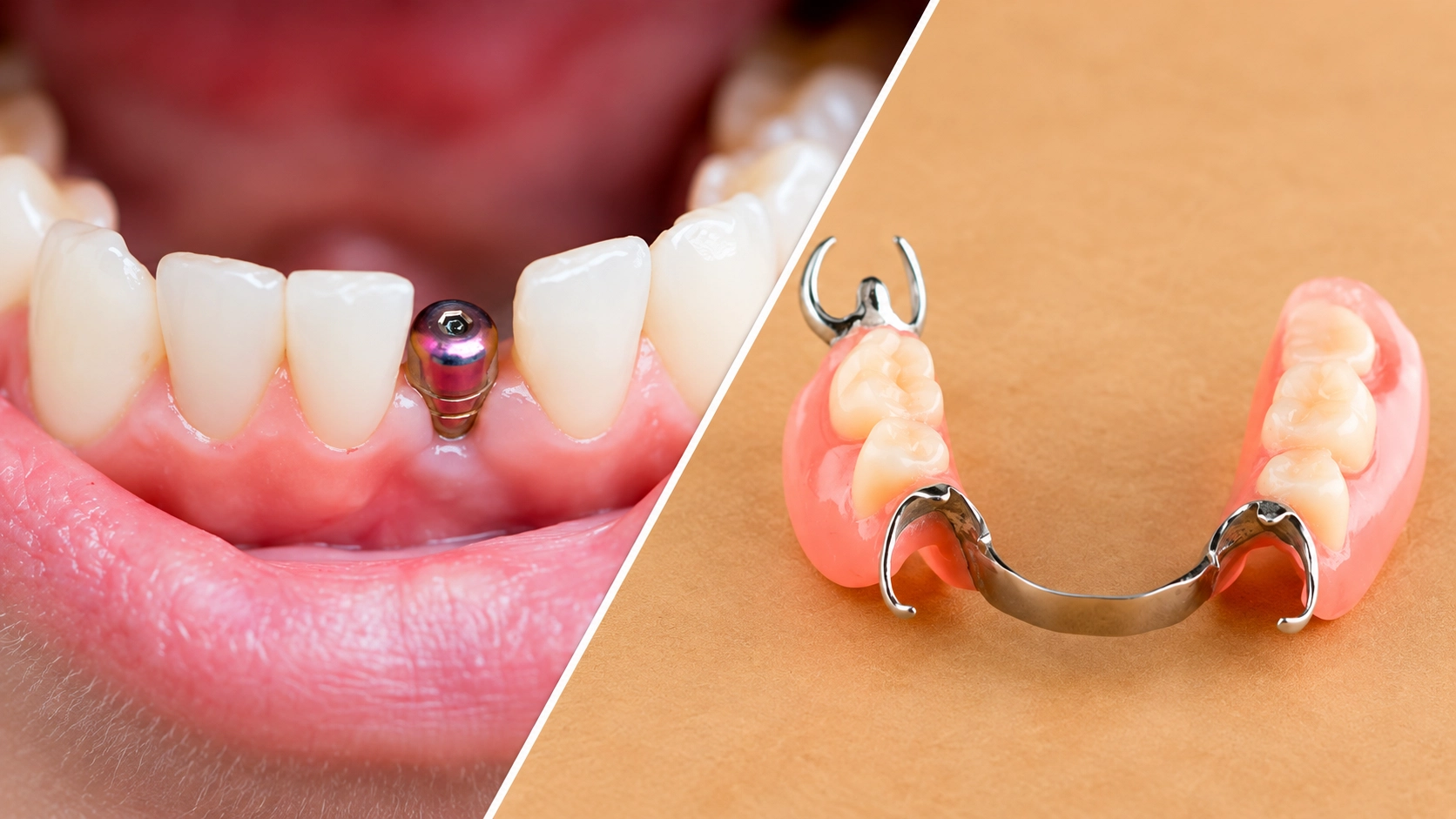
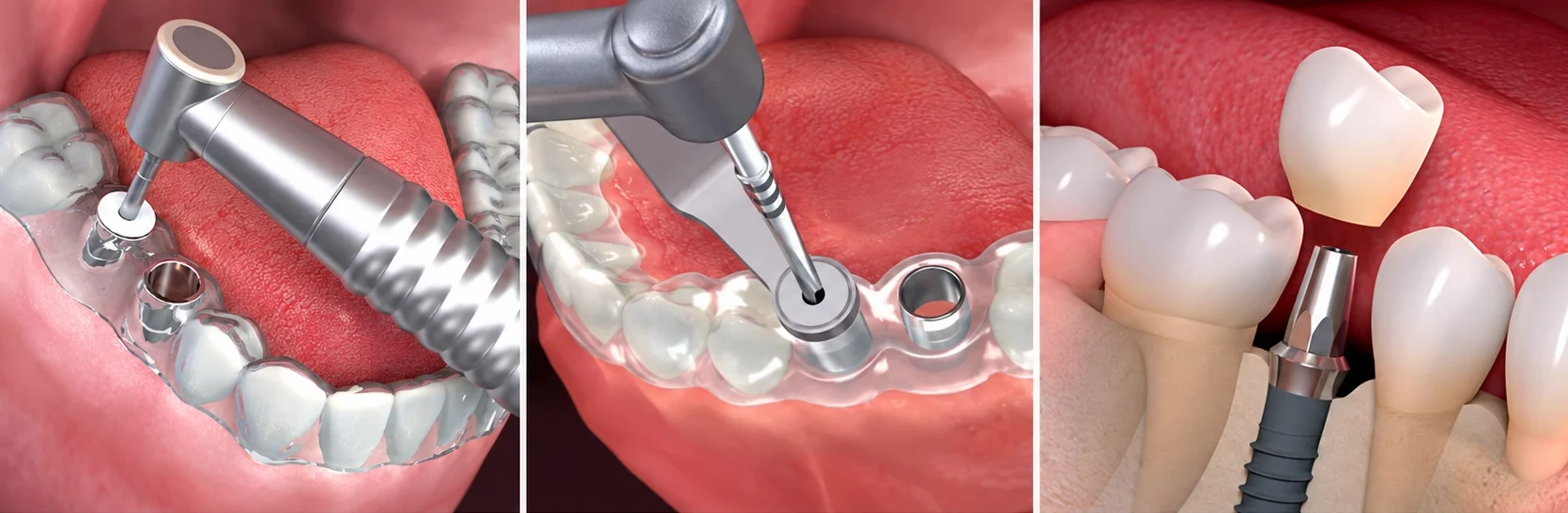
A fixed restoration may be better if you want a permanent solution with strong chewing stability. Titanium posts integrate with the jaw through a process called osseointegration, creating a stable base for artificial teeth and helping preserve bone.
A removable appliance may make more sense if you prefer not to have surgery, need faster treatment, or want to keep costs down. It can replace missing teeth in several areas without placing a post at every site.
How the Two Options Differ
Fixed restorations remain secure during chewing and speaking. Removable options rest on the gums and may use surrounding teeth for support, so they can feel less stable and may place additional stress on those teeth.
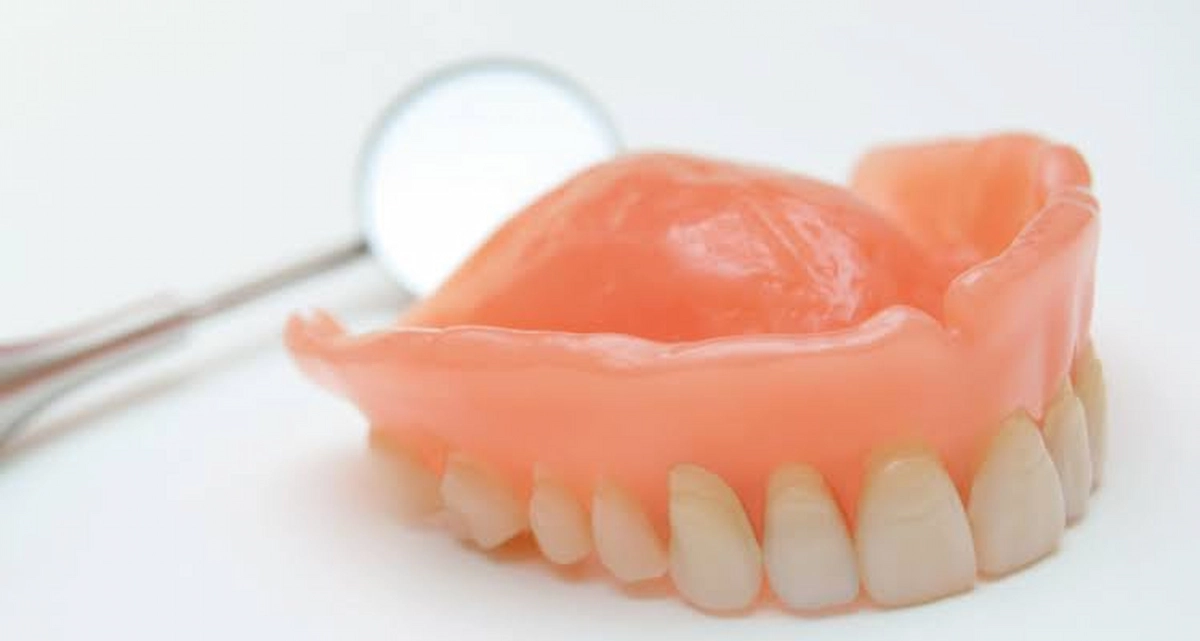
Implant-supported treatment also transfers chewing forces into the jaw, which can help prevent bone loss. Removable restorations do not provide the same stimulation, so changes in jaw shape can eventually lead to adjustments or denture replacements.
Treatment Time and Maintenance
Implants require surgery and healing before the final restoration, and some patients need bone grafting first. A removable option can usually be made sooner but requires daily removal, cleaning, and consistent oral hygiene.
Partial Dentures vs. Implants Cost
Removable tooth replacements usually cost less upfront because they do not require implant surgery. At Smile Lab, a single dental implant body costs $2,650, while the abutment and crown cost $3,300, bringing the total implant restoration to $5,950. Fixed treatment may also involve imaging, surgical placement, healing, and bone grafting when needed, while the cost of a partial denture depends on its design, materials, and how many teeth it replaces.
Are Partial Dentures Cheaper Than Implants?
Yes, they are generally cheaper at first. Long-term costs can narrow the difference if a removable prosthesis needs relining, repair, or replacement, while a well-maintained implant may remain functional for decades.
Dentures vs. Implants Pros and Cons
Both options can restore missing teeth, but they differ in stability, treatment time, bone support, cost, and daily care. The table below shows the main trade-offs to consider before choosing a treatment.
| Factor | Fixed Implant Restoration | Partial Denture |
|---|---|---|
| Stability | Fixed in place | Removable and may shift |
| Bone Support | Helps preserve jawbone | Does not stimulate the jawbone |
| Nearby Teeth | Does not rely on adjacent teeth | Often uses nearby teeth for support |
| Surgery | Requires surgical placement | No surgery required |
| Treatment Time | Usually several months | Often completed within weeks |
| Upfront Cost | Higher | Lower |
| Maintenance | Daily brushing, flossing, and exams | Daily cleaning and removal |
| Longevity | Implant may last decades | Usually needs periodic replacement |
Who Should Consider Each Option?
A fixed implant restoration may suit someone with healthy gums, enough jawbone, and a preference for a stable, long-term tooth replacement. A removable option may be better for someone who wants to avoid surgery, needs to replace several teeth, or prefers a lower initial cost.
At Smile Lab in Union Square, Dr. Waise Ebrahimi considers bone support, remaining teeth, oral health, function, and treatment goals before recommending either approach. His implant placement training helps determine whether a fixed or removable solution is more appropriate for each patient.
What to Know Before Dental Implants
Implants require healthy gums, adequate bone, and time for healing. Although they are designed as a long-term treatment, dental implants can be removed when problems such as failed integration, infection, or poor positioning make removal necessary.
Implants can’t develop cavities, but the surrounding gums and bone still depend on daily brushing, flossing, professional cleanings, and regular monitoring. Understanding common tooth implant side effects such as temporary swelling, tenderness, bruising, or minor bleeding can also help you know what to expect during early recovery.
Which Tooth Replacement Option Is Best?
If you want the most stable, fixed option and can undergo surgery, an implant-based restoration may offer better long-term function. If you are also comparing restorations for a damaged or missing tooth, understanding the difference between a dental implant vs. crown can help clarify which treatment fits your situation.
Make your final decision after an exam and imaging confirm which options are suitable. Schedule a Consultation to review your choices and next steps.