Compared with removable dentures, the restoration stays fixed and can improve chewing stability. Cost and results depend on bone density, oral health, extractions, grafting, materials, and long-term maintenance.
Key Takeaways
- Six posts can support a fixed full-arch restoration for patients with extensive tooth loss.
- Good candidates need healthy gums, adequate bone support, and overall health that supports healing.
- Treatment usually includes imaging, surgical placement, a temporary restoration when appropriate, healing, and a final prosthesis.
- Cost, recovery, and longevity vary based on bone condition, grafting, materials, hygiene, and case complexity.
- The treatment can provide more stability than traditional dentures, but infection, implant failure, and prosthetic problems remain possible.
What Are All-on-6 Dental Implants?
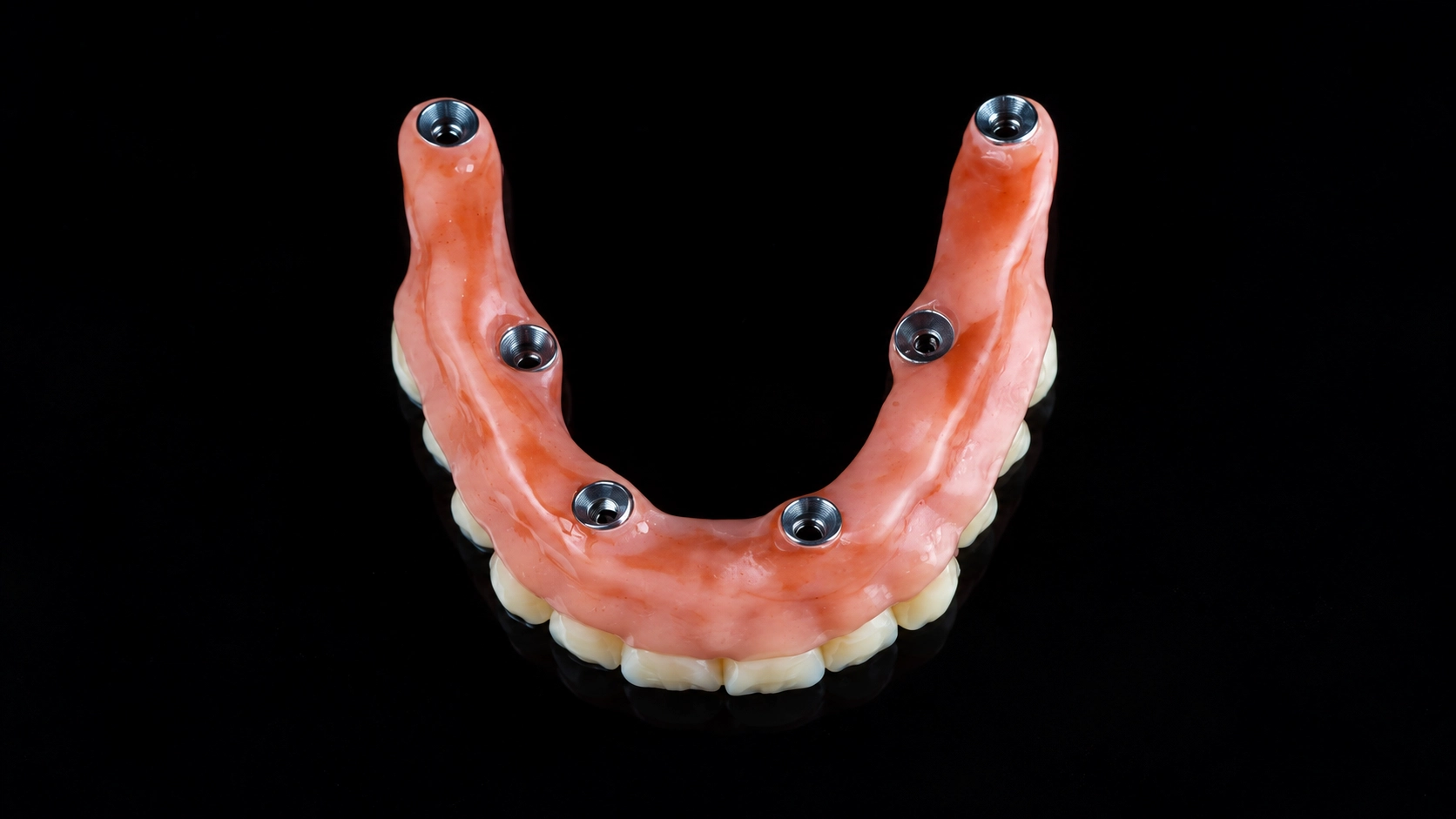
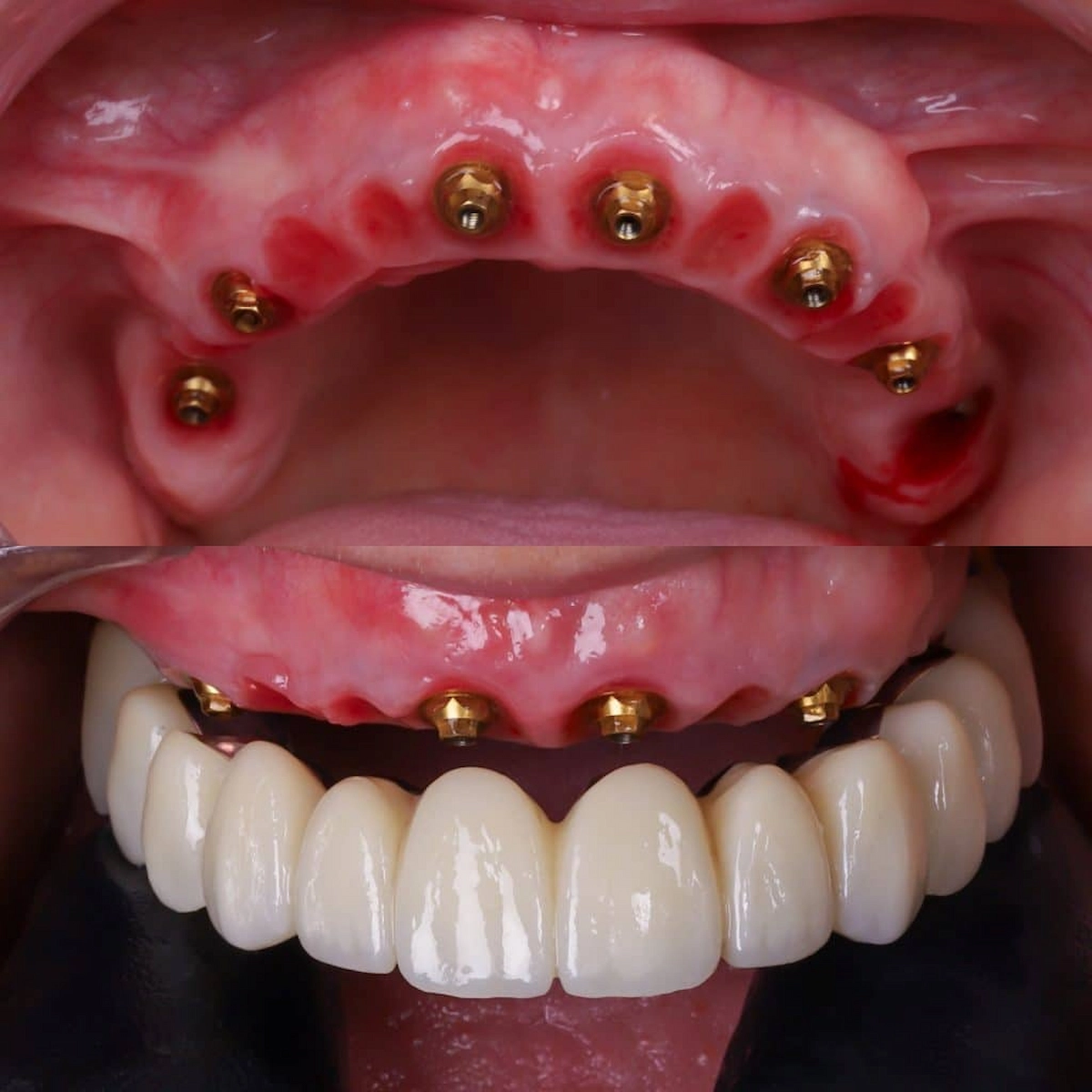
Six posts support a fixed bridge that replaces an entire arch. Unlike traditional dentures, the teeth stay in place and distribute biting forces across the jaw, which can help limit further bone loss after tooth loss.
Who Is a Candidate for All-on-6?
A good candidate usually has healthy gums, sufficient bone density, and health that supports healing. Whether you qualify for All-on-6 depends on your anatomy, medical history, and available jawbone.
Bone and Gum Health Requirements
CT scans can evaluate available bone and help determine placement positions. Bone grafting may be needed when there is not enough support for predictable treatment.
How Does the All-on-6 Procedure Work?
The All-on-6 dental implant procedure starts with imaging, examination, and planning. Dr. Waise Ebrahimi, a certified dental implant placement specialist, evaluates the jaw, bite, and remaining natural teeth, and complex cases may involve coordination with oral surgeons.
Implant Placement and Healing
The posts are placed in the jaw, and a temporary fixed restoration may be provided when appropriate. Osseointegration usually takes several months before the final bridge is secured. That timeline is much longer than cosmetic treatments such as veneers, so patients comparing options may also find it useful to review how long it takes to get veneers.
All-on-6 Dental Implants Pros and Cons
The main advantages are a fixed full-arch bridge, stronger chewing stability than removable dentures, and support that distributes bite forces across six posts. Because the restoration stays in place, patients do not need to remove it for meals or overnight.
The drawbacks include oral surgery, several months of healing, higher treatment costs, and the need to clean carefully beneath the bridge every day. Some patients may also need bone grafting, and complications can include infection, poor integration with the jawbone, gum inflammation, or the need to repair the prosthetic teeth over time.
Are They Worth It?
They may offer strong long-term value for someone who wants a fixed full-arch solution and meets the clinical requirements. The right choice depends on anatomy, health, expectations, and available alternatives.
Problems and Risks
Problems can occur when the bone does not integrate well with the posts, plaque causes peri-implantitis, or bite forces overload the bridge. Smoking, poor oral hygiene, uncontrolled health conditions, and limited bone support can increase these risks.
The restoration may also chip or loosen from normal wear, grinding, or an uneven bite.
Pain and Recovery
Soreness and swelling are usually strongest during the first 2–3 days and improve over the first week. Most patients can return to light daily activities within a few days, but a soft-food diet is often needed for several weeks to avoid excess pressure on the healing restoration.
The bone usually takes about 3–6 months to integrate with the posts before the final bridge is placed.
All-on-6 Dental Implants Cost
At Smile Lab, a single implant body costs $2,650, while the abutment and crown cost $3,300, for a total of $5,950 per individually restored implant. Full-arch treatment does not simply equal six individual implants, since pricing also depends on imaging, surgery, temporary teeth, the final bridge, extractions, bone grafting, and case complexity.
A consultation is needed to determine the total cost for an all-on-6 case.
Before and After Treatment
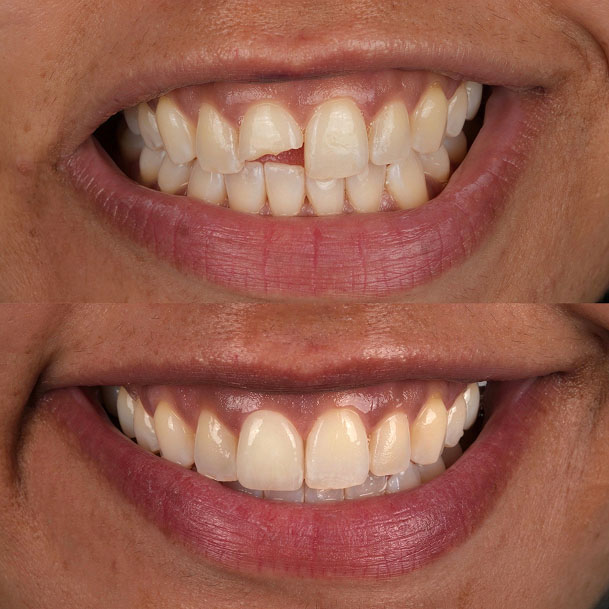
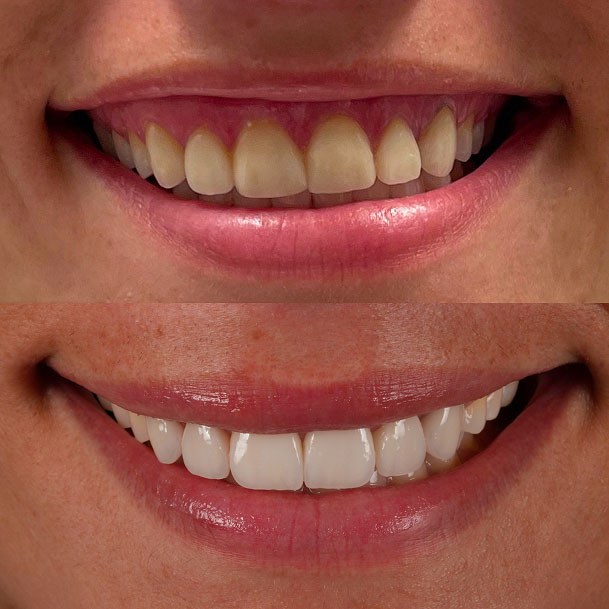
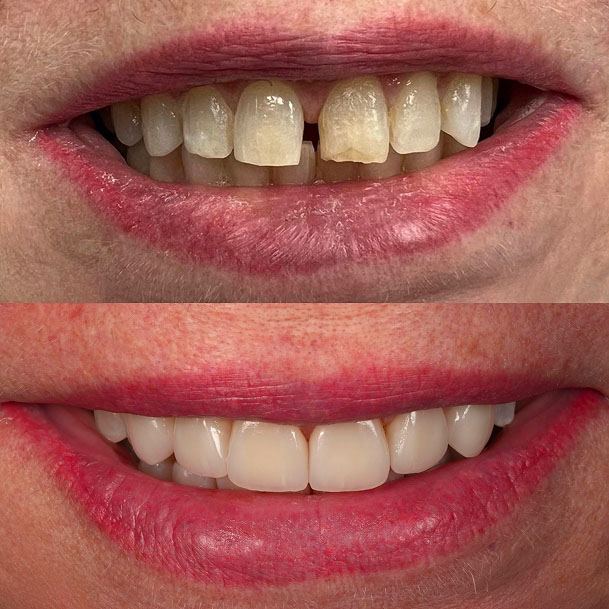
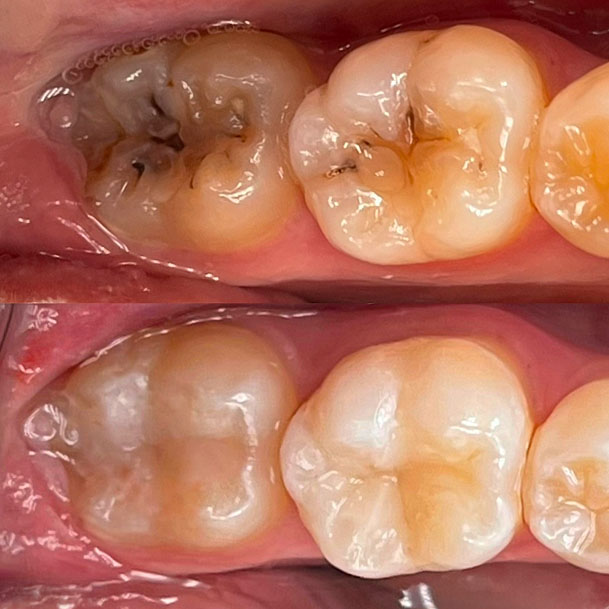
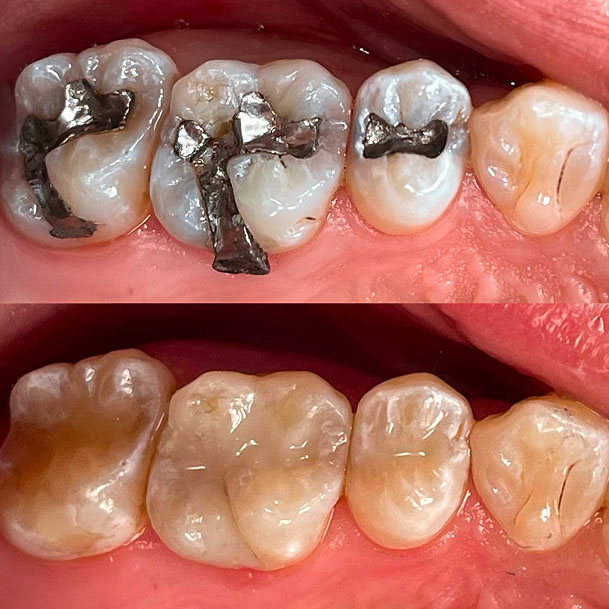
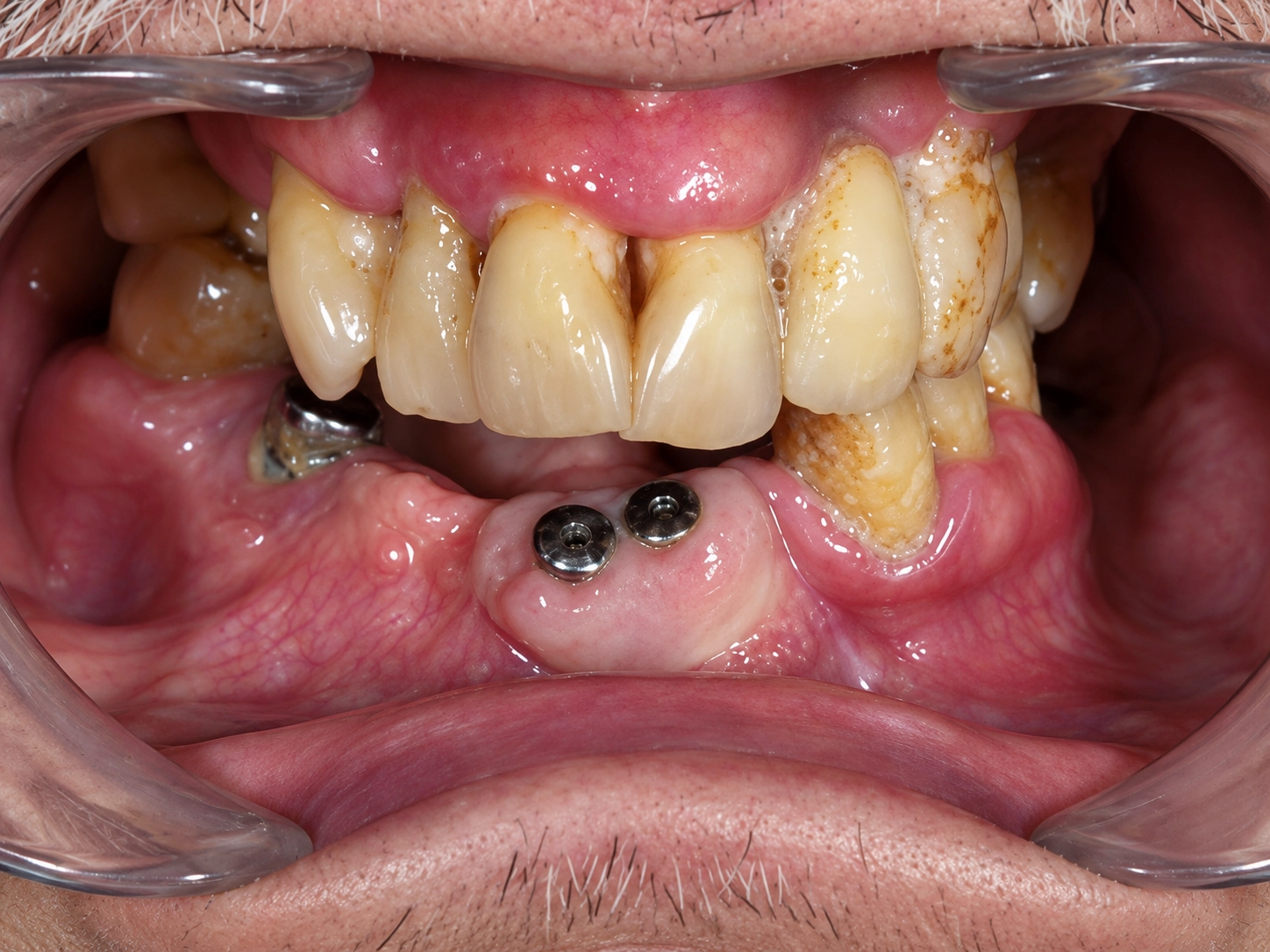
Before treatment, patients may have missing or unstable teeth that affect chewing and appearance. For isolated cosmetic concerns rather than extensive tooth loss, an alternative to veneers may be more appropriate depending on the condition of the natural teeth. After healing, the fixed bridge can restore an entire arch, but results vary with anatomy, healing, design, and maintenance.
Patients comparing cosmetic options may also want to understand how long veneers can last, since their lifespan and purpose differ from a fixed full-arch restoration. Veneers can improve the appearance of existing teeth, but dental veneers for missing teeth cannot replace a missing tooth root or restore an entire arch.
How Do You Clean All-on-Six Dental Implants?
Daily care includes brushing and cleaning beneath the fixed bridge. Interdental brushes, implant floss, or a water flosser can help reach areas a toothbrush cannot.
Regular professional visits allow the team to check the gums, bridge, bite, and supporting structures. At Smile Lab in Union Square, you can schedule a consultation to review whether this treatment fits your anatomy, goals, and lifestyle.