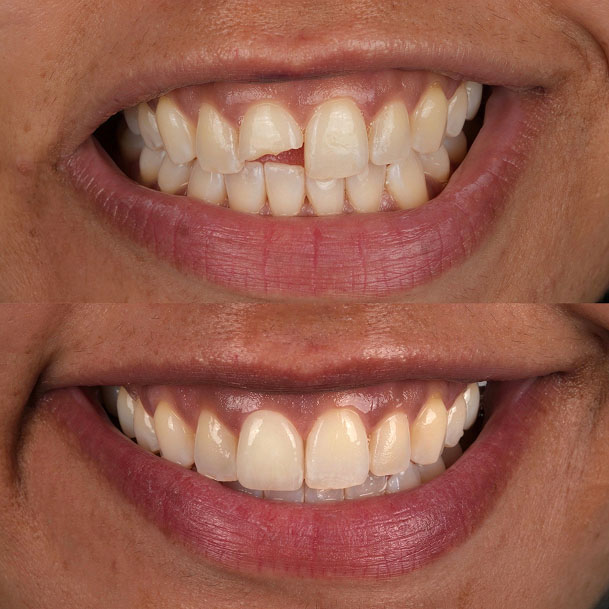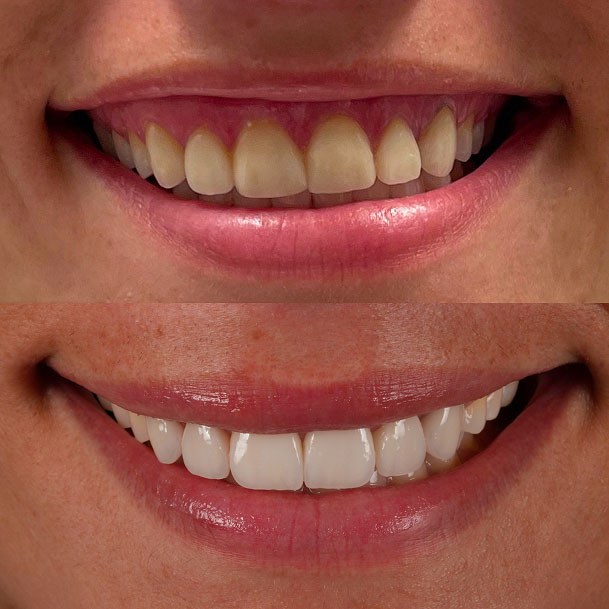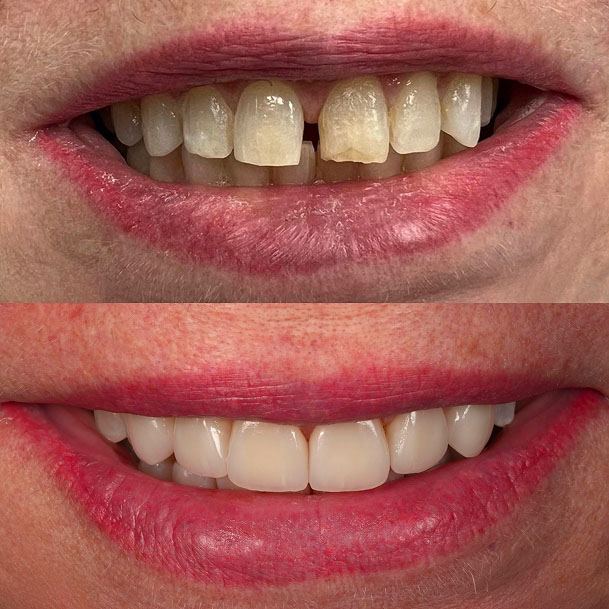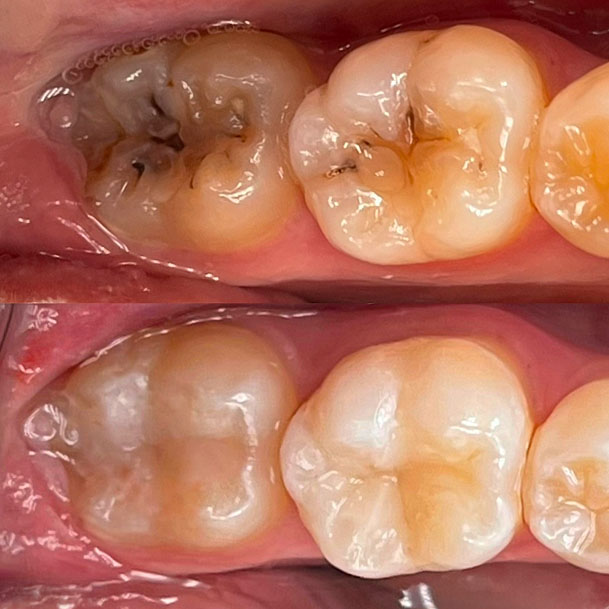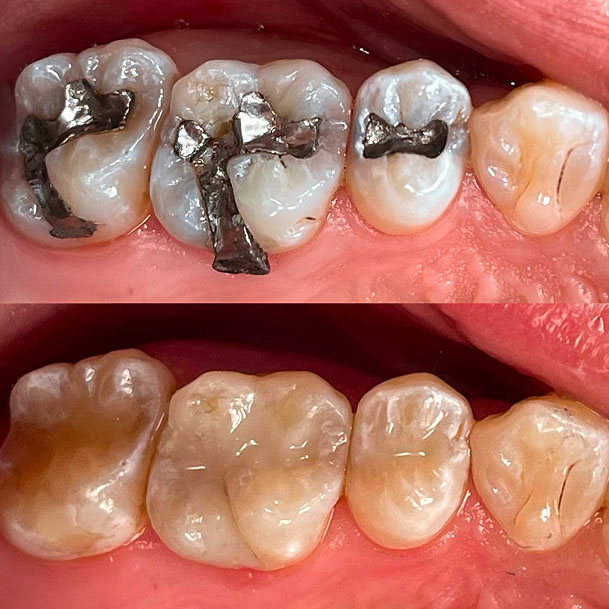

Does sugar give you cavities every time you eat something sweet? No. A single exposure does not guarantee decay, but frequent exposure can keep the acid cycle restarting.

What Are Cavities and How Do They Form?
A cavity is a permanent hole that develops after tooth decay damages the enamel. The process usually begins with plaque, a sticky film containing bacteria that builds up on the tooth surface and along the gumline.
When plaque bacteria come into contact with sugars and starches, they produce acids. These acids remove calcium, phosphate, and other minerals from enamel through a process called demineralization.
Saliva and fluoride help replace lost minerals through the remineralization process. Early decay may appear as a white spot and can sometimes be stopped or reversed before a hole forms. Once the enamel breaks down and a cavity develops, the damaged area usually requires a cavity filling to restore the tooth’s shape and function.
The National Institute of Dental and Craniofacial Research explains that frequent acid exposure can cause mineral loss to outpace the natural repair process.
What Our Patients Say
EXCELLENT Based on 2276 reviews
 Posted on Google
 Jou Min Chen (Jumin)I've been taking all my treatments over here for over a year now and so far I'm pretty satisfiedPosted on Google
 nikhil keswaneyDr basseri was amazing he took into account my fiances anxitey i to account and performed the filling even after hours he definitely earned 2 permenant patients.Posted on Google
 AkusaBeautiful experience! For my first dental visit- I had a smooth experience. Everyone was super nice. From the dentist, to the receptionist… all of the above.My teeth feels amazing. Super patient and explains everything clearly. I recommend, and I will definitely be back!Posted on Google
 Brynden FosterThis team is so helpful and kind! I always feel like a VIP coming for my cleaning and I couldn’t recommend them more.Posted on Google
 bhanu dattastaff was very helpful and they explained the procedure and payment options in a friendly wayPosted on Google
 Robina ShieldsMy experience with Smile Lab Dentistry Union Square "Wonderful", right down to the teeth cleaning.. that will make a person smile.Posted on Google
 Peter ChauLove coming here as a patient. Everyone here is super nice and thorough. I had my wisdom teeth done here which was an excellent experience. I now commute all the way to the city just to get my regular check ups here because it’s worth the trip. Also, I never had a hygienist floss my teeth before this place
Improve your smile today
Does Sugar Cause Tooth Decay?
So, does sugar cause tooth decay? Yes, but the damage happens through the bacteria-and-acid process rather than through direct contact with sugar alone.
Why does sugar cause cavities? Plaque bacteria use sugar as an energy source and produce acids as a byproduct. These acids weaken enamel each time you eat or drink something containing sugar or starch.
How does sugar cause cavities over time? Frequent exposure creates repeated acid attacks. When you sip soda throughout the day or snack on sweets between meals, enamel has fewer opportunities to recover.
Sugar tooth decay risk depends on both frequency and quantity. Eating one dessert with a meal usually results in fewer discrete acid exposures than slowly drinking a sweetened beverage over several hours.
Does eating sweets daily cause cavities? Not automatically. Daily sweets can raise your risk when consumed frequently, left on the surface, or combined with limited fluoride and inconsistent oral hygiene.
1. Tooth Extractions
It involves removing teeth that are badly damaged or decayed and cannot be fixed with fillings or crowns. Simple extractions are done on visible teeth while surgical extractions may be needed for broken or impacted teeth. It helps relieve pain and prevent further infection.
2. Wisdom Teeth Removal
Wisdom teeth are the last to emerge and often cause problems due to a lack of space. This surgery removes one or more of these third molars especially if they’re impacted, coming in at the wrong angle or pressing on nearby teeth. Early removal can prevent swelling and crowding.
3. Dental Implants
In dental implants, dentists place metal posts into your jawbone to hold replacement teeth in place. Implants are durable and help preserve jawbone density compared to dentures or bridges.
4. Bone Grafting
Bone grafting involves adding bone to your jaw to make it strong enough to support a dental implant. The surgeon adds natural or synthetic bone material to encourage new bone growth. It strengthens the jaw and creates a stable foundation for future dental procedures such as implants.
5. Gum Grafting / Periodontal Surgery
Gum grafting is adding gum tissue to cover exposed roots or treat serious gum disease. It helps reduce sensitivity and prevent further gum recession.
6. Oral Pathology / Biopsies
When there are unusual growths, persistent sores, or unexplained changes in the mouth, a biopsy is done to test the tissue. This helps diagnose conditions such as oral cancer, cysts, or infections. Early detection is crucial for effective treatment and better outcomes.
7. TMJ Surgery
Temporomandibular joint (TMJ) disorders can cause chronic jaw pain, headaches and difficulty chewing. If non-surgical treatments like therapy or splints fail, surgery may be needed to repair or reposition the joint. It aims to restore comfort, alignment, and function.
8. Sinus Lift
A sinus lift, or sinus augmentation, is commonly done before placing implants in the upper back jaw. When natural bone height is low or the sinuses are too close to the jaw, this procedure raises the sinus floor and adds bone to allow for secure implant placement.
Gum Graft Recovery: How Long Does It Take?
The typical recovery timeline for gum grafting surgery involves 1-2 weeks for initial healing. Full recovery takes around 4-6 weeks. The exact timeline depends on how your body heals. You must follow the doctor's instructions to speed up the recovery process. Moreover, it is suggested that you avoid sticky, hard food and smoking, as these can damage your gums again by stimulating bacterial infection.
Hidden Causes of Cavities You Should Know
Sugar is a major risk factor, but it is not the only substance that plaque bacteria can use. Starchy foods can also contribute because they break down into sugars inside the mouth.
Poor plaque control is one of the main preventable factors, as explained in this guide to what happens when you do not brush your teeth. Common causes of dental cavities besides sugar include:
- Frequent snacking between meals
- Sticky foods that remain in grooves or between teeth
- Inconsistent brushing and flossing
- Limited exposure to fluoride
- Dry mouth or reduced saliva flow
- Receding gums that expose root surfaces
- Deep grooves that trap food and plaque
Crackers, bread, chips, and similar foods may remain on the surface longer than expected. What matters is how often bacteria receive fuel and how long acid remains in contact with enamel.

Global Health Guidelines About Sugar Intake
The World Health Organization identifies free-sugar consumption as the most common risk factor for cavities. It recommends keeping free sugars below 10% of total daily calories, preferably below 5%, to reduce lifetime risk.
For someone consuming about 2,000 calories per day, the two thresholds are:
| WHO guideline level | Share of daily calories | Approximate sugar amount | Approximate teaspoons |
|---|---|---|---|
| Upper limit | Less than 10% | 50 grams or less | About 12 teaspoons |
| Preferred target | Less than 5% | 25 grams or less | About 6 teaspoons |
These are separate thresholds rather than one recommended range. The 10% figure is the upper limit, while the 5% figure is the preferred target.
Cavities remain common worldwide. WHO reports that dental caries affects about 2.5 billion people, making it the world’s most common noncommunicable disease.
In the United States, about 1 in 10 adolescents ages 12 to 19 and 1 in 5 adults ages 20 to 64 have at least one untreated cavity, according to the Centers for Disease Control and Prevention.
Are All Sugars Equally Harmful?
Honey, syrups, fruit juice, and fruit juice concentrates contain free sugars. Oral bacteria can use these sugars to produce acids, even when the product is marketed as natural.
Whole fruit is different from fruit juice. The sugars in intact fruit remain inside the food’s cellular structure, and the fruit also contains fiber. WHO’s free-sugar definition does not include sugars naturally present in fresh whole fruit, vegetables, or plain milk.
This does not mean every food outside the free-sugar category does not affect the mouth. It means whole fruit and plain milk should not be grouped with soda, candy, syrups, sweetened milk, or fruit juice.
Contact time also matters. Sticky sweets may remain on the surface, while sweetened drinks can repeatedly bathe enamel when consumed slowly. Keeping these foods and drinks with meals can reduce the number of separate acid exposures.

Signs Sugar May Be Contributing to Tooth Decay
Early decay often causes no symptoms. As it progresses, you may notice:
- Sensitivity to sweet, hot, or cold foods
- A toothache or pain when biting
- White, brown, or black spots
- A visible pit or hole
- Food repeatedly catching in one area
- Swelling, facial pain, or fever if an infection develops
Understanding why sugar hurts an existing cavity starts with the layer beneath enamel. Decay can expose a more sensitive layer, allowing sweet foods to trigger pain or sensitivity in the affected area.
Pain does not show how deep a cavity has become. Some advanced cavities cause little discomfort, while smaller areas can feel sensitive. An examination and digital dental imaging may be needed to determine the extent of the damage.
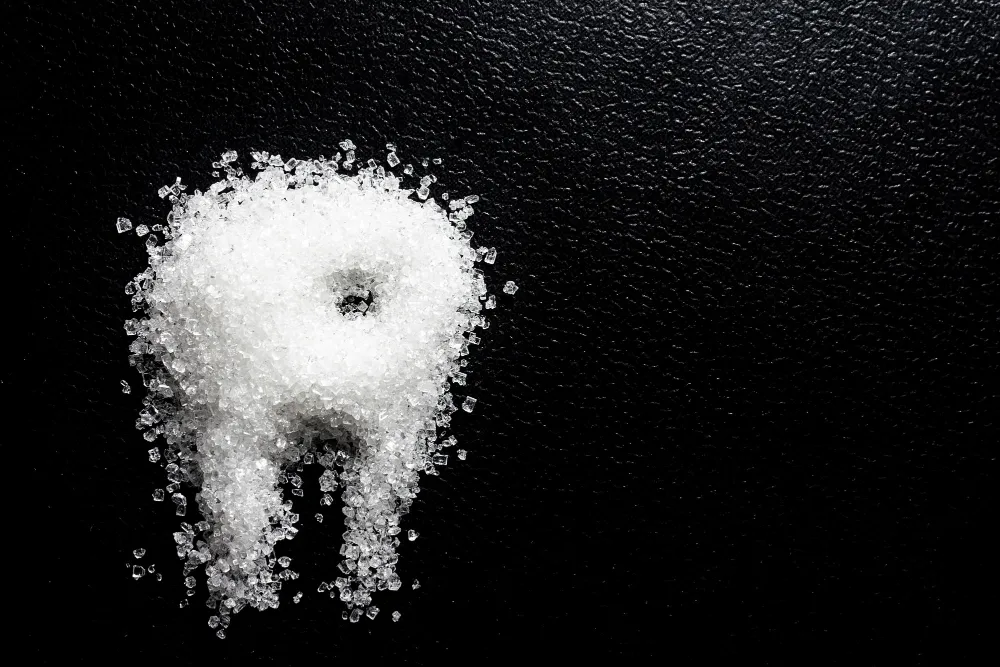
How to Protect Your Teeth If You Love Sweets
Do sweets cause cavities? They can help, but you do not have to eliminate all sweets to lower your risk.
Use these habits to limit repeated exposure to acid. For a broader home-care plan, review these oral hygiene routine tips.
- Brush twice daily with fluoride toothpaste.
- Clean between teeth once a day
- Drink fluoridated tap water when available
- Keep sweets and sweetened drinks with meals
- Avoid sipping soda, juice, or sweetened coffee for long periods
- Limit sticky snacks between meals
- Drink water after eating
- Schedule regular examinations and professional teeth cleanings
Fluoride strengthens enamel, helps replace lost minerals, and can slow or reverse early decay before a permanent cavity forms, according to the National Institute of Dental and Craniofacial Research.
The timing of sugar matters. Eating sweets with a meal results in fewer discrete acid exposures than consuming small amounts throughout the day.

Smile Lab NY’s Approach to Preventing Sugar-Related Cavities
Smile Lab’s team can check for active decay, early enamel changes, sensitivity, dry mouth, exposed root surfaces, and plaque buildup.
The findings help determine whether a patient needs preventive guidance, fluoride treatment, a filling, or further care. Recommendations are based on the examination rather than on sugar intake alone.
Smile Lab Dentistry is led by Dr. Waise Ebrahimi, who earned his Doctor of Dental Surgery degree from UCSF School of Dentistry. The Union Square practice provides preventive, restorative, and specialty services through its clinical team.

Call now to Schedule Your Appointment
At Smile Lab, you will receive experienced & professional dental implant services in a supportive
and high-tech environment, ensuring you get the best care possible.
Or
Complete The Form Below
Conclusion
Frequent sugar exposure is one of the main controllable risk factors for cavities. Keep sweets with meals, avoid sipping sweetened drinks slowly, use fluoride toothpaste, and clean plaque from hard-to-reach areas. Sensitivity, visible spots, or unexplained pain can indicate that decay has already started. Early care may stop mineral loss before it develops into a permanent hole.