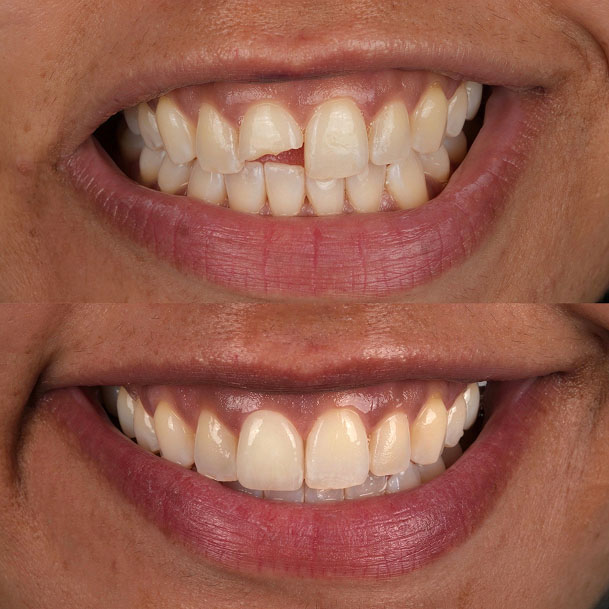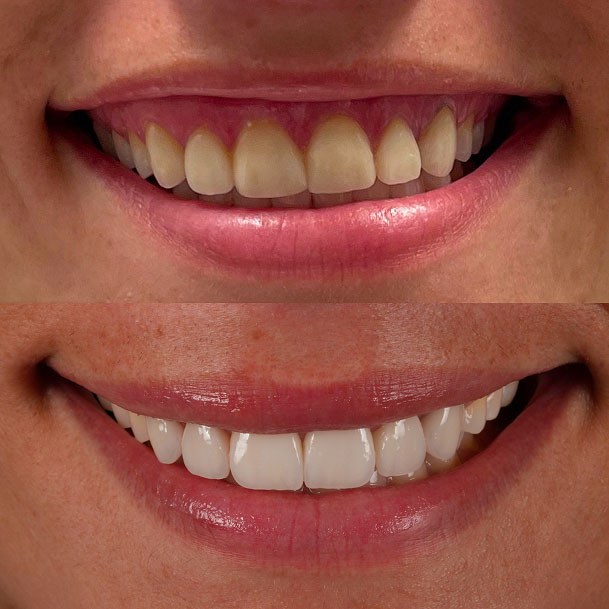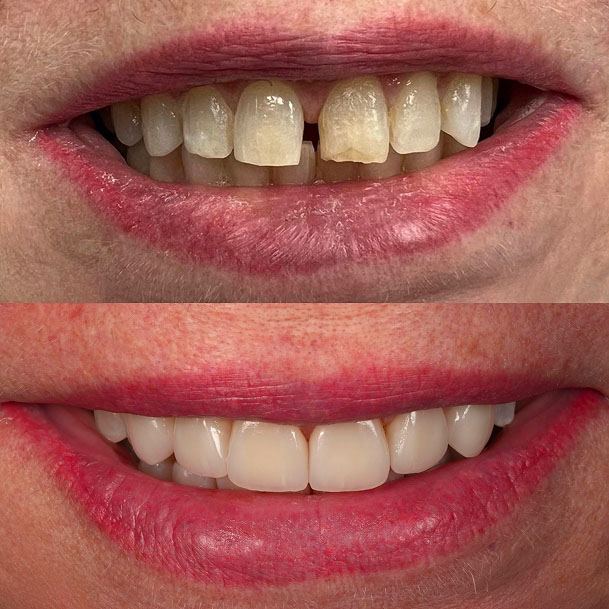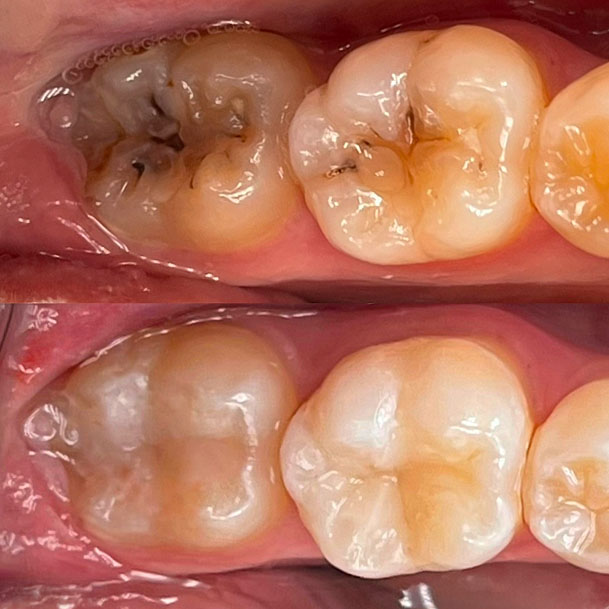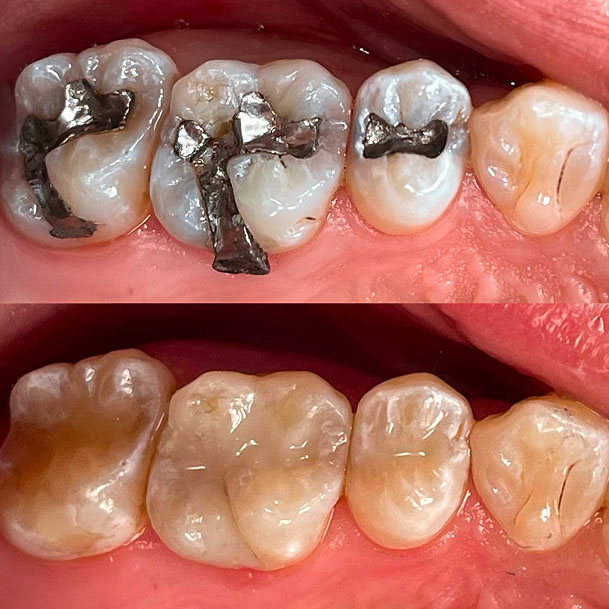

The right choice between veneers and crowns comes down to one question: does your tooth need a cosmetic fix or structural support? A veneer is a thin shell, about 1 millimeter of porcelain or composite, bonded only to the front of the tooth to correct color, shape, or minor flaws.
A crown is roughly twice as thick and wraps around the entire tooth, which is why it’s the right call after decay, a large filling, or damage that a veneer’s thin front-facing shell was never built to fix. If your tooth is structurally sound, a veneer usually solves it. If the tooth itself has lost strength, a crown is what restores it, and the sections below break down cost, durability, and how to know which situation actually applies to you.
Key Takeaways
- A veneer covers only the front surface of a tooth and is best for cosmetic issues such as discoloration or minor chips on an otherwise healthy tooth. A crown covers the entire tooth and is the right choice when structural damage, such as a large filling or a root canal, requires real support.
- Veneers require sufficient healthy enamel on the tooth for the bond to hold, and the procedure is irreversible once that enamel is trimmed, a key part of understanding whether veneers are permanent.
- Porcelain crowns and porcelain veneers cost close to the same, $1,950 versus $2,323 per tooth, while composite veneers run cheaper upfront at $950 but tend to wear out sooner.
- Crowns generally last longer than composite veneers, often ten to fifteen years versus five to seven, though porcelain veneers hold up close to the same pace as crowns.
- The right choice depends on the specific condition of the tooth, not on personal preference, so a dentist’s evaluation of the remaining tooth structure should drive the decision.
Difference between Veneers and Crowns
A veneer covers only the front surface of your tooth. A crown covers the entire tooth, top to bottom. That single difference in coverage explains almost everything else about how these two options work, from how much of your natural tooth gets removed to how each one holds up over time.
Veneers make sense when your tooth is structurally sound, and the concern is cosmetic. Crowns make sense when the tooth itself needs support. You may also hear a crown referred to as a “dental cap,” so if you come across dental caps versus veneers elsewhere, they’re describing this same comparison.
Are Crowns the Same as Veneers?
No. A crown replaces the outer surface of an entire tooth, while a veneer only replaces the front of it. They’re often made from similar materials, but a dentist chooses between them based on how much of the tooth actually needs protecting, not personal preference.
How Veneers Differ from a Crown Structurally
A porcelain veneer runs about 1 millimeter thick and bonds only to the front of the tooth. A crown runs about 2 millimeters thick and wraps around every surface. That’s the real answer to how veneers are different than a crown structurally: less material, less tooth preparation, and a much smaller treatment area. Covering only the front means your dentist removes far less of your natural tooth than a crown would.
What Is a Dental Veneer
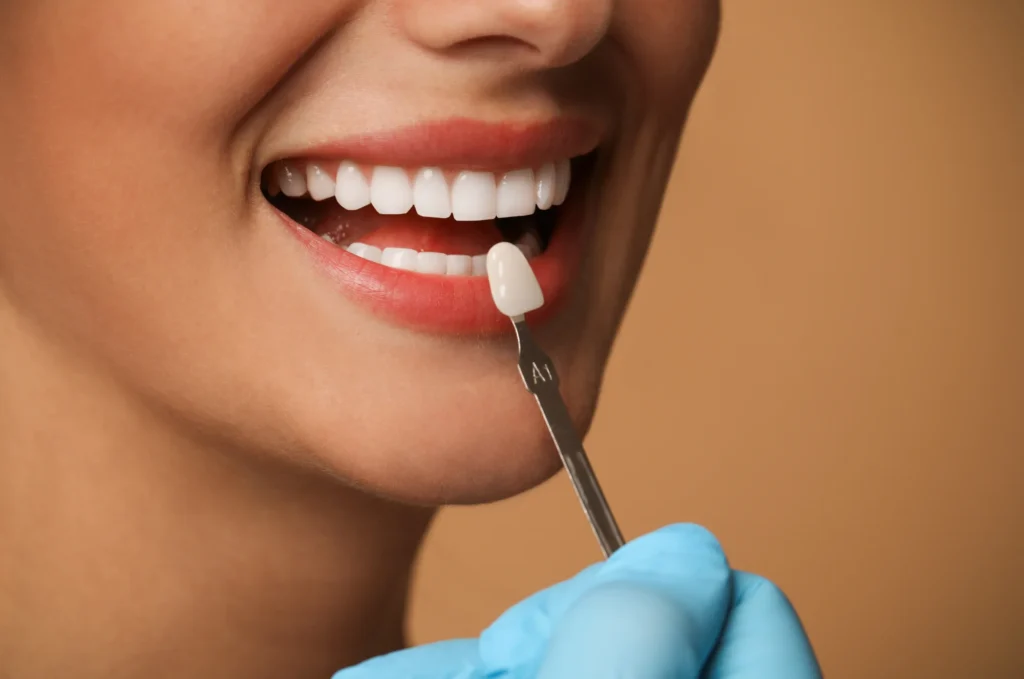
A dental veneer is a thin, cosmetic-enhancing shell, usually porcelain, bonded to the front of your tooth to change its color, shape, or size. Veneers are typically used on otherwise healthy teeth when the issue is appearance rather than damage. Veneers require enough healthy enamel on the front of the tooth for the bond to hold, which is why your dentist checks that before recommending one. Composite veneers are a lower-cost alternative to porcelain, though they don’t last quite as long.
If decay or a large filling is the real problem underneath, a porcelain veneer won’t fix it. It just covers a tooth that still needs a different kind of care.
How Veneers Are Placed
Your dentist starts by removing a thin layer of enamel from the front of the tooth, usually about half a millimeter, to give the veneer something to bond to. A digital scan or impression goes to a lab, which builds your custom veneer while you wear a temporary one in the meantime. At your final visit, the temporary comes off, the color and fit get checked against your natural teeth, and the permanent veneer is bonded in place with a cement that hardens under UV light. For most Manhattan schedules, this whole process fits into two visits spaced a few weeks apart.
What Is a Dental Crown
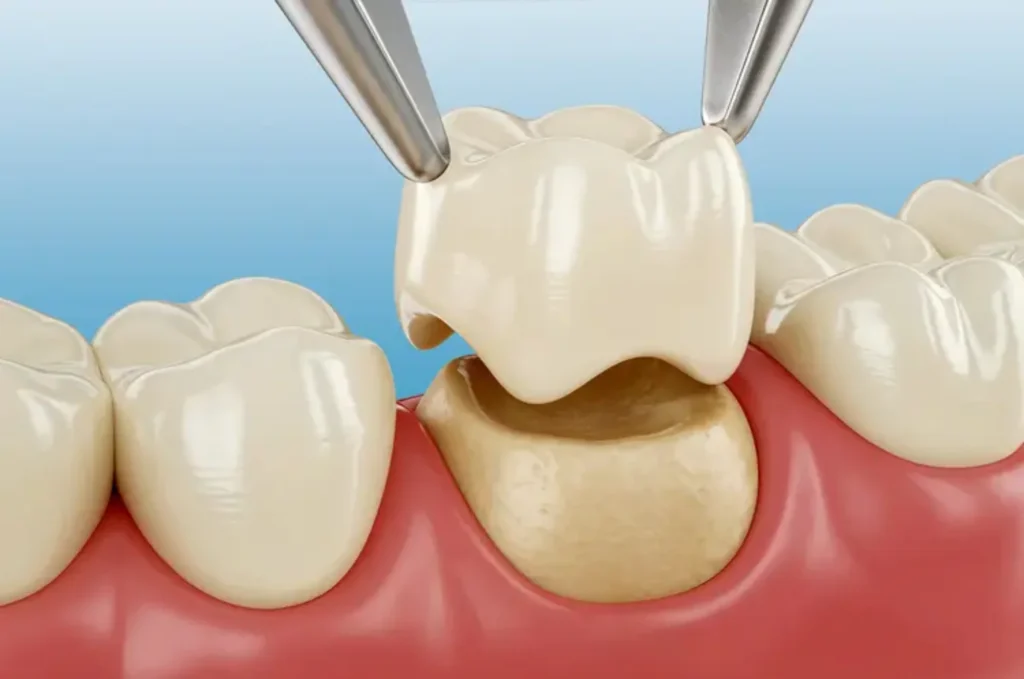
A dental crown is designed to cover the entire tooth, making it the right choice for a damaged tooth that needs more than a cosmetic fix. Dentists reach for crowns after a root canal, a large cavity filling, or when decay has weakened enough of the tooth that a veneer wouldn’t hold up. Crowns come in porcelain, porcelain-fused-to-metal, or full metal alloy, depending on where in your mouth the tooth sits and how much bite force it needs to withstand.
How Crowns Are Placed
Your dentist first removes any decayed or damaged material, then builds up the tooth’s core if there isn’t much healthy structure left to work with. A scan or impression is sent to the lab; a temporary crown holds the spot in the meantime, and at your final visit, the permanent crown is fitted, checked against your bite, and cemented into place. Crowns require a bit more tooth preparation up front than veneers, but that extra step helps restore a damaged tooth’s strength.
Which Option Is Better for Your Smile
There’s no single right answer here. It depends entirely on what your tooth actually needs. A healthy tooth with a cosmetic issue, like discoloration or a small chip, is veneer territory. A tooth with real structural damage, like a large filling or a root canal, needs a crown placed in Union Square to hold up over the long term.
At Smile Lab, Dr. Waise Ebrahimi starts with a conservative assessment of how much natural tooth structure is worth preserving before recommending either option, rather than defaulting to whichever procedure is more common. If a dentist recommends a crown for a tooth that only needs cosmetic improvements, it’s worth asking why. The reverse question is just as fair to ask.
Which One Lasts Longer
Crowns generally outlast veneers, often holding up for ten to fifteen years or more under normal bite force. Porcelain veneers land in a similar range, but composite veneers tend to wear out sooner, often within five to seven years. Material matters more than category; a porcelain veneer and a porcelain crown age at a similar pace.
Cost of Veneers vs Crowns
Once the clinical picture is clear, cost is usually what settles the decision. The price gap between a porcelain veneer and a porcelain crown is smaller than most people expect going in, and it matters more than what your dental insurance covers.
| Treatment | Material | Price Range |
|---|---|---|
| Veneer | Resin (Composite) | $950 per tooth |
| Veneer | Porcelain | $2,323 per tooth |
| Crown | Porcelain | $1,950 per tooth |
Ways to Lower the Cost
Composite veneers cost less upfront than porcelain, though they’ll likely need replacing sooner. If only one or two teeth actually bother you, start there rather than treating a full smile at once. Ask about payment plans that spread the cost over several months without added interest, especially if you’re weighing more than one tooth at a time.
Pros and Cons of Each Option
Neither option is perfect because they don’t solve the same problem.
Veneers:
- Preserve more of your natural tooth, since less enamel is removed
- Resist staining and blend in naturally once bonded
- Aren’t reversible once your enamel is trimmed down
- Leave the rest of the tooth exposed to new decay, and can’t fix a tooth with real structural damage
Crowns:
- Cover the entire tooth, protecting it from further decay
- Restore strength to damaged teeth weakened by large fillings or root canals
- Require more of your natural tooth to be removed to make room
- Can leave a freshly crowned tooth sensitive to hot or cold for a few weeks
This is often exactly why dentists advise against veneers for a tooth that needs more than a cosmetic fix; the material wasn’t built for that kind of damage.
Questions to Ask Your Dentist
Before committing to either option, a few questions are worth asking directly:
- How much healthy tooth structure do I actually have left to work with?
- How long would you expect this veneer or crown to last for my specific tooth?
- What happens if the fit needs adjusting after placement?
- Would a less invasive option, like teeth bonding, get the job done instead?
The Bottom Line
Veneers and crowns solve two different problems that happen to sound like one question. A veneer fits a healthy tooth that needs a cosmetic fix. A crown fits a tooth that needs real structural support.
If you’re still going back and forth between the two, and you’re anywhere near Union Square between meetings, see if Smile Lab is the right fit for you.