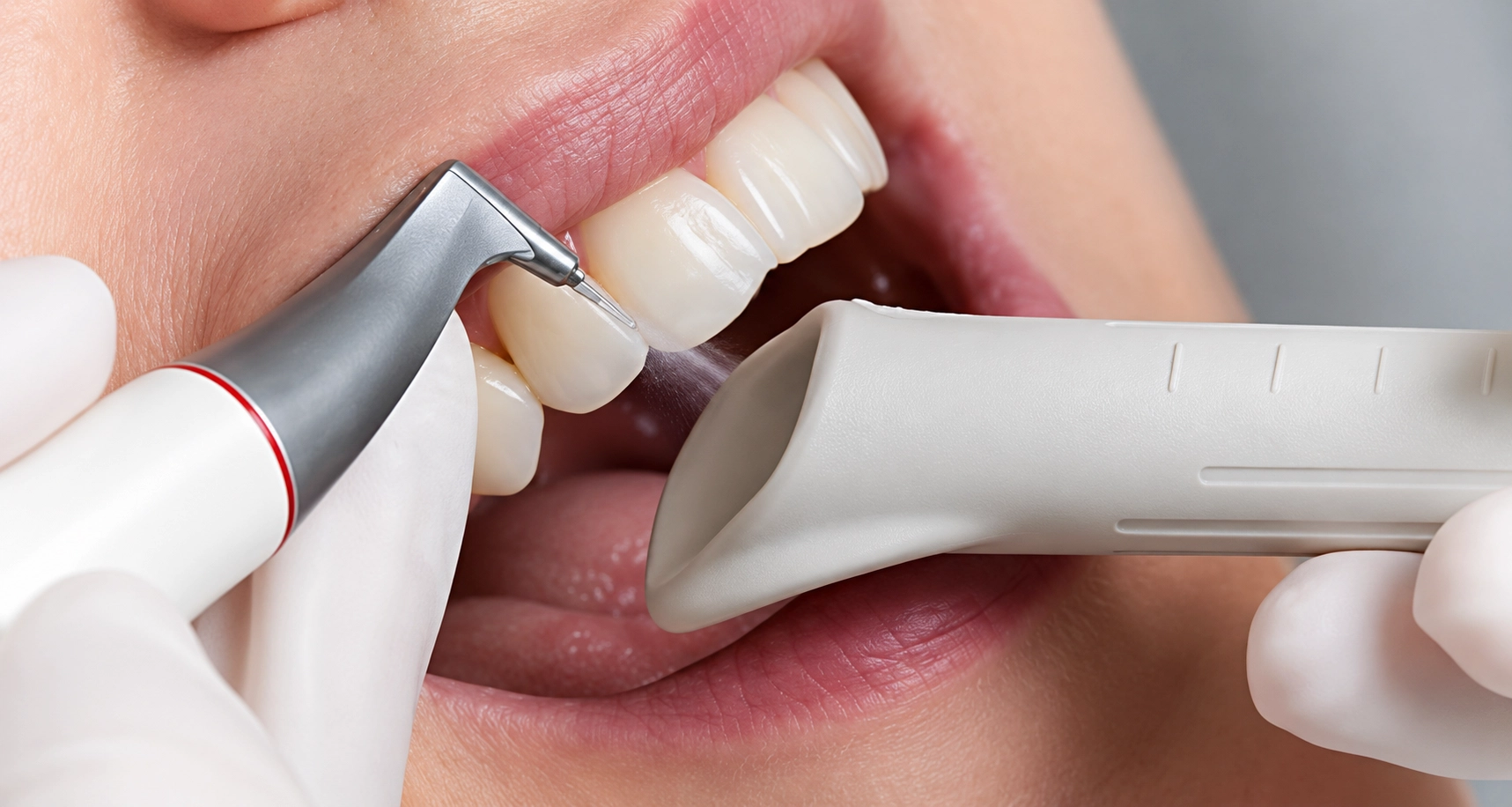
The benefits of airflow dental treatment include a more comfortable cleaning experience, cleaner-feeling enamel, and better access to areas that brushing and flossing can miss. Results vary based on stain type, oral hygiene, diet, and the amount of buildup present before the visit.
At Smile Lab in Union Square, the team uses this framework as part of a comfort-focused approach to help patients understand what their mouths need before care begins.
Key Takeaways
- Airflow teeth cleaning uses compressed air, warm water, and fine powder to remove soft plaque, biofilm, and surface stains.
- The treatment can feel more comfortable than traditional polishing for patients with sensitive teeth, though comfort depends on gum health and enamel condition.
- Airflow helps clean around braces, crowns, and dental implants, but hardened tartar still requires scaling.
- Results include smoother-feeling enamel and reduced surface staining, and they typically last several months when paired with daily home care.
- Most patients return every six months, though heavy stain-formers may benefit from a shorter interval.
- A dentist or hygienist should decide whether this treatment is right for you after assessing your gums, tartar, sensitivity, and overall oral health.
What Is Airflow Teeth Cleaning?
Airflow hygiene treatment uses a controlled spray to clean the tooth surface, gumline, and hard-to-reach areas. It is often used during professional teeth cleaning to remove soft plaque, biofilm, and surface discoloration. In many practices, it forms part of Guided Biofilm Therapy, a step-by-step cleaning protocol standardized by EMS Dental, the maker of the AIRFLOW Prophylaxis Master device.
How Does Airflow Teeth Cleaning Work?
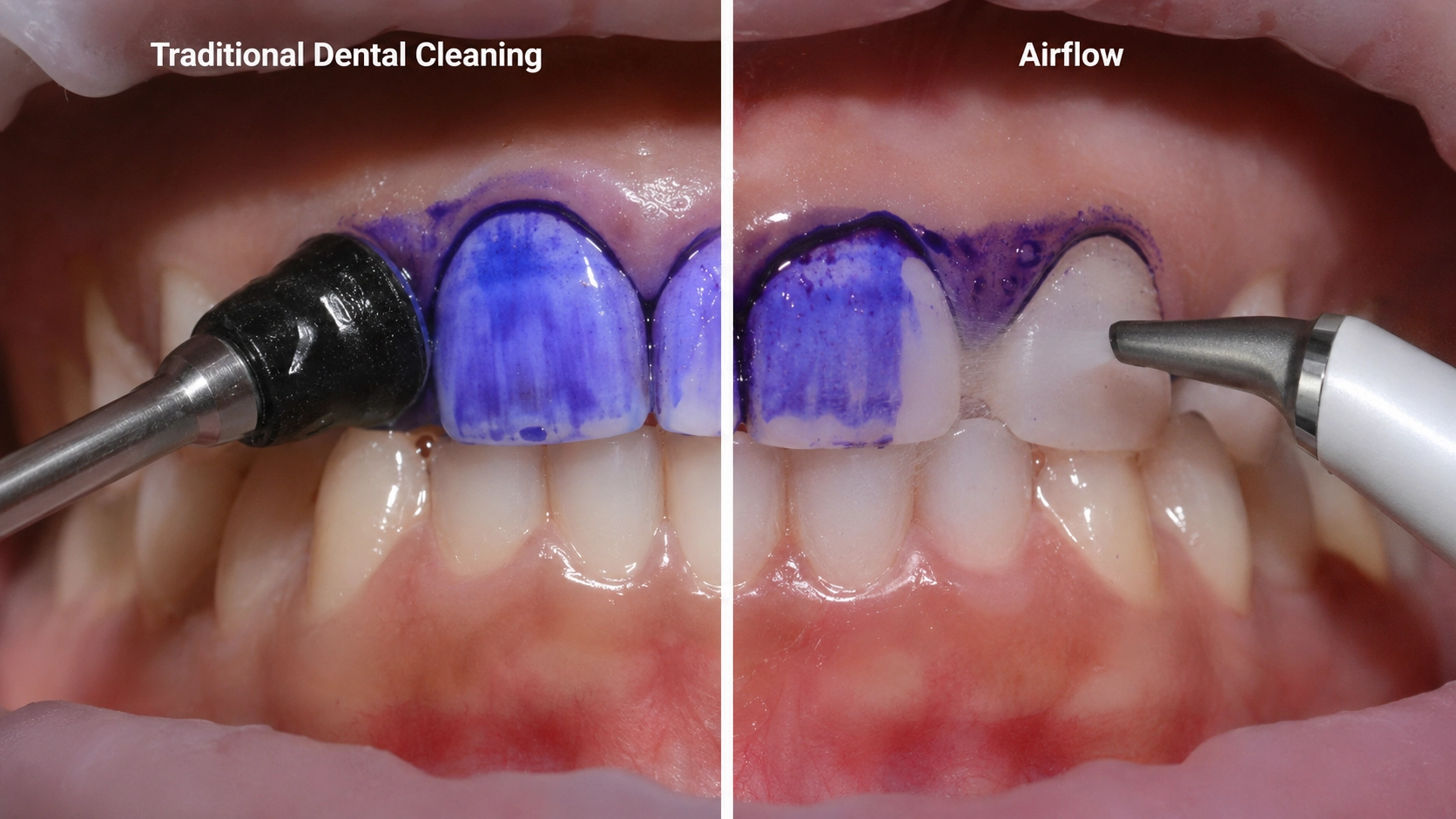
The device directs a compressed air-water stream, mixed with fine powder, across the enamel and around the gums. This lifts soft deposits without heavy pressure. Some clinics start the visit by applying a disclosing rinse that highlights biofilm so both patient and provider can see exactly where cleaning is needed.
Air polishing is the broader clinical name for this spray-based method, and it also shows up as air brush teeth cleaning or airflow teeth cleaning in patient searches. Different powders may be used depending on your needs, but the goal is the same: clean effectively while reducing the rough feeling associated with older polishing tools.
Airflow vs Traditional Dental Cleaning
Traditional care uses hand instruments, ultrasonic scaling, and gritty polishing paste. This newer approach uses a controlled spray to remove softer buildup and surface stains differently.
A dental hygienist may combine both options during one visit. The spray removes biofilm and light stains, while scaling handles hardened tartar. The table below compares them on the criteria patients ask about most.
| Factor | Airflow / Air Polishing | Traditional Scale and Polish |
|---|---|---|
| Removes | Plaque, biofilm, surface stains | Hardened tartar, calculus, plaque |
| Comfort | Gentle spray, warm water, minimal pressure | Physical scraping, ultrasonic vibration |
| Best for | Sensitive teeth, braces, implants, crowns | Heavy tartar buildup, deep pockets |
| Session feel | Cool mist and light contact | Firmer contact and metal tool sensation |
| Typical duration | 30 to 60 minutes | 30 to 60 minutes |
| When it isn’t enough | Hardened tartar below the gumline | Stains in tight spaces and around hardware |
Airflow vs Deep Cleaning
Airflow deep cleaning is a common patient search, but the two treatments are not the same. Air polishing removes soft buildup and stains from the tooth surface. A true deep cleaning, also called scaling and root planing, targets hardened tartar and bacterial deposits below the gumline in patients with early gum disease. If a provider sees signs of periodontal pockets, they will typically recommend scaling first, then use airflow to finish.
What the Treatment Removes
The treatment works best on soft plaque, biofilm, and surface stains. Biofilm is the sticky layer of bacteria that forms on the teeth and around the gums.
It can help remove stains from coffee, tea, red wine, and similar beverages. Deeper tooth color changes will not lift as easily because they sit within the enamel or dentin.
Does It Remove Plaque?
Yes, it can remove soft plaque and biofilm from the tooth surface. This helps support oral hygiene when paired with brushing, flossing, and regular dental exams and cleanings.
If plaque has hardened into tartar, your provider may need to perform scaling. That is why an exam matters before choosing the best approach.
Stains, Biofilm, and Tartar
Surface stains often respond well because the spray cleans the outer layer of enamel. Biofilms also respond well because they are soft and sticky.
Tartar is different. Once it hardens, dental instruments are needed to remove it safely.
Is Airflow Teeth Cleaning Painful?
Most people find air polishing comfortable. The spray usually feels like a mix of water, air, and light texture moving across the teeth.
People with exposed roots, gum recession, or active inflammation may feel more sensitivity. Tell your provider early so they can adjust the pressure, temperature, and pace.
Airflow Teeth Cleaning Side Effects
Possible airflow teeth cleaning side effects include short-term tooth sensitivity after cleaning, gum tenderness, or a slightly dry feeling after the visit. These effects are usually mild and fade within a day.
The treatment should be performed by a trained dental professional. Dr. Waise Ebrahimi’s preventive and conservative approach focuses on preserving natural tooth structure while choosing the least invasive option that still works.
Is Airflow Teeth Cleaning Worth It?
Air polishing can be worth it if you want a smoother, cleaner feel and have soft buildup or surface stains. It may also help if past cleanings were uncomfortable enough that you started delaying care.
If you have heavy tartar, cavities, or gum pockets, your dentist may recommend periodontal care first, including laser teeth cleaning when appropriate. Deep intrinsic staining is a separate concern best addressed with professional whitening.
Best Candidates
This option may fit people with light to moderate staining, plaque biofilm, sensitivity, orthodontic appliances, or restorations that need careful cleaning.
It works best as part of regular preventive care, not as a replacement for exams or diagnosis.
Braces, Implants, and Crowns
The spray can clean around brackets, wires, crowns, bridges, and dental implants when used properly. These areas can trap food and biofilm, which makes home care harder.
Your provider will still check gum health, tissue condition, and the fit of existing dental work.
Airflow Teeth Cleaning Before and After
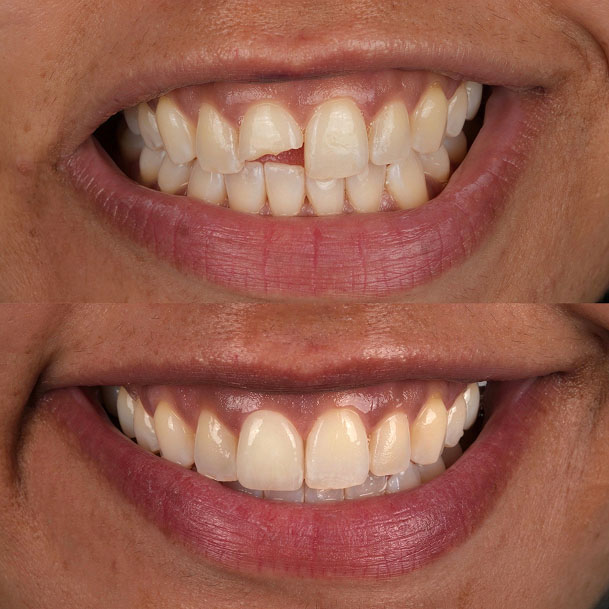
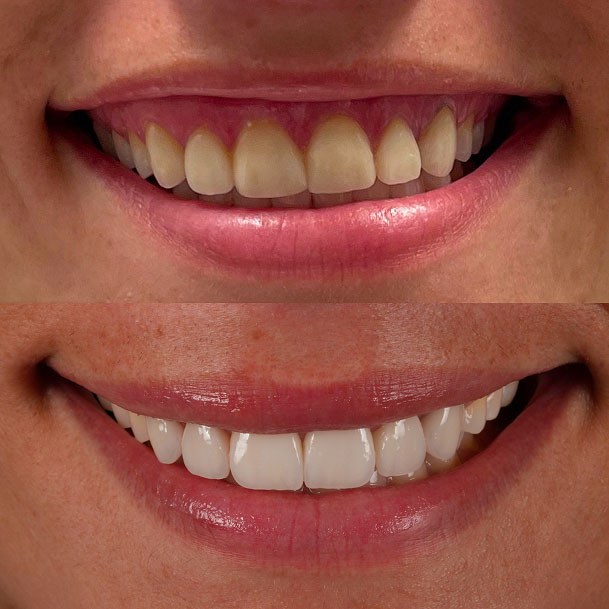
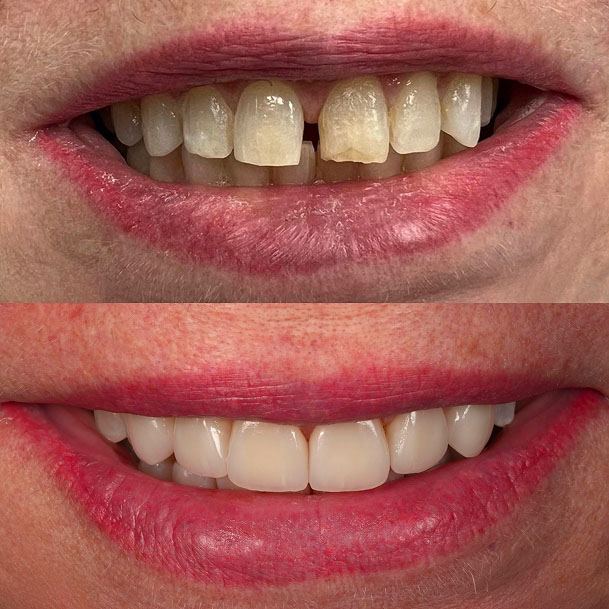
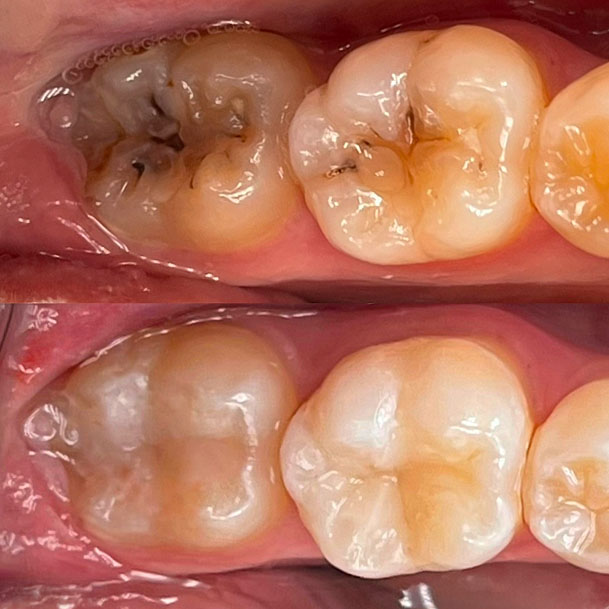
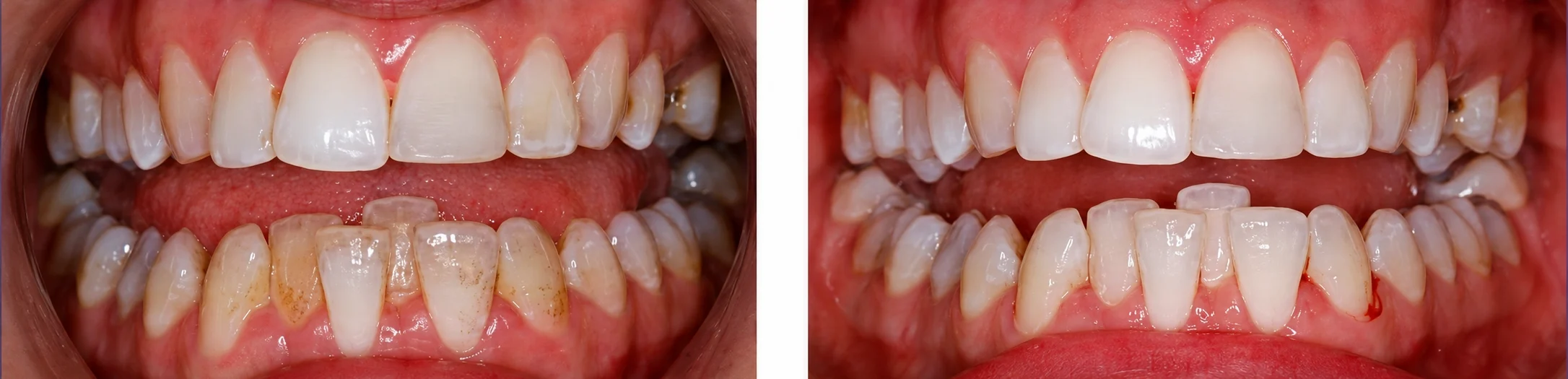
Before treatment, teeth may feel rough or look stained near the edges, gumline, or between teeth. After treatment, the surface often feels smoother and looks cleaner.
The difference in airflow teeth cleaning before and after depends on the type of stain and the amount of buildup. This treatment does not whiten teeth like bleaching, but it can make natural enamel look fresher by removing surface debris.
How Long Do Results Last?
Results can last several weeks to several months, depending on your habits. Coffee, tea, red wine, tobacco, and inconsistent flossing cause stains and plaque to return faster.
Daily brushing, flossing, and routine visits help maintain the result. Your provider can suggest a schedule based on your risk level.
How Often Should You Get Airflow Teeth Cleaning?
Most dental professionals recommend a hygiene visit every six months, and airflow can fit into that schedule as part of a regular cleaning. Patients who form stains quickly, such as coffee or tea drinkers and smokers, may benefit from a three- or four-month interval. Anyone with active gum disease should follow the recall interval set by their periodontal care plan, which is usually shorter than a standard checkup.
What to Expect During Treatment
A typical airflow appointment lasts 30 to 60 minutes, depending on how much buildup is present and whether scaling is also needed. The visit usually starts with a review of your mouth, gums, and existing buildup. Your provider may use low-radiation digital imaging if they need more information before recommending care.
During the spray portion, you may feel steady water, light pressure, and suction. If anything feels too cold, strong, or sensitive, say so.
What Not to Do Afterward
For the first 24 hours, avoid strong staining foods and drinks so the freshly cleaned enamel doesn’t pick up new pigment. Coffee, red wine, dark sauces, tomato-based dishes, and tobacco are the most common culprits.
Brush and floss as directed. If your gums feel tender, use a softer touch for the rest of the day.
Air Flow Teeth Cleaning at Home
Store-bought tools cannot replace a clinical visit. They may remove minor surface debris, but they do not diagnose gum disease, cavities, tartar, or problems with restorations. No true consumer version of the airflow device used in dental offices exists; “at-home” search results usually point to electric brushes and water flossers, not real air polishing.
Using strong sprays or abrasive powders without guidance can irritate gums or damage exposed root surfaces. Safer home care starts with a soft toothbrush, fluoride toothpaste, floss, and a plan your dentist has matched to your mouth.
How Much Does Airflow Teeth Cleaning Cost?
A hygiene visit that includes air polishing typically runs $150 to $250 in most US markets, and can go higher in major metros such as NYC, depending on the provider and what the appointment includes. Insurance often covers the cleaning portion even when the airflow component is bundled in. If you are searching “airflow teeth cleaning near me,” ask the office directly whether they use an airflow device or a traditional prophy setup, since not every practice offers it.
Smile Lab does not currently offer this specific service, but the team can evaluate stains, plaque, sensitivity, and gum health, then recommend the right cleaning option for your mouth.
A consultation can help you decide whether this treatment is right for your teeth, gums, and goals. Book Online to see if Smile Lab is the right fit for you.
Frequently Asked Questions
What is airflow hygiene treatment?
Airflow hygiene treatment is a professional cleaning technique that uses compressed air, warm water, and a fine powder to remove biofilm, plaque, and surface stains from teeth and around the gumline. Dentists and hygienists use it as a gentler alternative to, or a complement to, traditional scaling and polishing.
Is airflow safe for patients with dental implants?
Yes, when a trained provider uses the right powder and pressure. Airflow is often preferred around implants, crowns, and orthodontic hardware because it cleans tight spaces without scratching restorative surfaces.
How is airflow different from a regular cleaning?
A regular cleaning uses hand tools and ultrasonic scalers to strip tartar, finishing with a gritty paste polish. Airflow swaps that final polishing step for a controlled powder spray, which is why patients with sensitive gums often notice less discomfort.
Does airflow whiten teeth?
Not the way bleaching does. Airflow removes surface stains from coffee, tea, wine, and tobacco, so teeth look brighter, but the underlying enamel color doesn’t change. Patients wanting a lighter shade need professional whitening.
How long does an airflow session take?
Most sessions run 30 to 60 minutes. Heavier staining or a combined scaling visit pushes toward the longer end.
Can I get airflow teeth cleaning at home?
No. The compressed-air, powder-spray equipment stays in the dental office. At home, focus on brushing, flossing, and whatever routine your dentist recommends for your risk level.