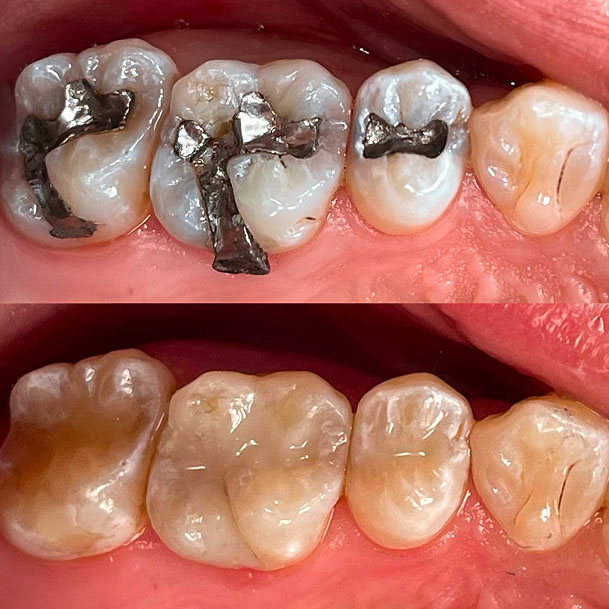
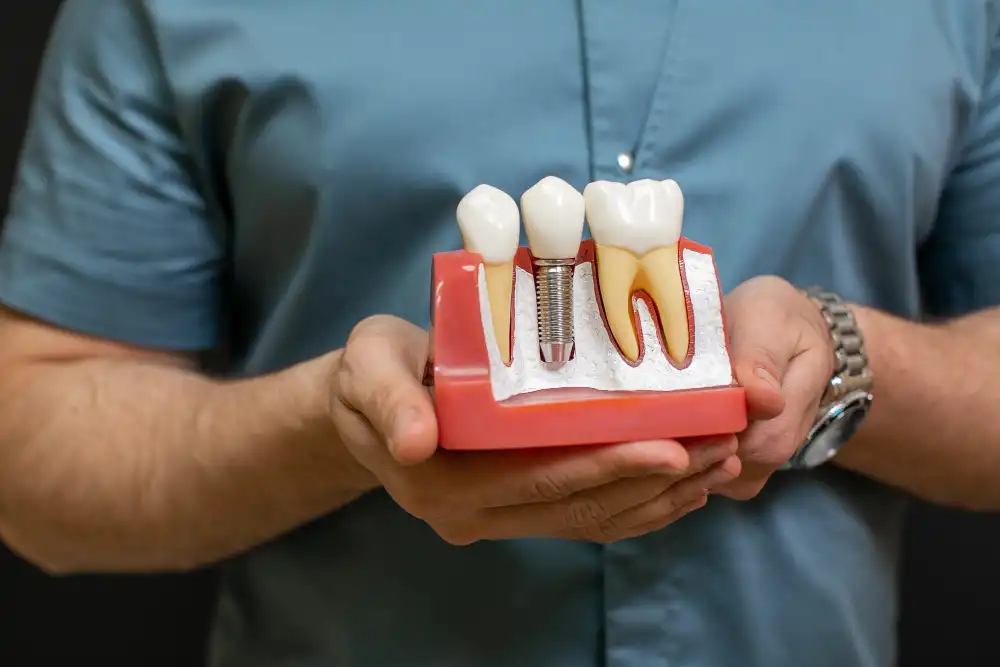
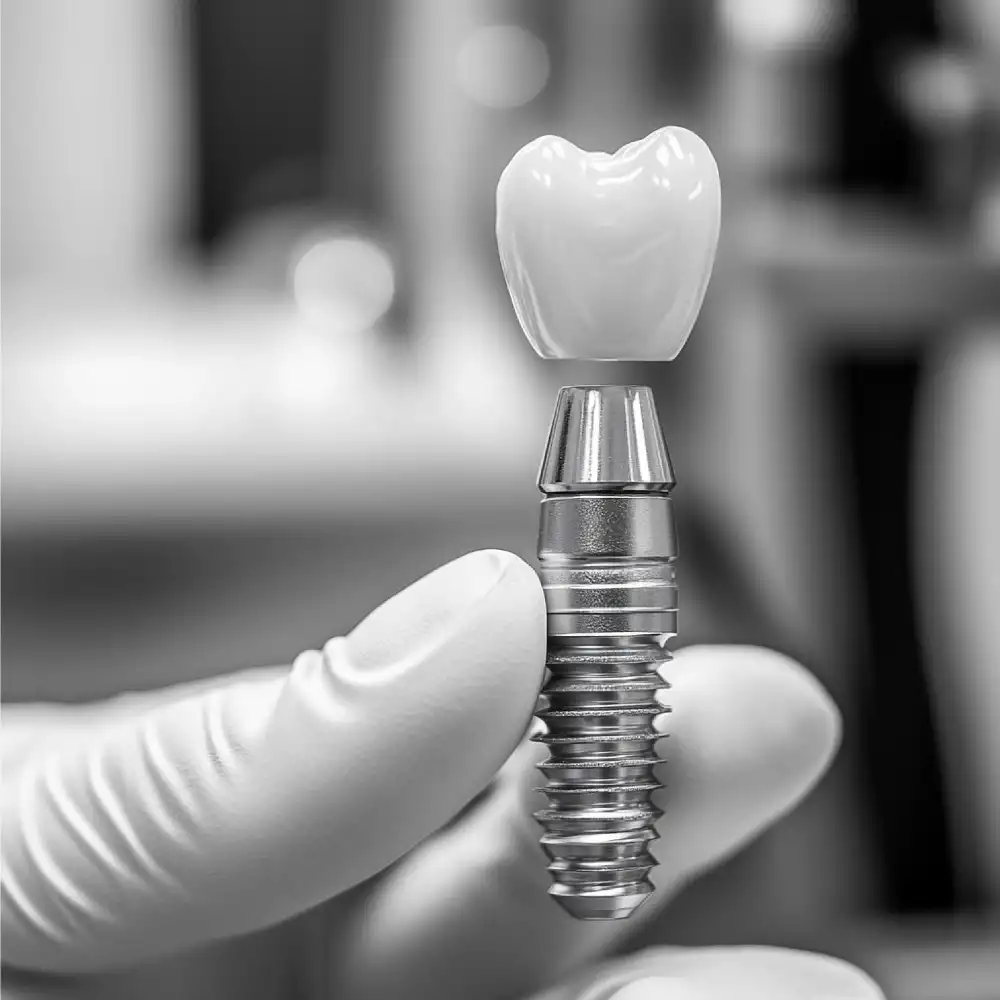
A dental implant is a small titanium or zirconia post that replaces the root of a missing tooth and is anchored directly into the jawbone, rather than resting against the gum line as other replacements do. Once that post fuses with the bone, a connector called an abutment attaches to it, and a crown, the visible artificial tooth, sits on top to complete the look and function of a real tooth.
That’s the full answer to what dental implants are in practical terms: a root replacement, a connector, and a crown, working together as one anchored unit rather than three separate pieces attached for appearance alone. Understanding how those three parts fit together is what makes the rest of this- candidacy, procedure, and cost- actually make sense.
Key Takeaways
- A dental implant replaces a missing tooth from the root up: a titanium or zirconia post fuses into the jawbone, then an abutment connects it to a crown that looks and functions like a real tooth.
- The full process happens in stages over several months, since the post needs time to fuse with the bone (osseointegration) before the abutment and crown can be added.
- Unlike a bridge, which relies on reshaping adjacent teeth, or a denture, which rests on the gums and doesn’t prevent bone loss, an implant is self-supporting and helps preserve jawbone density.
- Implants carry real risks, including infection, temporary nerve irritation, and a higher rate of complications in neighboring teeth, and conditions like uncontrolled diabetes or active gum disease can affect whether someone is a good candidate.
- A single implant typically costs $3,000 to $6,500 nationally, with Manhattan prices often running toward the higher end of that range because of the local cost of living.
Infected Root Canal
What Are Dental Implants?
A dental implants replaces a missing tooth from the root up, not just the visible part you see when you smile. It’s a small titanium or zirconia post that a dentist places directly into your jawbone, where it acts as an artificial tooth root.
Once it fuses with the bone, an abutment connects the post to a crown, the part that actually looks and functions like a tooth.
This is different from a tooth implant that only replaces the crown, which is why implants tend to outperform other tooth replacements in the long run.
Because the post sits where your natural tooth root used to be, it does what bridges and dentures can’t. It keeps signaling to your jawbone that there is still work to do. This helps prevent bone loss in that area.
What Our Patients Say
EXCELLENT Based on 2276 reviews
 Posted on Google
 Jou Min Chen (Jumin)I've been taking all my treatments over here for over a year now and so far I'm pretty satisfiedPosted on Google
 nikhil keswaneyDr basseri was amazing he took into account my fiances anxitey i to account and performed the filling even after hours he definitely earned 2 permenant patients.Posted on Google
 AkusaBeautiful experience! For my first dental visit- I had a smooth experience. Everyone was super nice. From the dentist, to the receptionist… all of the above.My teeth feels amazing. Super patient and explains everything clearly. I recommend, and I will definitely be back!Posted on Google
 Brynden FosterThis team is so helpful and kind! I always feel like a VIP coming for my cleaning and I couldn’t recommend them more.Posted on Google
 bhanu dattastaff was very helpful and they explained the procedure and payment options in a friendly wayPosted on Google
 Robina ShieldsMy experience with Smile Lab Dentistry Union Square "Wonderful", right down to the teeth cleaning.. that will make a person smile.Posted on Google
 Peter ChauLove coming here as a patient. Everyone here is super nice and thorough. I had my wisdom teeth done here which was an excellent experience. I now commute all the way to the city just to get my regular check ups here because it’s worth the trip. Also, I never had a hygienist floss my teeth before this place
How Do Dental Implants Work?
The short answer is that implants take over the job your tooth root used to do. Once the titanium post is placed, your jawbone slowly grows around it in a process called osseointegration, essentially fusing the implant to the bone the way it once held your natural tooth.
That fusion lets an implant support the same chewing forces as a real tooth, without shifting or loosening the way a removable denture sometimes does.
Not everyone is a candidate for dental implant treatment right away. Your dentist will assess bone density, gum health, and overall healing capacity before developing a treatment plan.
If there isn’t enough bone to support the implant, a bone graft can rebuild that foundation first. This is one reason a real exam matters more than a quick online estimate ever could.
Improve your smile today
What Happens During a Dental Implant Procedure?
Dental implant surgery is performed in stages over several months, and most patients are surprised by how manageable each step is.
- Consultation and imaging: Your dentist evaluates your jawbone and remaining teeth to confirm you’re a good candidate.
- Implant placement: The titanium post is placed into the jawbone under local anesthesia or sedation.
- Healing period: The bone fuses with the implant over 2 to several months, depending on your body’s healing rate.
- Abutment and crown: Once healed, the abutment connects the post to your final crown, completing the artificial tooth.
Each stage exists for a reason. Rushing the healing window is the fastest way to compromise how well the implant ultimately supports the crown.
Recovery and Aftercare
The first few days after placement usually involve mild swelling and soreness, similar to what you’d expect after a tooth extraction.
Sticking to soft, cold, or warm foods during this time helps protect the surgical site as it heals. Most patients return to their normal routine within a few days. Deeper bone healing still takes months.
Keeping the area clean matters as much during healing as it does afterward. Your dentist will check the implant at follow-up visits.
This confirms it is fusing well. Then you can move to the abutment and crown stage. Skipping these visits can derail healing without you realizing it.
Why Choose Implants Over Bridges or Dentures
If you've been comparing options, you've probably run into three: implants, dental bridges, and dentures. A bridge replaces a missing tooth by anchoring a false tooth to the adjacent teeth on either side, which means those healthy teeth get reshaped to hold the bridge in place. That can work, but it puts extra strain on teeth that weren't the problem to begin with. A removable denture solves the gap without touching neighboring teeth, but it sits on the gums rather than the bone, so it doesn't stop the jawbone loss that follows tooth loss. Some patients who wear dentures also notice slipping when they eat or speak, since nothing is anchoring the denture the way a root once did. In some cases, implants support dentures, providing a stable anchor point rather than relying on suction or adhesive alone. An implant addresses both issues at once: it doesn't rely on adjacent teeth for support, and it's secured in bone the same way your natural teeth are.
Benefits of Dental Implants
The appeal of implants comes down to how closely they replicate a natural tooth, in both function and appearance.
- They preserve jawbone density instead of letting it shrink over time
- They don’t require reshaping healthy adjacent teeth, unlike a bridge
- They’re fixed in place, so there’s no slipping the way there can be with a denture
- Most patients say implants naturally feel like their own teeth once healing is complete
- They support long-term chewing ability, which affects overall quality of life more than people expect
For someone missing a single tooth or several, implants are often the closest replacement option to what nature already gave you.
What Are the Risks and Who Should Think Twice?
No procedure is without downsides, and implants are no exception. Common risks include infection at the implant site, temporary nerve irritation that can cause numbness or tingling, and minor bleeding or swelling after surgery, all of which usually resolve within 1 to 2 weeks.
Because implants change how chewing forces are distributed, research has found a higher rate of complications, such as root fractures, in natural teeth adjacent to an implant, with root fracture identified as the leading cause. That’s one reason monitoring matters after placement, not just during the initial healing phase.
Certain conditions can also make implants a poorer fit. Active gum disease, uncontrolled diabetes, major bone loss, and smoking can all disrupt osseointegration, the process this treatment depends on. None of these automatically disqualify someone, but a thorough exam should catch these details before a treatment plan is built, not after.
How Much Do Dental Implants Cost?
A single dental implant usually costs $3,000 to $6,500 in the United States. This range often covers the full treatment. It includes the titanium post, the abutment, and the crown. Where you land in that range depends on your specific case, including whether you need a bone graft first, which material you choose, and where you’re located.
Manhattan and the wider New York market often fall on the higher end of that national range. This is mainly due to the local cost of living and provider overhead.
At Smile Lab, a single implant runs $2,650 for the implant post itself, with the abutment and crown priced separately at $3,300, for a combined total around $5,950 before any preparatory work like a bone graft. That figure reflects a straightforward single-tooth case.
If you’re missing more than one tooth, or if your evaluation shows you’ll need bone grafting first, your treatment plan and total cost will look different, which is exactly why the exam comes before the number, not after it.
What This Looks Like for NYC Patients
Between long workdays and busy commutes, most Manhattan patients lack time for a treatment plan. It should not drag on or require visits to many specialists across the city. That’s part of why coordinated implant care matters as much as the surgery itself.
Dr. Waise Ebrahimi, who trained at UCSF and holds a certification in dental implant placement, evaluates each case individually rather than assuming a single approach fits everyone.
At Smile Lab in Union Square, that evaluation includes a full review of your bone health. It also covers your healing timeline before scheduling any procedure. This way, the plan fits your mouth, not a generic protocol.
For a closer look at general oral health guidance around implants, the American Dental Association’s MouthHealthy resource is a solid, independent reference.
Is a Dental Implant Right for You?
If you’re dealing with a gap that’s affecting how you eat, speak, or feel about your smile, an implant is worth a real conversation, not just more research.
This information explains how implants work and what the process involves. It can also cover the honest trade-offs. Only an exam can confirm if your jawbone and gums support an implant now.
If that sounds like where you’re at, scheduling a consultation is the next reasonable step, not a leap.
Call now to Schedule Your Appointment
At Smile Lab, you will receive experienced & professional dental implant services in a supportive
and high-tech environment, ensuring you get the best care possible.