
How Long Do Teeth Last With Gum Disease? What the Research Shows
This is the question that brings most people here, so let’s start with real numbers instead of “it depends.”
A long-running study of 600 patients with gum disease found that half of them lost no teeth at all over the follow-up period. Of the rest, most lost between one and three teeth. Only a small group lost ten or more (Becker et al., Journal of Periodontology).
A later study tracking 156 patients over twelve years found a similar split. Fewer than half lost or had a single tooth extracted during the entire period (British Dental Journal).
The pattern across both is consistent. A diagnosis is not a countdown clock. It is a condition you manage, and the people who manage it well keep their teeth.
One caution worth naming: not every lost tooth in older adults comes from gum infection. Decay and fractures account for a large share too, so the raw tooth-loss statistics you see for people over 65 overstate what gum disease alone does.
Who Is Most at Risk of Losing Teeth?
Two people with the same diagnosis can have very different outcomes. These factors move the odds the most:
- Smoking or any tobacco use
- Diabetes that is not well controlled
- Age over 65
- Inconsistent brushing, flossing, and professional cleanings
- Osteoporosis
- Heavy alcohol use
- Conditions that make daily hygiene difficult, including cognitive decline
If none of these apply to you and you start treatment early, your outlook is strong. If several apply, your maintenance schedule matters more, not less.
What is Periodontal Disease? Signs and Causes Explained

Gum disease involves inflammation and infection in the tissues that hold your teeth in place. It begins quietly, often without pain.
The condition progresses as harmful bacteria build up beneath the gumline. That bacteria breaks down the structures keeping your teeth firmly anchored.
According to the CDC, almost 50% of adults over 30 in the US show signs of it. It is one of the most common chronic conditions there is, and one of the most manageable when caught early.
Signs of Gum Disease: What It Looks and Feels Like
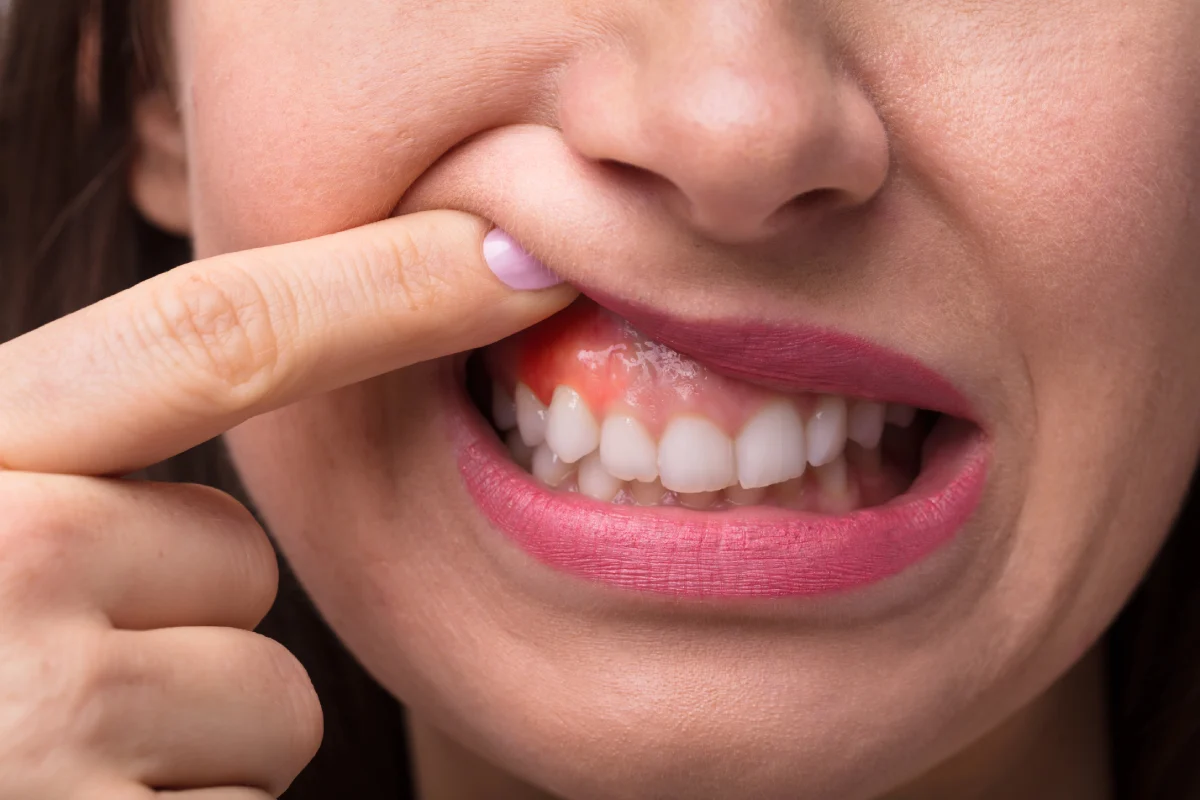
Wondering what gum disease looks like? Healthy gums are firm and pink, and they do not bleed when you brush. Here are the periodontitis symptoms that signal a problem:
- Reddish or purple gums
- Swelling and inflammation
- Bleeding, particularly during brushing and flossing
- Soreness in the gums
- Bad breath and unpleasant taste
- Pain while chewing, a sign the infection has progressed.
- Gum recession that may result in tooth loss
Advanced gum disease symptoms look different and more alarming. Teeth feel loose or shift position, pus appears along the gumline, roots become visible, and bad breath turns persistent.
If you are seeing any of that second group, the window for simple treatment is closing. That is the point to call rather than wait for your next routine visit.
Causes of Gum Disease
The main cause is dental plaque buildup. Several other factors raise your risk on top of that:
- Genetics. Gum disease is partly hereditary. If a parent lost teeth to it, tell your dentist, because you may need shorter intervals between cleanings.
- Smoking or other tobacco use. This is the single strongest modifiable risk factor.
- Health conditions such as diabetes, high stress, and hormonal shifts during puberty, pregnancy, or menopause. Untreated gum infection has also been linked to higher heart disease risk, since oral bacteria can enter the bloodstream and trigger inflammation elsewhere in the body.
- Certain medications and habits, including teeth grinding.
Can you get gum disease with good oral hygiene? Yes. Brushing and flossing well lowers your risk sharply, but genetics, diabetes, dry mouth from medication, and grinding can all drive the condition in people who do everything right at home. Good hygiene is protection, not immunity.
How Common Is Gum Disease and What Are Its Stages
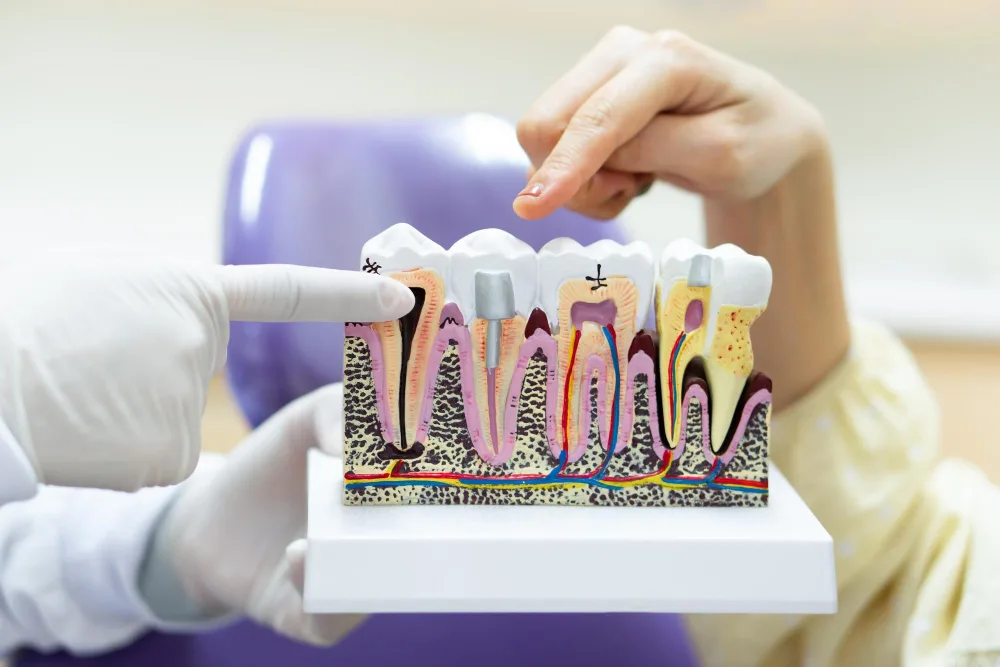
Gum infection does not appear overnight. It moves through distinct stages, and knowing which one you are in tells you how much is still reversible.
| Stage | What is happening | Typical timeline untreated | Reversible? |
|---|---|---|---|
| Gingivitis | Inflammation in the gums only, no bone loss | Visible signs within about 5 days of plaque buildup | Fully reversible |
| Early periodontitis | Bacteria below the gumline, shallow pockets forming, early bone loss | Months to years after untreated gingivitis | Bone loss permanent, disease controllable |
| Moderate periodontitis | Deeper pockets, exposed roots, teeth may loosen or shift | Roughly 12 to 16 months from early stage | Controllable with treatment |
| Advanced periodontitis | Extensive bone loss, very loose teeth, high risk of losing several | Varies widely, driven by smoking and diabetes control | Controllable, teeth at high risk |
Gingivitis: The First Stage
Gingivitis is the earliest form. The infection sits in your gums only. You might notice redness, swelling, and bleeding when brushing or flossing.
There is no bone loss at this point, which is why this stage can be fully reversed with proper care.
So does gum disease go away? At this stage, yes, completely. But it can progress faster than people expect. Plaque buildup peaks in about four days, and visible signs of gingivitis can appear by day five.
Early Periodontitis
Untreated gingivitis develops into early periodontitis, where bacteria move beneath the gums. This affects the supporting bone, and gums pull away from the teeth to form small pockets.
Those pockets trap plaque and bacteria that a toothbrush and floss cannot reach.
The bone lost at this stage does not fully grow back on its own, but the condition can still be controlled. Treatment here aims to stop further damage and hold onto your teeth.
Moderate Periodontitis
At this stage, gum and bone destruction becomes more pronounced. Tooth roots may become exposed.
You may notice teeth becoming loose or shifting position. Pus can appear along the gumline, and bad breath often worsens.
Without treatment, it takes roughly 12 to 16 months for early periodontitis to reach this stage. Tooth loss risk climbs sharply from here.
Severe or Advanced Gum Disease
Advanced gum disease is the most serious stage. Bone loss is extensive, and the risk of losing several teeth is at its highest.
The tissues supporting your teeth are badly damaged. Teeth may become very loose or fall out.
How Long Does It Take for Periodontitis to Develop?
There is no fixed clock, but the general arc is slow at the start and faster later.
Plaque produces visible gingivitis within about five days of poor hygiene. Gingivitis can then sit unaddressed for months or years before crossing into early periodontitis, and some people never cross that line at all.
Once it does become periodontitis, movement speeds up. Early to moderate takes roughly 12 to 16 months untreated. From moderate to advanced varies widely, driven mostly by smoking, diabetes control, and whether you are getting professional cleanings.
How fast gum disease progresses in your mouth is measurable. Your dentist charts pocket depths at each visit, and comparing those numbers over time is the clearest picture of whether the condition is stable or moving.


Potential Treatments for Gum Disease
Your treatment plan depends on how far the condition has progressed and on your individual needs.
1. Non-surgical Treatments
These are usually the first line of defense for early to moderate cases.
Professional Dental Cleaning
Routine cleaning, also called scaling and polishing, removes plaque and tartar above the gumline. Regular cleanings are the foundation of keeping gingivitis from progressing.
When infection has already moved below the gums, a scaling and root planing procedure goes deeper to remove bacteria and tartar a standard cleaning cannot reach.
Antimicrobial Therapy
Your dentist may use antimicrobial treatments, including antibiotic rinses such as chlorhexidine, to bring bacterial growth under control.
| Treatment | Out-of-pocket cost | Typically used for |
|---|---|---|
| New patient exam and cleaning | $250 | Diagnosis, charting pocket depths, gingivitis |
| Deep cleaning (scaling and root planing), includes maintenance visit | $1,400 | Early to moderate periodontitis |
| Gingivectomy (1 to 3 teeth) | $550 | Removing overgrown or diseased gum tissue |
| LANAP laser therapy and periodontal surgery | $99 specialist consultation, credited toward treatment | Deep pockets, moderate to advanced cases |
| Extraction with bone graft | $950 | Teeth that cannot be saved, preserving bone for an implant |
| Dental implant (implant body) | $2,650 | Replacing a tooth lost to gum disease |
| Implant abutment and crown | $3,300 | Completing the implant restoration |

2. Surgical Treatments
If the infection worsens despite non-surgical care, surgery may be the next step.
Flap Surgery (Pocket Reduction Surgery)
Your gum tissue is gently lifted and repositioned, letting your dentist remove tartar thoroughly. Repositioning the gums around the teeth reduces the depth of the pockets.
Bone Grafts
Grafting material replaces bone lost to infection. This helps regenerate lost bone, adding stability and improving the odds of keeping the tooth.
Guided Tissue Regeneration (GTR)
A membrane barrier is placed between the bone and the tissue. That space allows bone and connective tissue to regrow instead of being crowded out by faster-healing gum tissue.
Gum Grafts
If you have gum recession, tissue from your palate or a donor source is grafted onto the receded areas. This gum graft procedure protects exposed roots and helps prevent further recession.
3. Laser Therapy
LANAP laser therapy is a minimally invasive approach to treating deep pockets. It targets diseased tissue without a scalpel, cutting, or stitches.
Laser treatment can also stimulate tissue regeneration for faster, more comfortable healing, and it leaves healthy tissue intact.
Do You Need a Periodontist?
Most early and moderate cases are handled by a general dentist. Deep cleanings, antimicrobial therapy, and ongoing maintenance all fall within general practice.
A periodontist is a gum specialist with several years of training beyond dental school. Cases that usually warrant one include deep pockets that do not respond to deep cleaning, extensive bone loss, gum grafting, and regenerative surgery.
At Smile Lab, general and specialist gum care happen in the same office, so you are not starting over with a new practice mid-treatment.
Living With Gum Disease: Daily Habits That Protect Your Teeth
Once the condition is past gingivitis, it becomes something you manage rather than cure. The daily routine is what separates the patients who keep their teeth from the ones who don’t.
Brush twice daily with a soft-bristled brush. Angle the bristles toward the gumline at about 45 degrees. Hard brushing accelerates recession rather than preventing it.
Clean between your teeth every day. Floss, interdental brushes, or a water flosser all work. Interdental brushes may reach deeper pockets better than string floss does.
Keep your maintenance schedule. Patients with a history of gum infection typically need cleanings every three to four months rather than every six. This is the single habit most tied to long-term tooth retention.
Stop smoking. Smokers tend to respond worse to gum treatment and lose teeth at higher rates. Quitting improves your odds more than any product you can buy.
Control blood sugar if you are diabetic. The relationship runs both ways. Poor glucose control worsens gum infection, and active gum infection makes blood sugar harder to manage.
Why Smile Lab is Your Partner in Gum Health?
At Smile Lab, our team finds the problems that are easy to miss. From early-stage gum inflammation through cases where a tooth is close to being lost, we treat gums with thorough cleaning, advanced laser therapy, and surgical care when it is needed.
We also handle the full range of dental services alongside gum treatment, from cleanings to implants. Everything happens under one roof, which matters when a treatment plan spans several months.

What to Do Next
Gum disease is treatable at every stage. Catching it early gives you the best odds of keeping your natural teeth, and often the simplest treatment.
Early gingivitis can be turned around with cleaning alone. A late diagnosis is what pushes you toward surgical or laser treatment.
The deciding factor is not how bad it looks today. It is how quickly you start and how consistently you keep going.
Questions about Periodontal Disease
How long can you keep your teeth with periodontal disease?
Most people don’t. Roughly 50% of patients with a periodontal diagnosis keep every tooth. It depends on your stage, your overall health, and how consistently you treat it. Caught at the gingivitis stage, the condition is fully reversible and your teeth can last a lifetime. Past that point, bone loss cannot be fully reversed, but the disease can be controlled and stabilized. The key is not waiting. Call Smile Lab Dentistry today at 332-237-6453.
Can periodontal disease be cured?
Gingivitis can be completely reversed with professional cleaning and better habits at home. Once it progresses into periodontitis, it becomes a chronic condition that cannot be cured but can be effectively managed. With the right plan, whether that is deep cleaning, antimicrobial therapy, or surgery, most patients stabilize their condition and keep their remaining teeth long term.
How long does gum disease last?
Gingivitis clears within a week or two of proper treatment. Periodontitis does not end; it goes into a controlled state and stays there as long as you keep up maintenance. Think of it like blood pressure rather than a cold.
Is periodontal disease contagious?
The condition itself is not contagious, but the bacteria that drive it can be transmitted through saliva, including through kissing or sharing utensils. Transferring the bacteria does not mean the other person develops gum disease. Their hygiene, genetics, and immune response determine that.
Can gum disease kill you?
Not directly. But untreated gum infection has been associated with higher risks of heart disease, stroke, and worsened diabetes control, because oral bacteria and inflammation can affect the rest of the body. Treating it is a health decision, not only a dental one.
What happens if gum disease is left untreated?
It progresses through increasingly serious stages, from gingivitis to moderate and then advanced periodontitis. Expect worsening recession, major bone loss, teeth that loosen or shift, chronic bad breath, and eventually tooth loss. What starts as a simple cleaning can become surgery, bone grafts, or implants. Early treatment is always simpler, less invasive, and less costly.
Where is the best place to treat periodontal disease in Manhattan?
Smile Lab Dentistry in Union Square is one of Manhattan’s top-rated practices for gum disease treatment, offering everything from deep cleanings and antimicrobial therapy through laser treatment and surgical care. With over 1,400 five-star patient reviews and a team built around early detection, Smile Lab is a practice Manhattan trusts with gum health. Book your evaluation today at 332-237-6453.