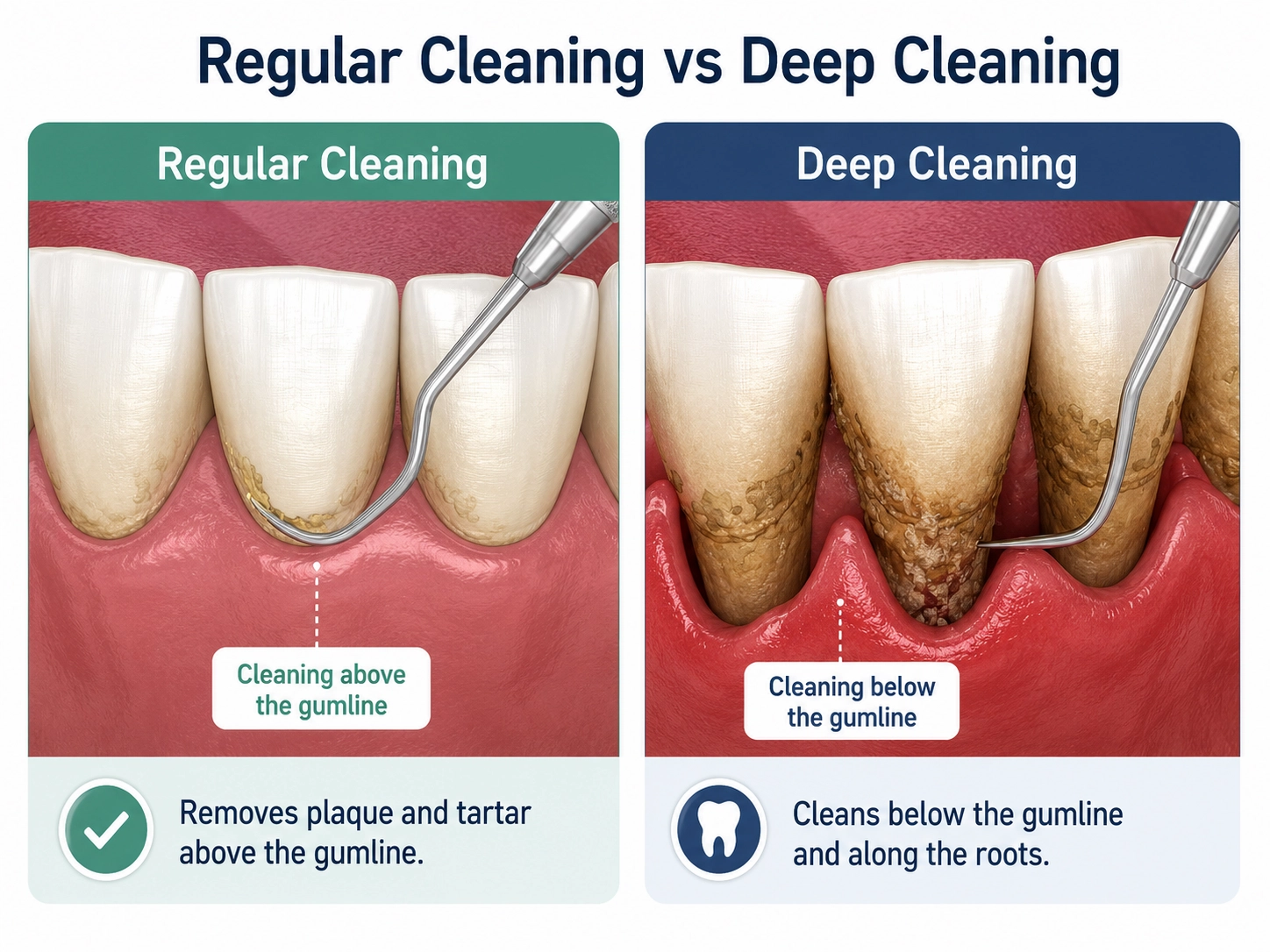
A routine dental visit is preventive care for healthy or stable gums, while scaling and root planing treat gum disease. The core difference in deep teeth cleaning vs regular teeth cleaning is how far the dentist or hygienist needs to reach: standard care removes buildup above the gumline, while periodontal therapy removes hardened tartar and bacteria below it.
Your dentist recommends the right option after checking gum pocket depths, bleeding, and tartar buildup, and taking X-rays as needed. At Smile Lab in Union Square, the team explains the diagnosis clearly so you understand which type of care is best for your gums.
Key Takeaways
- A standard dental visit helps maintain healthy or stable gums, while periodontal care treats disease below the gum line.
- Dentists decide between routine care and gum therapy by assessing pocket depths, bleeding, and tartar buildup, and by taking X-rays when needed.
- Scaling and root planing may be recommended when bacteria and hardened deposits collect below the gums, especially when periodontal pockets or bone loss are present.
- Temporary sensitivity, gum tenderness, and follow-up visits are common after periodontal treatment, but these effects usually support healing.
- At Smile Lab, the team explains the diagnosis clearly before treatment so patients understand why one option may fit their gums better than another.
Difference between Deep Cleaning and Regular Cleaning Teeth
The main difference is purpose. Preventive care supports oral health by maintaining healthy teeth and gums. Periodontal therapy treats infection below the gum line.
A regular teeth cleaning vs deep teeth cleaning comparison is not about which option is “better.” Regular dental cleanings help prevent cavities, gum irritation, and tartar buildup. Gum therapy is used when disease has moved beyond the early stages.
What Preventive Dental Care Covers
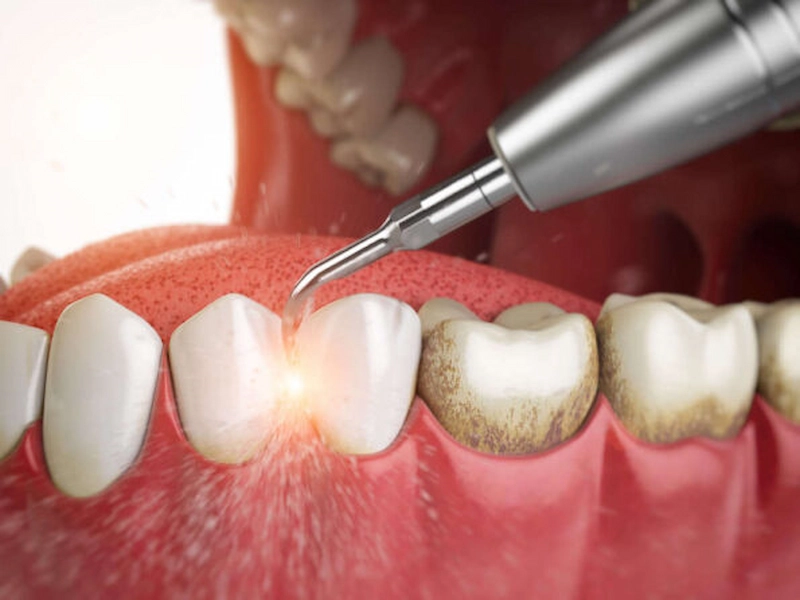
For some preventive visits, Airflow teeth cleaning may help remove biofilm and surface stains more comfortably. Plaque is sticky bacteria, and tartar is hardened buildup that dental professionals remove with special instruments.
This appointment may include polishing, flossing, X-rays when needed, and an exam. Your provider can also help you decide how often you should get your teeth cleaned based on your gum health, buildup, and risk factors. It works best when you have healthy gums, stable pocket depths, and no tartar below the gum line.
What Periodontal Therapy Treats
Scaling and root planing treats inflammation and infection below the surface. It cleans the roots and helps the gums heal closer to the tooth.
A dentist may recommend this care when periodontal pockets form around the teeth. These spaces can hold bacteria, cause swelling, and contribute to bone loss over time. If gum disease progresses, it can increase the risk of loose teeth and tooth loss.
How Dentists Decide What You Need
Your dentist checks for signs of gum disease, including bleeding, swelling, gum recession, bad breath, and sensitivity. Some people do not feel pain, even when infection is present.
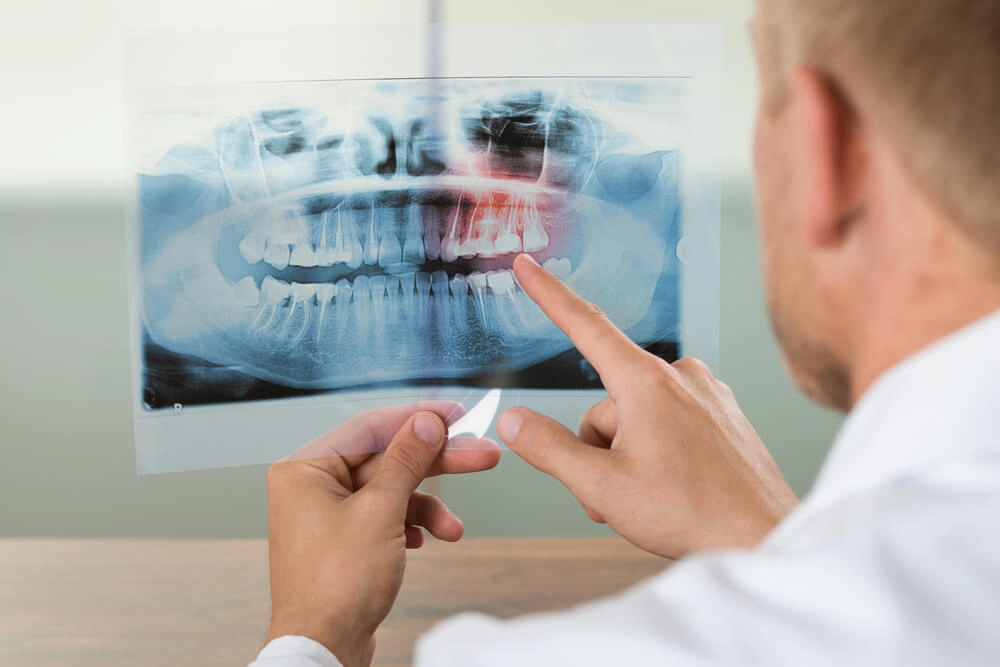
Gum pocket measurements help show whether bacteria have moved below the surface. X-rays can also show early signs of bone changes. If your gums are stable, a routine cleaning may be enough.
Can You Refuse Deep Cleaning?
You can ask questions and discuss your options. Still, if the diagnosis shows active gum disease, a dentist may not recommend standard preventive care alone.
A routine visit can polish visible areas and remove plaque and tartar buildup above the gums, but it does not treat infected pockets. Delaying periodontal care can allow inflammation to progress.
Deep Cleaning vs Regular Cleaning Teeth Cost
At Smile Lab, a routine visit for uninsured patients is $250 and includes a full set of X-rays, cleaning, and an exam. Smile Lab is in-network with most major PPO plans, so coverage may depend on your plan. Medicaid and HealthFirst are also accepted.
Deep Cleaning Teeth Cost without Insurance
SRP is diagnosis-based and depends on your exam. Full-mouth SRP is up to $1,400, including the first periodontal maintenance visit. Additional maintenance visits are $200.
Payment Options
Patients who cannot pay upfront can apply for a payment plan through Cherry, with 0% financing available.
Disadvantages of Deep Cleaning Teeth
The disadvantages of deep cleaning teeth are usually temporary. You may notice sensitivity, gum tenderness, or mild soreness after treatment. If sensitivity is already a concern, this guide to dental cleaning for sensitive teeth explains what can help before and during your visit.
Some patients also need follow-up visits or periodontal maintenance. This helps control bacteria and protect the results.
Is Gum Treatment Worth It?
This care is worth it when gum disease is present. It removes bacteria from areas that preventive visits cannot reach.
Treatment can reduce bleeding, swelling, and pocket depth. It also helps protect the bone and tissue that support your smile.
What to Expect During Treatment
A preventive visit may include an exam, X-rays, buildup removal, polishing, flossing, and home-care guidance. Periodontal therapy includes scaling below the gums and smoothing the root surfaces.
Local anesthesia can help keep the area comfortable during treatment. If dental anxiety or past bad experiences have kept you away, tell your provider before the visit begins.
Aftercare and Maintenance
Your gums may feel tender for a short time after treatment. Soft foods, gentle brushing, and clear home-care instructions can make recovery easier.
Your dentist may ask you to avoid hard or spicy foods for the first day, brush lightly around tender areas, and rinse as directed. You should also keep follow-up visits so your provider can check healing and remove any bacteria that returns below the gum line.
How Smile Lab Guides Your Care
Dr. Waise Ebrahimi uses a conservative, prevention-focused approach to help patients understand what they need and why. His UCSF training and focus on preserving natural tooth structure support clear, practical treatment planning.
When needed, low-radiation digital imaging and careful gum measurements help the team explain the diagnosis before treatment begins. If you want clarity about your gums, your options, or the right next step, schedule a consultation and see if Smile Lab is the right fit for you.