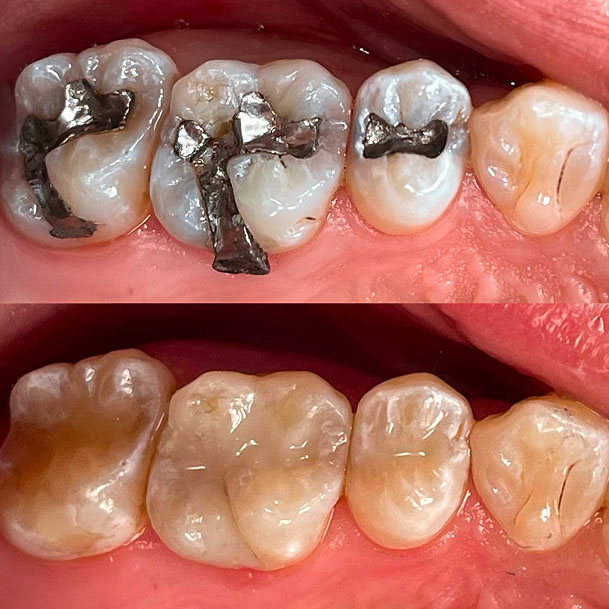
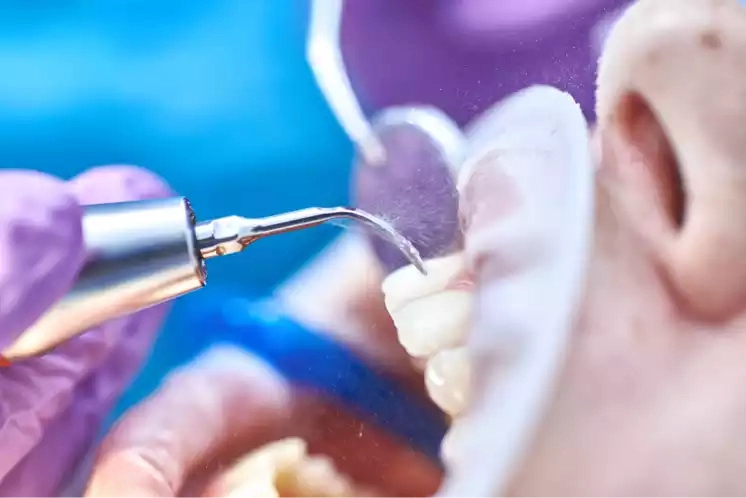
An ultrasonic teeth cleaner uses high-frequency vibrations to help remove plaque, tartar, and surface stains from teeth. While professional ultrasonic scaling is a common and effective dental procedure, at-home ultrasonic cleaning devices may not remove hardened tartar as effectively and can cause injury if used incorrectly.
This guide explains the benefits and risks of ultrasonic teeth cleaners, when professional treatment is the safer choice, and which at-home oral hygiene practices can help maintain a healthy smile between dental visits.
Safer options include regular professional dental cleanings, brushing with a soft-bristled toothbrush and fluoride toothpaste, cleaning between the teeth with floss or interdental aids, and using a water flosser when recommended. At Smile Lab in Union Square, the focus is on identifying the type of buildup you have, determining what can be managed safely at home, and recommending professional care when needed.
Key Takeaways
- An ultrasonic teeth cleaner can remove hardened buildup safely when used by a trained dental professional.
- Dentists usually do not recommend using at-home scaling devices on natural enamel because they can irritate gums, damage surfaces, or cause sensitivity.
- Professional scaling uses water and fast vibrations to loosen tartar, while home tools do not replace an exam, X-rays, or gum evaluation.
- Appliance cleaners can help clean retainers, aligners, night guards, and dentures, but they are not designed to scale natural enamel.
- Safer home care includes brushing, flossing, interdental aids, and water flossers, while hardened tartar should be removed during a dental visit.
Do Dentists Recommend Ultrasonic Teeth Cleaners?
Dentists usually do not recommend using consumer scaling devices on your own smile. These tools can look simple, but they are designed to reach hard deposits near the gums, enamel, and root surfaces.
A professional uses training, lighting, water control, and careful hand positioning to avoid injury. That matters because the goal is not just to scrape buildup. The goal is to remove deposits while protecting your gums and tooth structure.
Why Professional Training Matters
Dr. Waise Ebrahimi approaches cleanings through a preventative and conservative lens. That means the focus is not on aggressive scraping. It is on removing harmful buildup while preserving healthy tooth structure.
Small mistakes near the gumline can cause irritation, bleeding, or sensitivity. A tool that looks harmless online can become risky when used without a clear view or proper technique.
Does Ultrasonic Teeth Cleaning Work?
Yes, professional scaling can work well when used by a dentist or hygienist. It helps break up hardened deposits and can make the visit more efficient, especially with moderate buildup.
The keyword is professional. A clinical device and an at-home gadget are not the same in power, precision, or safety.
What It Can and Cannot Remove
In a dental office, this type of treatment can help remove plaque and tartar from the surface and around the gumline. Water helps flush away loosened debris during the visit.
It cannot replace a diagnosis. It also cannot tell whether bleeding, bad breath, sensitivity, or gum recession points to a deeper issue. If tartar has hardened, brushing, flossing, or scraping at home will not safely remove it.
How Does an Ultrasonic Teeth Cleaner Work?
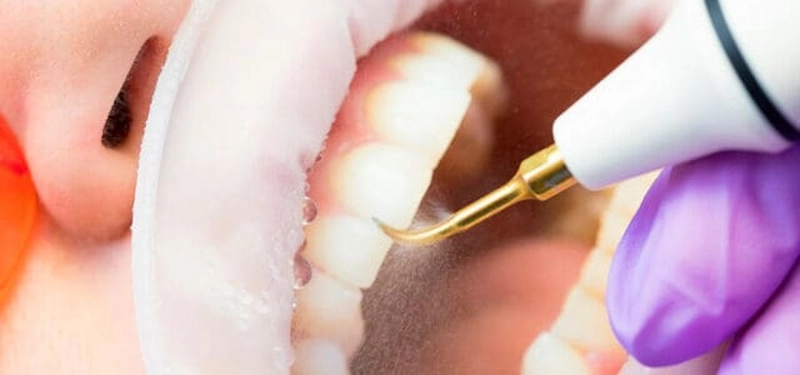
A professional device uses fast vibrations and water to loosen hardened deposits from the tooth surface. The tip moves quickly, while the spray helps cool the area and rinse away debris.
This is different from brushing. A toothbrush disrupts soft daily buildup. A scaler is used for hardened deposits that require clinical removal.
Water, Vibrations, and Tartar
Water is not just there for comfort. It helps manage heat, improves visibility, and washes away particles during the visit.
This is why a water-based scaling device may sound safer than a dry tool, but water alone does not make home use safe. Technique still matters.
Professional vs At-Home Devices
Professional instruments are used with patient-specific judgment. Your provider can adjust pressure, angle, and approach based on your gums, enamel, sensitivity, restorations, and tartar pattern.
Home devices do not provide that level of control. They also do not include an exam, X-rays, or gum measurements, which are often needed to understand what is really happening.
Is an Ultrasonic Teeth Cleaner Safe at Home?
A DIY scaling device is not the safest choice for removing buildup from natural enamel. You may press too hard, use the wrong angle, or mistake healthy structure for buildup.
Possible side effects include temporary sensitivity, gum irritation, bleeding, and tissue injury. The risk is higher if you already have gum disease, recession, crowns, veneers, implants, bonding, or sensitive areas.
Professional care is recommended when you notice hardened buildup, bleeding gums, persistent bad breath, or sensitivity near the gumline, especially if you need to understand the benefits and disadvantages of deep cleaning teeth. It is also safer if you have delayed care because of anxiety, cost concerns, or a difficult past experience.
Ultrasonic Cleaner vs Other Tools
Not every dental tool does the same job. Some tools clean natural enamel. Others clean appliances. Some help prevent buildup, while others remove deposits that have already hardened.
Manual scaling uses hand instruments to remove deposits. Powered clinical scaling uses vibration and water to loosen buildup faster in certain areas, while laser-assisted cleaning targets bacteria in select gum cases. Dentists often use both, depending on your gum health and where the deposits are.
A sonic tooth cleaner usually refers to a vibrating toothbrush or flosser that uses a stream of water to clean between surfaces and along the gums. A water flosser can support home care, but it does not remove hardened tartar.
Do Dental Appliance Cleaners Work?
Yes, dental appliance cleaners can work for retainers, aligners, night guards, dentures, and similar devices. This is different from removing deposits from your actual smile.
Appliance devices can help reduce odor, film, and buildup on removable oral devices. They are useful because retainers and night guards can collect bacteria and residue during daily wear.
An appliance sits outside your mouth when you clean it. Your gums and enamel are living tissue. That difference changes the safety question.
Safer Ways to Clean Teeth at Home
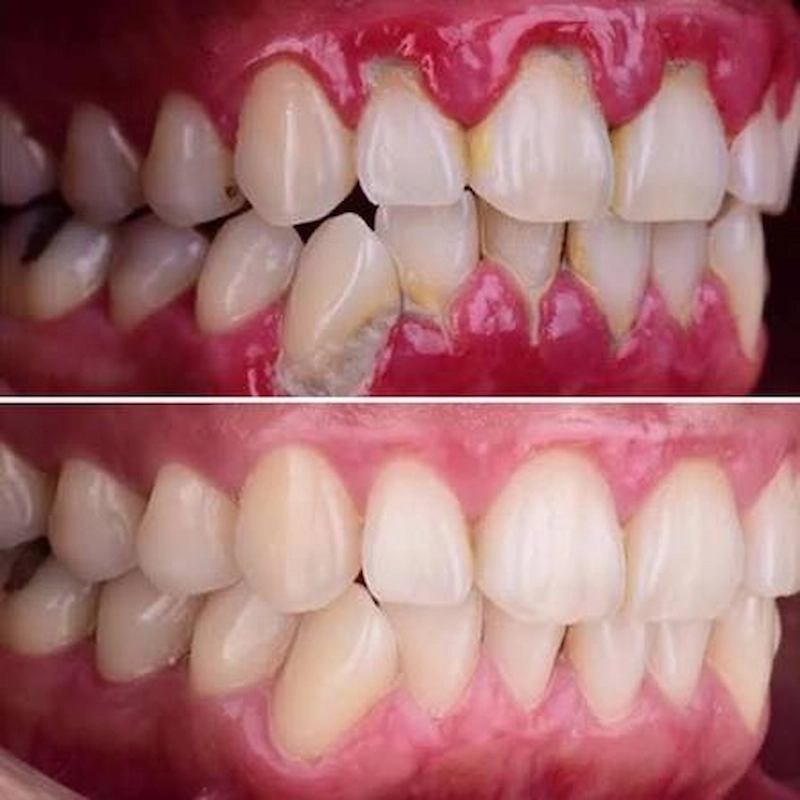
Home care should focus on preventing buildup before it hardens. Once tartar forms, it needs professional removal.
- Brush twice a day with a soft-bristle toothbrush.
- Clean between each tooth once a day with floss, picks, or another interdental aid that fits your routine.
- Use fluoride toothpaste, and consider a water flosser if your dentist recommends one.
- Try an electric brush if you tend to rush or miss areas.
- Do not scrape your enamel with metal tools or push below the gumline.
- Get it checked if something feels stuck, sharp, or sensitive instead of trying harder at home.
When to See a Dentist
You do not need to wait for pain to schedule a teeth cleaning in Union Square. Consider a visit if you notice buildup that won’t brush away, bleeding, sensitivity, or changes in your breath.
Tartar often appears yellow or brown and is rough near the gumline or behind the lower front teeth. Once it hardens, it will not come off with brushing.
Bleeding gums can come from plaque buildup, gum irritation, brushing technique, or periodontal disease, which may require deep cleaning teeth in some cases. Bad breath or sensitivity can also indicate issues that need closer attention.
A Safer Next Step
If you are looking at at-home tools to achieve a cleaner mouth, that is a good goal. The safer path is to find out what kind of buildup you have and what your smile actually needs.
If you live or work near Union Square, Schedule Your Visit with Smile Lab to see whether professional cleaning, better home tools, or a more specific treatment plan makes sense for you.