
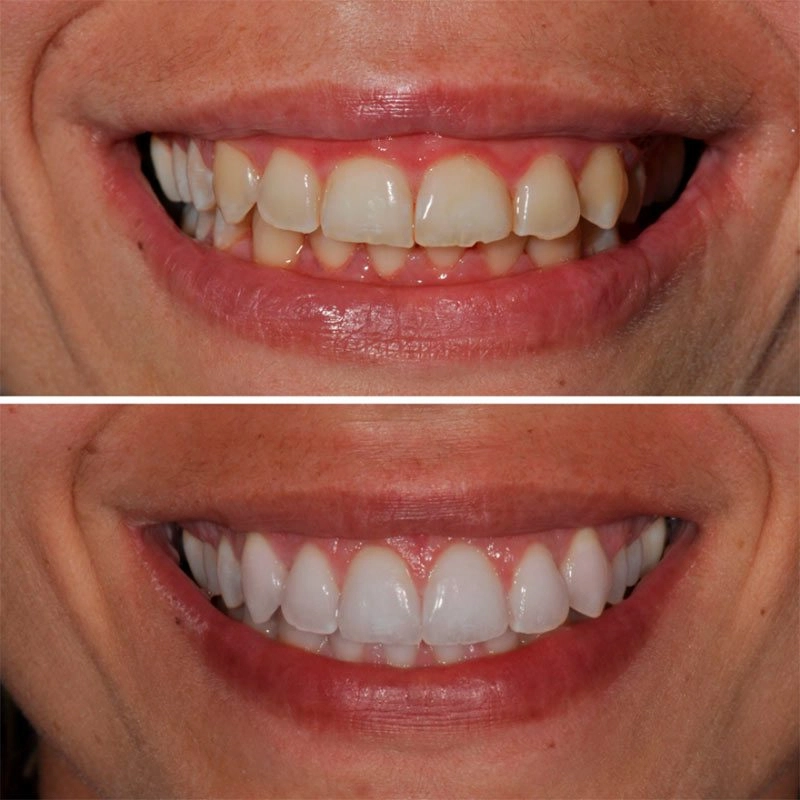
Here is the short answer. A toothbrush only cleans the outer surface of your enamel. When the discoloration sits underneath that surface, no amount of scrubbing will reach it. So if you brush every day and your smile still looks dull, you are probably not doing anything wrong. You are working on the wrong layer.
Poor hygiene is only one possible cause. Lifestyle, diet, medication history, and genetics all shape the shade you see in the mirror. Below, we break down why teeth turn yellow, what you can reverse at home, and what needs a professional.
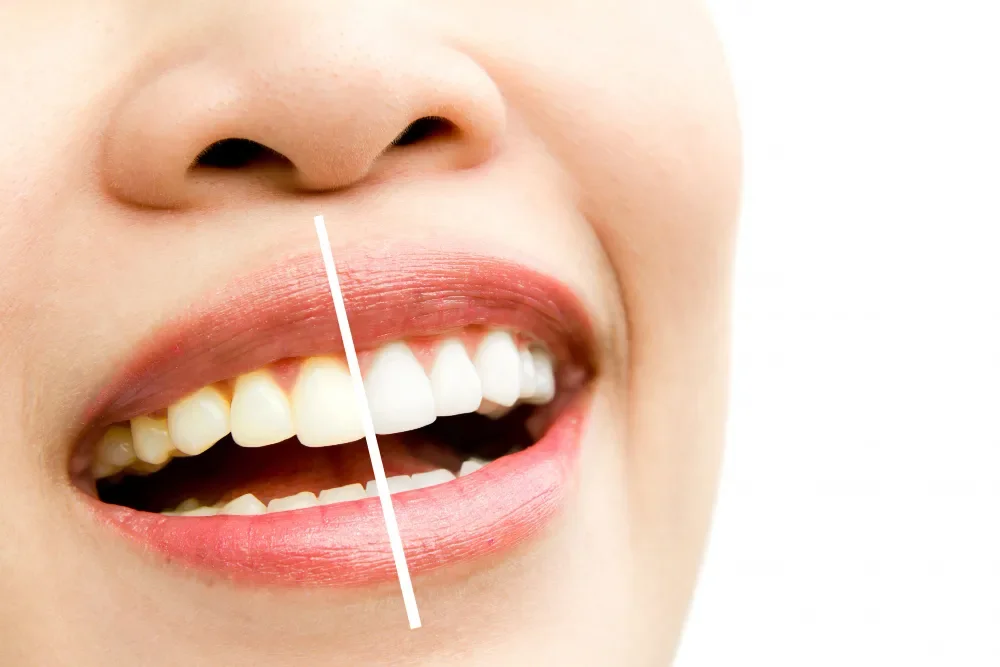
Your smile is not naturally bright white. Just like skin, enamel comes in a range of shades that run from light to dark. Discoloration falls into two categories, and the difference explains why brushing works for some people and does nothing for others.
Extrinsic stains: These sit on the enamel surface and come from food, drinks, or smoking. Your brush can reach these.
Intrinsic discoloration: This sits beneath the enamel, inside the dentin, and traces back to genetics, medications, or health conditions. Bristles cannot touch it.
The American Dental Association notes that surface stains respond well to brushing and professional polishing, while intrinsic discoloration requires a chemical process to change the color of the tooth itself.
That one distinction explains most cases where daily brushing never shifts the shade.
Darkly pigmented food and drink gradually alter your enamel color. The usual culprits are coffee, tea, red wine, cola, berries, soy sauce, and curry.
Nicotine and tar from cigarettes or chewing tobacco are among the fastest routes to yellow spots on teeth. These marks are deep, sticky, and resist a normal brushing routine. Most require professional removal.
Enamel is the protective shell over your dentin, and dentin carries a naturally warm, yellowish tone. That shell thins over time from acidic food, grinding, or scrubbing too hard. So does over-brushing cause yellow teeth? Indirectly, yes. Heavy pressure wears the enamel down, and once it thins, the darker layer underneath starts showing through.
Age plays a role too. Do teeth get yellow with age? Yes, because enamel grows thinner and more translucent over the decades, letting more dentin color show through. Strengthening enamel through remineralization can slow that process, though it will not reverse yellowing that has already set in.
Can teeth naturally be yellow? Yes. Some people inherit thicker dentin or a thinner enamel layer, which makes their baseline shade darker than average. In those cases, even flawless habits will not change the underlying color. A whitening procedure is the only thing that will.
Antibiotics taken during childhood, tetracycline and doxycycline in particular, can stain from inside the tooth. The ADA also lists antihistamines, antipsychotics, blood pressure medications, and chemotherapy among possible causes of darkening.
Too much fluoride while teeth are still forming can cause fluorosis, which appears as white, yellow, or brownish spots. For more on clearing brown marks specifically, see “How to Remove Brown Stains from Teeth Naturally: Simple Tips for a Brighter Smile.”
Plaque is a soft, sticky film that forms after eating. Left alone, it hardens into tartar, which traps yellow stains on teeth and holds them against the surface. Even with a daily routine, plaque collects where a brush struggles to reach, especially along the gumline and between teeth.
Grinding, known clinically as bruxism, usually happens during sleep without you noticing. The repeated pressure wears enamel thin and can crack it, which speeds up discoloration.
If you wake with a sore jaw or morning headaches, grinding may be part of the picture. A night guard protects the enamel you still have.
A knock to the mouth can damage the inside of a tooth and darken it from within. This normally affects one tooth rather than your whole smile. The ADA points out that standard whitening does not correct discoloration caused by injury. A single dark tooth after trauma needs an exam, not a drugstore kit.
Brushing twice daily matters. But technique shapes the result as much as frequency does. It helps to see the contrast: skipping brushing altogether does far more damage than brushing with imperfect technique.
It is a common complaint: I brush twice a day and still have yellow teeth. If that sounds familiar, work through this list before assuming the cause is beyond your control.
In most cases, no. Whether the color reverses depends entirely on which layer it sits in. A professional polish clears surface staining from coffee, wine, or tobacco in a single visit. Color built into the tooth structure takes longer to shift, since it usually needs a peroxide process spread over one in-office session or several weeks of take-home trays, or a cosmetic fix like bonding or veneers.
The ADA is direct on one point. Whitening does not work on crowns, veneers, bonding, or fillings, and it will not correct darkening caused by medication or injury. Those situations call for a different route.
| What caused it | Which layer | Does it reverse? | What works |
|---|---|---|---|
| Coffee, tea, wine, curry | Surface | Yes | Professional polish plus daily brushing |
| Smoking and tobacco | Surface, deeply set | Yes, with help | Professional cleaning first, then whitening |
| Plaque and tartar | Surface | Yes | Scaling and polish |
| Inherited natural shade | Inside the tooth | No, not on its own | In-office whitening or veneers |
| Thinning enamel with age | Inside the tooth | No | Whitening, bonding, or veneers |
| Tetracycline or other medication | Inside the tooth | No | Veneers or bonding; whitening has limited effect |
| Injury to a single tooth | Inside the tooth | No | Exam first; standard whitening does not correct it |
| Crowns, veneers, or fillings | Restoration material | No | Replacement to match your new shade |
Sometimes discoloration signals more than a cosmetic concern. It can point to enamel erosion, acid reflux, or nutritional deficiencies.
Less often, the shade change reflects structural damage inside the tooth or gum disease. That is why routine checkups matter. An exam separates harmless staining from something that needs proper care.
Once you know which layer the color sits in, choosing the right approach gets simple.
Routine professional cleanings lift plaque, tartar, and surface marks that a brush leaves behind. This is the fastest way to restore brightness with nothing invasive involved. Modern instruments keep the appointment gentle, which helps if you deal with sensitivity or anxiety in the chair. A typical visit is quick too, usually wrapped up well within an hour.
In-office whitening brightens your smile noticeably in a single visit. Unlike drugstore strips, the gel strength and fit are matched to your mouth, which produces more even results with less sensitivity afterward. Because it is a supervised, dentist-directed process, it also carries a stronger safety profile than store-bought kits used without guidance.
Preventing new marks matters as much as clearing old ones. A few changes reduce the pigment that settles on your enamel.
Between visits, you can hold onto a brighter smile by doing the following.
For the full daily routine beyond stain prevention, a complete oral hygiene checklist covers brushing, flossing, and mouthwash timing in more depth.
| Option | Best for | Chair time | Out-of-pocket cost |
|---|---|---|---|
| Exam and cleaning | Surface stains, plaque, light tartar | 30 to 50 minutes | $250 |
| Deep cleaning (SRP) | Hardened tartar below the gumline | Two 1-hour visits, plus a 30-minute follow-up | $1,400 |
| In-office Zoom whitening | Overall dullness and set-in surface color | About 1 hour | $350 |
| Composite bonding | One dark tooth, or staining alongside a chip | About 1 hour | $950 |
| Porcelain veneers | Intrinsic color that whitening cannot lift | About 1 hour per visit | $2,323 |
If you want a reliable whitening option in Manhattan, NY, visit Smile Lab. The team identifies the reason behind your discoloration first, then walks you through the choices so you can decide with full information.
Whether you are dealing with staining or something that calls for surgical care, Smile Lab’s full range of services covers it. Book an appointment for a healthier, brighter smile.
A brighter smile takes more than a consistent brushing routine. If you are wondering, “Why are my teeth yellow when I brush them every day?” the answer usually comes down to which layer the color lives in.
Scaling can shift the shade briefly as hardened tartar comes away and exposes the surface underneath. That is a normal part of the cleaning process, not a sign of new damage.
If your natural shade simply runs darker than you would like, whitening remains the most direct route to the result you want.