
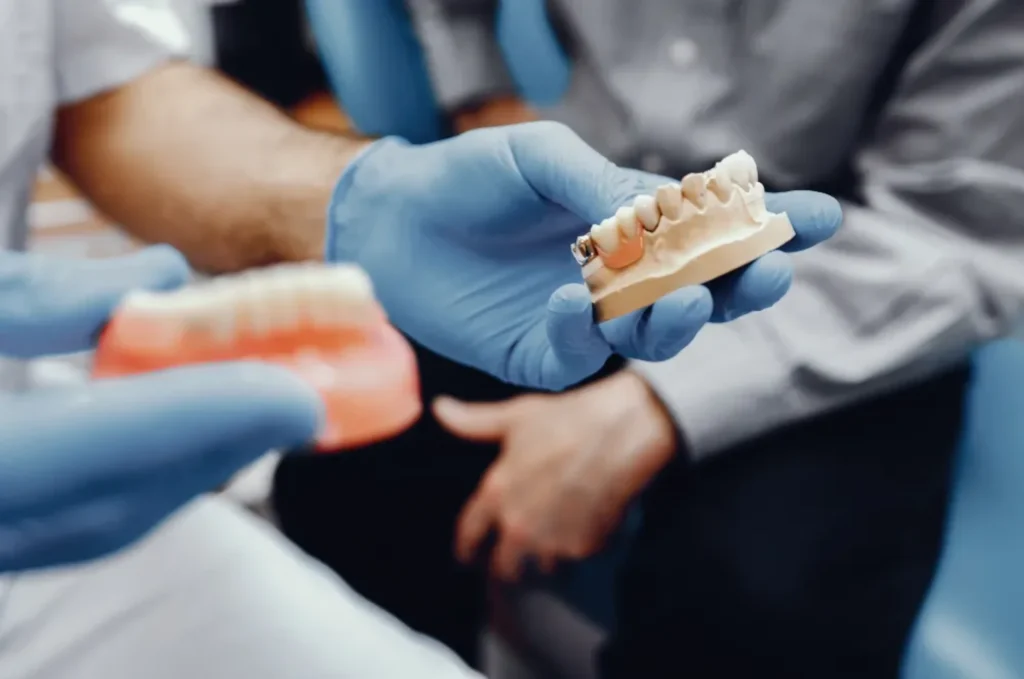
Crowns come in six main materials today: metal, porcelain-fused-to-metal, all-ceramic or porcelain (including pressed ceramic), zirconia, resin, and same-day milled crowns.
The types of dental crowns that make sense for you depend on which tooth needs one, since each material trades strength, appearance, and cost differently. A crown might be covering tooth decay, a crack, or a root canal, and that reason shapes which material fits best.
The breakdown below covers what each material is actually made of, where it holds up best, and the tradeoffs worth knowing before your next appointment.
A dental crown is a cap that covers a weak tooth from the gumline up. It restores shape and function after a crack, decay, or root canal. Crowns also protect a dental implant or anchor a dental bridge, extending their use well beyond a single restoration.
Crowns come in different materials, each designed to protect the tooth differently. So what are crowns made of? Mostly zirconia, porcelain, ceramic, metal, or a porcelain-metal mix, depending on the case.
Each family branches into more specific materials, which is where the differences start to matter for your decision.
Zirconia crowns are among the strongest options available and can withstand heavy biting and chewing without chipping.
Dentists often recommend them for back molars, though you can add a porcelain layer for a more natural look up front. If you grind your teeth at night or want something that holds up long term, zirconia is a reliable choice.
A porcelain crown or ceramic tooth crown mimics the color and translucency of natural teeth better than almost any other option. That makes both a strong choice for front teeth, where appearance matters as much as function.
Porcelain and ceramic aren’t as impact-resistant as metal or zirconia, so dentists tend to reserve them for teeth that don’t take the brunt of daily chewing forces. If you have a metal allergy, this category is usually the safest route.
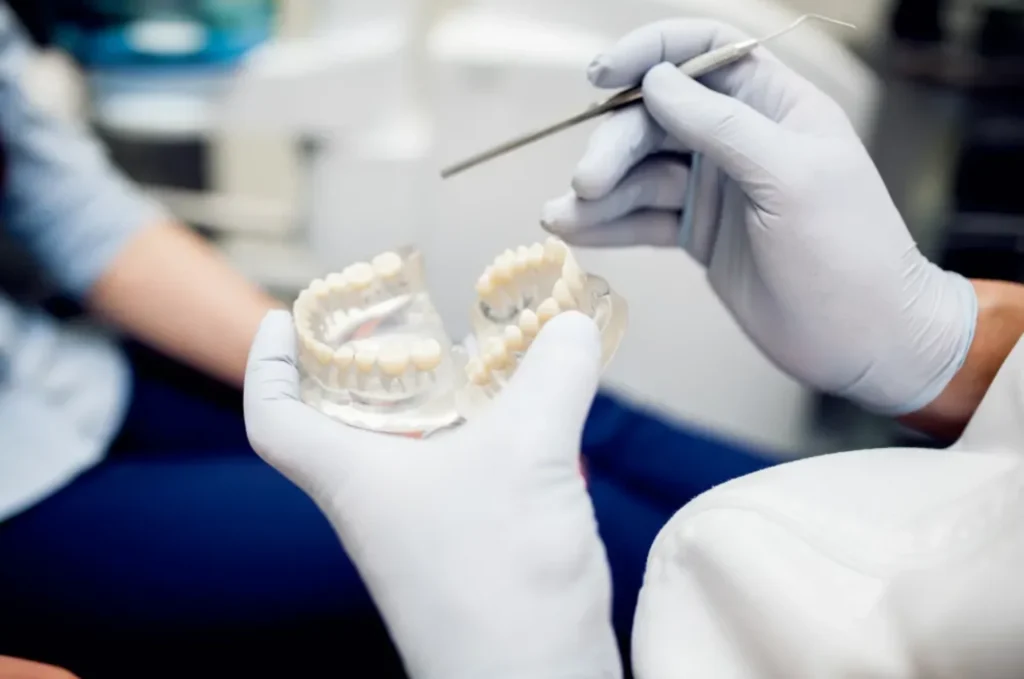
A porcelain-fused-to-metal crown, often abbreviated as PFM, combines a metal base with a porcelain outer layer. The metal core provides strength comparable to a full metal crown, while the porcelain surface helps it look closer to a natural tooth.
Fused to metal PFM crowns work on both front and back teeth, which makes them a flexible option when one crown type needs to cover multiple locations. Over time, the porcelain edge can wear thin near the gumline, showing a faint metal line, something worth asking about if a front tooth is involved.
Metal crowns, made from alloys such as gold or chromium, remain among the most durable options for molars that endure years of chewing and grinding.
They require less removal of the original tooth structure than some other crown types, which some patients see as an advantage. The main tradeoff is the visible metal color, which is why most patients reserve this option for teeth that don’t show when they smile.
Resin costs less than most other crown materials, making it a common choice for temporary crowns while a permanent one is being fabricated. Resin wears down faster than porcelain, ceramic, or metal, so it’s rarely meant to last as a permanent solution.
If your dentist mentions a temporary resin crown after root canal treatment or an extraction, that’s normal. The permanent replacement typically follows within a few weeks.
Some dental offices use digital scanning technology to design and mill a crown in a single visit, skipping the temporary crown and the two- to three-week wait entirely.
This works well for certain teeth and materials, most often solid zirconia or ceramic, but not every case qualifies. If a fast turnaround matters to you, ask your dentist directly whether your tooth is a good candidate for a same-day crown.
Pediatric dentistry sometimes uses crowns too, usually stainless steel ones, for baby teeth affected by extensive decay. These crowns protect the tooth until it naturally falls out, buying time without the cost or complexity of a permanent restoration.
If you’re researching options for a child rather than yourself, this is a different conversation from the adult materials covered above and is worth raising directly with a pediatric provider.
Material alone doesn’t decide which crown is right for you. A few practical factors, where the tooth sits, how much force it takes daily, and any sensitivities you have, narrow the decision considerably.
Front teeth show every time you smile or speak, so most patients opt for porcelain, ceramic, or zirconia layered with porcelain for those areas.
Back teeth take on far more chewing pressure and far less visibility pressure, which is why metal or solid zirconia tends to work better there. There’s no universal right answer, only the right answer for that specific tooth.
If you clench or grind your teeth at night, or you know your bite runs on the stronger side, durability should outweigh appearance.
Metal and zirconia both handle heavy biting and chewing better than resin or standard porcelain. A dentist can usually tell within a quick exam how much force a particular tooth is under.
Metal allergies aren’t common, but they happen, and they rule out metal or PFM crowns for patients who have them. Porcelain, ceramic, and zirconia avoid that issue entirely since none contain metal.
If you’ve reacted to jewelry or dental work before, mention it before your dentist recommends a material.
Nationally, dental crowns typically cost between $800 and $2,500, depending on the material. Metal and resin crowns usually sit at the lower end of that range, while porcelain, ceramic, and zirconia cost more due to the materials and lab work involved. A porcelain-fused-to-metal crown usually lands somewhere in the middle.
Those figures are a starting point, not a quote. The actual cost depends on which tooth needs a crown, whether any additional work, such as a root canal or a dental bridge, is involved, and the specific material your dentist recommends after an exam.
The most reliable way to get a number for your case is to contact our office directly for a quote based on your tooth and treatment plan.

For most people, zirconia or a porcelain-fused-to-metal crown offers the best overall balance of strength and appearance, which is why dentists reach for one of those two most often. If durability is your top priority, especially for a back tooth that takes heavy chewing force, zirconia or metal wins.
If the crown is going on a front tooth and blending in matters more than raw strength, porcelain or ceramic is the better fit.
The tradeoff is straightforward: the materials built to look the most natural are also the ones that chip more easily, and the materials built to last the longest are the ones you’d rather not see when you smile.
During an exam, a dentist weighs that tradeoff against the specific tooth, your bite, and your budget, which is why the “best” answer changes from patient to patient rather than staying fixed to one material.
Crown placement is one of the more common dental procedures for adults dealing with a cracked or heavily decayed tooth, and it usually takes two visits.
During the first appointment, the dentist reshapes the damaged tooth, takes an impression, and fits a temporary crown while the permanent one is custom-made.
About two to three weeks later, the second visit involves removing the temporary, checking the fit and color of the new crown, and cementing it in place.
At Smile Lab, Dr. Waise Ebrahimi trained at UCSF and completed advanced restorative training at the Kois Center. He focuses on preserving as much natural tooth as possible during preparation. This approach follows conservative dentistry and avoids removing more structure than needed.
Once the color and fit look right, the dentist permanently crowns the tooth with a strong dental cement, and you can typically resume normal eating the same day.
No. Getting a crown involves local anesthesia, so most patients feel pressure rather than pain during the procedure itself.
Some sensitivity to hot or cold is normal for a few days afterward as the tooth adjusts. If the pain continues beyond that, or the bite feels off, call your dentist rather than waiting it out.
Most crowns last between five and 15 years with proper care, and some patients get even longer out of a well-placed crown. The material plays a role; metal and zirconia tend toward the higher end of that range, but daily habits matter just as much.
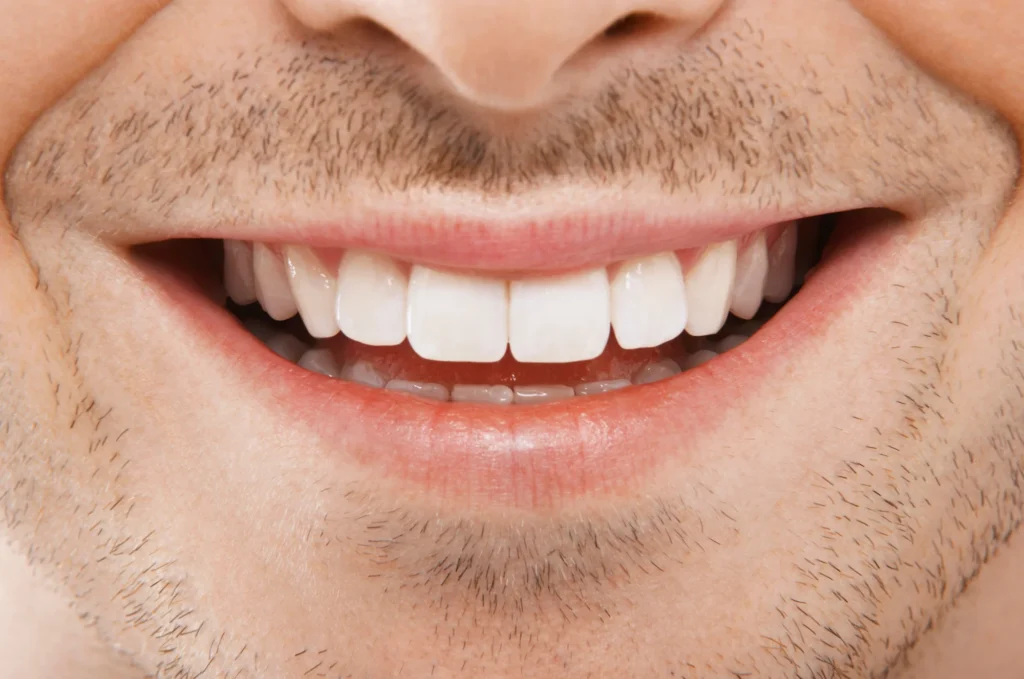
A crown that feels loose, shows a visible crack, or causes new sensitivity is signaling it needs attention.
Crown replacement becomes necessary when the underlying tooth or the cement holding the crown in place starts to break down, not just because time has passed. Catching these signs early, rather than waiting for pain, usually means a simpler fix.
Proper care helps keep any crown material lasting longer, toward the higher end of its expected range. Brushing twice daily, flossing around the crown, and avoiding ice or extremely hard foods all reduce the chance of a crack or chip. Regular dental care visits let a dentist catch small issues, like a shifting fit, before they become bigger problems.
The crown material itself can’t decay, but the natural tooth underneath still can. Bacteria can work their way under a crown that doesn’t fit tightly, or along the gumline if brushing and flossing slip. Regular checkups catch that kind of decay early, before it reaches the tooth’s nerve.
Choosing between crown types doesn’t have to feel like guesswork once you understand what each material offers and where it fits your situation. If you have a damaged tooth, a failing filling, or a crown that needs replacement, a full exam creates a plan for you.
Smile Lab, located in Union Square, sees patients across Manhattan weighing exactly this decision, and a short consultation is usually enough to know which crown makes sense for you.