A root canal clears bacteria and infection out of the inside of a tooth, so your natural tooth can stay put instead of coming out.
By cleaning and sealing the space below the gum line, the procedure prevents infection from spreading into the jaw and allows the tooth to function normally again. A crown is usually fitted afterward to protect it.
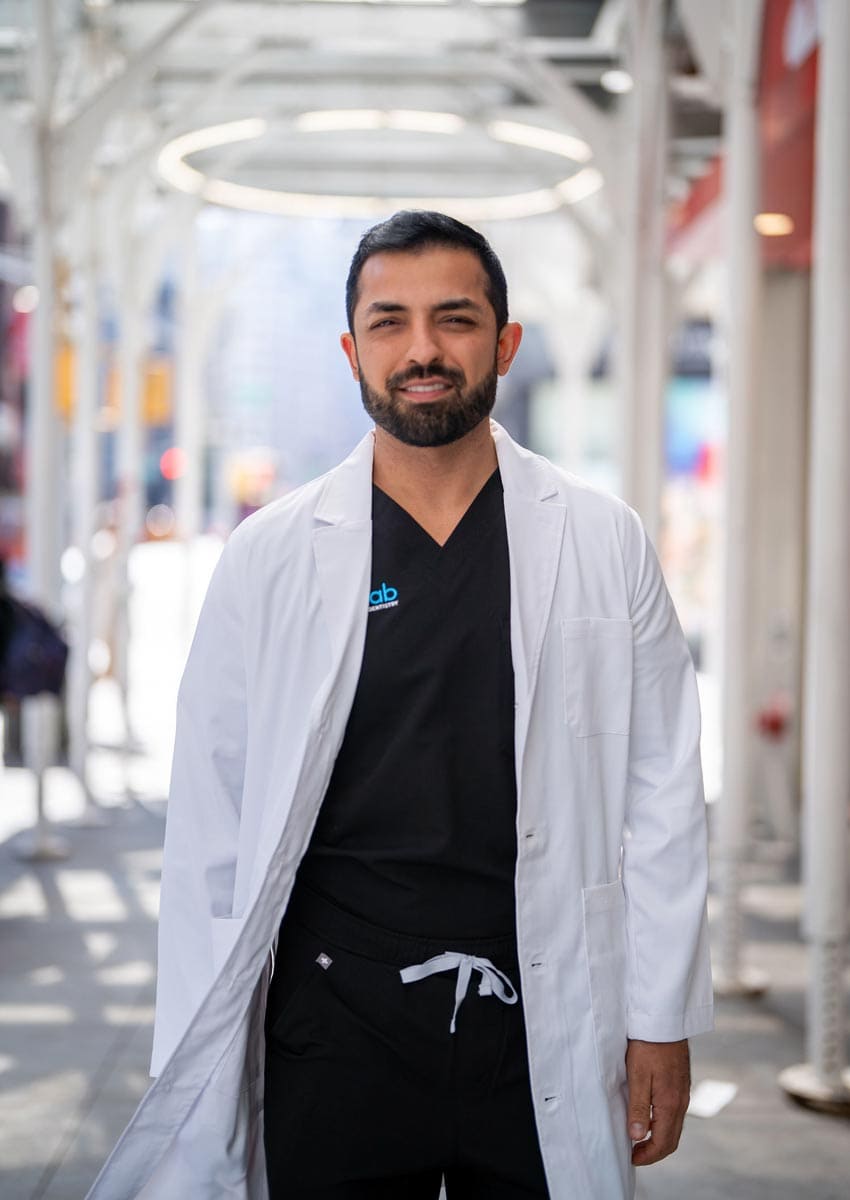
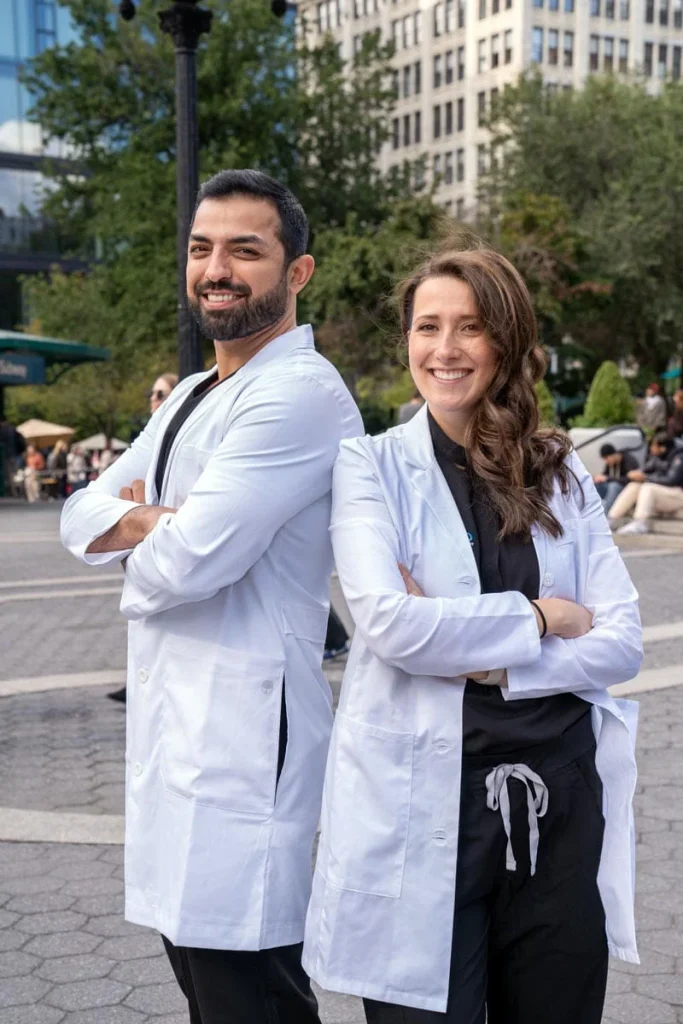
Experience matters here. Smile Lab NY keeps an endodontist in Manhattan on staff, alongside our oral surgeon and periodontist. Dr. Waise Ebrahimi leads root canal care at our Union Square office and works alongside our broader surgical team.
He will walk you through the appointment and give you clear, simple instructions for the days that follow.
Endodontic therapy stops infection at the root of a tooth before it spreads further. Patients with cracked or badly decayed teeth are the most common candidates.
A cavity caught early might only need a filling; once decay reaches the nerve, a root canal is needed to save the tooth rather than lose it.
Here are the symptoms that usually send people to a root canal specialist in NYC:
One thing worth knowing: some infected teeth cause no pain at all. If an X-ray during a routine check-up detects an infection at the root, care is still needed even when nothing hurts.
Acting early protects your tooth and jaw from far more invasive surgery later. It also helps:
If you have PPO insurance, endodontic therapy is covered by most plans as a restorative procedure, and our team verifies your benefits before your appointment. Without insurance, our prices are fixed and published. What you see below is what you pay.
| Tooth treated | Canals typically involved | Cost |
|---|---|---|
| Front tooth (incisor or canine) | 1 | $1,400 |
| Premolar | 1 to 2 | $1,600 |
| Molar | 3 to 4 | $1,800 |
| Crown afterwards | Protects the treated tooth | $1,950 |
| Retreatment, front tooth | If a previous root canal fails | $1,600 |
| Retreatment, premolar | If a previous root canal fails | $1,800 |
| Retreatment, molar | If a previous root canal fails | $2,000 |
Prices shown are out-of-pocket for patients without insurance. With a PPO plan, most of this is covered as a restorative procedure.
A first visit to find out what is going on costs $250 for uninsured patients, which covers the exam, digital X-rays, and your written plan. If you come in with acute pain, the emergency visit is a flat $99 without insurance. The tooth almost always needs a crown afterward to keep it from fracturing. Budget for that alongside the endodontic work, not instead of it.
The most expensive outcome is losing the tooth. Removing it leaves a gap that shifts your bite and thins the jawbone, so most patients end up replacing it with an implant.
| Path | What it involves | Cost |
|---|---|---|
| Save the tooth | Root canal on a molar, plus a crown | $1,800 + $1,950 |
| Total | Keeps your natural tooth and jawbone | $3,750 |
| Remove and replace | Extraction with bone graft | $950 |
| Implant body | $2,650 | |
| Abutment and crown | $3,300 | |
| Total | Several months of appointments | $6,900 |
Figures are for a molar without insurance. Front teeth and premolars cost less to save.
Smile Lab’s Union Square practice brings specialist training, current technology, and calm, unhurried care to every appointment.
All specialists under one roof means no more referrals across the city, no conflicting plans, and faster care from start to finish. Your periodontal surgeon, endodontist, oral surgeon, and cosmetic dentist are all here, all talking to each other about your case.
Open 9 AM to 7 PM weekdays and 9 to 5 on weekends. Book same-day appointments online. Fit dentistry into your life, not the other way around.
Know exactly what you will pay before we begin. We accept most insurance, offer 0% financing, and never surprise you with hidden costs.
We recommend treatment based on what your X-rays and exam actually show, not what pads the bill. If a filling can save the tooth rather than a crown, we will recommend it.
Brand-new office with clean design, modern technology, and an atmosphere that feels more like a SoHo studio than a clinic.
At our Union Square office, we take every precaution before we start. Here is what Dr. Ebrahimi’s process looks like, and if you’d like a more detailed walkthrough, our step-by-step root canal guide covers each phase in full.
He begins with a thorough exam and digital X-rays to assess how far the infection has spread and map the canals before anything else happens.
A local anesthetic goes in so you feel nothing. A small rubber dam isolates the tooth and keeps the area clean and free of saliva throughout the procedure.
Using precision instruments, the infected pulp comes out, and each canal is cleaned, shaped, and disinfected until no bacteria remain.
The canal is sealed against re-infection, then a crown or filling restores the tooth’s full strength and appearance.
Most cases are completed in one or two 60- to 90-minute visits. Complex molars with multiple canals are more likely to require a second appointment. For a fuller breakdown of timing by tooth type, our guide on how long a root canal takes explains what affects appointment length.
Recovery is quicker than most people expect. Numbness wears off within a few hours, and any tenderness usually settles within two to three days. You can go back to work the same day. What you should not do is chew on the treated side until the permanent crown is in place, because the tooth is vulnerable until then.
| When | What you'll feel | What to do |
|---|---|---|
| First few hours | Numbness across the jaw and lip | Nothing hot to drink, nothing to eat until it wears off |
| Day 1 | Mild tenderness when biting | Soft food. Back to work is fine |
| Days 2 to 3 | Soreness fading | Over-the-counter anti-inflammatories as needed |
| Week 1 | Feeling normal again | Still avoid chewing on that side |
| Until the crown is fitted | Tooth feels fine but is fragile | Keep off it. Book the crown appointment |
Stick to soft food for the first couple of days: yogurt, eggs, soup, mashed potato, pasta, smoothies. Skip anything hard, crunchy, or sticky. Our full guide on what to eat after a root canal covers more options and what to avoid in each recovery stage.
Avoid alcohol and very spicy food while the area settles. Do not smoke; it slows healing at the root and raises the odds of complications.
Wait until the anesthetic has fully worn off before drinking anything hot, since you will not feel the temperature properly until it does. Keep brushing and flossing normally, including the treated tooth. An antibacterial rinse helps keep the area clean while it heals.
Get in touch if pain gets worse rather than better after three days, if you notice swelling in the face or gum, if your bite feels uneven or high, or if a temporary filling comes loose.
Most treated teeth continue to function normally for many years, and many last a lifetime. The main thing that decides this is what happens after the appointment, not during it. The permanent crown is the deciding factor. A temporary filling is not built to last, and a tooth left under a temporary for months is a tooth waiting to crack or reinfect. Endodontic work can fail when bacteria survive in a canal, when saliva slips into the tooth during the procedure, when a crown is poorly seated, or when facial trauma damages the restoration and lets bacteria back in.
If a new infection does develop, retreatment is the fix. The crown and filling material are removed, the canals are cleaned again, and a fresh restoration is placed. If you’re wondering whether an infected root canal needs extraction, our guide covers when retreatment works and when it doesn’t. It works, but it costs more than getting it right the first time. Good brushing, flossing, and regular check-ups are what keep the tooth in your mouth long-term.

Most people dread this procedure, but the truth is it ends the pain rather than causing it. Smile Lab Dentistry in Union Square offers same-week appointments and a comfort-first team that will make sure you actually feel okay from start to finish.
At Smile Lab, you’re not just a patient number.
You’re cared for by a collaborative team of highly trained specialists who actually talk to each other about your treatment.
Founder & General Dentist
Oral & Maxillofacial Surgeon
Periodontist & Implant Specialist
Dr. Ebrahimi trained at UCSF, one of the country's leading dental schools, and has spent over a decade treating infected and damaged teeth in Manhattan.
We use current equipment for precision and minimal discomfort, from digital X-rays to advanced endodontic instruments, which means faster recovery and better outcomes.
We understand dental anxiety. For patients who want more than local anesthesia, sedation options are available too.
Dr. Ebrahimi personally walks every patient through the procedure and aftercare in plain language, so you always know what comes next.
Dr. Waise Ebrahimi graduated from the University of California, San Francisco, consistently ranked among the top dental schools in the United States. After completing his doctorate in dental surgery, he continued to develop his skills in reconstructive and cosmetic work at the Kois Center for Advanced Dentistry.
He has an extensive patient base, filled with people who report a marked improvement in daily life after endodontic therapy from him and his team. You will struggle to find anyone better placed to save your tooth and restore your smile.
The Smile Lab Dental Office is Near:
Most patients are surprised by how comfortable it is. With modern local anesthesia, you should feel little to nothing during the appointment. The procedure relieves pain from the infection, and most people feel significantly better within a day or two. A pain-free root canal in Manhattan is a realistic expectation, not a marketing line.
Without insurance, ours run $1,400 for a front tooth, $1,600 for a premolar, and $1,800 for a molar, with the crown afterward at $1,950. With PPO insurance, most plans cover a large share of that as a restorative procedure. You get the exact number in writing before you agree to anything.
Most cases finish in one or two appointments, each lasting 60 to 90 minutes. The exact time depends on how many canals the tooth has and how far the infection has spread. Dr. Ebrahimi will give you a clear timeline at your first visit.
Yes. Most patients are back at work the same day. See “Recovery After a Root Canal” above for what the first few days typically look like.
The infection spreads deeper into the jaw and neighboring teeth, which can lead to bone loss, tooth loss, and more invasive procedures like implants or bridges. If the pain is already severe, same-day emergency care can get treatment started sooner. Early is always safer and cheaper.
Most dental plans cover endodontic therapy as a restorative procedure. Our team verifies your benefits before your appointment; use our insurance checker or call us, and we will walk you through your coverage.
That depends on what you need. If you want a specialist-only endodontic practice, several excellent ones operate in Manhattan. If you would rather have your endodontist, oral surgeon, periodontist, and restorative dentist in one building so nobody has to refer you across town, that is what Smile Lab is built for. We hold a 4.7-star rating based on more than 2,400 combined Google and ZocDoc reviews, over 1,400 of which are five stars.
An infected or damaged tooth does not heal on its own, and the longer you wait, the more complicated and costly it gets. Smile Lab’s experienced team in Union Square is ready to relieve your pain, save your tooth, and get you back to your day. Over 1,400 five-star patients can’t be wrong.


Book My Appointment