
— Veneers in NYC
For natural-looking smile results, veneers in SoHo NYC should be planned around your face, bite, tooth shape, and goals. At SmileLab, your consultation focuses on clear options, realistic outcomes, and a smile that feels like you.
Over 5.4K
5-Star Reviews
Free Consultation
Book Online in 60 Seconds
All PPO Accepted
No Surprise Bills
5,400+ Five-Star Reviews
Trusted by Manhattan
Same-Day Appointments
Open 7 Days a Week

Choosing this treatment is about more than changing how your teeth look. It is about working with a cosmetic dentistry team that understands your goals, protects your tooth structure, and creates results that fit your face.
The best option is the one that matches your goals, your bite, and your natural teeth, which is why it helps to understand whether veneers are right for you before choosing a treatment plan. Some patients want a major change. Others want subtle improvements that still feel like their own smile.
Porcelain restorations can help when deep stains do not respond well to teeth whitening. They can create a brighter, more even appearance while keeping the final shade realistic.
Small chips, uneven edges, and minor gaps can make the smile look aged or unbalanced. Cosmetic restorations can improve these concerns in a controlled way.
Some teeth naturally look short, narrow, or uneven. Custom smile design can improve tooth size and proportion while helping the smile look more balanced.
This planning must account for gum position, bite forces, and facial symmetry. That is why consultation matters before any dental procedure begins.
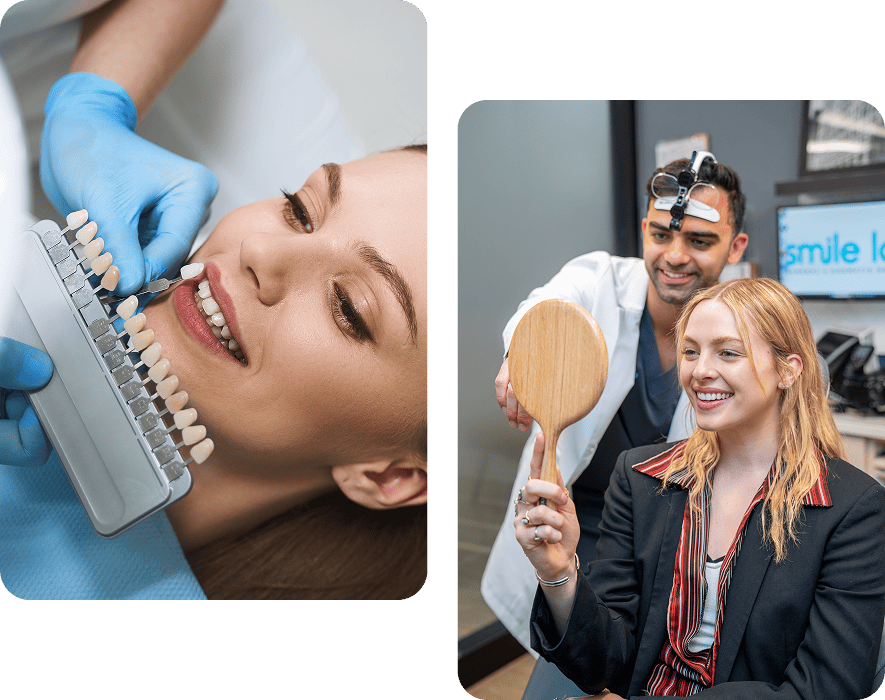
You should not have to guess what your new smile might look like or wonder whether veneers are permanent before you commit. A clear preview helps you make a more confident decision before treatment starts.
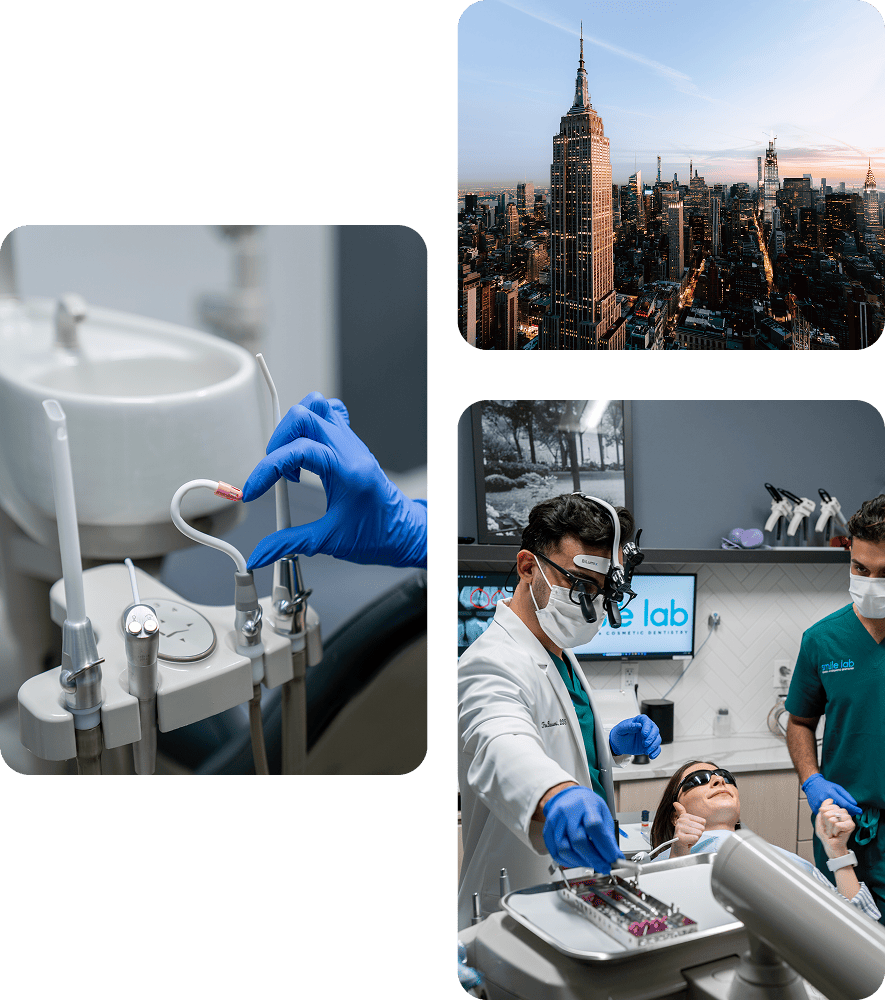
Patients searching for cosmetic dental care near SoHo often want a provider who is close, experienced, and easy to reach. Our Union Square porcelain veneers location gives you convenient access from nearby Manhattan neighborhoods and New York City routines.
Cost may change based on the number of treated teeth, lab work, bite needs, gum health, and whether other care is needed first. Porcelain veneers start at $2,323 per tooth, while resin veneers start at $950 per tooth.

Most patients with healthy gums and enough remaining enamel are candidates for porcelain veneers. They work well for teeth that are stained, chipped, gapped, or slightly uneven but otherwise structurally sound. If you have active gum disease, significant decay, or heavily worn enamel, that needs to be treated first, and a crown or another restoration may be a better fit than a veneer.
Most cases run three to five weeks start to finish. The first visit covers your consultation and digital scan, prep and temporaries usually follow one to two weeks later, and your final veneers are bonded two to three weeks after that once the lab finishes them. Your dentist will give you a more exact timeline once your treatment plan is set.
A typical porcelain veneer case takes two to three visits: a consultation and digital scan, a preparation visit where temporary veneers are placed, and a final visit where the permanent veneers are bonded. Most patients wear temporaries for about two to three weeks while the final veneers are custom made.
Yes. Digital scans and imaging let you and your dentist review shape, shade, and proportion before any tooth is touched, so you know what to expect before treatment starts.
With good care, porcelain veneers typically last 10 to 15 years, and many hold up well beyond that. Lifespan depends on your bite, your oral hygiene routine, and whether you grind your teeth. Resin veneers have a shorter typical lifespan, often 5 to 7 years, since the material is softer and more prone to staining.
Treat veneers the way you would treat healthy natural teeth. Avoid biting down on ice, fingernails, pens, or other hard objects, since a hard enough impact can chip porcelain the same way it can chip a natural tooth.
Traditional porcelain veneers require removing a thin layer of enamel to make room for the restoration, which makes the process permanent for that tooth. Some patients notice mild, temporary sensitivity after preparation. Once bonded, veneers do not change color the way natural teeth do, so any whitening should happen before your final shade is selected.
No, veneers themselves do not damage teeth, but the enamel removed during preparation does not grow back. That is why an accurate diagnosis and a conservative treatment plan matter before choosing veneers over a less invasive option like whitening or bonding.
Choosing between porcelain and resin comes down to budget and how long you want the results to last.
Porcelain has a natural translucency that mimics real enamel, so it is hard to distinguish from a natural tooth, and it resists staining far better than resin. Porcelain veneers at Smile Lab start at $2,323 per tooth and typically last 10 to 15 years with good care.
Resin veneers use the same composite material as dental bonding, sculpted and bonded directly onto the tooth, often in a single visit. They start at $950 per tooth and require little to no removal of natural tooth structure, but composite is softer than porcelain, so it stains and chips sooner, often needing touch-ups within 5 to 7 years.
If you want the most natural, longest-lasting result, porcelain is usually the stronger investment. If you want a faster, lower-cost fix for a few chips or gaps, resin veneers are a reasonable starting point. Your dentist can walk you through which option fits your goals at your consultation.
| Feature | Porcelain Veneers | Resin Veneers |
|---|---|---|
| Material | Ceramic porcelain | Tooth-colored composite resin |
| Appearance | Natural translucency, closely mimics enamel | More opaque, less light-reflective |
| Stain Resistance | High | Lower, more prone to staining over time |
| Average Lifespan | 10 to 15 years | 5 to 7 years |
| Tooth Preparation | Thin layer of enamel removed | Little to no enamel removed |
| Number of Visits | 2 to 3 visits: consult, prep, final placement | Often completed in 1 visit |
| Starting Cost per Tooth | $2,323 | $950 |
| Repairs | Typically requires full replacement | Can often be touched up chairside |

9:00 AM – 7:00 PM
Saturday – Sunday:
Bring your questions, your goals, and any concerns about comfort, cost, or past dental experiences. The team will review your smile, explain your options, and help you decide whether this cosmetic treatment is the right next step. You can find full Union Square office details whenever you’re ready to come in.
Address
Subway
Parking
Citi Bike